Start with Fall of Giants. Ken Follett's Century Trilogy follows five families — Welsh, English, German, Russian and American — across the twentieth century, and the three volumes run in plain chronological order with the children and grandchildren of book one carrying books two and three. Publication order is chronological order. There is no puzzle.
The one thing worth clearing up immediately: the Century Trilogy has no connection to Follett's Kingsbridge novels. You do not need to read The Pillars of the Earth first, and readers regularly assume otherwise because the two series get shelved together. They share an author and a method, nothing else.
The sequence
Fall of Giants runs from 1911 through the First World War and the Russian Revolution. Winter of the World (published in English as Winter of the World; the edition in our catalogue is a dual-language listing) covers the rise of the Nazis through 1949. Edge of Eternity takes the third generation from the Berlin Wall through the civil rights movement, Cuba, Vietnam and Watergate.
Each volume is roughly a thousand pages. Read them in order — the family trees are the entire structure, and book two opens with the children of people you met in book one.
The Kingsbridge question
If you want more Follett afterwards, the Kingsbridge sequence is the other major project: The Pillars of the Earth (twelfth century, the building of a cathedral), World Without End (fourteenth century, the plague), and A Column of Fire (sixteenth century, religious war). These are also chronological, and The Pillars of the Earth is the best book Follett has written by general agreement. A later prequel, The Evening and the Morning, was published in 2020 and is not in our catalogue.
If you have not read Follett at all and want to know whether you like him, start with The Pillars of the Earth rather than the Century Trilogy. It is the stronger book.
Honest warnings
Follett writes for propulsion, not prose. Characters are types and largely stay that way; dialogue frequently exists to deliver historical exposition; the good characters are progressive and sympathetic and the bad ones are not, with very little in between. If that bothers you in the first hundred pages it will bother you for three thousand more.
The historical set pieces are the reason to read. The Somme sequence in Fall of Giants and the political manoeuvring in Weimar Berlin in Winter of the World are genuinely well done. The romances between them are formulaic.
Edge of Eternity is the weakest volume by common assessment. Its span is the widest, its characters are the thinnest, and its treatment of the 1960s reads more like a checklist of famous events than the earlier books did. Several readers stop after book two without much loss.
Where to stop
After Winter of the World is a defensible stop if the formula has worn thin. If you finish all three, the trilogy closes properly rather than trailing off.
Reading alongside
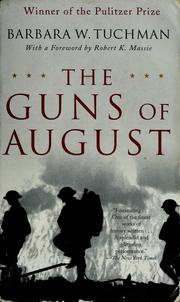
For the real history of the trilogy's opening, Barbara Tuchman's The Guns of August is the classic narrative account of how Europe walked into 1914 — vastly better written than any novel about it, and still the standard popular treatment despite later historians disputing parts of its thesis. John Keegan's The Second World War is the equivalent single-volume account for book two. Read either and the fiction gains a great deal.
Browse more sequenced reading orders in Discover.
Follow the full ordered path here: The Century Trilogy Reading Order and Guide.