The Tudors: the best books on England's most dramatic dynasty
This curriculum takes you from a vivid, accessible introduction to the Tudor world all the way through specialist-level analysis of politics, religion, and power. Each stage builds on the last: you first absorb the narrative sweep of the dynasty, then zoom in on its most pivotal figures and events, and finally engage with the deeper historical debates that scholars still argue over today.
Foundations: The Tudor Story
BeginnerGrasp the full arc of the Tudor dynasty — its rise, key monarchs, and fall — with a clear narrative framework and essential vocabulary before diving deeper.
▸ Study plan for this stage
Pace: 6–7 weeks, ~40–50 pages/day. Week 1–4: "The Tudors" by G. J. Meyer (~500 pages); Week 5–7: "Six Wives" by David Starkey (~400 pages). Allow 2–3 days per book for review and consolidation.
- The Tudor rise to power: Henry VII's victory at Bosworth Field (1485) and the consolidation of dynastic legitimacy through marriage and political strategy
- Henry VIII's break with Rome and the English Reformation: causes, consequences, and the shift from Catholic to Protestant England
- The six marriages of Henry VIII as windows into power, succession, and the king's evolving priorities—from Catherine of Aragon to Catherine Parr
- The roles and fates of Henry VIII's queens: how each marriage reflected political alliances, religious upheaval, and the precarious position of women in Tudor power structures
- The succession crisis and its resolution: Edward VI, Lady Jane Grey, Mary I, and Elizabeth I—how the dynasty survived fragmentation and religious conflict
- Key Tudor personalities and their influence: Thomas Wolsey, Thomas Cromwell, and Anne Boleyn as architects of change and victims of court politics
- The decline of the Tudors: the death of Elizabeth I and the transition to the Stuarts, marking the end of an era
- Essential Tudor vocabulary: dissolution of the monasteries, Act of Supremacy, legitimacy, succession, regency, and religious settlement
- How did Henry VII establish Tudor legitimacy after Bosworth Field, and why was this foundation crucial for the dynasty's survival?
- What were the primary causes of Henry VIII's break with Rome, and how did this rupture reshape English politics and religion?
- How did each of Henry VIII's six marriages reflect the political, religious, and personal priorities of different periods of his reign?
- What was the succession crisis following Henry VIII's death, and how did it affect the reigns of Edward VI, Mary I, and Elizabeth I?
- How did key figures like Thomas Cromwell and Anne Boleyn influence Tudor policy, and what were the consequences of their rise and fall?
- Why did the Tudor dynasty end with Elizabeth I, and what does this reveal about the challenges of dynastic succession in early modern England?
- Create a visual timeline of all seven Tudor monarchs (Henry VII through Elizabeth I) with key dates, major events, and one-sentence descriptions of each reign's defining characteristic.
- Construct a detailed family tree of Henry VIII and his six wives, noting the children from each marriage, their legitimacy status, and their role in the succession.
- Write a comparative character sketch (500–750 words) of two of Henry VIII's queens from 'Six Wives'—analyzing how Starkey portrays their personalities, political roles, and fates.
- Create an annotated map or diagram showing the religious and political divisions in Tudor England, highlighting the shift from Catholicism to Protestantism under different monarchs.
- Develop a 'court politics' case study: trace the rise and fall of one key figure (Wolsey, Cromwell, or Anne Boleyn) using evidence from Meyer's narrative, explaining how court factions and the king's will shaped their destiny.
- Write a reflective essay (750–1000 words): 'What made the Tudors remarkable?' using specific examples from both books to argue what distinguished this dynasty from its predecessors and successors.
Next up: This stage provides the narrative spine and essential context needed for deeper exploration—whether diving into specific reigns, religious upheaval, or the lived experiences of Tudor figures—allowing the next stage to build specialized knowledge on a solid foundational framework.
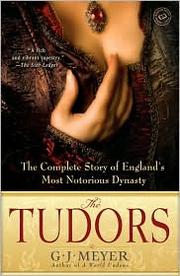
A highly readable, single-volume narrative covering all six Tudor monarchs from Henry VII to Elizabeth I. Its conversational tone and helpful context boxes make it the perfect entry point for a complete beginner.
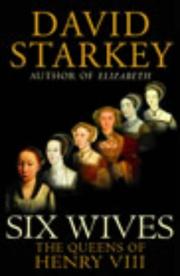
After absorbing the broad sweep, this book anchors you in the reign of Henry VIII — the dynasty's dramatic centre — through the stories of his six wives, making court politics immediately human and memorable.
The Reign of Henry VIII: Power and Reformation
BeginnerUnderstand Henry VIII as a ruler in full — his personality, his break with Rome, and the political machinery of his court — building on the narrative base from Stage 1.
▸ Study plan for this stage
Pace: 6–7 weeks, ~40–50 pages/day. Start with Weir's biography (approx. 600 pages, 3–4 weeks), then move to Guy's broader narrative (approx. 500 pages, 2–3 weeks). Allow 1 week for review and synthesis.
- Henry VIII's personality, psychology, and evolution as a ruler—from confident young king to aging, paranoid despot
- The break with Rome: theological justifications, political motivations, and the role of Anne Boleyn and the succession crisis
- The English Reformation under Henry VIII—dissolution of the monasteries, religious settlement, and the creation of the Church of England
- The mechanics of Henry's court: patronage networks, factionalism, and how courtiers navigated his volatile temperament
- Henry's six marriages as windows into his character, his obsession with the male heir, and the fates of his queens
- The role of key advisors—Wolsey, Cromwell, and others—in shaping policy and their ultimate fates
- Henry VIII's legacy: how his reign transformed England's religious, political, and dynastic landscape
- What were the primary personal and political reasons Henry VIII broke with Rome, and how did Anne Boleyn's role differ from the theological arguments?
- How did Henry VIII's personality and psychology change over the course of his reign, and what factors contributed to his increasing paranoia and violence?
- What was the English Reformation under Henry VIII, and how did the dissolution of the monasteries reshape English society and economy?
- How did Henry VIII's court function as a political system, and what strategies did courtiers use to survive and gain favor?
- Why did Henry VIII marry six times, and what does his treatment of each queen reveal about his character and priorities?
- What were the major accomplishments and failures of Henry's chief ministers—Wolsey and Cromwell—and how did their fates illustrate the dangers of serving him?
- Create a detailed timeline of Henry VIII's reign (1509–1547) marking key events: accessions, marriages, breaks with Rome, religious reforms, and deaths of major figures. Use both Weir and Guy to cross-reference dates and causality.
- Write character sketches (500–750 words each) of three key figures: Henry VIII himself, Thomas Cromwell, and one of his queens (your choice). Ground these in specific incidents and quotes from Weir's biography.
- Map Henry's court factionalism: identify the major power blocs (e.g., religious conservatives vs. reformers) and trace how they competed for influence across different periods of his reign using Guy's broader perspective.
- Analyze one of Henry's marriages in depth (500–1000 words): explain the political/personal motivations, the theological or legal justifications given, and the outcome. Use Weir's detailed narrative and Guy's contextual analysis.
- Create a visual or written comparison of Henry VIII's religious settlement with that of his predecessors and successors (reference Guy's broader Tudor narrative). What made Henry's approach unique?
- Debate exercise: Prepare arguments for both 'Henry VIII was primarily motivated by personal desire (Anne Boleyn, the male heir)' and 'Henry VIII's break with Rome was fundamentally about power and sovereignty.' Support each with textual evidence from both books.
Next up: This stage establishes Henry VIII as a complex, transformative ruler whose personal obsessions and political ambitions reshaped England's religion, governance, and dynastic future—providing essential context for understanding how his children (Edward, Mary, and Elizabeth) inherited and navigated the fractured realm he left behind.
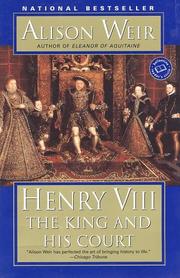
Weir reconstructs the daily reality of the Tudor court in rich detail, giving you a vivid sense of how power actually operated around Henry. Read this before tackling the Reformation so you understand the world it disrupted.
A concise but authoritative overview by one of Britain's leading Tudor historians. Guy sharpens your understanding of the constitutional and religious revolution Henry VIII unleashed, preparing you for deeper reading on the Reformation.
The English Reformation: Religion and Politics Intertwined
IntermediateUnderstand the English Reformation not just as a religious event but as a political and social revolution, and follow its turbulent course through Edward VI, Mary I, and into Elizabeth I's reign.
▸ Study plan for this stage
Pace: 4–5 weeks, ~40–50 pages/day (Dickens' work is dense with historical detail; allow time for note-taking and reflection)
- The English Reformation as a political act driven by Henry VIII's break with Rome, not primarily by theological conviction
- The role of economic interests: dissolution of monasteries, redistribution of church lands, and creation of a new gentry class
- Religious upheaval under Edward VI: the acceleration of Protestant reform and the introduction of the Book of Common Prayer
- Mary I's Counter-Reformation: the attempt to restore Catholicism and its violent consequences (Marian persecutions)
- Elizabeth I's Religious Settlement: the via media (middle way) and the establishment of a uniquely English Protestant church
- The interplay between religious ideology and political survival: how each monarch used religion to consolidate power
- Social and cultural consequences: the transformation of parish life, literacy, and the role of the printing press in spreading reform ideas
- The long-term legacy: how the Reformation reshaped English national identity and prepared the ground for later religious and political conflicts
- Why did Henry VIII break with Rome, and how did his motives differ from those of continental Protestant reformers?
- What were the economic and social consequences of the dissolution of the monasteries, and who benefited most?
- How did the religious policies of Edward VI, Mary I, and Elizabeth I differ, and what political circumstances shaped each approach?
- What was the 'via media' and why was it significant for the development of the Church of England?
- How did the printing press and increased literacy contribute to the spread and consolidation of the Reformation in England?
- What role did religious persecution play in each reign, and how did it affect public opinion and political stability?
- Create a timeline chart comparing the religious policies of Henry VIII, Edward VI, Mary I, and Elizabeth I—noting which were Protestant, Catholic, or compromises—and identify the political pressures behind each shift
- Write a 500-word analysis of one primary source excerpt (e.g., from the Book of Common Prayer, a royal proclamation, or a contemporary account) that Dickens discusses, explaining how it reflects the political and religious tensions of its moment
- Map the dissolution of monasteries: identify 5–10 major monasteries mentioned in Dickens, research who received their lands, and trace how this redistribution created a new class of landowners with a stake in the Reformation
- Construct a debate outline: argue both the 'religious' and 'political' cases for why the English Reformation happened, using evidence from Dickens to support each side
- Create a character profile for each of the four monarchs (Henry VIII, Edward VI, Mary I, Elizabeth I) noting their religious beliefs, political constraints, and key decisions—then write a comparative paragraph on how personal conviction versus political necessity shaped their choices
- Research and write a short case study (300–400 words) on one group affected by the Reformation (e.g., parish priests, monks, women, the poor, or merchants) using examples Dickens provides, exploring how their lives changed across the reigns
Next up: This stage establishes the religious and political foundations of early modern England, preparing you to explore how these unresolved tensions—between Catholic and Protestant, royal authority and religious conscience—erupted into civil conflict and shaped the intellectual and literary culture of the Elizabethan and Stuart periods.
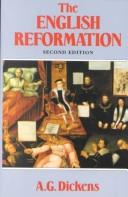
The classic scholarly account of how Protestantism took root in England. Reading it now, after the narrative foundations are in place, lets you engage with its arguments rather than being overwhelmed by unfamiliar names and events.
Key Figures: Wolsey, Cromwell, and the Power Brokers
IntermediateMove beyond monarchs to understand the ministers and advisors who actually ran the Tudor state, and see how personal ambition, ideology, and royal favour shaped policy.
▸ Study plan for this stage
Pace: 8–10 weeks, ~40–50 pages/day (MacCulloch first 2–3 weeks, then Wolf Hall 5–7 weeks). Allocate 1 week for synthesis and review.
- Cromwell's rise from blacksmith's son to chief minister: how ambition, intelligence, and ruthlessness enabled social mobility in Tudor England
- The machinery of power: how Cromwell reorganized the Privy Council, patronage networks, and bureaucratic structures to consolidate Henry VIII's authority
- Ideology and policy: how religious reform (break with Rome, dissolution of monasteries) served both Cromwell's evangelical convictions and Henry's political needs
- The personal relationship between king and minister: how royal favour is both the source of power and the instrument of its destruction
- Mantel's fictional reconstruction: how historical fiction reveals the interior lives, calculations, and moral ambiguities of power that biography cannot fully capture
- The cost of loyalty: how Cromwell's enemies (More, Fisher, the Pilgrimage of Grace rebels) were destroyed, and how Cromwell himself ultimately fell from favour
- Patronage and clientage: how Tudor ministers built networks of dependents and allies to extend their influence beyond court
- The intersection of personal ambition and state-building: how Cromwell's self-interest aligned with (and sometimes conflicted with) the modernization of English governance
- How did Cromwell's early life and career in Italy and the Low Countries shape his later approach to governance and religious reform?
- What were the key institutional reforms Cromwell implemented, and how did they strengthen Henry VIII's control over the English church and state?
- How does Mantel's portrayal of Cromwell's inner thoughts and moral reasoning in Wolf Hall differ from MacCulloch's historical account, and what does this reveal about the limits of historical knowledge?
- What role did personal relationships—between Cromwell and Henry, Cromwell and More, Cromwell and his enemies—play in shaping Tudor policy?
- How did the dissolution of the monasteries serve both Cromwell's ideological goals and Henry's financial and political interests?
- What were the circumstances of Cromwell's fall from power in 1540, and what does his fate reveal about the precariousness of ministerial authority under an absolute monarch?
- Create a timeline of Cromwell's career (using both MacCulloch and Mantel) from his early years through his execution, marking key appointments, reforms, and turning points.
- Map Cromwell's patronage network: identify the key allies, clients, and enemies mentioned in both texts, and diagram how they were connected and how their fortunes rose or fell with his.
- Write a comparative character study: how does Mantel's Cromwell differ from MacCulloch's? What does each author emphasize, and what does each omit?
- Analyze a specific policy (e.g., the break with Rome, the dissolution of the monasteries, or the fall of Anne Boleyn) using both texts: how do the historical facts and the fictional reconstruction illuminate different aspects of the same event?
- Role-play a scene: imagine a conversation between Cromwell and Henry VIII, or between Cromwell and Thomas More, drawing on details from both books to make the dialogue historically plausible and psychologically complex.
- Write a short essay: 'Was Cromwell a reformer or a tyrant?' Use evidence from both MacCulloch and Mantel to construct a nuanced argument that acknowledges the complexity of his motivations and legacy.
Next up: This stage reveals how individual ministers and their networks of power operated within the Tudor system, preparing you to examine how this machinery of governance shifted after Cromwell's fall and how subsequent advisors (like Seymour, Dudley, and Cecil) navigated the reigns of Edward VI, Mary, and Elizabeth.
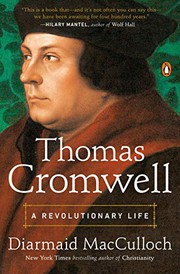
The definitive modern biography of Henry VIII's chief minister, the architect of the Reformation in government. MacCulloch's exhaustive research reveals how one man's vision transformed England — essential reading after you understand the broader Reformation context.

Though fiction, Mantel's Booker Prize-winning novel is meticulously researched and brings Cromwell's world to life with unmatched psychological depth. Reading it here, after the history, lets you appreciate its accuracy and enjoy it as a masterwork.
Elizabeth I and the Tudor Legacy
ExpertEngage with Elizabeth I's reign at a sophisticated level — her political genius, the cult of the Virgin Queen, and the long-term legacy of the Tudor century — and encounter the major historiographical debates.
▸ Study plan for this stage
Pace: 8–10 weeks, ~40–50 pages/day. Somerset's biography (600+ pages) requires 3–4 weeks; Tillyard's conceptual work (200+ pages) requires 2–3 weeks; remaining time for review, synthesis, and exercises.
- Elizabeth I's political pragmatism and strategic use of ambiguity in religion, marriage, and succession
- The cult of the Virgin Queen: how Elizabeth weaponized her unmarried status as a political and symbolic tool
- The Elizabethan World Picture: the hierarchical, interconnected cosmos and its influence on Tudor political thought
- Elizabeth's relationship with Parliament, her counselors (especially Burghley and Walsingham), and the limits of her power
- The long-term consolidation of Tudor rule: how Elizabeth stabilized the monarchy after the instability of earlier reigns
- Historiographical debates: revisionist interpretations of Elizabeth's gender, agency, and the role of her court
- The tension between Elizabeth's public image and private person, as revealed through Somerset's biographical evidence
- The legacy of the Tudor century: institutional, religious, and cultural transformations that outlasted Elizabeth
- How did Elizabeth I use religious ambiguity as a political strategy, and what were the limits of this approach?
- What was the 'cult of the Virgin Queen' and how did Elizabeth deliberately construct and maintain it?
- According to Tillyard, how did the Elizabethan World Picture—the concept of cosmic and social hierarchy—shape political thinking during Elizabeth's reign?
- What does Somerset's biography reveal about the gap between Elizabeth's public persona and her private decision-making?
- How did Elizabeth manage her relationship with Parliament and her key advisors, and where did real power ultimately lie?
- What were the major institutional and cultural legacies of the Tudor century, and how did they extend beyond Elizabeth's death?
- Create a timeline of Elizabeth's major political decisions (e.g., religious settlement, Mary Queen of Scots, the Spanish Armada) and annotate each with Somerset's analysis of her reasoning and constraints.
- Write a comparative character sketch: identify 3–4 key moments where Somerset reveals a tension between Elizabeth's public image and private motivations, and analyze what this reveals about her political genius.
- Map the Elizabethan World Picture as Tillyard describes it (cosmic hierarchy, correspondences, order) and write a 2–3 page essay on how this framework would have constrained or enabled Elizabeth's political choices.
- Conduct a historiographical close-read: identify 2–3 revisionist claims Somerset makes about Elizabeth (e.g., regarding her gender, her agency, her relationships) and evaluate the evidence she provides.
- Design a mock court debate: choose a major Elizabethan policy question (e.g., marriage, succession, religious settlement) and argue both sides using Somerset's account of the political pressures Elizabeth faced.
- Create an annotated visual: produce a diagram or infographic showing the key relationships in Elizabeth's inner circle (Burghley, Walsingham, Leicester, etc.) and note how Somerset characterizes each person's influence on her decisions.
Next up: This stage equips you with a sophisticated understanding of Elizabeth I's reign and the Tudor legacy at the level of political biography and intellectual history; the next stage will likely deepen your analysis by examining specific domains (religious settlement, foreign policy, cultural production) or by comparing the Tudors to other early modern dynasties.
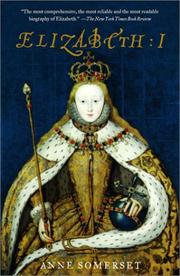
A thorough, balanced, and scholarly biography that covers Elizabeth's entire reign in depth. By this stage you have the context to appreciate its nuanced treatment of her religious settlement, foreign policy, and court management.

This classic short study unpacks the intellectual and cosmological framework through which Elizabethans understood their world — the ideal capstone that reframes everything you have read by revealing the ideas underlying Tudor politics, religion, and society.
Discussion
Keep reading
Paths that share books, cover the same subject, or open a related topic.