Philippa Gregory books in order: where to start with the Tudor novels
Gregory has written more than thirty novels and they were not published in the order the history happens, which is why every new reader asks the same question. This path answers it: start with the two Tudor novels that made her name, then read the Cousins' War sequence in story order — Lancaster and York, a generation before Henry VIII — and then the Tudor court in story order, at which point the whole century reads as one continuous narrative. The Starz adaptations follow the Cousins' War order used here, not publication order.
Start here
BeginnerRead the two books that define what a Gregory novel is — a real woman at court, narrating in the first person, with the history bent toward the story — and decide whether that is what you want.
▸ Study plan for this stage
Pace: Three to four weeks for 1,225 pages — The Other Boleyn Girl at 664 and The Boleyn Inheritance at 561. Read them in that order and consecutively. Both are long but fast; the first-person voice pulls, and most readers finish The Other Boleyn Girl considerably quicker than the page count suggests. One
- The Gregory formula, which The Other Boleyn Girl establishes and every later book uses: a real woman at court, narrating in the first person, present tense, with the history bent toward the story. Recognising the formula is what lets you read thirty novels without them blurring.
- Why this is the entry point rather than the chronological beginning. Starting chronologically is the commonest way to bounce off Gregory, because the early-chronology books are quieter and assume an appetite the reader has not yet acquired.
- The choice of narrator is the actual technique. Putting Mary Boleyn rather than Anne at the centre turns a familiar story into an unfamiliar one, and Gregory makes that choice again in every subsequent book.
- The first-person voice compels and constrains simultaneously. The narrator cannot know what she does not witness, so the reader gets rumour, partial information and self-justification rather than a historian's overview — which is a genuine narrative strength and also where the disputed history enter
- The Boleyn Inheritance moves to three narrators in turn — Anne of Cleves, Katherine Howard and Jane Boleyn — which shows what Gregory can do once she is not restricted to one voice, and is the more technically interesting of the two books.
- Reading historical fiction alongside its history. The useful habit, established now and used for the rest of the path, is to notice which claims the novel treats as settled and check the ones that carry the most narrative weight.
- The court as a system: patronage, family advancement, and women deployed by their male relatives as assets. This is the engine of every Gregory novel and it is the part historians dispute least.
- What does putting Mary Boleyn at the centre allow the novel to do that an Anne-narrated version could not?
- Identify three points in The Other Boleyn Girl where the narrator's limited knowledge shapes what the reader is allowed to believe.
- What changes technically when Gregory moves from one narrator to three? What does each of the three voices in The Boleyn Inheritance supply that the others cannot?
- Take one claim in either novel that carries significant narrative weight and check it against a historical account. What do you find, and does it change the novel for you?
- Having read both, do you want twelve more of these? The rest of the path is a considerable commitment and this is the deliberate decision point.
- Start a family tree on page one, covering Boleyns, Howards, Seymours and the crown. Gregory's whole project is dynastic, and the later books assume you can place a surname without help.
- Keep a narrators' ledger — which woman narrates which book, and what she can and cannot see from her position. By the end of the path it will be a map of the method.
- Pick one scene you found most persuasive and look up what is actually documented about the event. Do this once now; the habit is what makes the rest of the path interesting rather than passive.
- Write one paragraph on what a Gregory novel is, in your own words. You will revise it at the end of the path and the revision is instructive.
Next up: You have the voice, the method and the court; the next stage steps back a generation to the war that produced the dynasty these two novels take for granted.
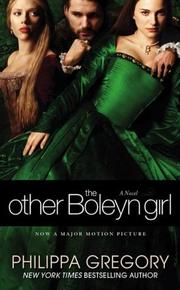
The book that made her, and still the best entry point. Mary Boleyn watching her sister rise; the compulsive first-person voice that all the later books use starts here. It is not the earliest in the chronology, and starting chronologically is the commonest way to bounce off Gregory.

The direct sequel, narrated in turn by Anne of Cleves, Katherine Howard and Jane Boleyn. Read it second, because the three-voice structure shows what Gregory can do once she is not restricted to one narrator.
The Cousins' War, in story order
BeginnerRead the Wars of the Roses from the Lancastrian and Yorkist women's side, in the order events happen rather than the order the books appeared.
▸ Study plan for this stage
Pace: Four to five weeks. The White Queen is 441 pages and The Red Queen 552; The Lady of the Rivers has no page count in the catalogue record but is comparable in length to the others. Read them in the order given, which is story order rather than publication order — Jacquetta first, then Elizabeth Woodv
- Story order versus publication order, which is the practical question every new Gregory reader asks. The Lady of the Rivers was published third and comes first chronologically; reading it first gives you the Woodville family before The White Queen assumes you know them.
- The Wars of the Roses as a dynastic conflict between Lancaster and York, seen entirely from the women's side — mothers, wives and widows working through marriage, inheritance and influence because those are the levers available to them.
- Jacquetta of Luxembourg as the founding figure of the sequence, and the introduction of the magic-and-prophecy element that Gregory runs through the Cousins' War books. That element is fiction, and worth registering as such before it recurs.
- The White Queen: Elizabeth Woodville and Edward IV, the marriage that destabilised the Yorkist settlement, and the beginning of the Woodville family's rise. It is the book the television adaptation is named for.
- The Red Queen runs in parallel with The White Queen from the Lancastrian side — Margaret Beaufort, and one of the least sympathetic narrators Gregory has written, which is deliberate and makes it the more interesting book of the two.
- The parallel-narrative method: the same years told from opposing positions, so that the reader accumulates incompatible accounts rather than a single story. This is Gregory's most distinctive structural move and it develops further in the next stage.
- The princes in the Tower is the sequence's central unresolved question, and Gregory's handling of it is a novelist's answer to a genuine historical dispute rather than a settled account.
- Historians dispute a good deal of the characterisation here, particularly of Margaret Beaufort and of the Woodvilles, and the strength of the novels does not depend on their being right about it.
- Why does reading The Lady of the Rivers first improve The White Queen? Be specific about what it supplies.
- How does Gregory handle the magic-and-prophecy element, and what work does it do narratively? Would the books be weaker without it?
- The White Queen and The Red Queen cover overlapping years. Find one event narrated in both and compare the two versions line by line.
- Margaret Beaufort is not a sympathetic narrator. What does Gregory gain by that, and does the book ask you to believe her?
- What is Gregory's account of the princes in the Tower, and what is the actual state of the historical evidence?
- How does the women's-side framing change what counts as a decisive event in this war?
- Extend the family tree back to Lancaster, York, Neville and Woodville. This is the stage where the tree becomes essential rather than helpful.
- Build a timeline of the Wars of the Roses from a reference source and place each novel's coverage on it as a bar. The overlaps are the design of the sequence.
- Take one event covered in both The White Queen and The Red Queen and write the two accounts side by side, then note what each narrator has an interest in believing.
- Read a short historical account of Margaret Beaufort alongside The Red Queen and note the divergences without deciding which you prefer yet.
- Track how many pages pass before you can hold the whole family tree without checking. That is the real measure of whether the sequence is working for you.
Next up: Two positions on the same war are established; the next stage adds a third, then follows the conflict through to the dynasty the first stage already showed you.
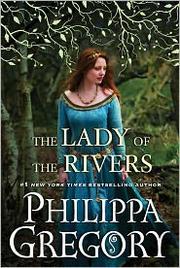
Jacquetta of Luxembourg, and chronologically the earliest of the sequence even though it was published third. Beginning here gives you the Woodville family before The White Queen assumes you know them.
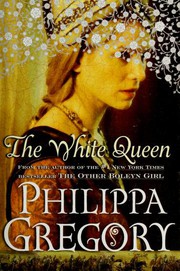
Elizabeth Woodville and Edward IV. Published first in the series and the one the television adaptation is named for; it follows directly from Jacquetta's story.
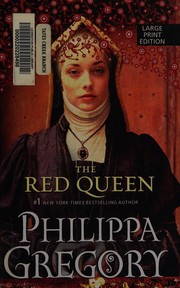
Margaret Beaufort, running in parallel with The White Queen from the Lancastrian side. Read it immediately after — the two books cover overlapping years deliberately, and the effect is lost if you separate them.
The Cousins' War, into the Tudors
BeginnerFollow the sequence through Richard III and Bosworth to the founding of the Tudor dynasty, arriving at the point where the Tudor court books begin.
▸ Study plan for this stage
Pace: Four to six weeks for 1,711 pages — The Kingmaker's Daughter at 417, The White Princess at 391 and The King's Curse at 903, which is much the longest book on the path and should be given its own three weeks. Read them in that order. This stage takes the sequence through Richard III and Bosworth to t
- The Kingmaker's Daughter narrates the same years a third time, from Anne Neville's position — Warwick's daughter, married to Richard III — and Gregory's method across this sequence is to keep re-narrating until no single version is trustworthy.
- Three incompatible accounts of one war is the sequence's actual achievement, and it is a legitimate literary technique rather than an accident of writing several books about the same period. Judge it as a technique.
- Richard III as presented from inside the family that married into him. Gregory's Richard is neither the Shakespearean villain nor a rehabilitated hero, and the ambiguity is deliberate.
- The White Princess is the hinge of the whole reading order: Elizabeth of York marries Henry VII, and the Wars of the Roses become the Tudor dynasty. Everything before this book explains everything after it.
- The Perkin Warbeck material and the persistence of Yorkist claims, which is where the princes-in-the-Tower question returns with consequences rather than as a mystery.
- The King's Curse follows Margaret Pole, a Plantagenet surviving into Henry VIII's reign, and is the last of the Cousins' War novels chronologically. It overlaps The Constant Princess and The Other Boleyn Girl, which you will now be reading from the other side.
- Reading the Tudor court from a Plantagenet position is the payoff of the whole ordering scheme. The events of stage one become the events of a hostile outsider's life, which is an effect only available if you read in this order.
- The disputed-history caution applies with most force to The White Princess and The King's Curse, where the narrative depends on contested reconstructions of what people knew and intended.
- Set the three accounts of the war — Woodville, Beaufort and Neville — against one another on a single disputed event. What does the triple treatment achieve that two accounts would not?
- How does Gregory's Richard III differ from both the Shakespearean version and the revisionist one?
- Why is The White Princess the hinge of the reading order? Name what it closes and what it opens.
- What does The King's Curse show about Henry VIII's court that The Other Boleyn Girl could not, given who is narrating?
- Margaret Pole's story overlaps books you read in stage one. Find one event that appears in both and describe how differently it reads.
- Where in this stage is the history most contested, and does knowing that change your reading of the scene?
- Create a single master timeline with a row per novel, marking the years each covers. By the end of this stage the overlaps are extensive and the chart is the clearest picture of the project.
- Take one event narrated in three books and write all three accounts on one page. This is the exercise that demonstrates what Gregory is actually doing.
- Read a short historical account of the princes in the Tower and note where Gregory's fiction fills evidentiary gaps and where it contradicts the record.
- After The King's Curse, reread twenty pages of The Other Boleyn Girl. Write a paragraph on what has changed.
- Update the family tree to show the Tudor claim and the surviving Plantagenet lines. The next stage assumes both.
Next up: The dynasty is founded and you have watched it from the losing side; the Tudor court sequence now reads in story order as the continuation of a single century-long narrative.
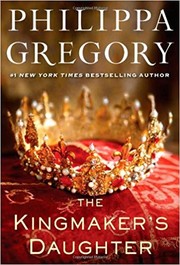
Anne Neville, Warwick's daughter, married to Richard III. It covers the same years again from a third position — Gregory's method across this sequence is to keep re-narrating the same events until no version is trustworthy.
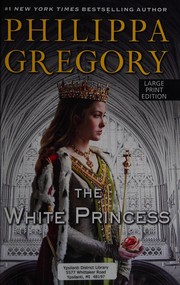
Elizabeth of York, married to Henry VII, and the book where the Wars of the Roses become the Tudor dynasty. This is the hinge of the whole reading order.

Margaret Pole, a Plantagenet surviving into Henry VIII's reign, and the last of the Cousins' War novels chronologically. It hands you directly to the Tudor court and overlaps The Constant Princess and The Other Boleyn Girl, which you will now be reading from the other side.
The Tudor court, in story order
BeginnerRead the Tudor court sequence chronologically, from Katherine of Aragon's arrival in England to the end of the dynasty.
▸ Study plan for this stage
Pace: Six to eight weeks. The Constant Princess is 490 pages, Three Sisters Three Queens 556 and The Last Tudor 518; The Taming of the Queen has no page count in the catalogue record and is comparable. Read them in the order given, which is story order: Katherine of Aragon's arrival, then Margaret Tudor,
- The Constant Princess covers Katherine of Aragon before she was Henry's queen, and it works far better here than as a starting point, which is precisely why this path did not begin with it.
- Its central claim — about Katherine's first marriage and what she later swore about it — is the most historically contested thing Gregory has written, and the whole novel rests on it. Read it knowing the claim is disputed and the book is the argument for it.
- Three Sisters Three Queens covers Margaret Tudor across England, Scotland and France, and is the book that connects the English and Scottish crowns. It sits alongside The Constant Princess in time.
- The Scottish material widens the frame. Most Tudor fiction is confined to one court, and this novel is Gregory's most sustained attempt at a British rather than an English story.
- The Taming of the Queen covers Kateryn Parr — the sixth wife, and the one with a mind of her own. It is the strongest of the later Tudor novels and the closest Gregory comes to writing about ideas, in this case religious reform, rather than about dynasties.
- The reformation material is where the Tudor books stop being only about marriage. Kateryn Parr's danger comes from what she has written and believes rather than from whom she has married, and the novel is better for it.
- The Last Tudor follows the Grey sisters — Jane, Katherine and Mary — to the end of the line, and returns to the multiple-narrator structure of The Boleyn Inheritance.
- The Queen's Fool, The Virgin's Lover and The Other Queen fill in Mary I, Elizabeth and Mary Queen of Scots if you want the reign covered completely. This path samples rather than completes the Tudor court sequence, and saying so is more useful than implying otherwise.
- Read in this order, the whole century — from Jacquetta to the Grey sisters — reads as one continuous narrative, which is the entire argument for the reading order this path uses.
- Why does The Constant Princess work better here than as a starting point? Answer in terms of what the reader already knows.
- State the contested claim at the centre of The Constant Princess and describe how the novel makes it plausible. What is the historical objection?
- What does Three Sisters Three Queens gain by covering three courts? Where does the breadth cost it focus?
- How is The Taming of the Queen different in subject from the other Tudor novels? Why does that make it the strongest of the later ones?
- Compare the three-narrator structure of The Last Tudor with that of The Boleyn Inheritance. Which is better handled, and why?
- Having reached the end of the dynasty, does the whole sequence from Jacquetta onward read as one narrative? Where does the seam show?
- Complete the master timeline through the end of the dynasty. It should now cover the whole span from the Wars of the Roses to the Grey sisters in one view.
- Read a historical account of Katherine of Aragon's first marriage and write a page on Gregory's version, the documentary evidence and where the novel departs from it.
- Take the reformation material in The Taming of the Queen and note what a reader learns about religious change from it that the earlier books never mention.
- For each of the three narrators in The Last Tudor, write one line on what she can see that the others cannot.
- Decide which of the three optional novels — The Queen's Fool, The Virgin's Lover, The Other Queen — you would add, and give a reason based on the gap it fills.
Next up: The dynastic project is complete; the last stage leaves the court entirely and shows what Gregory writes when there is no crown at the centre.

Katherine of Aragon before she was Henry's queen, and chronologically the first of the Tudor court novels. It works far better here, after the Plantagenet books, than it does as a starting point.

Margaret Tudor, narrating across England, Scotland and France. It sits alongside The Constant Princess in time and is the book that connects the English and Scottish crowns for later readers of the Stuart material.
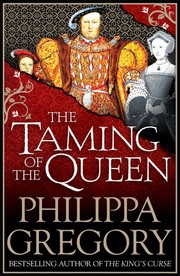
Kateryn Parr, the sixth wife and the one with a mind of her own — the strongest of the later Tudor novels and the closest Gregory comes to writing about ideas rather than dynasties. Follows The Boleyn Inheritance chronologically.
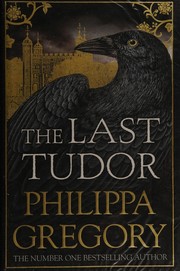
The Grey sisters, Jane, Katherine and Mary, and the end of the line. The Queen's Fool, The Virgin's Lover and The Other Queen fill in Mary I, Elizabeth and Mary Queen of Scots if you want the reign covered completely.
Outside the Tudors
IntermediateRead the two other Gregory sequences and see what she does with periods that have no royal court at the centre.
▸ Study plan for this stage
Pace: Three to four weeks for 1,047 pages — Wideacre at 591 and Tidelands at 456. No required order, though reading the debut first and the recent novel second shows the range of the career most clearly. A strong content warning on Wideacre specifically: it involves incest, sexual violence and a narrator
- Wideacre is the debut and the opening of the Wideacre trilogy: an eighteenth-century Sussex estate, land and inheritance, and a heroine who is genuinely monstrous rather than merely transgressive.
- The shift in what the first-person voice is for. In the Tudor books the narrator's limited perspective generates sympathy; in Wideacre it generates complicity, and the reader is placed much less comfortably.
- Land rather than crown as the object of desire. The trilogy's subject is inheritance and the agricultural economy, and the eighteenth-century enclosure material gives the books a political dimension the Tudor novels lack.
- The Favoured Child and Meridon complete the Wideacre trilogy if you want the sequence.
- Tidelands is the first Fairmile novel, set in the sixteen-forties among poor people rather than at court, and it is the most recent direction of Gregory's fiction.
- Writing the seventeenth century from below is a deliberate reversal of the whole Tudor project — the same period fiction can cover through queens is here covered through a woman with no property and no protection, and the accusation of witchcraft is a real danger rather than a court metaphor.
- Dark Tides and Dawnlands continue the Fairmile sequence, and Normal Women, her history of English women, is the nonfiction companion to the whole project.
- Finishing outside the Tudors reframes the earlier books. The court novels look, from here, like one strand of a career-long interest in what women could do with the very limited means available to them, which is a more defensible account of Gregory than either her admirers or her critics usually giv
- How does the first-person voice work differently in Wideacre than in the Tudor novels? What does it ask of the reader?
- What is the eighteenth-century agricultural and inheritance material doing in Wideacre? Could the story be told without it?
- Tidelands is set among the poor. What can Gregory show there that a court novel structurally cannot?
- Compare the danger facing the narrator of Tidelands with that facing a Tudor queen. Which is more precarious, and why?
- Does reading these two change how you read the Tudor books? Give a specific way in which it does.
- Write your final answer to the question that started the path: in what order should someone read Philippa Gregory, and why that order?
- Read Wideacre knowing the content warning and, if you continue, note where the narration makes you complicit rather than sympathetic. If you stop, note where and why — that is a legitimate outcome.
- Compare the opening chapter of Wideacre with that of The Other Boleyn Girl. Two openings by the same writer at opposite ends of a career is a genuinely instructive comparison.
- For Tidelands, list what the protagonist cannot do because of her position. That list is the novel's actual subject.
- Write the reading-order guide the path exists to produce: where to start, the story-versus-publication-order question, which sequence the adaptations follow, where to stop if you only want the Tudors, and what to read next if you want more.
- Revise the paragraph you wrote in stage one on what a Gregory novel is. The difference between the two versions is the deliverable of the whole path.
Next up: This is the end of the path: the Tudor and Plantagenet novels read in story order as one continuous century, plus the two sequences that show what the same writer does away from the court.
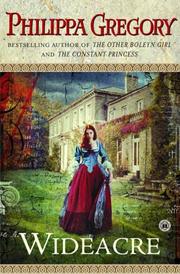
Her 1987 debut and the opening of the Wideacre trilogy — an eighteenth-century Sussex estate and a heroine who is genuinely monstrous. Far darker than anything in the Tudor books, and a shock to readers who arrive from them. The Favoured Child and Meridon complete the trilogy.

The first Fairmile novel, set in the 1640s among poor people rather than at court, and the most recent direction of her fiction. Dark Tides and Dawnlands continue it; her 2023 history of English women, Normal Women, is the nonfiction companion to the whole project.