Start with Palace Walk. Naguib Mahfouz's trilogy has exactly one order — Palace Walk, then Palace of Desire, then Sugar Street — and each volume covers a different generation of the same Cairo family across roughly thirty years, from the British occupation and the 1919 revolution to the Second World War. There is no chronological alternative because the books are already chronological.
Two of the three volumes are not currently in our catalogue under their own entries, which is worth stating plainly rather than pretending otherwise: only Palace of Desire appears below. All three are readily available in the standard English translations published by Doubleday, and you should read them as a set.
Why the first volume feels slow, and why that matters
Palace Walk is largely domestic. A tyrannical merchant, al-Sayyid Ahmad, rules his household with absolute authority while living a second life of music and drink outside it; his wife has not left the house in twenty-five years. For two hundred pages very little happens except the enforcement of a routine.
That is deliberate, and it is the engine of the whole trilogy. Everything that follows — the sons' politics, the daughters' marriages, the erosion of the father's authority, the arrival of Marxism and the Muslim Brotherhood in the third book — only registers as change because you have felt how immovable the opening looked. Readers who skip ahead to the more eventful later volumes consistently report that the ending lands flat.
The sequence
Palace Walk: the household and the 1919 revolution. Palace of Desire: the second generation, Kamal's intellectual crisis, and the father's decline. Sugar Street: the grandchildren, ideological politics, and the closing of the family's world.
Read them consecutively rather than spacing them out. The cast is large and the names recur across generations.
Honest warnings
The trilogy runs to well over a thousand pages of nineteenth-century-style realism, and Mahfouz's method is accumulation, not incident. If you dislike long domestic novels, no amount of literary importance will save this for you.
The portrayal of women is a genuine point of argument. Mahfouz depicts an oppressive patriarchal order with obvious critical intent, but he depicts it at length and from within, and readers disagree about how far the critique extends. Take the disagreement as real rather than settled.
Translation matters here. The standard English versions are competent and readable, though scholars note that Mahfouz's registers of Arabic — classical narration against colloquial dialogue — do not survive into English. You are reading a good approximation.
Where to go after, and what to read alongside
Mahfouz wrote a great deal besides the trilogy. Midaq Alley is the best next step: a short, sharp novel about a single Cairo alley during the Second World War, and by far the easiest introduction to his work if the trilogy's length puts you off. Start there if you want to sample him first.
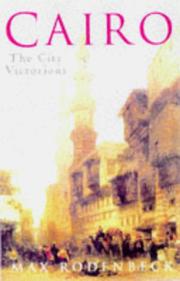
For context, Max Rodenbeck's Cairo: The City Victorious is the readable modern biography of the city itself, and Albert Hourani's A History of the Arab Peoples is the standard single-volume history for the political background the sons argue about. Michael Beard's critical study, titled simply Naguib Mahfouz, and Roger Allen's The Arabic Novel place him in the tradition he essentially founded.
Where to stop
Nowhere before the end. Sugar Street is the payoff, and the trilogy is designed as one book. If you are unsure whether to commit, read Midaq Alley first and decide from there.
Browse more sequenced reading orders in Discover.
Follow the full ordered path here: The Cairo Trilogy Reading Order and Guide.