The Border Trilogy Reading Order and Guide
This curriculum guides an intermediate reader into a deep understanding of Cormac McCarthy's Border Trilogy — its three novels read in sequence, their place in McCarthy's broader arc, and the literary, historical, and thematic contexts that unlock their full power. The path moves from McCarthy's earlier voice and style, through the Trilogy itself novel by novel, and finally into critical and contextual reading that deepens retrospective appreciation.
McCarthy's Voice Before the Border
IntermediateUnderstand McCarthy's prose style, moral vision, and Southern-to-Western transition so the Trilogy's opening pages feel immediately grounded rather than foreign.
▸ Study plan for this stage
Pace: 8–10 weeks total: Weeks 1–3 for Outer Dark (~25–30 pages/day, including re-reading dense passages); Weeks 4–9 for Blood Meridian (~20–25 pages/day — slower pace to absorb the violence, biblical cadence, and historical texture); Week 10 reserved for comparative reflection, journal review, and exercis
- McCarthy's unpunctuated dialogue and how the absence of quotation marks and speech tags collapses the boundary between character voice and narrative voice
- Biblical and archaic diction: McCarthy's use of King James cadences, inverted syntax, and prophetic register as a moral framing device, visible in the triune antagonists of Outer Dark and Judge Holden's speeches in Blood Meridian
- The landscape as moral agent: how setting in both books is not backdrop but active force — the Tennessee wilderness in Outer Dark mirrors Rinthy and Culla's spiritual desolation; the Sonoran desert in Blood Meridian mirrors the scalp hunters' metaphysical emptiness
- The transition from Southern Gothic to Western Gothic: Outer Dark inherits Faulknerian grotesque and incest-as-original-sin; Blood Meridian strips away the domestic and replaces it with continental, near-cosmic violence — tracking this shift prepares the reader for the Border Trilogy's hybrid regist
- McCarthy's moral vision of evil as autonomous and systemic, not merely personal: the three nameless men in Outer Dark and Judge Holden both exceed any individual psychology and function as embodiments of a world-principle
- Narrative withholding and ellipsis: McCarthy's refusal to explain motivation, backstory, or outcome — readers must practice tolerating and interpreting ambiguity rather than resolving it
- Violence as revelation rather than sensation: how McCarthy deploys atrocity to strip characters (and readers) down to irreducible questions about fate, will, and culpability
- The lone wanderer archetype: both Culla Holme and the Kid are morally compromised protagonists moving through a world indifferent to their survival — this archetype is the direct ancestor of John Grady Cole and Billy Parham
- In Outer Dark, what does the triune of nameless men represent, and how does their presence reframe Culla Holme's guilt — are they external punishment or a projection of his own moral state?
- How does McCarthy use the landscape of the Tennessee backwoods in Outer Dark and the Chihuahuan desert in Blood Meridian to communicate something about the spiritual condition of the characters moving through them?
- Judge Holden declares that 'war is god' and that whatever in creation exists without his knowledge exists without his consent — what does this speech reveal about McCarthy's conception of evil, and how does it differ from the more anonymous evil of Outer Dark's three men?
- Identify three specific stylistic signatures — at the sentence level — that appear in both Outer Dark and Blood Meridian, and explain how each one shapes the reader's emotional and moral experience of the narrative.
- How does Blood Meridian mark a geographic and tonal departure from Outer Dark, and what elements of style and moral vision remain continuous across both books?
- What does McCarthy's consistent refusal to use quotation marks and chapter-level psychological explanation demand of the reader, and how does learning to read this way prepare you for the more intimate but equally spare prose of the Border Trilogy?
- Sentence imitation journal: After each reading session, choose one paragraph from that day's pages — one that stopped you — and rewrite it in your own words first, then attempt to write an original paragraph in McCarthy's style on any subject. Focus specifically on replicating his syntax, his use of 'and'-chains (polysyndeton), and his refusal to use adverbs.
- Landscape annotation: Mark every passage in both books where the natural world is described in a way that feels morally or emotionally charged rather than purely descriptive. At the end of each book, write a one-page synthesis: what 'role' does the landscape play in each novel, and how do those roles differ?
- Evil taxonomy: Create a two-column character study comparing the three nameless men from Outer Dark with Judge Holden from Blood Meridian. For each, note: what they say, what they do, what they never explain, and what McCarthy withholds about their origin. Conclude with a paragraph on what these two portraits of evil have in common and where they diverge.
- Dialogue isolation exercise: Select three dialogue exchanges from each book (six total) and rewrite them with conventional punctuation, speaker tags, and attributions. Then read both versions aloud. Write a short reflection on what is gained and lost — this makes McCarthy's stylistic choices viscerally concrete rather than abstractly noted.
- Transition essay (500–700 words): Write a comparative essay titled 'From Tennessee to the Borderlands' tracing how McCarthy's moral vision stays consistent while his geography, scale, and register shift between Outer Dark and Blood Meridian. Use at least four direct quotations, one from each half of each book.
- Pre-Trilogy prediction: Before moving on, write a one-page reader's hypothesis: based on what you now know of McCarthy's style and moral concerns, what do you expect the opening pages of All the Pretty Horses to feel like? What will be familiar, and what might surprise you? Seal this and re-read it after the first week of the Trilogy.
Next up: Having internalized McCarthy's unpunctuated prose, his landscape-as-moral-force, and his lone-wanderer archetype through the compressed darkness of Outer Dark and Blood Meridian, the reader arrives at All the Pretty Horses not as a stranger to his voice but as someone who can immediately feel — and meaningfully question — the relative tenderness and elegiac light that opens the Border Trilogy.

An early McCarthy novel that establishes his biblical cadences, bleak landscape, and characters adrift in a violent world — essential preparation for his register before encountering the Trilogy.
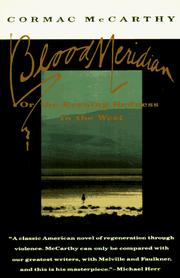
McCarthy's great pivot to the American West and Mexico; its scalping violence, Gnostic darkness, and Judge Holden directly precede the moral universe of the Border Trilogy, making the shift to John Grady Cole all the more resonant.
The Border Trilogy — Novel One
IntermediateRead and absorb All the Pretty Horses with full attention to its coming-of-age romance, the Mexican landscape, and McCarthy's new lyrical warmth — a deliberate tonal break from Blood Meridian.
▸ Study plan for this stage
Pace: 3–4 weeks, ~25–30 pages/day — a pace slow enough to linger in McCarthy's prose rhythms and the novel's episodic structure; aim to finish each of the four major sections within a week, reserving the final days for review and reflection
- Coming-of-age and the loss of innocence: John Grady Cole's journey from Texas boyhood to hard-won manhood is the novel's emotional spine — track every illusion he carries south and every one the world strips away
- The lyrical shift in McCarthy's style: All the Pretty Horses marks a deliberate tonal departure toward warmth, beauty, and romantic longing; notice the long, cadenced sentences describing landscape and horses versus the sparse violence of earlier McCarthy
- The Mexican landscape as character: the Coahuilan desert, the hacienda of La Purísima, and the mountains are not backdrop but moral and spiritual terrain — map how setting shapes mood and fate
- Horses as symbol and language: horsemanship is John Grady's deepest form of communication, identity, and ethics; the novel's title is not incidental — trace every significant horse scene for what it reveals about character
- Romance, idealism, and tragedy: the love between John Grady and Alejandra is the novel's central romantic arc; examine how class, family honor (the dueña Alfonsa), and Mexican social codes doom it from the start
- Justice, codes of honor, and violence: from the Encantada captain to the prison at Saltillo, McCarthy tests whether personal codes of honor can survive in a world governed by corrupt power
- Dueña Alfonsa and the weight of history: her long philosophical dialogue with John Grady is one of the novel's intellectual keystones — she articulates a tragic worldview about fate, will, and the limits of idealism
- Friendship and loyalty — Rawlins and Blevins: the three-boy dynamic illustrates different relationships to risk, conscience, and consequence; Blevins in particular functions as a dark foreshadowing of John Grady's own vulnerability
- How does the opening sequence — the grandfather's death, the loss of the ranch, and the departure into Mexico — establish John Grady's motivation, and what does he believe he is riding toward versus what he is actually fleeing?
- What does Dueña Alfonsa's account of her own youth and the Mexican Revolution reveal about her opposition to Alejandra's relationship with John Grady, and do you find her worldview fatalistic, realistic, or both?
- Trace the arc of Jimmy Blevins from comic nuisance to executed boy — what does his fate argue about innocence, luck, and the indifference of power in the novel's moral universe?
- How does McCarthy use the Spanish language — untranslated, woven into dialogue — to create distance, authenticity, and a sense of John Grady as a foreigner who nonetheless belongs? What effect does this have on you as a reader?
- Compare John Grady's experience breaking horses at La Purísima with his experience surviving Saltillo prison — in what ways are both tests of the same core qualities, and how does he emerge differently from each?
- By the novel's final pages, what has John Grady lost, what (if anything) has he gained, and does McCarthy suggest that his journey was worth making — or is the ending deliberately unresolved?
- Prose imitation journal: After each reading session, write one paragraph (150–200 words) in McCarthy's style — no quotation marks, long coordinate clauses, landscape detail woven with interiority. Choose a mundane moment from your own day as the subject. This trains your ear to his rhythm before you analyze it.
- Scene-by-scene horse log: Keep a running list of every scene involving horses. For each entry note: who is present, what the horse's condition or behavior is, and what emotional or thematic weight the scene carries. By the end you will have a map of the novel's symbolic core.
- Alfonsa close-reading: Reread the two extended conversations between John Grady and Dueña Alfonsa (her dinner-table monologue and the final meeting where she buys his freedom). Annotate her argument line by line — where is she right, where is she self-serving, and where does John Grady push back or fail to push back?
- Comparative landscape sketching: Choose three geographically distinct settings in the novel (e.g., the Texas ranch, the Coahuilan plain, the hacienda grounds) and write a short descriptive paragraph for each from memory, then compare your version to McCarthy's. Note what details he chooses that you omitted — this reveals his priorities.
- Character fate chart: Draw a simple grid with John Grady, Rawlins, Blevins, Alejandra, and Alfonsa on one axis and the novel's four sections on the other. In each cell write one word or phrase capturing that character's dominant condition or desire. Watch how the grid shifts — this makes the novel's structure visible.
- Tonal contrast essay (500 words): Without referencing any book outside this stage, write a short essay on what makes All the Pretty Horses feel emotionally warmer and more romantic than you might expect from a novel that contains a prison stabbing, an execution, and a doomed love affair. Where exactly does McCarthy locate the warmth, and is it earned?
Next up: Finishing All the Pretty Horses leaves the reader fluent in McCarthy's Border-world grammar — its landscape, its codes, its Spanish-inflected voice — and emotionally invested in John Grady Cole, which makes the darker, more disillusioned continuation of that world in The Crossing (following a different but thematically rhyming protagonist) land with far greater resonance and comparative weight.
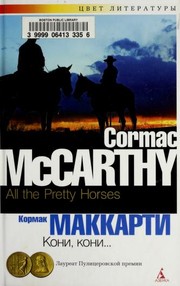
The first and most accessible novel of the Trilogy; John Grady Cole's journey into Mexico introduces the central themes of lost Eden, honor, and the death of the cowboy ideal that the next two novels will deepen and darken.
The Border Trilogy — Novels Two & Three
IntermediateComplete the Trilogy in sequence, tracking how McCarthy's tone grows more philosophical and elegiac across the three volumes and how Billy Parham and John Grady's fates intertwine.
▸ Study plan for this stage
Pace: 6–7 weeks total: Weeks 1–4 for The Crossing (~25–30 pages/day across its ~425 pages), then Weeks 5–7 for Cities of the Plain (~20–25 pages/day across its ~292 pages). Allow slower pacing during The Crossing's wolf-journey and epilogue sections, which reward re-reading.
- The wolf as symbol: In The Crossing, Billy's three journeys into Mexico each carry escalating symbolic weight — the wolf represents wildness, fate, and a world indifferent to human intention; tracking how McCarthy frames her death illuminates the novel's entire moral architecture.
- Ritual and futility: Billy's repeated, compulsive acts of care (returning the wolf, retrieving Boyd's bones) are portrayed as sacred even when — especially when — they accomplish nothing; this tension between purposeful action and meaningless outcome is the trilogy's philosophical spine.
- Shift from action to elegy: Compared to All the Pretty Horses, both The Crossing and Cities of the Plain are slower, more meditative, and more openly fatalistic; readers should chart how McCarthy's prose rhythm lengthens and his dialogue grows sparser as the trilogy progresses.
- The embedded tale as form: The Crossing is structured around long interpolated stories told by strangers (the priest, the heretic, the blind man); these parables-within-the-novel comment on Billy's journey and introduce McCarthy's most explicit philosophical monologues about God, history, and knowle
- Convergence of protagonists: Cities of the Plain is the trilogy's synthesis, bringing Billy Parham and John Grady Cole together on a New Mexico ranch; readers should analyze how their contrasting temperaments (Billy's resignation vs. John Grady's romantic idealism) create dramatic irony.
- Magdalena and doomed love: John Grady's obsession with the epileptic prostitute Magdalena in Cities of the Plain consciously echoes his romance in All the Pretty Horses but strips away any possibility of redemption; her fate seals the novel's elegiac register.
- Eduardo as antagonist and philosopher: The pimp Eduardo is not merely a villain but a spokesman for a nihilistic worldview that directly contests John Grady's idealism; their knife fight is a collision of cosmologies as much as men.
- The epilogue of Cities of the Plain as coda to the trilogy: The aged Billy's encounter with the stranger in the epilogue recapitulates every major theme — memory, loss, the nature of dreams, and the persistence of the self — and should be read as McCarthy's farewell statement to the entire trilogy.
- In The Crossing, why does Billy insist on returning the she-wolf to Mexico rather than simply releasing or killing her, and what does the failure of that mission reveal about McCarthy's view of human agency?
- How do the interpolated tales told by strangers in The Crossing function structurally and thematically — what does each parable add that the main narrative cannot say directly?
- Compare Billy Parham at the end of The Crossing with John Grady Cole as we first encounter him in Cities of the Plain: in what ways has each character been shaped by loss, and how do those different responses to grief drive the plot of Cities of the Plain?
- What role does Magdalena's epilepsy play symbolically in Cities of the Plain, and how does McCarthy use her illness and her dreams to connect her fate to the trilogy's broader meditation on fate and the unconscious?
- How does the knife fight between John Grady and Eduardo function as a philosophical confrontation, and what does each man's fighting style and final words suggest about their respective worldviews?
- Read the epilogue of Cities of the Plain carefully: who or what is the stranger Billy meets, and how does the dream-within-the-epilogue resolve — or refuse to resolve — the trilogy's central questions about memory, identity, and loss?
- Wolf-journal: While reading The Crossing, keep a dedicated journal entry for each scene involving the wolf. After finishing the novel, write a one-page analysis of how McCarthy's prose style (sentence length, imagery, point of view) changes in those scenes versus the rest of the narrative.
- Parable mapping: Create a visual diagram or outline of every interpolated tale in The Crossing (the priest's story, the blind man's story, etc.). For each, note: Who tells it? What is its explicit subject? What does it mirror or comment on in Billy's journey? Present your map in a one-page annotated chart.
- Tone comparison essay (500–700 words): Select one landscape description from All the Pretty Horses (Stage 1) and one from The Crossing and one from Cities of the Plain. Analyze how McCarthy's descriptive language shifts across the three books — diction, sentence rhythm, emotional temperature — as evidence of the trilogy's growing elegiac tone.
- Character convergence scene-study: In Cities of the Plain, choose three scenes where Billy and John Grady appear together. Write a brief (one paragraph each) close reading of each scene focusing on dialogue attribution, body language, and silences. What does McCarthy reveal about each man through contrast?
- Philosophical dialogue reconstruction: The Eduardo–John Grady confrontations are among the most ideologically charged passages in the trilogy. Rewrite one of their exchanges as a Socratic dialogue, making each man's underlying philosophical premises explicit. Then write a half-page reflection on which argument McCarthy's narrative ultimately endorses — or whether he refuses to choose.
- Epilogue close reading: Read the final epilogue of Cities of the Plain twice — once straight through, once annotating every image that has appeared earlier in the trilogy. Write a one-page reflection arguing for a specific interpretation of the stranger's identity and what Billy's final dream means as a conclusion to both novels and to the trilogy as a whole.
Next up: Completing the full arc of Billy and John Grady's intertwined fates — and sitting with the trilogy's unresolved, elegiac epilogue — equips the reader to step back and engage McCarthy's broader body of work and critical reception, examining how The Border Trilogy fits within his career-long preoccupations with violence, myth, and the American Southwest.
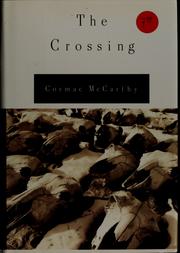
Read second: Billy Parham's three crossings into Mexico are more mythic and digressive than All the Pretty Horses, demanding the patience and trust in McCarthy's rhythm you built in the first novel.
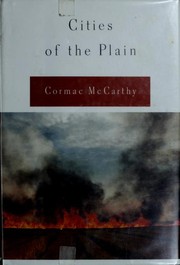
The concluding volume unites both protagonists and must be read last; its tragic inevitability and long epilogue only land with full weight after living through the previous two books.
Context: The West, the Border, and the Myth
IntermediatePlace the Trilogy inside the broader tradition of Western American literature and the historical reality of the U.S.–Mexico borderlands that McCarthy drew on.
▸ Study plan for this stage
Pace: 8–10 weeks total: ~2 weeks for "The Log of a Cowboy" (~30 pages/day across its ~350 pages), then ~6–8 weeks for "Lonesome Dove" (~25–30 pages/day across its ~950 pages). Read both with a dedicated notebook for tracking landscape descriptions, moral dilemmas, and border-crossing moments.
- The Cattle Drive as Mythic Structure: Both books use the trail drive as a narrative spine — recognize how Adams's documentary realism and McMurtry's epic scope each construct the drive as a rite of passage and a foundational American myth.
- Documentary Realism vs. Elegiac Fiction: Adams writes as a first-person participant-observer, prioritizing authenticity and craft knowledge; McMurtry writes retrospectively and elegiacally, mourning a West already lost even as it is being made.
- The U.S.–Mexico Borderlands as Liminal Space: Pay close attention to how the Rio Grande and the territory south of it function in 'Lonesome Dove' — as a zone of lawlessness, opportunity, violence, and cultural ambiguity that prefigures McCarthy's borderlands.
- Masculinity, Codes of Honor, and Silence: Track the unspoken codes that govern men like Adams's cowboys and McMurtry's Gus and Call — duty, loyalty, stoicism, and the suppression of interiority — as a direct precursor to McCarthy's male protagonists.
- The Land as Character: Analyze how both authors render the physical landscape (the Llano Estacado, the Rio Grande, the Montana plains) not as backdrop but as an active, often hostile force shaping human fate.
- The Myth of the Frontier and Its Costs: Identify how each book interrogates — or uncritically celebrates — the Turnerian idea of the frontier as the crucible of American identity, and what is erased or silenced in that myth (Indigenous peoples, Mexican communities, women).
- Violence as Constitutive of the West: From the casual brutality of trail life in Adams to the systematic and personal violence in 'Lonesome Dove,' trace how violence is normalized, ritualized, or questioned, laying the groundwork for McCarthy's unflinching treatment.
- Endings and Elegy: Both books close on notes of loss, dispersal, and the passing of an era — study these endings as templates for the elegiac tone McCarthy adopts throughout the Border Trilogy.
- How does Andy Adams's use of a first-person, participant narrator in 'The Log of a Cowboy' create a sense of authenticity, and what does that realism reveal about the actual labor, hierarchy, and daily texture of cattle-drive life that later mythologized versions obscure?
- In 'Lonesome Dove,' how does McMurtry use the U.S.–Mexico border — specifically the crossings of the Rio Grande and the excursions into Mexico — to signal moral and legal ambiguity, and how does this geographic liminality compare to the borderlands McCarthy will later inhabit?
- Compare the leadership philosophies of the trail boss in 'The Log of a Cowboy' with those of Woodrow Call in 'Lonesome Dove.' What do their similarities and differences reveal about evolving cultural ideals of Western masculinity?
- Both books depict the destruction or displacement of Indigenous peoples as a background condition of the cattle frontier. How do Adams and McMurtry handle this violence — through silence, justification, or critique — and what are the ideological consequences of each approach?
- How does McMurtry's elegiac framing — the sense that the characters are already living inside a myth that is ending — differ from Adams's more present-tense, unsentimental account, and what does each mode of storytelling suggest about the relationship between history and myth in Western American literature?
- Identify three or four specific landscape passages — at least one from each book — where the physical environment actively determines plot or character outcome. What techniques do the authors use to animate the land, and how might these techniques have influenced McCarthy?
- Parallel Passage Journal: Each week, copy out one landscape description from each book into a dedicated journal. Write a one-paragraph comparison analyzing word choice, sensory detail, and the emotional or moral weight the land is made to carry. By the end of the stage you will have a mini-anthology of Western landscape prose to set against McCarthy's later style.
- Border-Crossing Map: Draw or annotate a physical map of the U.S.–Mexico borderlands (the Rio Grande corridor, Texas, northern Mexico). Each time a character in 'Lonesome Dove' crosses or references the border, mark it with a brief note on what the crossing means narratively — escape, transgression, commerce, violence. Reflect on what geography is doing that dialogue cannot.
- Masculinity Code Inventory: Create a two-column chart — one column for 'The Log of a Cowboy,' one for 'Lonesome Dove' — listing every explicit or implied rule of conduct that governs the male characters (e.g., 'never complain about the work,' 'debts of loyalty must be repaid'). After finishing both books, write a one-page synthesis: what is the shared 'code,' and where do the books diverge?
- Myth vs. History Annotation: Choose one chapter from each book that depicts an encounter with Indigenous people or Mexican characters. Annotate it closely: What perspective is centered? What is left unsaid? Who has no interiority? Write a 300-word reflection on how the narrative choices reinforce or complicate the frontier myth.
- Elegy Exercise — Rewrite an Ending: After finishing 'Lonesome Dove,' rewrite the final two pages of either book in the style of the other (Adams's plain realism applied to McMurtry's ending, or McMurtry's elegy applied to Adams's). This forces you to feel the difference in register and prepares you to identify McCarthy's own elegiac voice.
- Precursor Checklist: Before moving to the next stage, compile a one-page 'McCarthy Inheritance List' — specific themes, images, character types, and formal choices from Adams and McMurtry that you predict will reappear in the Border Trilogy. Revisit and revise this list as you read McCarthy.
Next up: Having established the literary and historical DNA of the Western cattle frontier and the U.S.–Mexico borderlands through Adams and McMurtry, the reader is now equipped to recognize exactly what McCarthy inherits, subverts, and darkens when the Border Trilogy begins — making the encounter with his prose, his silences, and his moral universe far more resonant and precise.

A classic, documentary-style account of the cattle-drive era that McCarthy consciously invokes; reading it shows exactly which authentic details and rhythms he absorbed and which myths he dismantles.
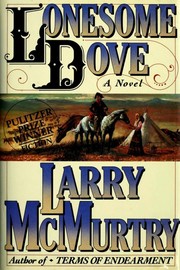
The dominant popular Western of McCarthy's era; reading it alongside the Trilogy clarifies what McCarthy is doing differently — stripping away nostalgia and sentimentality that McMurtry retains.
Critical Depth: McCarthy's Place in American Literature
ExpertEngage with serious literary criticism and McCarthy's later work to understand how the Trilogy fits his full career arc and what scholars consider its lasting significance.
▸ Study plan for this stage
Pace: 2–3 weeks, ~25–30 pages/day — The Road is lean (~287 pages) but demands slow, deliberate reading; budget extra time for re-reading key passages and engaging with critical commentary alongside the text
- Post-apocalyptic minimalism as McCarthy's stylistic culmination: The Road strips away the ornate Biblical cadences of the Trilogy to a bare, ash-gray prose that critics read as McCarthy's ultimate confrontation with nothingness
- The father-son dyad as moral universe: unlike the Trilogy's solitary male protagonists, The Road centers an intimate bond, shifting McCarthy's ethical inquiry from individual codes of honor to inherited love and the transmission of 'the fire'
- Carrying the fire — McCarthy's central metaphor for moral continuity, grace, and the will to persist, which critics debate as either a secular humanism or a residual theological hope
- The Road as capstone of McCarthy's career-long preoccupation with violence, entropy, and the fragility of civilization, extending themes from Blood Meridian through the Trilogy into an explicitly eschatological register
- Landscape as character and prophecy: the scorched, ashen American landscape inverts the sublime Southwestern terrain of the Border Trilogy, signaling the logical endpoint of the ecological and moral devastation implied throughout his earlier work
- Intertextual dialogue with the Border Trilogy: the nameless man and boy echo John Grady Cole and Billy Parham's quests for meaning, but stripped of horses, borders, and any surviving cultural mythology
- Critical reception and the Pulitzer/Oprah effect: how The Road's mainstream canonization reshaped scholarly and popular perception of McCarthy's entire body of work, including retroactive re-readings of the Trilogy
- McCarthy's place in the American literary tradition: situating The Road — and by extension the Trilogy — within the lineages of Melville, Faulkner, Hemingway, and the American jeremiad
- How does The Road's prose style differ from that of the Border Trilogy novels, and what does that stylistic shift reveal about McCarthy's evolving literary project?
- What does 'carrying the fire' mean within the moral and philosophical framework of The Road, and how does it compare to the codes of honor pursued by John Grady Cole and Billy Parham in the Trilogy?
- In what ways does the devastated American landscape of The Road function as a culmination or inversion of the Southwestern landscapes in the Border Trilogy?
- How do critics position The Road within McCarthy's full career arc — is it a departure, a culmination, or both — and what evidence from the text supports that reading?
- What does the father-son relationship in The Road add to McCarthy's long-running meditation on masculinity, mentorship, and moral inheritance that was central to the Border Trilogy?
- How did the mainstream canonization of The Road (Pulitzer Prize, Oprah's Book Club) affect scholarly approaches to the Border Trilogy, and do you find that reception warranted based on your reading?
- Comparative close-reading: Select one landscape description from each of the three Border Trilogy novels and one from The Road. Write a 600-word analysis tracing how McCarthy's use of setting evolves — what is gained, what is lost, and what thematic work the landscape does in each.
- Thematic lineage essay: Write a 800–1,000-word argumentative essay on the proposition that The Road is the logical conclusion of the moral questions raised in the Border Trilogy. Use specific textual evidence from The Road and at least two moments from the Trilogy novels to build your case.
- 'Carrying the fire' annotation project: Re-read every scene in The Road where the phrase 'the fire' or 'carrying the fire' appears. Annotate each instance with a marginal note connecting it to a specific scene of moral choice or failure from the Border Trilogy — map the continuity of McCarthy's ethical vision.
- Critical synthesis exercise: Read at least two published scholarly articles on The Road (e.g., from The Cormac McCarthy Journal or similar). Write a one-page response for each: summarize the critic's argument, identify one point you find convincing, and one point you would challenge using evidence from the text.
- Style imitation and analysis: Choose one paragraph from The Road and one thematically similar paragraph from All the Pretty Horses or The Crossing. Write a 300-word stylistic comparison, then attempt to rewrite the Road passage in the style of the earlier Trilogy novel — reflect on what is lost in translation.
- Final synthesis statement: Draft a 500-word 'critical position paper' articulating where you personally place The Road — and the Border Trilogy — within the American literary canon. Cite at least one scholarly source and at least three specific passages across the books you have read in this curriculum.
Next up: Having established McCarthy's full career arc and the lasting critical significance of both The Road and the Border Trilogy, the reader is now equipped to move into independent, thesis-driven scholarship — synthesizing primary texts, critical sources, and personal interpretation into original literary argument.
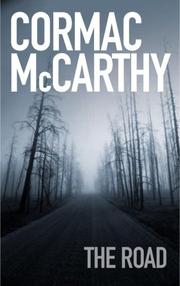
Reading McCarthy's post-Trilogy masterwork last reveals how the father-son love and apocalyptic bleakness are the logical endpoint of themes seeded across the Border Trilogy, completing your understanding of his arc.
Discussion
Keep reading
Paths that share books, cover the same subject, or open a related topic.