Hilary Mantel Reading Order: Where to Start
This curriculum moves through Hilary Mantel's work in a carefully sequenced arc: starting with her most accessible and personal writing, building familiarity with her voice and historical obsessions, then tackling the monumental Wolf Hall trilogy in order, and finally returning to her earlier, more experimental novels with the confidence to fully appreciate them. Each stage deepens your feel for Mantel's prose style, her preoccupation with power and the body, and her radical use of the present tense.
Meet the Writer: Memoir First
BeginnerUnderstand Hilary Mantel's life, sensibility, and recurring themes — illness, class, Catholicism, memory — before encountering them refracted through fiction.
▸ Study plan for this stage
Pace: 2–3 weeks, ~20–25 pages/day — Giving Up the Ghost is ~230 pages; read in three loose sections: Chapters 1–4 (childhood & the unseen), Chapters 5–8 (adolescence, class, & Catholicism), Chapters 9–end (illness, writing life, & haunting). Allow one rest/reflection day between each section.
- Autofiction and the memoir form: how Mantel blurs the boundary between remembered self and invented self, writing about 'Hilary' in the third person at times to create critical distance
- Illness as identity: the years-long misdiagnosis of endometriosis and how chronic physical suffering shapes Mantel's relationship to her own body, time, and creative output
- Class and social mobility: the texture of working-class Catholic life in Derbyshire, the shame and ambition that come with crossing class lines through education
- Catholicism and its aftermath: the Church as a system of guilt, beauty, and surveillance — and the lifelong psychic residue left even after faith is abandoned
- Memory, haunting, and the ghost: Mantel's literal and metaphorical use of ghosts — the child-self she never fully became, the half-sibling she sensed before knowing, the house on Bankbottom — as a structural and thematic device
- The unseen and the uncanny: Mantel's early experience of perceiving 'something' in the garden and her lifelong attunement to presences that resist rational explanation
- Silence and family secrets: the unspoken replacement of her father by her stepfather Jack Mantel, the adoption of his name, and how family silence trains a future novelist's ear
- The writer's formation: how each wound — bodily, spiritual, social — becomes retrospectively legible as the material from which fiction is made
- How does Mantel use the second person and shifts in narrative distance in Giving Up the Ghost, and what effect does this have on the reader's sense of whose story is being told?
- What does the childhood vision in the garden represent for Mantel, and how does she connect it to her broader sense of living alongside the invisible or the not-yet-explained?
- In what specific ways do class and Catholicism intersect in Mantel's upbringing, and how does she show them reinforcing — or sometimes contradicting — each other?
- How does Mantel frame her illness: as purely medical, as metaphorical, as punishment, or as something else entirely — and what evidence from the text supports your reading?
- What is the significance of the name 'Mantel' itself, and what does the act of taking her stepfather's name reveal about identity, erasure, and self-construction?
- By the end of the memoir, which recurring preoccupations can you identify that you would expect to find refracted through her historical fiction?
- Thematic annotation log: Keep a dedicated notebook (or document) divided into four columns — Illness, Class, Catholicism, Memory/Haunting. As you read, copy one striking sentence per chapter into the relevant column and write one sentence explaining why it belongs there. By the end you will have a ready-made thematic index of the book.
- Voice imitation exercise: Choose any two-page episode from your own childhood and rewrite it in Mantel's style — using the second person ('you') or a cool third person ('she'), present tense, short declarative sentences. Compare the emotional effect to writing it in first person. Reflect in a paragraph on what distance does and does not allow.
- Ghost map: Draw or describe the physical geography of Mantel's childhood — Bankbottom, the house, the garden, the church, the school. Annotate each location with the emotional or supernatural charge she assigns it. Notice which spaces are sites of dread, which of longing, and which of both.
- Timeline of silences: Create a chronological list of things that were never spoken aloud in Mantel's family (the father's departure, Jack's true role, the illness dismissed by doctors). For each silence, write one sentence on how Mantel eventually breaks it on the page — and what the act of writing seems to cost or release.
- Close-reading paragraph: Select the passage describing the childhood garden vision (the 'something' she perceives). Write a 300-word close reading focusing on Mantel's word choices, sentence rhythm, and what she refuses to explain. Practice the skill of sitting with ambiguity rather than resolving it.
- Pre-fiction prediction journal: Before moving to the next stage, write a one-page prediction: based solely on Giving Up the Ghost, list five specific obsessions, images, or emotional textures you expect to find in Mantel's novels. Save this page — you will return to it later in the curriculum to test your predictions.
Next up: Giving Up the Ghost hands the reader a set of autobiographical keys — illness, class shame, Catholic guilt, the haunted past — that the next stage will show Mantel transmuting into fiction, making it possible to recognize her sensibility even when it is dressed in Tudor costume or suburban realism.

Mantel's memoir is the ideal entry point: written in her signature present-tense voice, it explains the autobiographical roots of everything she would go on to write, and it is her most immediately gripping and accessible book.
Early Mantel: Finding Her Range
BeginnerExperience Mantel's earlier fictional voice across two very different registers — a darkly comic domestic thriller and a sweeping historical novel — building the reading stamina and stylistic familiarity needed for the trilogy.
▸ Study plan for this stage
Pace: 6–8 weeks total: Weeks 1–2 for "Fludd" (~20–25 pages/day; it is a short, dense novel of ~180 pages, so a slow, savoring pace rewards its layered symbolism); Weeks 3–8 for "A Place of Greater Safety" (~25–30 pages/day across the remaining ~600 pages, with a built-in mid-point pause at the fall of the
- Mantel's dual registers: the intimate/grotesque (Fludd) vs. the panoramic/political (A Place of Greater Safety) — recognizing that she is equally at home in both scales
- The unreliable or liminal narrator/protagonist: Father Angwin and Fludd himself occupy ambiguous ontological space; Danton, Robespierre, and Desmoulins are rendered through competing, often contradictory interior perspectives
- Dark comedy and the Gothic body: Fludd uses physical grotesquerie (the nuns' habits, the cigarette miracle, the statue burial) as theological and social satire
- Historical fiction as psychological realism: A Place of Greater Safety refuses romantic heroism, instead grounding the Revolution in petty ambition, sexual jealousy, financial anxiety, and childhood trauma
- Mantel's free indirect discourse: her narration slides in and out of characters' consciousness without signposting, demanding active reader attention to whose 'voice' is present at any moment
- Structural compression vs. structural sprawl: Fludd achieves its effects through fable-like brevity and symbolic economy; A Place of Greater Safety achieves them through accumulation, documentary texture, and interwoven timelines
- The role of place and institution as character: the fictional northern village of Fetherhoughton in Fludd and Revolutionary Paris in A Place of Greater Safety are not mere backdrops but active forces shaping — and trapping — the human figures within them
- Mantel's treatment of power, faith, and self-invention: both books ask how individuals construct identity under oppressive systems (the Church; the Terror), a theme that will become central in the Wolf Hall trilogy
- In Fludd, what is the theological and comic function of the mysterious stranger Fludd — is he angel, devil, alchemical agent, or something else entirely, and how does Mantel keep all readings simultaneously alive?
- How does Mantel use the physical fabric of Fetherhoughton — its church, presbytery, and convent — to externalize the spiritual stagnation and latent violence of its community?
- In A Place of Greater Safety, how does Mantel differentiate the three central voices of Danton, Robespierre, and Desmoulins — in prose style, moral outlook, and relationship to revolutionary ideology — while keeping all three sympathetic and damning at once?
- A Place of Greater Safety was written before Fludd but published after it — having now read both in publication order, what evidence do you see of Mantel developing or refining her narrative techniques between the two books?
- Both novels feature characters who are, in some sense, performers or self-mythologizers (Sister Philomena, Robespierre, Desmoulins). How does Mantel use this quality to generate both sympathy and irony?
- How does Mantel handle the problem of dramatic irony in A Place of Greater Safety — the reader's foreknowledge of the guillotine — without letting it collapse into fatalism or melodrama?
- **Close-reading log for Fludd:** Choose one short scene per reading session (2–3 pages) and annotate it for free indirect discourse — mark every sentence where the narrative voice merges with a character's consciousness. Note what Mantel gains by blurring that boundary.
- **Character voice chart for A Place of Greater Safety:** Create a three-column table (Danton / Robespierre / Desmoulins). Each time you encounter a scene from one of their perspectives, jot down one word or phrase that feels distinctively *theirs* in register or preoccupation. By the end, you will have a map of Mantel's ventriloquism.
- **Comparative setting essay (500 words):** Write an informal response comparing how Fetherhoughton in Fludd and Paris in A Place of Greater Safety function as cages or crucibles for their characters. Use at least two specific scenes from each book as evidence.
- **Timeline reconstruction:** A Place of Greater Safety covers 1763–1794. After finishing it, reconstruct a bare-bones chronology of the three protagonists' lives on a single page — birth, key turning points, death. Then annotate it with one moment where Mantel *slows time down* and one where she *compresses years into a paragraph*, and reflect on why she makes those choices.
- **Imitation exercise:** Write a single page of fiction (any subject) in which you attempt Mantel's free indirect discourse — begin in third-person narration and let it slide, without quotation marks or 'he thought', into a character's interior voice, then back out again. Compare your attempt to a passage from Fludd.
- **Pre-trilogy bridge reflection:** Before moving on, write a short paragraph (no more than 150 words) predicting, based only on what you have read so far, how Mantel might handle Thomas Cromwell — which techniques from Fludd and A Place of Greater Safety do you expect to see again, and what new challenges does a first-person-adjacent Tudor setting pose?
Next up: By internalizing Mantel's free indirect discourse in the intimate register of Fludd and her panoramic psychological realism in A Place of Greater Safety, the reader has built exactly the dual sensitivity — to sentence-level voice and to large-scale structural architecture — that Wolf Hall demands from its very first, famously disorienting page.

Short, strange, and blackly funny, this novella-length tale of a mysterious stranger in a 1950s Catholic village is the perfect low-pressure introduction to Mantel's fiction: it distils her obsessions with religion, the body, and transformation in under 200 pages.

Her epic novel of the French Revolution introduces Mantel's method of inhabiting historical figures from the inside — the same technique that powers Wolf Hall — and trains the reader to follow multiple perspectives across a long, densely peopled narrative.
The Wolf Hall Trilogy: In Sequence
IntermediateRead the complete story of Thomas Cromwell's rise and fall across all three volumes, experiencing Mantel's mature style at full power and following the narrative arc to its devastating conclusion.
▸ Study plan for this stage
Pace: 16–20 weeks total: Wolf Hall (~650 pages, 5–6 weeks at ~25 pages/day), Bring Up the Bodies (~410 pages, 3–4 weeks at ~25 pages/day), The Mirror and the Light (~750 pages, 6–7 weeks at ~25 pages/day), plus 1–2 weeks of reflection and review between volumes
- Mantel's signature second-person/close-third 'he' narration — understanding how the pronoun 'he' anchors every scene to Cromwell's consciousness and creates intimacy while preserving ambiguity
- The architecture of power at the Tudor court — how Wolf Hall maps Cromwell's ascent from Wolsey's shadow, Bring Up the Bodies traces his ruthless consolidation, and The Mirror and the Light charts the slow unraveling of the same machinery he built
- Dramatic irony and dramatic tension across the trilogy — the reader's foreknowledge of historical outcomes (the fates of Anne Boleyn, Jane Seymour, Cromwell himself) as a narrative device Mantel exploits for dread and pathos
- Mantel's use of the present tense throughout all three volumes — how immediacy collapses historical distance and forces the reader to experience events as contingent rather than inevitable
- The recurring motif of ghosts, memory, and the dead — Cromwell is haunted by Walter (his father), Liz and Grace (his wife and daughter), and Wolsey across all three books, and these presences shape his decisions
- Language and silence as political instruments — how characters in all three volumes deploy, withhold, and misread words, and how Cromwell's skill as a reader of people is both his greatest asset and his fatal blind spot in The Mirror and the Light
- The trilogy as a meditation on loyalty, service, and self-invention — Cromwell's identity is constructed through his usefulness to others, and The Mirror and the Light asks what remains when that usefulness expires
- Structural parallels and echoes across the three volumes — Mantel's deliberate mirroring of scenes, phrases, and moral dilemmas from Wolf Hall to The Mirror and the Light as a way of showing how history rhymes
- How does Mantel's choice to narrate almost entirely through Cromwell's perspective — using the pronoun 'he' — shape your sympathy for him across all three volumes, and where does that sympathy become most strained?
- Wolf Hall ends with Anne Boleyn's triumph; Bring Up the Bodies ends with her execution; The Mirror and the Light ends with Cromwell's. How does Mantel use these three endings to build a cumulative argument about power and its costs?
- Identify at least two scenes or images that recur or are deliberately echoed across different volumes. What is the effect of these repetitions on the trilogy's meaning?
- How does Cromwell's relationship with the dead — particularly Wolsey, Liz, and Grace — evolve from Wolf Hall through The Mirror and the Light, and what does it reveal about his inner life?
- In Bring Up the Bodies, Cromwell orchestrates the destruction of Anne Boleyn and the men accused with her. How does Mantel present this — as justice, as political necessity, as revenge, or as something more ambiguous?
- By the final pages of The Mirror and the Light, what has Mantel suggested about the nature of self-invention and whether Cromwell ever truly knew himself?
- Pronoun tracking exercise: Choose one chapter from each volume and highlight every instance of 'he.' Note the moments where the referent is ambiguous — when does 'he' slip between Cromwell and another man? Write a short paragraph on what this instability reveals about Cromwell's relationship to power and identity.
- Trilogy timeline and fate map: As you read, maintain a running document tracking every major character's status (alive, dead, in favor, disgraced) at the close of each volume. At the end of The Mirror and the Light, annotate which fates Cromwell directly caused, which he failed to prevent, and which he could not have foreseen.
- Ghost and memory journal: Each time a dead character (Wolsey, Liz, Grace, Walter) appears in Cromwell's thoughts or visions, log the passage, the volume, and the circumstances. After finishing all three books, write a 400-word analysis of what these hauntings collectively reveal about Cromwell's conscience.
- Scene comparison essay: Select the opening pages of Wolf Hall and the closing pages of The Mirror and the Light. Write a 500-word close reading comparing Mantel's prose style, imagery, and tone in each — what has changed, what has stayed the same, and what does the contrast say about Cromwell's arc?
- Power-mapping exercise: Draw a simple diagram of Cromwell's alliances and enemies at the end of each volume. Trace how the network shifts — who moves from ally to threat, who disappears — and write a brief note on the single turning point in each book that most dramatically reshapes the map.
- Reader-response reflection: After finishing The Mirror and the Light, write a one-page personal response to the question: 'Did Mantel make you mourn for Cromwell?' Use specific scenes from all three volumes as evidence, and consider how your feelings changed across the trilogy.
Next up: Completing the full arc of Cromwell's story — and sitting with the emotional and moral complexity Mantel leaves unresolved — prepares the reader to step back and engage critically with Mantel's broader body of work, her essays on historical fiction, and the scholarly and biographical contexts that illuminate how and why she wrote the trilogy the way she did.
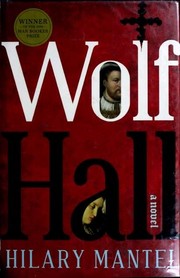
The Booker Prize-winning first volume establishes Cromwell's world and Mantel's immersive present-tense 'he' narration; reading it first is essential as every character and relationship introduced here pays off across the trilogy.
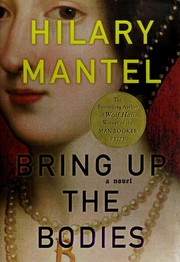
The tighter, more propulsive second volume — also a Booker winner — covers the fall of Anne Boleyn; having Wolf Hall's groundwork makes its ironies and loyalties land with full force.

The long-awaited concluding volume follows Cromwell to his end; its scale and emotional weight are only fully felt after living through the first two books, and it rewards everything the reader has invested in the series.
Deeper Cuts: The Darker Earlier Novels
ExpertReturn to Mantel's back catalogue with fully trained eyes, appreciating her formal experiments, psychological intensity, and the way her earlier work anticipates the trilogy's themes.
▸ Study plan for this stage
Pace: 4–5 weeks total: Week 1–2 — Beyond Black (~450 pages; aim for 30–35 pages/day, with two slower re-reading days per week for dense passages); Week 3–4 — Eight Months on Ghazzah Street (~250 pages; 20–25 pages/day, allowing time for contextual research into 1980s Saudi Arabia); Week 5 — comparative re
- The haunted female body as a site of trauma and social critique — in Beyond Black, Alison's psychic permeability literalises the way women absorb and carry collective violence, anticipating the embodied suffering of Anne Boleyn and Katherine Howard in the trilogy.
- Gothic realism as a formal mode — Mantel fuses the mundane (suburban commuter belts, IKEA furniture, motorway service stations) with the spectral to produce unease without abandoning psychological plausibility.
- Surveillance, enclosure, and the policing of women's space — Eight Months on Ghazzah Street uses the compound and the curtained window as architectural metaphors for patriarchal and theocratic control, echoing the court as a gilded cage in the Wolf Hall trilogy.
- The unreliable or limited perceiver — Frances Shore in Eight Months and Alison Hart in Beyond Black both occupy positions of partial knowledge; Mantel forces the reader to calibrate what can be trusted, sharpening the interpretive skills needed for Cromwell's point-of-view narration.
- Psychological intensity and interiority — both novels prioritise the texture of a character's inner life over plot momentum, demanding that the reader attend to free indirect discourse, ellipsis, and what is withheld.
- The past as an active, invasive presence — in Beyond Black the dead literally crowd the living; in Eight Months the colonial and religious past shapes every interaction Frances witnesses, establishing Mantel's career-long conviction that history is never safely over.
- Genre subversion — Beyond Black deconstructs the cosy British psychic-medium tradition; Eight Months dismantles the expatriate thriller. Recognising what Mantel borrows and then refuses illuminates her relationship to literary convention throughout her career.
- Isolation and epistemic uncertainty — both protagonists are cut off from reliable community and must construct meaning from fragments, a condition that mirrors the reader's own interpretive position and prefigures Cromwell's solitary moral reckoning.
- How does Mantel use the geography of the English commuter belt in Beyond Black — its retail parks, ring roads, and new-build estates — to amplify rather than contrast with Alison's supernatural experiences? What does this setting argue about contemporary English culture?
- In Eight Months on Ghazzah Street, Frances is an observer who is herself observed. Trace the novel's system of watching and being watched: who holds the gaze, who is denied it, and what does Mantel suggest about the relationship between visibility and power?
- Both Alison Hart and Frances Shore are women whose competence and intelligence are systematically disbelieved or ignored by the men around them. How does each novel frame this disbelief, and what formal techniques does Mantel use to ensure the reader sides with the protagonist's perception?
- Beyond Black is saturated with the residue of working-class English violence — Morris and his associates represent a specific social world of abuse, petty crime, and misogyny. How does Mantel historicise this violence, and in what ways does it connect to her broader project of recovering suppressed or marginalised histories?
- Compare the function of silence and the unspoken in both novels. What cannot be said in the Saudi compound, and what cannot be said about Alison's childhood? How does Mantel's prose style enact these silences rather than merely describing them?
- Having now read these two novels alongside the Wolf Hall trilogy, identify three specific techniques, preoccupations, or structural choices that appear in embryonic form here and reach full maturity in the trilogy. Be as precise as possible about the textual evidence.
- Close-reading annotation sprint — Select any ten consecutive pages from the middle section of Beyond Black (roughly the chapters dealing with Alison's childhood memories of Morris). Annotate every instance of free indirect discourse, noting where Mantel blurs the boundary between Alison's voice and the narrator's. Write a 300-word reflection on what this technique does to the reader's moral relati
- Architectural mapping — Draw a floor plan or spatial diagram of the Ghazzah Street compound as Frances experiences it, marking zones of permitted movement, zones of prohibition, and zones of ambiguity. Annotate the map with quotations from the text. Then write a paragraph arguing what this spatial logic reveals about the novel's central themes.
- Genre autopsy — Write a 400-word analysis identifying one convention of the traditional British ghost story or psychic-medium narrative that Beyond Black deliberately invokes and then subverts. Use at least two specific scenes as evidence. This trains the skill of reading Mantel against her generic backdrop.
- Comparative voice exercise — Choose one paragraph of close third-person narration from each novel. Rewrite both paragraphs in the first person. Then write a short reflection (200 words) on what is lost or gained, and what this experiment reveals about why Mantel chose the distance she did in each case.
- Research and contextualise — Spend one focused session (90 minutes) reading about the 1980s oil-boom expatriate experience in Saudi Arabia and the social history of psychic mediumship in post-war Britain. Return to one passage in each novel and write a marginal note on how the historical context sharpens your reading.
- Anticipation essay — Write a 600-word essay with the title: 'These two novels are apprentice works for the Wolf Hall trilogy.' Argue either for or against this claim, using specific textual evidence from Beyond Black and Eight Months on Ghazzah Street. This synthesises the stage and prepares the comparative thinking needed going forward.
Next up: Having excavated the formal and thematic roots of Mantel's imagination in these earlier novels — her Gothic interiority, her politics of enclosure, her insistence that the past bleeds into the present — the reader is now equipped to return to the Wolf Hall trilogy (or any subsequent stage) with a panoramic view of her entire career, able to read the trilogy not as a beginning but as a culmination.

This contemporary ghost story about a psychic medium is Mantel's most unsettling novel and showcases a completely different register — suburban horror — that reveals the full breadth of her imagination now that you know her historical work.

A claustrophobic thriller set in Saudi Arabia, drawn from Mantel's own experience living there; reading it after the memoir makes the autobiographical pressure behind it viscerally clear.
Discussion
Keep reading
Paths that share books, cover the same subject, or open a related topic.