What to Read Before Ulysses: The Books That Make Joyce Readable, in Order
Ulysses is genuinely hard, and most abandoned copies are abandoned in the third chapter, where Stephen Dedalus's interior monologue arrives with no warning and no explanation. This is not a survey of Joyce's work; it is a preparation sequence, and the novel itself is the last thing on it. If you are not willing to read a companion volume alongside the text, do not start: readers who finish almost always have one open, and readers who insist on going in unaided almost always stop somewhere in the middle.
The two books Joyce is rewriting
IntermediateRecognize the Homeric skeleton and the Hamlet argument that Ulysses assumes you already carry in your head
▸ Study plan for this stage
Pace: Four to five weeks. Give The Odyssey three to four weeks in a modern prose or verse translation, roughly a book of the poem per sitting; you want the shape of the story rather than scholarly Greek, so pick a translation you enjoy reading aloud and stop worrying about which. Hamlet takes a week: read
- Every episode of Ulysses carries an Odyssey title, and the parallels are structural rather than decorative — knowing the poem is how you know where you are in the novel
- The three-part shape of The Odyssey: Telemachus searching for a father, Odysseus getting home, and the reckoning in Ithaca. Ulysses reuses that shape in one day
- The specific episodes to hold on to — Telemachus, Nestor, Proteus, Calypso, the Lotus Eaters, Hades, Aeolus, the Lestrygonians, Scylla and Charybdis, the Sirens, the Cyclops, Nausicaa, the Oxen of the Sun, Circe, Eumaeus, Ithaca and Penelope
- Odysseus as the first fully domestic hero in European literature — a man defined by wanting to get back to his wife and house, which is precisely why Joyce chose him for an ad canvasser
- The Hamlet argument: a son, a dead father, a mother's remarriage and a ghost. Joyce's Stephen builds an elaborate theory out of this and delivers it in a library
- Fathers and sons as the load-bearing theme across both source texts, and the thing Bloom and Stephen are for
- What is Telemachus doing in the first four books of The Odyssey, and why does Homer delay Odysseus's appearance?
- Which Odyssey episodes involve deception or disguise rather than combat? Those are the ones Joyce found most useful.
- In Hamlet, what does the Ghost actually ask for, and what does Hamlet do instead?
- Why is Odysseus's homecoming drawn out over so many books once he is already on Ithaca? What is Homer withholding, and what for?
- Both texts are about a household invaded by other men. What does each think should be done about it?
- Write out the eighteen Ulysses episode names in order on a single sheet with a one-line Odyssey summary beside each. Keep the sheet; you will use it every reading session in the final stage.
- Summarise Hamlet's relationship with his mother in 200 words, using only the play. Stephen's library theory is a reading of exactly this, and you need your own version to argue with his.
- Pick one Odyssey episode — Hades or the Cyclops are the best candidates — and write a paragraph imagining how it might be staged in a single day in a modern city. This is the transposition Joyce performs eighteen times.
- Read Hamlet's advice to the players and the graveyard scene twice. Both are quoted, parodied or argued with in Ulysses.
Next up: With the skeleton and the Hamlet argument in place, you can meet Stephen Dedalus in the books where Joyce still explains who he is.
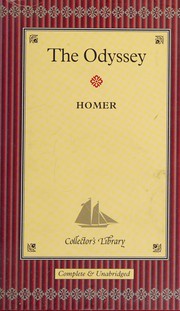
Every episode of Ulysses is titled after an Odyssey episode, and the parallels are the load-bearing structure of the book. Read it first in any modern prose or verse translation; you need the shape of the story, not scholarly Greek.
The Scylla and Charybdis episode is a sustained argument about Hamlet delivered in a library, and it is close to unreadable if you do not know the play. Reading it here saves you fifty pages of bafflement later.
Joyce before he got difficult
IntermediateMeet Stephen Dedalus, Dublin and Joyce's method in books that are still conventional enough to read straight through
▸ Study plan for this stage
Pace: Four to five weeks. Dubliners is fifteen stories in around 250 pages; read two or three a week rather than in a rush, and save The Dead for its own sitting — it is a third of the book's weight. A Portrait of the Artist as a Young Man takes about three weeks; the prose style changes deliberately as S
- Dublin as a fixed cast. People and streets introduced casually in Dubliners reappear in Ulysses with no introduction at all, and the novel assumes you have met them
- The Joycean epiphany — the small moment of exposure that ends most of the Dubliners stories, and the technique the whole later work is built out of
- Paralysis as the announced subject of Dubliners, stated in the first story and demonstrated fifteen times
- The Dead as the hinge: the realism is still intact but the ending reaches past it, which is the first sight of what Joyce would become
- A Portrait's rising style. The narration begins in a child's vocabulary and matures page by page, which is the gentlest possible training in Joyce's interiority
- Stephen's history — the family's decline, the Jesuit schooling, the hell sermon, the refusal to serve — all of it assumed and never re-explained in Ulysses
- Silence, exile and cunning: Stephen's stated programme at the end of A Portrait, and the thing Ulysses tests him against
- What does Joyce mean by paralysis, and which of the fifteen stories makes the case most clearly?
- In The Dead, what does Gabriel learn about his wife, and why does the story end where it does rather than with a conversation?
- How does the prose of A Portrait change between the first chapter and the last? Point to two specific passages.
- What does Stephen refuse at the end of A Portrait, and what is he choosing instead?
- Which characters from Dubliners can you name who you expect to matter later? Keep the list.
- A Portrait still has a narrator standing between you and Stephen's mind. Where can you feel that narrator, and what will change when it goes?
- Keep a running list of Dublin place names and people across both books, with a line on each. This becomes your personal index and saves an enormous amount of lookup later.
- Read the hell sermon in A Portrait in one sitting, then write 200 words on what it does to Stephen. It is the longest sustained set piece in Joyce before Ulysses.
- Take any Dubliners story and write down the exact sentence where the epiphany lands. Doing this for three stories makes the technique visible.
- Reread the final pages of A Portrait immediately before starting the next stage. Stephen's voice there is the voice that opens Ulysses, and the continuity is easier to hear with no gap.
Next up: You now know who Stephen is and how Joyce's interiority works with a narrator supporting it, which is the point at which it is worth being told plainly what the harder book is doing.

Short, plain and mostly easy, and it introduces characters and streets that reappear in Ulysses without introduction. Read The Dead last and slowly; it is where Joyce's technique first outgrows the realism it is written in.
Stephen Dedalus is the man you meet on page one of Ulysses, and Portrait is the only place his history is actually explained. It also trains you on Joyce's stream of consciousness in a version that still has a narrator holding your hand.
Understand the book before you open it
BeginnerArrive knowing what Ulysses is doing, so that difficulty reads as design rather than as failure on your part
▸ Study plan for this stage
Pace: Three to four weeks. Re Joyce is short and can be read in a week; read it first and read it straight through, because its whole function is to remove the sense of being examined. The biography, titled simply James Joyce, is long — you do not need all of it before starting, so read the Dublin and Tri
- Difficulty as design. Re Joyce's central service is establishing that Ulysses is hard on purpose and in specific ways, so that confusion stops reading as a personal failure
- The episode-by-episode plan — each chapter of Ulysses has its own style, hour, organ, art and colour, and knowing the scheme exists changes how a strange chapter reads
- Joyce as a comic writer. Re Joyce is written by a novelist and insists on the jokes, which almost every scholarly account underplays and which is the main reason people enjoy the book
- The real Dublin behind the novel: the biography shows that the people, quarrels, debts and streets were largely actual, which is why the density is not arbitrary
- Trieste, Zurich and Paris — the novel was written over seven years in exile, and the exile is why the Dublin in it is reconstructed with such obsessive precision
- The publication history and the obscenity fights, which explain the book's reputation as scandalous rather than as funny
- Read the accessible guide before the scholarly apparatus, not after. The order matters: arriving at annotations without a sense of the whole produces a lookup habit rather than a reading habit
- What does Re Joyce say Ulysses is actually about, stripped of the apparatus? State it in one sentence.
- Each episode has a distinct style. Why did Joyce do this, on the account you have just read, and what does it cost the reader?
- Which real people from the biography turn up in the novel, and what did Joyce change about them?
- How much of Joyce's own life is in Stephen, and where does the biography say the resemblance stops?
- Having read a guide before the novel, what do you now expect to be the hardest episodes and why?
- What is the argument for reading a companion at all, rather than going in unaided? Make it honestly, including the case against.
- Write out, from Re Joyce, a one-line description of what happens in each of the eighteen episodes. Add it to the sheet you started in stage one.
- From the biography, list five real people and note in a phrase how each is used in the fiction.
- Write 200 words on what you are expecting Ulysses to be like. Keep it and read it again when you finish; the gap between the two is worth having.
- Decide now, in writing, what your reading pace will be and what you will do when you get stuck. Readers who plan this finish; readers who improvise it mostly do not.
Next up: You know what the book is doing; the next stage is assembling the tools that tell you what it is doing on any particular page.

A novelist explaining Joyce to ordinary readers, published in the UK as Here Comes Everybody. It is short, funny, and it removes the sense that you are being examined. Read this before the scholarly apparatus, not after.

The standard biography, and the reason so much of Ulysses stops being random: the people, quarrels and debts in the novel were real. You do not need all of it before starting, but the Dublin and Trieste chapters pay for themselves.
The apparatus you keep open beside the text
BeginnerAssemble the working reference kit that turns a page of Ulysses from noise into something you can follow
▸ Study plan for this stage
Pace: One to two weeks of setup, then these three books stay open for the whole of the final stage rather than being read through. Skim The new bloomsday book now to learn its layout. Look up three or four random pages in Ulysses annotated to understand how it is organised. Read the introduction and one c
- The three tools do three different jobs: The new bloomsday book tells you what is literally happening, Ulysses annotated tells you what a specific phrase refers to, and Ulysses on the Liffey tells you what an episode means
- The Blamires sandwich — read the summary of an episode before the episode, then read it again after. This single habit is the difference between finishing and abandoning
- Ulysses annotated is a lookup tool and nothing else. Reading it continuously will slow you to a crawl and is the commonest way an over-equipped reader stalls
- Interpretation comes last. Reading Ulysses on the Liffey on an episode before you have read the episode replaces your reaction with someone else's
- Knowing when not to look something up. Most of the Dublin songs, Latin tags and street names can be passed over on a first reading with no loss of plot
- The companions disagree with each other in places, which is useful — it shows you where the novel is genuinely unsettled rather than merely obscure
- What does each of the three companions do that the other two do not? Answer without looking at them.
- In The new bloomsday book, how is an episode entry laid out, and how quickly can you find a given moment?
- Open Ulysses annotated at any page: what kinds of thing does it annotate, and what does it leave alone?
- What is Ulysses on the Liffey's basic approach to an episode — what question is it answering?
- Where would you look first if a sentence made no sense at all, and where second? Have the sequence settled before you need it.
- Do a full dry run on the first episode: read the Bloomsday summary, read the episode, reread the summary, then look up three phrases in the annotations and read the Liffey chapter. Time it. That figure is your real reading rate.
- Physically arrange the four books before you start — a table, a stand, or e-reader tabs. Reaching for the wrong volume is a small friction that compounds over three months.
- Set a rule in writing for how many lookups per page you will allow yourself, and stick to it. Two or three is workable; ten is not reading.
- Take one paragraph of Ulysses and annotate it yourself first, guessing at every unfamiliar reference, then check against Ulysses annotated. Your hit rate is usually better than you fear, which is the point.
Next up: Everything is now in place — the Homeric map, Stephen's history, an account of what the book is doing, and the reference kit — so there is nothing left to prepare with.

The single most useful object on this list: a plain-English, page-by-page account of what is literally happening in each episode. Read Blamires's summary of an episode before reading the episode, then again afterwards.
The line-by-line reference for the allusions, Dublin geography, songs and Latin. It is a lookup tool, not a book to read through; use it when a specific phrase stops you, or it will slow you to a crawl.
Ellmann's episode-by-episode interpretation, for when you want to know what an episode meant rather than what happened in it. Best read after each episode, alongside Blamires rather than instead of him.
Ulysses
BeginnerRead the novel itself, with the companions open and at a pace that assumes eight to twelve weeks rather than a fortnight
▸ Study plan for this stage
Pace: Eight to twelve weeks, one episode at a time, and no faster. Roughly 700 pages but the episodes are wildly unequal — some are twenty pages and Circe alone is close to 150. Read one episode per session where possible, with the Bloomsday summary before and after. Expect Oxen of the Sun and Circe to be
- One day, 16 June 1904, three principal consciousnesses and eighteen incompatible styles — the whole design in one sentence
- Bloom as the anti-heroic Odysseus: kind, curious, unfaithful, cuckolded, Jewish in a city that will not let him forget it, and the most fully rendered ordinary man in English fiction
- The style changes are the plot's second layer. Each episode is written in a manner that comments on its own content, and asking why this style here is the main interpretive question
- Skimming is permitted and is the correct technique in places. Oxen of the Sun parodies the history of English prose and can be read for its rhythm rather than its sense on a first pass
- Circe's hallucinatory play form is where the day's suppressed material surfaces — read it as theatre and let the impossible events be impossible
- The Bloom and Stephen encounter, prepared for by the entire book, and what the novel does and does not allow to come of it
- Molly's closing monologue as the answer to everything preceding, delivered by the character who has been talked about for 700 pages without being heard
- Why did Joyce make Bloom an advertising canvasser rather than an artist, when Stephen was available for the central role?
- Pick any three episodes and say what the style of each is doing to its content.
- What actually happens between Bloom and Stephen when they finally meet, and why does Joyce refuse to make it more than it is?
- The Cyclops episode is narrated by an anonymous drinker with frequent interruptions in other voices. What is that arrangement for?
- Molly is discussed constantly and speaks only at the end. What does the delay accomplish?
- Having finished, was the preparation sequence necessary, or would you now send someone in with only Blamires and no Homer?
- Keep a one-paragraph-per-episode log written immediately after reading each, before consulting Ulysses on the Liffey. This is your reading, and it is the thing most easily lost to other people's.
- For Oxen of the Sun, read it once at speed for sound alone with no lookups, then read the Bloomsday account, then reread a few pages. The parody is more audible than it is legible.
- Read Penelope in a single sitting, aloud if you can. It is punctuated for breath rather than for grammar and is a substantially different experience heard.
- After the last page, reread the first three pages of Telemachus. They read as an entirely different book once you know where the day goes.
- Write 500 words on what Ulysses is about, without using the words difficult, modernist or experimental. The constraint forces an actual answer.
- Compare what you wrote here with the 200 words of expectation you wrote in stage three.
Next up: This is the end of the path — you have read Ulysses with the equipment that makes it readable, and the honest next step is not Finnegans Wake but a second reading of Ulysses itself, which is the one most readers say is the real one.
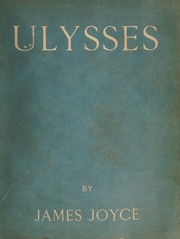
The destination. Read one episode at a time, Blamires before and after each; expect Oxen of the Sun and Circe to be the hardest, and allow yourself to skim rather than stop. Any of the standard editions will do — the textual controversies matter to scholars, not to a first reading.
Discussion
Keep reading
Paths that share books, cover the same subject, or open a related topic.