What to Read Before The Brothers Karamazov: The Dostoevsky Run-Up, in Order
The Brothers Karamazov is a novel about God, patricide and free will in which the theological argument is the plot, and readers who arrive expecting a Russian family saga get blindsided by fifty pages of a monk's biography and a chapter of philosophy delivered in a tavern. This is not a survey of Dostoevsky's novels; it is the preparation that makes the religious argument legible — the earlier books that build to it, the life, the Orthodox context, and the reference companion — with Karamazov last. It is his hardest and best novel, and starting here is the commonest way people decide they dislike him.
Dostoevsky at short length
BeginnerMeet his method, his underground psychology and his prose before committing eight hundred pages
▸ Study plan for this stage
Pace: Ten to twelve weeks. Notes from Underground is only about 120 pages of the collected volume this path assumes — the short novel almost never appears alone — and takes a week, read slowly, because the narrator's self-contradictions are the content. Crime and Punishment is around 550 pages and reads f
- The underground man as the seed of everything: a narrator who argues himself out of every reasonable position, including the ones he holds, and who prefers spite to advantage
- The attack on rational egoism — the claim that a man will act against his own interest simply to prove he is not a piano key — which is the philosophical move Dostoevsky spends the rest of his career elaborating
- That Ivan Karamazov is close to unintelligible without this short novel. The tone, the self-laceration and the willingness to argue a position one does not hold all begin here
- Raskolnikov's theory in Crime and Punishment: that an extraordinary man may license himself past ordinary morality, and the novel's method of refuting it through the body rather than through argument
- Dostoevsky's characteristic construction — a thriller plot carrying a philosophical argument, so the reader is gripped before being asked to think
- Sonya, and the first appearance of the figure Dostoevsky will keep reaching for: the humiliated believer whose faith the novel cannot dismiss and cannot quite defend
- The Idiot as his first attempt to put a genuinely good man in a novel, and the reason it is such a strange and unbalanced book — Myshkin's goodness disrupts the plot rather than driving it
- That the failure of The Idiot is what makes Karamazov's answer feel earned: Alyosha and Zosima are the second attempt at the problem Myshkin exposed
- What is the underground man actually arguing against, and does he believe his own case? The novel is built so that both answers have support.
- Why does Raskolnikov confess? Trace the reasons the novel gives and note how few of them are arguments.
- Crime and Punishment refutes Raskolnikov's theory. Does it refute it, or merely defeat him? The distinction matters and Dostoevsky knew it.
- What goes wrong with Myshkin? Be specific — the novel is quite clear about the mechanism and readers usually blame the book instead.
- Compare Sonya and Myshkin as attempts at goodness in fiction. What can a novel do with each, and what defeats it?
- After three books: what is Dostoevsky's method for putting an idea into a novel? Write it in three sentences — you will test it against Karamazov.
- Read part one of Notes from Underground twice, back to back. It is forty pages of pure argument and the second pass is where the self-contradictions become visible rather than merely confusing.
- Keep a name list from the first chapter of each Russian novel: full name, patronymic, diminutives, who they are. Russian novels are hard for exactly one avoidable reason and this removes it.
- In Crime and Punishment, mark every place Raskolnikov's body betrays his theory — fever, fainting, nausea. Collect six or seven. The list is the novel's real argument.
- Write 300 words on why The Idiot does not work as well as Crime and Punishment. Then 300 on what it achieves that Crime and Punishment cannot. Both are true and holding both is the preparation for Karamazov.
- Note every character in these three books who is genuinely religious. There are fewer than you expect, and how each is treated is the best available forecast of what Zosima will be.
Next up: You have the method and the recurring problem — how to put goodness and unbelief in the same book without either winning cheaply — which is exactly the point at which the biography and the religious context stop being background and become explanation.
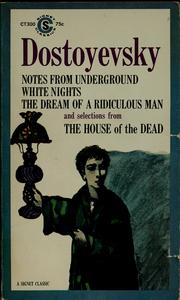
A hundred and twenty pages, and the seed of everything: the man who argues himself out of every reasonable position. Ivan Karamazov is unintelligible without it. This path assumes the common collected edition that prints it with White Nights and other short works — the short novel almost never appears alone.
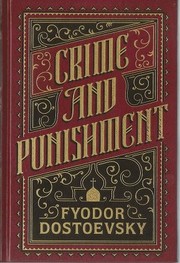
The accessible major novel and the standard entry point: a thriller structure carrying the same argument about whether a man can license himself past morality. Read it second so you meet Dostoevsky's ideas while there is still a murder plot pulling you along.

His first attempt at putting a genuinely good man in a novel, which is the problem Alyosha and Zosima solve in Karamazov. It is the harder of the two, and it is why the later book's answer feels earned rather than pious.
The world and the faith the novel argues from
IntermediateUnderstand nineteenth-century Russian Orthodoxy, the intelligentsia and the biography that put them in conflict inside one man
▸ Study plan for this stage
Pace: Fourteen to sixteen weeks, the longest stage here, and it can be run in parallel with a break from the fiction rather than as a block. Frank's one-volume abridgement is around 460 pages of dense biography; four to five weeks. Natasha's Dance is 748 pages of cultural history and is better sampled tha
- The mock execution: Dostoevsky was led out to be shot, reprieved at the last moment, and never wrote the same way again. Every account of his religious seriousness runs through this episode
- The Siberian prison years and the New Testament he was given there, which was the only book he had for four years — the specific origin of the biblical saturation of the late novels
- The turn from radical to something much harder to label, which Frank is careful not to flatten into simple conversion
- The gambling, the debts and the serial-publication deadlines, which explain a great deal about the shape of the novels and are usually omitted from accounts of his ideas
- The Slavophile versus Westerniser quarrel — whether Russia's future lay in its own Orthodox peasant tradition or in European rationalism — which the Karamazov brothers stand in for and which the novel never stops to explain
- The intelligentsia as a distinctively Russian social formation, and what it meant to be an educated Russian arguing about Europe
- Russian Orthodoxy's specific features that the novel assumes: the elder or starets, the monastery as a living institution rather than a relic, and a theology of active love that Zosima will state directly
- The Grand Inquisitor as an argument with the Gospels rather than about them, which is why having the scriptural passages in front of you before reading it changes what the chapter is
- What did the mock execution change? Frank is careful here — distinguish what is documented from what is inferred.
- How does Frank handle the relationship between the prison years and the later religious position? Is it presented as conversion, as deepening, or as something less tidy?
- State the Slavophile position and the Westerniser position as their best advocates would. Which of the brothers stands where?
- What is a starets, and what authority does one have? The relationship between Zosima and Alyosha is unintelligible without this.
- Read the Gospel passages in the anthology and note which ones Dostoevsky returns to most. What does the selection suggest about what he found hardest?
- Frank writes a life; Figes writes a culture. Where do they disagree about what shaped Dostoevsky, if at all?
- From Frank, build a one-page chronology of Dostoevsky's life: eight or ten entries. The compression is the point — the shape of the life is not visible from inside a 460-page biography.
- Write 400 words on the Slavophile-Westerniser quarrel as a live argument, with your own view withheld. When the brothers start arguing you will recognise the positions rather than the noise.
- In The Gospel in Dostoyevsky, read the passages behind the Grand Inquisitor — the temptations in the wilderness above all — before you meet the chapter. Note what each temptation offers.
- Take one episode from Frank's account of the prison years and one from the gambling years and write a paragraph on how each shows up in the fiction you read in the previous stage.
- List the Orthodox terms and practices you will need: starets, monastery, hesychasm, the kiss, active love. Five or six entries with a line each. The novel uses all of them without explanation.
Next up: You now know what the novel is arguing about and where it is standing; the next stage supplies the two things still missing — a theory of how Dostoevsky constructs an argument he does not settle, and a reference for the surface you will otherwise skate over.
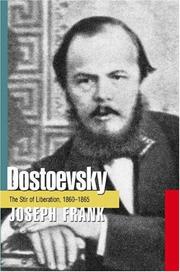
Frank's five-volume life, available in a one-volume abridgement, and the standard work. Read it for the mock execution, the Siberian prison years and the gambling — the specific events that turned a radical into the writer who wrote this book.
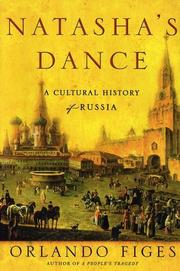
A cultural history of Russia that supplies the Slavophile-versus-Westerniser quarrel the Karamazov brothers are standing in for. Included because the novel treats that argument as everyday context and never explains it.

A short anthology of the religious passages with the scriptural material beside them. The Grand Inquisitor chapter is the most famous thing Dostoevsky wrote and it is an argument with the Gospels; this puts both texts in front of you before you meet it.
The critical apparatus
IntermediateArrive with a reading method and a reference for the novel's names, quotations and theology
▸ Study plan for this stage
Pace: Eight to ten weeks, with a specific instruction about the third book. Bakhtin is 333 pages of demanding theory — three to four weeks, and read the first two chapters closely and the rest at whatever pace they allow. Rowan Williams is 307 pages and considerably more approachable; three weeks. Terras'
- Polyphony, Bakhtin's term for what Dostoevsky does: a novel in which the author does not overrule his characters, so that competing positions are voiced at full strength rather than arranged around a thesis
- The consequence that matters most for Karamazov — Ivan's case against God is allowed to be genuinely strong, and the novel's refusal to settle the argument is design rather than evasion
- The dialogic word, and Bakhtin's distinction between a character who is an object of authorial knowledge and one who is a subject with a voice the author cannot overrule
- Carnival and the grotesque as Bakhtin's other contribution here, which explains the scandal scenes — the tavern, the monastery, the courtroom — that readers often find tonally baffling
- Williams reading the novels as theology rather than around it: not what Dostoevsky believed, but what the fiction itself does with belief
- Williams's account of Zosima's chapters, which is the clearest available explanation of what those fifty pages are for and why they are placed where they are — this is where most readers stall
- Active love, in Zosima's formulation, as the reply the novel offers to Ivan's accusation, and the fact that it is offered as practice rather than as counter-argument
- Terras as a line-by-line reference for names, diminutives, Church Slavonic, biblical quotation and allusion, keyed to the novel's chapters — consulted per chapter, never read through
- What does Bakhtin mean by polyphony, and what would a non-polyphonic novel about the same material look like?
- If Ivan's case is allowed to be genuinely strong, in what sense does the novel answer it at all? Bakhtin and Williams give different-shaped answers to this.
- Where does Bakhtin's theory overreach? He is describing Dostoevsky and generalising about the novel — the generalisation is more contested than the description.
- Williams reads Zosima's chapters as doing theological work rather than delivering a message. What is the difference, and can you state it precisely?
- Both critics insist the novel does not adjudicate between belief and unbelief. Is that a description of the book, or a preference of theirs? What in the text would settle it?
- Having a theory before reading a novel is a risk. What might Bakhtin make you miss?
- After Bakhtin's opening chapters, go back to Notes from Underground and reread ten pages with polyphony in mind. Testing the theory on a book you already know is the cheapest way to find out how much of it you believe.
- Write 400 words stating Ivan's case against God as strongly as you can, before reading the novel. You have enough from the previous stages. Keep it — you will compare it with Dostoevsky's version.
- From Williams, extract in one page what Zosima's chapters are supposed to be doing. Put the page inside the novel at book six. It is the section readers abandon and this is the intervention that prevents it.
- Skim Terras's introduction and one sample chapter entry now, so that consulting it during the novel is a habit rather than a decision. Then close it.
- Write down the three sentences you produced at the end of the first stage about Dostoevsky's method, and revise them with Bakhtin's vocabulary. The revision is what the theory bought you.
Next up: Everything is now in place — the earlier novels, the life, the theological context, a theory of the construction and a reference for the surface — which is exactly the state in which the novel becomes what it is rather than what defeats people.

The book that named what Dostoevsky does: a polyphonic novel in which the author does not overrule his characters, so Ivan's case against God is allowed to be genuinely strong. Read it before Karamazov and the novel's refusal to settle the argument reads as design.

Williams's Dostoevsky: Language, Faith and Fiction, a theologian reading the novels as theology rather than around it. The clearest account of what Zosima's chapters are doing, which is where most readers stall.
The line-by-line reference for the allusions, Russian names, Church Slavonic and biblical quotation, keyed to the novel's chapters. Keep it beside you and consult it per chapter; it is a lookup tool, not a book to read through.
The Brothers Karamazov
IntermediateRead the novel with the theological argument in view and the companion at hand
▸ Study plan for this stage
Pace: Three to five months, and treat any shorter plan with suspicion. The novel runs to around 870 pages and is divided into twelve books plus an epilogue, which is a natural unit — one book at a time, consulting Terras at the end of each. Fifteen to twenty pages a day finishes it in three months without
- The four brothers as four positions — Dmitri the sensualist, Ivan the intellect, Alyosha the novice, Smerdyakov the consequence — with the novel careful never to reduce any of them to the position they carry
- The patricide plot as the structure that holds the theology: the question of who killed the father is also the question of who is responsible for what they merely thought
- Ivan's rebellion, in which he returns his ticket rather than accept a harmony purchased with a child's suffering — the strongest statement of the problem of evil in any novel, and stated by Dostoevsky at full force on purpose
- The Grand Inquisitor as Ivan's poem rather than Dostoevsky's argument, and as a rewriting of the temptations in the wilderness you read in the second stage
- Book six on Zosima as the reply — offered as a life and a practice rather than as a counter-argument, which is why skipping it removes the answer and leaves the accusation standing
- Active love and the injunction that each is responsible for all, which is Zosima's formulation and the novel's alternative to Ivan's accounting
- Smerdyakov as the demonstration that ideas have consequences in other people's hands, and the most uncomfortable thing the novel does to Ivan
- The trial as a satire of legal reasoning and psychological expertise, in which everyone is plausible and the verdict is wrong — the novel's last statement about what argument can and cannot establish
- Compare Ivan's rebellion as Dostoevsky writes it with the version you wrote in the previous stage. What did he do that you did not?
- The Grand Inquisitor offers bread, mystery and authority in place of freedom. Is that offer a caricature, or does the novel let it stand as a serious proposal?
- How does book six answer book five? It does not argue back — describe what it does instead, and decide whether you find it an answer.
- Who killed Fyodor Pavlovich, and who is responsible? The novel separates these and the separation is its central moral claim.
- Bakhtin says the author does not overrule his characters. Does Dostoevsky keep to that here, or does he put a thumb on the scale for Zosima? Argue it from the text.
- At the end: has the novel settled the argument between Ivan and Alyosha? Answer for yourself, and note that a great many serious readers have answered both ways.
- Make the name list before you read a page: four brothers, the father, the servants, the women, with every diminutive. Twenty minutes, and it removes the single most common reason readers lose the thread.
- Read book five and book six consecutively with no gap, even if it costs a long evening. They are one unit split by a seam and reading them apart is how the reply gets lost.
- Consult Terras at the end of each of the twelve books rather than as you go. Mid-page lookups break the prose; end-of-book lookups build the ground under it.
- After the Grand Inquisitor, reread the temptation passages from the second stage. The chapter is an argument with a specific text and this is the only way to hear both sides of it.
- Write 500 words on whether book six answers book five. Then set it beside the 400 words you wrote before starting the novel. The distance between them is what the whole preparation was for.
- Having finished, go back to Notes from Underground and read part one again. Ivan is audible in it now in a way he was not fourteen books ago, and it is the cleanest demonstration available that this path was ordered correctly.
Next up: This is the end of the path. The obvious next step is Demons, which is the political novel this one grew out of and which reads completely differently once you know where Dostoevsky's argument with unbelief was going to end.

The destination. Read Pevear and Volokhonsky or Ignat Avsey if you can choose, keep a list of the names and their diminutives from the first chapter, and do not skip book six on Zosima — it is Dostoevsky's answer to the Grand Inquisitor, and skipping it removes the reply while leaving the accusation.
Discussion
Keep reading
Paths that share books, cover the same subject, or open a related topic.