The Western Canon: What to Actually Read, and in What Order
There is no official Western canon. The phrase now mostly names an argument — about whether a common core of great books exists, who assembled it, and what was left out — and the best-known defence of it is Harold Bloom's 1994 book, which puts Shakespeare at the centre and judges everything by aesthetic strangeness rather than moral or political usefulness. Bloom appended a list of hundreds of works that he later said his publisher wanted and he regretted; that list is why the canon is so often mistaken for a syllabus. The honest objection is not that these books are bad but that survival tracked access to leisure, patronage and printing presses, which is a fact about history rather than about literary merit, and Bloom's book does not really answer it. This path is deliberately finishable: the map first, then the prose, then the verse that needs a running start, and a companion volume where one genuinely helps.
The Map, and Two Ways In
IntermediateUnderstand what is being claimed and by whom, then read two canonical works that are actually entertaining, so the rest of the path starts from pleasure rather than duty.
▸ Study plan for this stage
Pace: Eight to ten weeks. Bloom's The Western Canon is 562 pages and should be read selectively — the opening chapters on his method, the Shakespeare chapter, and then the chapters on the writers you are about to read, saving the rest to return to. Three weeks. The Canterbury Tales runs to around 430 page
- That there is no official Western canon. The phrase names an argument — about whether a common core of great books exists, who assembled it, and what was left out — and Bloom's 1994 book is its best-known defence rather than its constitution
- Bloom's criterion: aesthetic strangeness. He judges a work by its originality and its resistance to assimilation, explicitly not by moral or political usefulness, and everything else in his book follows from that choice
- Shakespeare at the centre as the load-bearing claim. If Bloom is wrong about Shakespeare's uniqueness the whole structure loosens, which is why he spends so much of the book there
- The appended list of hundreds of works, which Bloom later said his publisher wanted and which he regretted — and which is why the canon is so persistently mistaken for a syllabus
- The honest objection, which is not that these books are bad but that survival tracked access to leisure, patronage and printing presses. That is a claim about history rather than about literary merit, and Bloom's book does not really answer it
- Bloom's own unevenness: excellent on individual books, weakest whenever he turns to his opponents. Knowing this in advance makes him considerably more useful
- The Canterbury Tales as a frame narrative in which the tellers are as interesting as the tales, and several of the tales are frankly obscene — the most immediately entertaining pre-modern work in English
- Hamlet as a play rather than a novel: the commonest way readers persuade themselves they dislike Shakespeare is by reading a script silently at prose speed
- What is Bloom's actual criterion for canonical status, and can you state it without using the word great?
- Bloom insists the canon has no moral or political function. What does he think it is for, and does his own book stay inside that limit?
- Take the objection that canon formation tracked access to patronage and print. What would Bloom say to it, and does he in fact say it anywhere in the book?
- Which of Chaucer's tellers is more interesting than their tale, and what is the frame narrative doing that a collection of stories could not?
- In Hamlet, what changes when you hear it rather than read it? Name two specific things.
- Before you go further: write one sentence on what you think the canon is. You will revise it twice on this path.
- Read Bloom's chapter on a writer you already know well before reading any of the others. It is the fastest way to calibrate how much to trust him, and the calibration is the point of putting him first.
- Read the General Prologue of The Canterbury Tales aloud in the original spelling, badly, once. Then read a modernised version. The exercise takes forty minutes and permanently changes your sense of what Middle English is.
- Watch a filmed Hamlet and read along with the text open. Note three places where a performance decision resolves an ambiguity the page leaves open.
- Copy Bloom's list of twenty-six writers onto a page and mark which you have read, which you have heard of, and which you have not. Then mark which of them a reader in 1850 or 1600 would have named. The list is more recent than it looks.
- Write 300 words on the strongest objection to Bloom's project, stated as he would have to answer it rather than as he caricatures it.
Next up: You now have a map you distrust in the right places and two primary works read for pleasure, which is exactly the footing needed for the long prose — where the argument stops being about the canon and becomes about specific books.

Twenty-six writers with Shakespeare at the centre, argued fiercely and often unfairly. Read it first as the map and as the position you are testing — Bloom is at his best on individual books and at his weakest whenever he turns to his opponents, and knowing that in advance makes him far more useful.
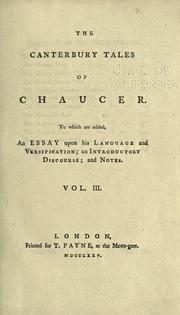
Pilgrims tell stories to pass the time, and several of them are filthy. The most immediately enjoyable pre-modern work in English and the right first primary text — use a facing-page or modernised edition without embarrassment, since the point at this stage is momentum.
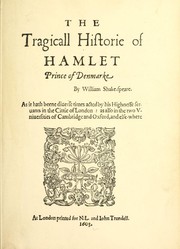
Bloom's whole argument stands or falls on Shakespeare, and Hamlet is where he places the centre of it. Read it aloud or alongside a filmed production; treating a play as a novel is the commonest way readers convince themselves they dislike Shakespeare.
The Great Prose
BeginnerRead four long prose works that reward the time, and be able to say what each one invented that later writers took for granted.
▸ Study plan for this stage
Pace: Six to eight months, and this is the stage where people abandon the project, so plan it honestly. Don Quixote is around 800 pages in an annotated edition and wants two months at fifteen pages a day — and the second half is better than the first, which is worth knowing before the first half tests you
- Don Quixote as the standard candidate for the first modern novel, and the specific innovations that claim rests on — a character who has read books, an author who appears inside his own fiction, and a second part in which the characters have read the first
- That the jokes depend on chivalric romances nobody has read since 1600, which is why a well-annotated edition is not optional here even though it is elsewhere
- Montaigne inventing the essay by writing about his kidney stones, his cat and his fear of dying — and inventing with it the idea that a private mind is a legitimate subject
- The essay as a form that thinks rather than argues, which is the thing later writers took from him and which is visible in almost every personal essay written since
- Middlemarch as the best novel about intelligent people making avoidable mistakes, and Eliot's free indirect style, which lets a narrator sit inside a character's self-justification and outside it at once
- Dorothea and Lydgate as two versions of the same trap, and Eliot's refusal to punish or rescue either in the way a lesser novel would
- Moby-Dick's structure of narrative interrupted by essays on cetology, rope, whiteness and God — the digressions are the book rather than an obstacle to it, even if you skim them first time
- The Melville revival as this path's clearest evidence that canons are made retrospectively: a commercial failure, forgotten for seventy years, then installed at the centre of American literature by twentieth-century critics who needed it there
- What exactly makes Don Quixote modern? Name three specific devices rather than gesturing at its influence.
- The second part of Don Quixote contains characters who have read the first part. What does that do, and why is it so hard to find an earlier example?
- Pick one Montaigne essay and describe its movement. Where does it start, where does it end, and does it get there by argument or by association?
- In Middlemarch, at what moment does the narrator most clearly know more than the character? Find the sentence and describe the technique.
- Moby-Dick failed and was forgotten for seventy years. What does that fact do to Bloom's claim that aesthetic strangeness selects for survival?
- Which of these four would you drop from a canon, and what would you defend it against? An answer that keeps all four has not tested anything.
- Read the first fifty pages of Don Quixote and the first fifty of Part Two back to back before continuing. The distance between them is the fastest demonstration of what Cervantes learned in the ten years between.
- Read three Montaigne essays and then write one of your own, 800 words, on a small private subject, in his manner. It is the only way to feel what the form is doing, and it takes an afternoon.
- In Middlemarch, mark every chapter epigraph. Eliot chose them and they constitute a running commentary; reading them as a sequence at the end is a genuine second book.
- Skim the cetology chapters of Moby-Dick on a first pass and then go back and read two of them properly. Decide, in writing, whether they belong. Both answers are respectable and the argument is the point.
- Add to a running one-page ledger: work, roughly when written, one line on what it invented that later writers took for granted. Four rows now, thirteen by the end of the path.
- Write 400 words on the claim that Moby-Dick's canonisation was a twentieth-century decision. Then apply the same analysis to one of the other three.
Next up: Long prose is a matter of stamina; verse is a matter of technique, and the next stage is mostly about acquiring the small set of practical habits that make four verse epics readable at all.

An old man reads too many chivalric romances and goes out to live one. Usually called the first modern novel and genuinely funny, though the second half is better than the first — read the annotated or heavily-noted editions this catalogue tends to return, because the jokes depend on books nobody has read since 1600.

The man who invented the essay by writing about his kidney stones, his cat and his fear of dying. Not a book to read straight through — take three or four essays at a time. Montaigne is the canon's most companionable figure and the one most likely to keep you reading the rest.
Provincial English lives, and the best novel ever written about intelligent people making avoidable mistakes. Placed here because it is the easiest long book on this path and the strongest evidence that the canon's nineteenth-century core is not an obligation.
A whaling voyage interrupted constantly by essays on cetology, rope, whiteness and God. Commercially a failure, forgotten for seventy years, then installed at the centre of American literature — the clearest case on this path of a canon being made retrospectively. Skim the cetology chapters on a first reading; almost everyone does.
The Verse That Needs a Running Start
BeginnerTake on four works in verse and learn the practical technique for reading them — a good modern translation, a short daily portion, and notes you actually consult.
▸ Study plan for this stage
Pace: Six to seven months, and the scheduling here is the technique. The Divine Comedy is a hundred short cantos and is the easiest verse epic to plan — one canto a day finishes it in a little over three months, and that is genuinely the best way to do it. Paradise Lost is 333 pages across twelve books; s
- The practical method for verse epic, which is the real content of this stage: a good modern translation, a short fixed daily portion, and notes you actually consult rather than aspire to
- Dante's structure — three canticles, a hundred cantos, terza rima — and why the small unit makes it the most schedulable long poem in the tradition
- That translation choice matters more for Dante than for anything else here: a modern verse translation with facing notes is a different book from a Victorian one, and the difference will decide whether you finish
- Dante's habit of putting real contemporaries in Hell by name, which is invisible without notes and is half the poem's original charge
- Milton's syntax as the actual difficulty — sentences running twenty lines in Latin word order, which resolves into rhythm once heard and stays opaque if only seen
- Satan as Paradise Lost's most compelling voice, and the long argument about whether that is Milton's failure, his design, or a fact about how persuasion works
- Faust Part One as a complete and coherent tragedy, and Part Two as a strange allegorical sprawl that many readers abandon — reading Part One alone is a legitimate outcome and should be named rather than concealed
- King Lear as the play Bloom ranks above Hamlet and the one that most resists being enjoyed, which makes it the strongest available test of what the canon is supposed to be for
- Read one canto of Dante in two different translations. What changes, and which would you finish the poem in?
- Whom does Dante place in Hell that his first readers would have known personally? What does that do to the poem's tone that a modern reader loses without notes?
- Is Satan the hero of Paradise Lost? Argue both sides from the text. This is one of the oldest live disputes in English criticism and it has not been settled.
- After reading Milton aloud for a week, has the syntax become easier? Describe what changed — it is a real and describable process.
- Faust Part Two loses most readers. Read fifty pages of it and say honestly whether you want to continue. Either answer is legitimate; the exercise is in deciding rather than drifting.
- Bloom puts King Lear above Hamlet. Having read both, do you? What criterion are you using, and is it Bloom's?
- Set a fixed daily canto for Dante and keep it, including on the days you do not want to. A hundred days is the plan and the plan is the reason people finish this poem and not others.
- Read the first two books of Paradise Lost aloud, slowly, over several evenings. If the syntax has not started to resolve by the end of book two, read book one aloud again rather than pressing on — it does resolve, and pressing on is how readers convince themselves it does not.
- Take one twenty-line Milton sentence and rewrite it in plain modern English word order. Then read the original again. The exercise takes ten minutes and permanently improves your reading of him.
- Keep a list of the people Dante meets in each realm and what they are being punished or rewarded for. By Paradiso it is several pages and it is the only way to hold the poem's moral architecture.
- Read King Lear immediately after finishing Milton, and note whether the density feels manageable. Then write 300 words on why this play is harder to enjoy than Hamlet and whether that is a fault in the play or in the criterion of enjoyment.
- Add four rows to the ledger.
Next up: You now have the practical habit that makes a difficult book finishable — small portions, real notes, a fixed plan — which is precisely the habit the last stage formalises into a method.
Hell, Purgatory and Paradise, in a hundred short cantos. Structurally the easiest verse epic to schedule — one canto a day finishes it in three months — and the one where the translation matters most, so choose a modern verse translation with facing notes rather than a Victorian one.
The fall of man, with Satan as its most compelling voice. The syntax is the difficulty and it is a real one: Milton's sentences run for twenty lines in Latin word order. Read the first two books aloud until the rhythm arrives, and it will.
The scholar's bargain with Mephistopheles. Part One is a coherent tragedy and Part Two is a strange, sprawling allegory that many readers abandon — read Part One as a complete work, and treat Part Two as optional rather than pretending otherwise.
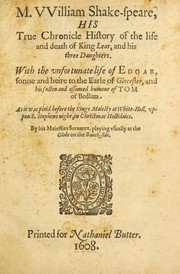
The play Bloom puts above Hamlet and the one that most resists being enjoyed. Read it last of the verse: after Milton and Dante the density is manageable, and it is the strongest single answer to the question of what the canon is supposed to be for.
The Modern End of It, With a Companion
BeginnerFinish with the canon's hardest modern book, using the scholarly apparatus rather than pretending it is unnecessary.
▸ Study plan for this stage
Pace: Three to four months, and the schedule is unusually specific because it is the whole reason this stage works. Ulysses is 736 pages in eighteen episodes; read one episode at a time, at whatever pace it takes, and read the corresponding section of Blamires's guide immediately after each episode rather
- Ulysses as one Dublin day in eighteen episodes, each written in a different style — the styles are the book's real subject and the plot is deliberately small
- The honest distribution of difficulty: three or four episodes are forbidding and most of the rest are funny and human, which is the opposite of the book's reputation and the single most useful thing to know before starting
- The Homeric parallel as scaffolding rather than a puzzle to be solved — knowing which episode corresponds to which adventure helps, and reading Ulysses as a code to be cracked does not
- Bloom and Stephen as the book's two centres, and Molly's closing episode as the third, with the novel's warmth concentrated in exactly the places the reputation ignores
- Blamires's guide telling you what is literally happening, page by page, which is the intervention that turns an abandoned book into a finished one
- The order — episode first, guide second — because reading the guide first substitutes a summary for the experience, and reading it after supplies the ground the style was standing on
- That a companion volume is not cheating, and that the scholarly apparatus around difficult books is one of the tradition's genuine goods rather than an admission of defeat
- The general lesson this path ends on: the canon is finishable with method, and the method is small daily portions, an honest map, and the willingness to use notes
- Which episodes did you find hardest, and what was the difficulty — style, reference, or simply not knowing what was happening? The three call for different responses.
- What does the Homeric parallel actually contribute? Test it: pick an episode and ask what you would lose by not knowing its Odyssean counterpart.
- Ulysses has a reputation for coldness and difficulty. Having read it, is that fair, and which parts of the book produced the reputation?
- Where did Blamires help most, and was there an episode where consulting him diminished the reading? Both are worth noticing.
- Bloom the critic puts Shakespeare at the centre of the canon and Joyce near the end of it. Having read both, does the line between them look like a tradition or like a critic's construction?
- Final version: what is the Western canon? Write it with your ledger in front of you, and note which of the thirteen books moved you most.
- Read episode one of Ulysses, then Blamires's section on it, then episode one again. Do this once, at the start, to establish the rhythm. After that, one pass plus the guide is enough.
- Keep a one-line note per episode: what style, what happens, what you thought. Eighteen lines. It is the whole book in a page and it is the thing you will still have in ten years.
- When you reach an episode you cannot follow, read Blamires first for that episode only and then read it. Breaking your own rule deliberately, once, for a specific reason, is better than abandoning the book — and knowing when to break it is the last thing this path teaches.
- Complete the thirteen-row ledger. Then mark which works you would defend to someone who thinks the canon is an artefact of who had access to printing presses, and which you would concede.
- Write 1,000 words answering the question the path was built around: is there a Western canon, and what is it for? Cite specific books. Compare it with the one-sentence answer you wrote in the first stage.
- Choose the one work here you would give someone who has read none of them, and defend it against Middlemarch, which is the sensible default. A reasoned alternative is proof you read the shelf rather than the argument about it.
Next up: This is the end of the path. The natural next step is outward rather than onward — read the books the canon debate says were left out, now that you can compare them against the tradition rather than against its reputation.
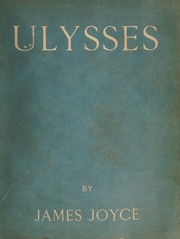
One Dublin day, in eighteen episodes each written in a different style. It is the book most often bought and least often finished, and the honest advice is that the difficulty is real and unevenly distributed — three or four episodes are genuinely forbidding and the rest are comic and warm.

A page-by-page guide that tells you what is literally happening in Ulysses, episode by episode. Read the corresponding section immediately after each episode rather than before — this is the single practical intervention that turns Ulysses from an abandoned book into a finished one, and it is why this path ends here rather than defeated.
Discussion
Keep reading
Paths that share books, cover the same subject, or open a related topic.