Start with Nathaniel Philbrick's Why read Moby-Dick?. It is about a hundred and thirty pages, it is a work of enthusiasm rather than scholarship, and it exists precisely to answer the question most people are silently asking. Read it in one sitting and you will approach Moby Dick — published as Moby-Dick; or, The Whale, and catalogued here without its hyphen — wanting to, which is more than half the problem solved.
Be honest about what makes the novel hard, because it is not the prose. Melville's sentences are grand but rarely obscure. The difficulty is structural: a gripping first-person opening gives way to chapters on whale taxonomy, rope, the colour white, and the anatomy of a whale's head, and the narrator himself half-disappears for long stretches. If you need continuous forward motion from a novel, you will fight this one, and there is no version of it with the digressions removed that is still the book.
The world the book comes out of
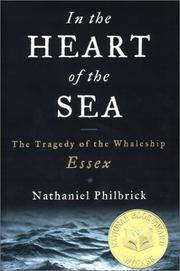
Two histories make the whaling chapters land as fact rather than as detour. Philbrick's In the Heart of the Sea tells the story of the Essex, the Nantucket whaleship stove and sunk by a sperm whale, whose survivors resorted to cannibalism in open boats — the real disaster Melville knew about and used for his ending. Two years before the mast is Richard Henry Dana's account of his own voyage as an ordinary seaman, the book that convinced a generation that life before the mast was worth writing about; Melville admired it and wrote in its wake.
Ahab's Rolling Sea is the modern natural-history companion. Richard J. King goes through the novel's marine biology and oceanography and reports what Melville got right, what he got wrong, and what has changed in the sea since. It is the book that makes the cetology chapters interesting instead of skippable.
Melville himself, cheaply
Typee was Melville's first book and his only real commercial success, a South Seas narrative that sold on the promise of cannibals and beautiful islanders. It shows you the writer the public wanted, which is context for the commercial catastrophe the whale book became. Bartleby, the Scrivener is the short story, written after the novel and readable in an hour; it is the cheapest possible sample of the late, strange, funny-bleak Melville. Andrew Delbanco's Melville is the standard modern biography and the best single account of the American 1850s the novel was written into.
Then there is King Lear. Melville read Shakespeare hard in the years just before writing, and Ahab is assembled out of Lear and Macbeth — the raging monarch, the ruined authority, the soliloquies delivered to a crew who cannot answer. Read the play, or reread it, and Ahab's speeches stop sounding overwrought and start sounding deliberate.
The scholarly tool
The trying-out of Moby-Dick is Howard P. Vincent's source study: a systematic account of the whaling books and voyage narratives Melville read and, frequently, lifted from. It is scholarship from an earlier era and reads like it. Use it as a reference rather than as a book to read through — go to it when you want to know where a chapter came from — and do not let it be your introduction to the novel.
Reading it
Take the narrative chapters at speed and the digressions at leisure. Read the cetology chapters rather than skipping them, but read them as essays, at a chapter or two a day, without pressure to remember anything. Many readers find the book turns for them somewhere in the middle third, when the digressions and the hunt start to comment on each other. If it has not turned for you by then, put it down; it will still be there in ten years, and people who love it often failed at it twice first.
Readers preparing for one difficult classic usually have a second on the list — the Karamazov run-up is built the same way.
Follow the full ordered path here: What to Read Before Moby-Dick: The Run-Up to Melville's Whale, in Order.