Irish Literature: Best Books to Read, in Order
This curriculum moves through Irish literature's towering canonical figures before opening into the vibrant modern scene, giving an intermediate reader the cultural and stylistic grounding needed to appreciate each successive layer of difficulty and allusion. Starting with Yeats's poetry and Synge's drama builds the mythic and vernacular Irish idiom; Joyce and Beckett then push language to its limits; and a final stage in contemporary voices shows how those traditions are being inherited, challenged, and reinvented today.
The Irish Idiom — Myth, Land & Voice
IntermediateAbsorb the mythological, rural, and vernacular foundations of Irish literary identity that every later writer responds to.
▸ Study plan for this stage
Pace: 8–10 weeks, ~40–50 pages/day (Yeats: 4–5 weeks; Synge: 3–4 weeks, with overlap for thematic synthesis)
- Yeats's use of Irish mythology (Cuchulainn, Oisín, the Sidhe) as a vehicle for exploring identity, desire, and historical trauma
- The tension between romantic idealization and modernist skepticism in Yeats's treatment of Irish legend and the Irish past
- Synge's linguistic innovation: the Anglo-Irish dialect as a literary tool that captures rural consciousness and defamiliarizes English
- The role of the Irish landscape (bog, mountain, western seacoast) as a character and symbol in both poets' work
- Vernacular speech and oral tradition as sources of authenticity and resistance to colonial literary norms
- The 'playboy' archetype: how Synge uses folk comedy and transgression to expose social hypocrisy and desire in rural Irish life
- Yeats's evolution from Celtic Revival romanticism toward modernist complexity across his collected work
- The relationship between myth, peasant life, and national identity in early 20th-century Irish literature
- How does Yeats use specific Irish myths (such as Cuchulainn or Oisín) across different poems, and what does his treatment of these myths reveal about his changing views on Irish identity and modernity?
- What is the significance of Synge's use of Anglo-Irish dialect in *The Playboy of the Western World*, and how does it differ from standard English theatrical language?
- How do both Yeats and Synge use the Irish landscape and rural setting to explore themes of desire, violence, and social transgression?
- What is the relationship between oral tradition, folk speech, and literary authenticity in these texts, and how do the authors position themselves toward peasant culture?
- How does *The Playboy* function as both comedy and tragedy, and what does Christy Mahon's journey reveal about the gap between myth-making and reality in Irish rural society?
- How do Yeats's poems respond to historical events and cultural anxieties specific to Ireland (the Troubles, the Easter Rising, Irish independence), and what role does myth play in that response?
- Create a myth map: track 2–3 Irish myths (Cuchulainn, Oisín, Deirdre) across Yeats's *Collected Poems*. Note which poems invoke them, how they're characterized, and what shifts occur across Yeats's career.
- Dialect close-reading: select 3–4 scenes from *The Playboy* and annotate Synge's use of Anglo-Irish syntax, vocabulary, and rhythm. Compare one scene to standard English dialogue to identify what the dialect conveys emotionally and socially.
- Landscape inventory: collect 10–15 images of Irish geography (bog, mountain, sea, stone) from both texts. Write a one-page reflection on how the physical landscape functions symbolically in each author's work.
- Oral performance: memorize and perform aloud 2–3 passages from Yeats (e.g., 'The Second Coming,' 'Leda and the Swan') and 1–2 monologues from *The Playboy*. Note how sound, rhythm, and vernacular speech shape meaning.
- Comparative character study: write a 2–3 page analysis of how Yeats's mythic heroes (Cuchulainn, Oisín) compare to Synge's Christy Mahon—what does each author value in the figure of the transgressive or legendary man?
- Historical annotation: read 3–4 Yeats poems that reference specific Irish historical moments (e.g., 'Easter 1916,' 'The Second Coming'). Research the historical context and write brief notes on how myth and history interact in each poem.
Next up: This stage establishes the mythological, linguistic, and landscape vocabulary that later Irish modernists and postcolonial writers inherit, critique, or transform—preparing you to see how subsequent authors either deepen these foundations or deliberately dismantle them.
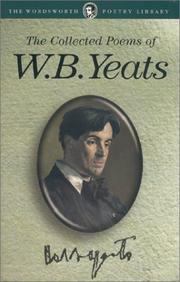
Yeats is the unavoidable starting point: his symbols, myths, and cadences echo through virtually every Irish writer who follows. Reading him first gives you the cultural and linguistic vocabulary the whole tradition builds on.
Synge's masterpiece captures the raw, lyrical energy of rural Irish speech and the Abbey Theatre tradition. It bridges Yeats's mythic Ireland and the realist social drama that Joyce would soon react against.
Joyce — From Story to Stream
IntermediateFollow Joyce's arc from accessible realism to modernist interiority, building the stamina and interpretive skill needed for Ulysses.
▸ Study plan for this stage
Pace: 12–14 weeks, ~40–50 pages/day (with 2–3 days per week for reflection and exercises). Dubliners (2–3 weeks), A Portrait (4–5 weeks), Ulysses (5–6 weeks).
- Epiphany as a structural and thematic device: how Joyce uses sudden moments of revelation in Dubliners to expose paralysis and self-awareness
- Stream of consciousness and interior monologue: the progression from conventional third-person narration in Dubliners to free indirect discourse in A Portrait to full interior monologue in Ulysses
- Bildungsroman and artistic development: how A Portrait traces Stephen Dedalus's intellectual and spiritual formation, preparing the reader for his reappearance in Ulysses
- Modernist fragmentation and non-linear narrative: how Ulysses abandons traditional plot structure in favor of multiple perspectives, time shifts, and stylistic experimentation
- Dublin as character and setting: the recurring geography, social hierarchies, and cultural paralysis that unify all three works
- Language as subject: Joyce's increasing linguistic playfulness, from realistic dialogue in Dubliners to neologisms and multilingual puns in Ulysses
- Myth and correspondence: how Ulysses maps Homer's Odyssey onto a single day in Dublin, creating layers of meaning through parallel structure
- Consciousness and time: how Joyce moves from external action to the representation of thought itself, collapsing clock time into psychological time
- What is an epiphany in Joyce's Dubliners, and how does it function as both a moment of insight and a moment of paralysis for his characters?
- How does Joyce's narrative technique evolve across the three books, and what does each shift in technique reveal about the protagonist's inner life?
- Trace Stephen Dedalus's intellectual and spiritual journey in A Portrait: what are his key crises, and how do they prepare him for the events of Ulysses?
- How does Ulysses use the structure of Homer's Odyssey, and what is the significance of mapping an epic journey onto a single day in Dublin?
- What role does Dublin itself play across all three works, and how does Joyce's representation of the city change from Dubliners to Ulysses?
- How does Joyce's use of language—from realistic dialogue to neologisms and multilingual wordplay—reflect his modernist ambitions and the evolution of consciousness in his work?
- After finishing Dubliners, select three stories and map the moment of epiphany in each. Write a one-page analysis of how the epiphany reveals both self-awareness and paralysis in the protagonist.
- Create a parallel-text exercise: choose one passage from Dubliners (third-person narration) and one from A Portrait (free indirect discourse) dealing with similar emotional content. Annotate the differences in how interiority is conveyed.
- Track Stephen Dedalus across A Portrait and Ulysses: create a character dossier noting his intellectual positions, spiritual crises, and key relationships in each work. How consistent is he? How has he changed?
- Read the Telemachus, Nestor, and Proteus episodes of Ulysses (the opening chapters featuring Stephen). Then reread the final pages of A Portrait. Write a short essay on narrative continuity and discontinuity.
- Choose one episode from Ulysses (e.g., Hades, Lestrygonians, Circe) and identify its Homeric parallel. Create an annotated chart showing how Joyce's modern scenes correspond to and diverge from Homer's epic.
- Conduct a close reading of five passages across all three works that deal with Dublin geography, religion, or social constraint. How does Joyce's treatment of these themes deepen and complicate from Dubliners to Ulysses?
Next up: This stage equips you with the interpretive flexibility, historical context, and stylistic literacy to engage with Joyce's later experimental works (Finnegans Wake) and to understand how modernism transformed narrative itself.

Joyce's short-story collection is the ideal entry point: precise, realist, and emotionally devastating. Its portraits of paralysis and epiphany establish the Dublin world and the ironic voice that Ulysses will explode.
The semi-autobiographical novel traces Stephen Dedalus's consciousness from childhood to artistic awakening, introducing Joyce's stream-of-consciousness technique at a manageable scale before Ulysses.
The summit of Irish modernism and one of the greatest novels in any language. Having read Dubliners and Portrait, you now have the Dublin geography, the characters, and the stylistic confidence to take it on.
Beckett — Language at the Edge
ExpertUnderstand how Beckett strips language and narrative to their bare bones, and how his work represents both a continuation of and a radical break from the Irish tradition.

Beckett's first published novel is his most accessible and most overtly Irish, full of dark comedy and philosophical play. It eases you into his sensibility before the austerity of his later work.

The defining work of the Theatre of the Absurd. Reading it after Joyce reveals how Beckett inherits and then demolishes the modernist project, reducing drama to pure waiting, language, and vaudeville.
The first volume of Beckett's great prose trilogy pushes his minimalist vision to its furthest point in fiction. It rewards the reader who has already wrestled with Joyce's late style.
Heaney & the Lyric Conscience
IntermediateEngage with Seamus Heaney's poetry as a meditation on landscape, history, violence, and the responsibility of the poet — a crucial bridge between the canonical tradition and contemporary Irish writing.
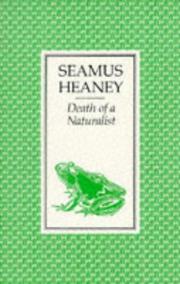
Heaney's debut collection grounds his entire poetic project in the soil, sounds, and community of rural Ulster. Starting here lets you trace his development and understand what he is building toward.
Heaney's most politically charged collection uses bog bodies and Norse myth to confront the Troubles. It is his most debated and essential book, showing how the lyric tradition can bear the weight of history.
Modern Irish Writing — Inheritance & Reinvention
IntermediateSee how contemporary Irish writers — in fiction, memoir, and poetry — absorb, argue with, and expand the tradition you have now deeply studied.
▸ Study plan for this stage
Pace: 4–5 weeks, ~40–50 pages/day. Week 1–2: *The Butcher Boy* (200 pages); Week 3: transition & reflection (5–7 days); Week 4–5: *Normal People* (480 pages)
- Narrative unreliability and fractured consciousness: how McCabe and Rooney use voice and perspective to destabilize the reader's trust and mirror psychological fragmentation
- Linguistic innovation as cultural inheritance: how both writers repurpose Irish vernacular, slang, and speech patterns to challenge literary convention and claim new territory
- The body as text: how McCabe's grotesque physicality and Rooney's minimalist bodily description both interrogate embodiment, class, and social belonging
- Intimate realism and the domestic as political: how both writers locate large historical and social forces (violence, class, gender, sexuality) within private relationships and domestic spaces
- Argument with the past: how McCabe's dark comedy and Rooney's cool detachment each represent different strategies for inheriting and revising Irish literary tradition
- Desire, power, and asymmetry: how both texts explore unequal relationships—McCabe through madness and violence, Rooney through emotional withholding and class difference
- How does Francie Brady's unreliable narration in *The Butcher Boy* function as both a formal technique and a thematic exploration of trauma and mental illness? What does McCabe gain by refusing to clearly distinguish Francie's reality from his delusion?
- Compare the narrative voices of *The Butcher Boy* and *Normal People*: how do McCabe's baroque, digressive monologue and Rooney's spare, fragmented third-person narration each represent different approaches to representing interiority and Irish identity?
- How do both texts use language—dialect, slang, contemporary speech—to claim literary authority and challenge the formal conventions of earlier Irish literature?
- What role does class play in each novel? How does McCabe's Francie navigate class anxiety and social exclusion differently from how Marianne and Connell navigate class difference in *Normal People*?
- How does each writer represent violence, sexuality, or bodily experience? What does the contrast between McCabe's grotesque physicality and Rooney's minimalism reveal about different strategies for writing the body in contemporary Irish literature?
- In what ways does each novel 'argue with' or revise the Irish literary tradition you studied in earlier stages? What does each writer reject, and what do they preserve or transform?
- Close-read 2–3 passages from *The Butcher Boy* (e.g., the opening monologue, a scene with Francie's mother, the climactic violence) and annotate them for narrative unreliability: mark where Francie's perception seems distorted, where the reader cannot trust his account, and where McCabe's irony operates. Write a 300-word reflection on how unreliability functions as both form and content.
- Track Marianne and Connell's power dynamics across 3–4 key scenes in *Normal People* (e.g., their first conversation, a sexual encounter, a moment of emotional distance). Create a chart showing who holds power in each moment and how Rooney signals this through dialogue, body language, and narrative distance. Write a 250-word analysis of how power shifts between them.
- Collect 10–15 examples of distinctive speech, slang, or dialect from each novel (e.g., Francie's malapropisms and Irish colloquialisms in *The Butcher Boy*; Connell's and Marianne's contemporary Irish speech in *Normal People*). Organize them by effect (comic, alienating, intimate, etc.) and write a 400-word essay on how each writer uses language to establish voice and claim literary territory.
- Write two short scenes (300–400 words each)—one in McCabe's baroque, digressive style (inspired by *The Butcher Boy*) and one in Rooney's spare, fragmented style (inspired by *Normal People*)—depicting the same moment of social awkwardness or intimate tension. Reflect on what each style allows you to reveal or conceal about a character's interiority.
- Create a genealogy: identify 2–3 moments in each novel where the writer seems to be in dialogue with, revising, or arguing against earlier Irish literary traditions (e.g., the Bildungsroman, the representation of rural Ireland, the treatment of sexuality or violence). Write a 500-word essay titled 'Inheritance and Argument' that traces how McCabe and Rooney position themselves within and against t
- Comparative character study: write dual character portraits of Francie Brady and Marianne Sheridan (or Connell Waldron), focusing on how each writer represents a young person's struggle with belonging, desire, and social alienation. How do their narrative techniques shape our sympathy or distance from each character?
Next up: This stage has equipped you to recognize how contemporary Irish writers absorb, transform, and argue with literary tradition through formal innovation and intimate realism; the next stage will likely deepen your understanding of how these strategies extend into other genres, regions, or historical moments within Irish literature, or how they connect to broader transnational literary conversations.
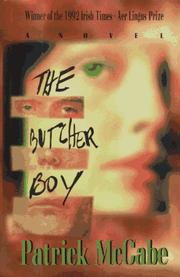
McCabe's darkly comic, disturbing novel of a boy's disintegrating mind in 1960s Ireland shows the Gothic underside of the national story and the influence of both Joyce's interior monologue and Beckett's black humour.

Rooney's internationally celebrated novel represents the newest generation of Irish fiction: psychologically precise, socially aware, and in quiet dialogue with the realist tradition of Dubliners. It closes the curriculum by showing the tradition fully alive.
Discussion
Keep reading
Paths that share books, cover the same subject, or open a related topic.