What to Read Before Moby-Dick: The Run-Up to Melville's Whale, in Order
Moby-Dick defeats first attempts for a specific reason: it stops being a novel around chapter thirty-two and becomes a treatise on whales, and readers who did not expect that assume they have lost the plot. This path is not a tour of Melville's fiction; it is the run-up that makes the whaling chapters interesting instead of an obstacle, and the novel goes last. If you want a sea adventure with a continuous story, be honest with yourself now — the digressions are the book, not a flaw in it.
Find out what you are signing up for
BeginnerKnow in advance what kind of book this is and why its strangest parts are deliberate
▸ Study plan for this stage
Pace: 4-5 days — 138 pages of very short chapters, comfortably a chapter or two per sitting
- Moby-Dick is not a continuous adventure novel: the narrative largely suspends itself after the Pequod sails and the digressions become the book
- Philbrick's core case in Why Read Moby-Dick? — that the encyclopaedic chapters are the design, not a failure of editing
- What a first reader should expect structurally: short chapters, abrupt genre shifts, sermons, stage directions, taxonomy
- The difference between reading for plot and reading for accumulation, and choosing the second before you start
- Philbrick's habit of quoting a single sentence and unpacking it, which models the close-reading pace the novel rewards
- Permission as a practical reading tool: knowing the whale-anatomy chapters are legitimate removes the urge to skip them
- What does Philbrick claim the digressive chapters are doing, and does he demonstrate it or assert it?
- Which of Philbrick's arguments would still hold if you disliked the novel — that is, which are about the book rather than about enthusiasm?
- What kind of reader does Philbrick assume, and where does that assumption shape what he chooses to explain?
- Having read this, what specifically do you now expect to happen around chapter thirty-two of the novel?
- Does knowing the shape of Moby-Dick in advance cost you anything as a first reader?
- Write a 150-word statement of what you now expect Moby-Dick to be, and seal it — you will check it against the real thing in the final stage.
- Copy out the three passages Philbrick quotes that most interest you, with a sentence each on why; this becomes your first checklist when you reach them in the novel.
- List the specific reasons Philbrick gives for readers abandoning the book, and mark which apply to you.
- Summarise Philbrick's case for the cetology chapters in 200 words without using the word 'symbolic'.
Next up: You now know what shape the book is; next you learn the real whaling world it is describing, so the technical chapters read as reportage.

A hundred and thirty pages of short chapters arguing the case, written for people who have bounced off the novel. It tells you what to expect from the structure without spoiling it, which is exactly the intervention most first readers need.
The real world the novel is built on
BeginnerUnderstand nineteenth-century whaling and the actual disaster behind the ending, so the technical chapters read as reportage rather than filler
▸ Study plan for this stage
Pace: 6-7 weeks, ~25 pages/day across roughly 1,170 pages; keep Ahab's Rolling Sea for dipping rather than straight reading
- The Essex, rammed and sunk by a sperm whale, as the documented disaster behind the novel's ending — history first, symbolism second
- What actually happened to the Essex survivors afterwards, and why Melville needed only the sinking
- Shipboard hierarchy and vocabulary from Dana's own voyage as a common sailor — the working knowledge Moby-Dick assumes and never explains
- Dana's book as one Melville read and admired, which makes it a source rather than merely a parallel
- Richard J. King's chapter-by-chapter natural history: where Melville's cetology is accurate, where it is wrong, and where it is deliberately doing something other than science
- Whaling as an industry — oil, lays and shares, voyage economics — rather than as an adventure setting
- The distinction between a technical chapter that is filler and one that is reportage, and how having the facts changes which you are reading
- After In the Heart of the Sea, what did Melville take from the Essex and what did he leave behind?
- Which parts of Dana's shipboard world does Moby-Dick assume you already know? Make a list before you start the novel.
- King documents Melville's factual errors about whales. Does an error damage the chapter it appears in, and does the answer differ chapter by chapter?
- What do the economics of a whaling voyage — the lay system, the years at sea, the value of oil — explain about the Pequod's crew?
- Dana wrote as a sailor and Philbrick as a historian. How does that change what each is able to notice?
- Which of these three books do you expect to be most useful while actually reading the novel, and why?
- Build a one-page glossary of ship parts, ranks and whaling terms from Dana — forecastle, mate, try-works, lay — and keep it beside you for the final stage.
- Write 250 words on what changes in the Essex story between the historical record in Philbrick and the ending Melville needed.
- Use Ahab's Rolling Sea to check three specific claims Melville makes about sperm whales, and note King's verdict on each in a sentence.
- Sketch the economics of one voyage from Dana and Philbrick together: crew size, duration, expected return, and each hand's share.
- Read King's treatment of one natural-history topic and write a paragraph on how it would change your reading of the corresponding chapter of the novel.
Next up: With the industry and the disaster in hand, the next question is narrower and more personal — whether you can live with Melville's sentences.
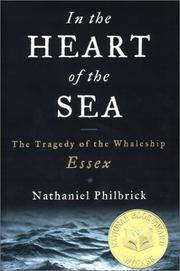
The wreck of the whaleship Essex, rammed and sunk by a sperm whale in 1820, is the true story Melville built his ending from. Reading it first makes the ending land as history rather than as symbolism, and it is a gripping narrative in its own right.

The best-known first-hand account of life as a common sailor from the same decade, and a book Melville read and admired. It supplies the shipboard vocabulary and hierarchy that Moby-Dick assumes and never explains.

A natural history of the novel: what Melville got right and wrong about whales, currents and sea life, chapter by chapter. This is the book that converts the cetology chapters from tedium into the most interesting part of the voyage.
Melville himself, in small doses
IntermediateTest whether you can live with Melville's prose, and learn the life that produced it, before committing six hundred pages
▸ Study plan for this stage
Pace: 5-6 weeks, ~25 pages/day across roughly 850 pages; read only Delbanco's chapters up to 1851 for now
- Typee as straightforward narrative and an early bestseller, which makes it the fair test of whether Melville's prose suits you before it turns baroque
- The gap between the popular adventure writer of Typee and the author of an unsellable metaphysical epic five years later
- Bartleby's deadpan strangeness as a fifty-page diagnostic: delight here reliably predicts delight in the whale, irritation predicts the opposite
- 'I would prefer not to' as a refusal that the story declines to explain, and Melville's willingness to leave a centre empty
- Delbanco's account of the Hawthorne friendship, the reading, and the pressures on Melville during the composition period
- Reading a biography selectively and by design — stopping at 1851 so the later collapse does not colour a first reading of the novel
- Deserting ship in the Marquesas as lived material, and how much of Typee is experience versus construction
- Did you enjoy Typee's sentences? Answer concretely, with two passages, before deciding anything about the novel.
- What does Bartleby refuse, and does the story ever suggest why? What is gained by leaving it unexplained?
- Delbanco explains how a commercial writer produced a commercially fatal book. What is his central explanation, and how well evidenced is it?
- What in Typee is already recognisably the writer who would write Moby-Dick, and what is not there yet at all?
- Why stop the biography at 1851, and what would you lose by reading on now?
- Between Typee and Bartleby, which is the better predictor of your response to the novel, and why?
- Read one page of Typee aloud and one page of Bartleby aloud, then write 200 words on the difference in rhythm and what each demands from you.
- Write a 150-word verdict on whether you actually like this prose. Be honest — this is the decision point of the whole path.
- From Delbanco's pre-1851 chapters, list the five events or influences he treats as most decisive for Moby-Dick, with a sentence each.
- Summarise Bartleby's plot in 100 words, then write 100 more on why the summary makes the story sound like nothing.
- Mark the point in Typee where the narrative stops moving and starts describing; note whether you minded.
Next up: Prose and biography settled, the last preparation is the literary frame — the Shakespeare and the scholarship that make Ahab's soliloquies legible.
His first book and a bestseller, drawn from deserting ship in the Marquesas. It is straightforward narrative, which makes it the fair way to find out whether you like his sentences before they get baroque.

Fifty pages, written just after Moby-Dick, and the standard short test of whether Melville's particular deadpan strangeness works on you. If Bartleby delights you, the whale will; if it merely annoys you, that is useful information.
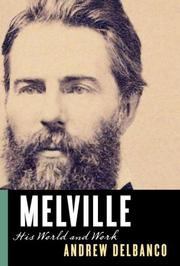
The modern one-volume biography, and the clearest account of why a popular adventure writer suddenly produced an unsellable metaphysical epic. Read the chapters up to 1851 before starting the novel and save the rest.
The scaffolding beneath Ahab
IntermediateRecognize the Shakespearean and critical frames that explain Ahab's soliloquies and the book's sudden shifts into stage directions
▸ Study plan for this stage
Pace: 5-6 weeks — King Lear over two weeks with a good annotated text, Vincent read as a companion at ~25 pages/day
- Ahab built on Lear: a commanding figure whose authority survives his judgement, raging outward at something that cannot answer
- Melville's obsessive Shakespeare reading during composition, and the direct traces of it in the novel's diction
- Chapters set out as drama, with stage directions and soliloquies, which read as ambition rather than loss of control once you know the source
- Lear's storm and fool as the model for a scene where a man addresses the elements and is attended by an inferior who sees more clearly
- Vincent's chapter-by-chapter account of how the book was assembled from whaling manuals, sermons and Shakespeare
- Source study as reading aid: knowing a chapter is worked up from a manual changes what you look for in it
- The limits of an older critical study — Vincent's scholarship predates much later work, so use it as a companion rather than a verdict
- Which specific features of Ahab come from Lear, and which come from somewhere else entirely?
- Why does Melville shift into stage directions and soliloquy at particular moments rather than throughout?
- Vincent shows how much of the novel is worked up from sources. Does that make it more or less impressive as composition?
- Lear has a fool. Who performs that function on the Pequod, and how faithfully?
- Where does Vincent's reading feel dated, and how would you check a claim of his against Ahab's Rolling Sea from the earlier stage?
- Is Ahab a tragic figure in Lear's sense, or is Melville using the form for something else?
- Read Lear's storm scenes, then write 250 words predicting what an Ahab soliloquy will sound like; check the prediction in the final stage.
- Use Vincent to identify three chapters built directly on whaling manuals and note, for each, one thing to watch for while reading.
- Write out the stage-direction convention Melville borrows and list what it lets him do that third-person narration would not.
- Compare Lear's opening abdication with any account of Ahab's first appearance on deck, in 200 words on how authority is established in each.
- Keep Vincent open at the relevant chapter for the first fifty chapters of the novel and log, in one line each, whether the companion helped.
Next up: Structure, industry, prose and literary frame are all in place; the only thing left is the novel itself.
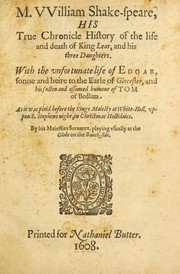
Melville read Shakespeare obsessively while writing, and Ahab is built out of Lear. Whole chapters are set out as drama with stage directions; knowing Lear is what makes that read as ambition rather than as an author losing control.
The classic chapter-by-chapter study of how the book was assembled out of whaling manuals, sermons and Shakespeare. Old, but still the most useful companion to keep at your elbow while reading.
Moby-Dick
IntermediateRead the novel with the digressions understood as the point, at a pace that assumes six to ten weeks
▸ Study plan for this stage
Pace: 6-10 weeks, read by chapter rather than by page — three to five short chapters a sitting, never in a hurry
- Reading by chapter, not by page count: the chapters are short and self-contained, and pacing by them is what makes the length manageable
- The digressions as the book — cetology, the whiteness of the whale, the try-works, the doubloon — earned rather than endured
- Ishmael as a narrator who recedes for hundreds of pages and then returns, and what that does to the novel's point of view
- Ahab's soliloquies read against Lear, and the drama chapters read as deliberate formal shifts
- Queequeg and the Spouter-Inn opening as the most conventionally novelistic stretch, and the moment the book leaves that mode behind
- The Essex ending arriving as historical fact rather than symbolic invention, because you read Philbrick first
- Permission to enjoy the whale-anatomy chapters, which is the practical payoff of everything in the four preceding stages
- Open the 150-word prediction you sealed in stage one. Where was it right, and what did no amount of preparation prepare you for?
- Which digressive chapter did you most enjoy, and what would the novel lose without it?
- Ahab against Lear: where does the borrowing hold, and where does Melville do something Shakespeare does not?
- Now that you know the Essex, does the ending land as history, as symbol, or as both at once?
- Where did Dana's vocabulary and King's natural history actually earn their place, chapter by chapter?
- Would you recommend this preparation to another first reader, or does some of it get in the way?
- Keep a one-line log for every chapter — narrative, cetology, sermon, drama, or something else — and at the end write 200 words on what the distribution shows.
- Reread the chapter on the whiteness of the whale twice and write 300 words on what it argues, without settling on a single meaning.
- Return to the three passages you copied from Philbrick in stage one and write a sentence on each now that you have met it in context.
- Take the doubloon chapter and summarise, in one line per character, what each man sees in the coin; then write a paragraph on why the chapter is constructed that way.
- Write a final 400-word verdict on whether the digressions are the book, defending your answer against the case Philbrick made before you started.
Next up: The path ends here, with the novel read on its own terms — and Delbanco's post-1851 chapters waiting whenever you want the rest of the life.
The destination. The chapters are short, so read by chapter rather than by page count and never in a hurry. Any annotated edition helps; what matters more is permission to enjoy the whale-anatomy chapters instead of skipping them.
Discussion
Keep reading
Paths that share books, cover the same subject, or open a related topic.