Modernist literature: what to read and in what order
This curriculum guides you from the historical and intellectual roots of modernism through its landmark novels, poetry, and criticism, building the interpretive skills needed to tackle increasingly demanding texts. Each stage equips you with the context, vocabulary, and reading strategies required for the next, so that by the end you can engage confidently with even the most experimental modernist works and understand why they changed literature forever.
Foundations: What Is Modernism?
BeginnerUnderstand the historical, cultural, and aesthetic forces that gave rise to modernism, and build a mental map of the movement before diving into primary texts.
▸ Study plan for this stage
Pace: 4–5 weeks, ~25–30 pages/day. Start with Ellmann's "The Modern Tradition" (anthology selections, 1–2 weeks), then move to Butler's "Modernism: A Very Short Introduction" (2–3 weeks). Allow time for review and synthesis.
- Modernism as a response to industrial, technological, and social upheaval in the late 19th and early 20th centuries
- The rejection of 19th-century realism and Victorian conventions in favor of formal experimentation and subjective consciousness
- Key aesthetic principles: fragmentation, non-linearity, difficulty, self-reflexivity, and the foregrounding of technique
- The role of psychology (Freud, Jung) and philosophy (Bergson, Nietzsche) in shaping modernist thought
- Modernism as an international movement with distinct national and regional variations (British, American, European)
- The relationship between modernism and visual/musical arts (Cubism, Futurism, Expressionism, Schoenberg)
- Periodization: when modernism emerged, its peak years, and debates about its end or transformation
- The tension between modernism's elitism and its utopian or revolutionary aspirations
- What historical and cultural conditions made modernism necessary or inevitable as a literary movement?
- How did modernist writers and artists reject 19th-century realism, and what formal techniques did they use instead?
- What role did psychology, philosophy, and scientific developments play in shaping modernist aesthetics?
- How did modernism manifest differently across national traditions (British, American, European), and what did these variations share?
- What is the relationship between modernism in literature and modernism in the visual and musical arts?
- What does it mean to call modernism 'difficult,' and why did modernist writers embrace obscurity and fragmentation?
- Create a timeline of modernism (1890–1945) marking major historical events (wars, technological innovations, scientific breakthroughs) alongside key modernist publications and artistic movements. Use Ellmann's selections and Butler's chronology as guides.
- Compile a glossary of 15–20 modernist aesthetic terms (e.g., stream of consciousness, imagism, montage, epiphany, objective correlative) with definitions drawn from both texts and one brief example for each.
- Write a 2–3 page comparative analysis: choose one modernist principle (e.g., fragmentation, subjectivity, or difficulty) and trace how Ellmann's anthology and Butler's commentary explain its origins and function.
- Map the international modernist network: identify 8–10 major modernist figures mentioned in both texts, note their nationality, primary genre, and one key innovation. Note which figures appear in both Ellmann and Butler.
- Read 2–3 short modernist excerpts from Ellmann's anthology (e.g., a poem, a prose passage, a manifesto) and annotate them for formal techniques discussed in Butler's introduction. What makes each 'modernist'?
- Write a one-page 'modernism manifesto' in your own voice, synthesizing Butler's definition of modernism and the historical pressures Ellmann documents. What would you add or challenge?
Next up: This stage equips you with the conceptual vocabulary, historical context, and aesthetic principles needed to approach primary modernist texts with confidence, allowing you to recognize modernist techniques and understand their cultural urgency in the works you'll read next.

This landmark anthology of primary sources — manifestos, essays, and critical statements by the modernists themselves — gives beginners an immediate sense of what the movement stood for and why it broke from the past. Reading it first means every novel and poem that follows will feel grounded in real intellectual debate.

A concise, jargon-free overview of modernist ideas in literature, art, and music that maps the terrain without overwhelming a newcomer. It provides the shared vocabulary — stream of consciousness, fragmentation, the unreliable narrator — you will need for every subsequent stage.
First Encounters: Accessible Modernist Fiction
BeginnerExperience modernist techniques — interior monologue, shifting perspective, non-linear time — in shorter, more approachable works before tackling the major novels.
▸ Study plan for this stage
Pace: 4–5 weeks, approximately 40–50 pages per day. Week 1–2: Mrs. Dalloway (210 pages); Week 2–3: The Great Gatsby (180 pages); Week 3–5: In Our Time (100 pages, plus review and reflection time).
- Stream of consciousness and interior monologue: how Woolf renders Clarissa's unfiltered thoughts and memories in Mrs. Dalloway to collapse past and present
- Narrative perspective and unreliability: how Fitzgerald's third-person narrator in The Great Gatsby filters events through Nick Carraway's limited understanding and bias
- Non-linear time and fragmentation: how Hemingway's vignettes and stories in In Our Time jump between moments, places, and characters without explicit transitions
- Modernist compression and minimalism: how Hemingway strips language to essentials in In Our Time, contrasting with Woolf's lyrical density in Mrs. Dalloway
- Symbolism and imagery as narrative structure: how the green light in The Great Gatsby and the clock in Mrs. Dalloway function as organizing symbols rather than plot devices
- The dissolution of linear plot: how all three works prioritize psychological depth and thematic resonance over traditional cause-and-effect storytelling
- Social alienation and interiority: how modernist technique reveals characters' isolation within crowded urban spaces (London in Mrs. Dalloway, New York in The Great Gatsby)
- Technique as meaning: how stylistic choices (Woolf's free indirect discourse, Hemingway's dialogue-heavy minimalism, Fitzgerald's lyrical realism) embody modernist philosophy
- How does Woolf's use of stream of consciousness in Mrs. Dalloway blur the boundaries between past and present, and what effect does this have on your sense of Clarissa's character?
- What is Nick Carraway's role as narrator in The Great Gatsby, and how does his perspective shape your understanding of Gatsby's dream and Daisy's character?
- How does Hemingway's fragmented structure in In Our Time—moving between vignettes and stories—create meaning without explicit connections between pieces?
- Compare the treatment of time in Mrs. Dalloway and The Great Gatsby: how does each work use temporal disruption to explore modernist themes?
- What do the green light in The Great Gatsby and the clock in Mrs. Dalloway symbolize, and how do these symbols function differently than traditional literary symbols?
- How does each author use minimalism or density of language to convey psychological states? What does Hemingway's sparse style in In Our Time achieve that Woolf's lyricism does not?
- Stream-of-consciousness imitation: Select a moment from Mrs. Dalloway (e.g., Clarissa's morning walk) and rewrite a brief scene from your own life using Woolf's technique—let thoughts interrupt, memories surface, sensations blend—without punctuation or logical transitions.
- Narrator analysis chart: Track Nick Carraway's judgments and observations throughout The Great Gatsby. Create a two-column chart: 'What Nick sees' vs. 'What the reader infers Nick misses.' Discuss how his unreliability shapes the novel's meaning.
- Hemingway vignette reconstruction: Choose three separate pieces from In Our Time and create a hypothetical narrative that connects them. What story emerges? What is lost by making connections explicit?
- Comparative close reading: Select a passage of interior monologue from Mrs. Dalloway and a dialogue-heavy scene from In Our Time. Annotate how each technique reveals character psychology differently.
- Symbol tracking: Map every appearance of the green light in The Great Gatsby and the clock/time references in Mrs. Dalloway. Write a brief essay on how these symbols evolve and what they reveal about each novel's central preoccupations.
- Modernist technique journal: After finishing each book, write a one-page reflection on a single modernist technique you encountered. How did it disorient you initially? What did it eventually reveal about the character or theme?
Next up: This stage equips you with hands-on familiarity with core modernist techniques—stream of consciousness, fragmentation, unreliable narration, symbolic density—in shorter, more navigable works, preparing you to recognize and engage with these same techniques at greater complexity and scale in the major modernist novels ahead.
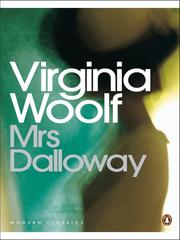
Woolf's compact novel is the ideal first modernist fiction: its single-day structure is easy to follow while its stream-of-consciousness prose introduces the movement's signature interiority. Starting here builds the patience and attentiveness that Joyce and Faulkner will demand.
Fitzgerald's lyrical, symbolically rich novel bridges realist storytelling and modernist sensibility, making it a perfect second step. Its themes of disillusionment and fractured American identity resonate with the broader modernist worldview established in Stage 1.
This linked story collection showcases the modernist 'iceberg theory' — meaning conveyed through omission and understatement — in short, manageable bursts. Reading it after Woolf and Fitzgerald reveals how radically different modernist styles could be while sharing the same anti-Victorian impulse.
The Major Novels: Depth and Difficulty
IntermediateRead and genuinely understand the landmark long-form modernist novels, applying the techniques and context built in earlier stages to navigate their complexity.
▸ Study plan for this stage
Pace: 12–14 weeks, ~40–50 pages/day with 2–3 days per week for rereading, annotation, and reflection. Allocate roughly 4 weeks per novel, with a 1-week buffer for overlap and synthesis.
- Stream of consciousness as a narrative technique: how Woolf, Faulkner, and Joyce render unfiltered thought and dissolve linear time
- The dissolution of plot in favor of psychological depth and sensory immediacy across all three novels
- Modernist treatment of the self: fragmented identity, multiplicity of perspective, and the instability of the subject
- Temporal experimentation: how each novel restructures chronology (Woolf's single day, Faulkner's layered monologues, Joyce's bildungsroman compression)
- Language as obstacle and medium: dense syntax, neologism, dialect, and stylistic difficulty as formal choices, not accidents
- The role of consciousness in relation to external reality: how perception shapes 'what happens' in modernist fiction
- Recurring modernist themes across the three works: alienation, artistic vocation, family dysfunction, and the search for meaning in a fragmented world
- How does each novelist use stream of consciousness differently, and what does each technique reveal about the character's inner life that traditional narration could not?
- In To the Lighthouse, how does Woolf's treatment of time (the passage of years in a single section) differ from Faulkner's fragmented chronology in The Sound and the Fury, and what is the effect of each approach?
- What is the role of the artist or artistic consciousness in A Portrait of the Artist as a Young Man, and how does Stephen Dedalus's journey compare to the psychological crises of Mrs. Ramsay, Quentin, or Benjy?
- How do the three novels use language itself—syntax, vocabulary, dialect—as a formal strategy to convey modernist themes of fragmentation and alienation?
- What does each novel suggest about the possibility of communication, understanding, or connection between characters, and how does this relate to modernist skepticism about meaning?
- How do family relationships function as a microcosm of broader modernist concerns about identity, time, and the self in these three works?
- Create a 'consciousness map' for a key scene in each novel (e.g., the dinner scene in To the Lighthouse, Quentin's section in The Sound and the Fury, Stephen's epiphany in A Portrait): chart how the narrative moves between external events and internal thought, noting shifts in tense, register, and focus.
- Reread the opening pages of each novel without consulting secondary sources; write a 2–3 page analysis of how each author establishes their narrative voice and what formal choices signal the novel's modernist approach.
- Track a single motif or symbol across one complete novel (e.g., the lighthouse beam in Woolf, the sound/fury in Faulkner, the bird/flight in Joyce) and write a short essay on how it accumulates meaning through repetition and variation.
- Perform a close reading of a passage of difficult syntax from each novel (e.g., Mrs. Dalloway's interior monologue, Benjy's section, Stephen's final diary entries); rewrite the passage in conventional prose, then reflect on what is lost and gained.
- Create a timeline or diagram for one novel that shows the relationship between narrative time, story time, and the reader's experience of time; compare your diagrams across the three novels.
- Write character sketches for 2–3 major figures from each novel, focusing on what their consciousness reveals about modernist ideas of selfhood, and note how each character's interiority is rendered differently by the author's formal choices.
Next up: This stage equips you to recognize and navigate the formal innovations and psychological depth that define modernist fiction, preparing you to encounter more experimental or fragmented works, engage with modernist poetry and drama, or examine how later postmodern and contemporary authors build upon or deconstruct these techniques.

A natural progression from Mrs Dalloway, this novel pushes Woolf's interior method further and introduces her boldest structural experiment — the silent, time-collapsing middle section. Having already read Mrs Dalloway, you will recognize and deepen your grasp of her technique rather than being overwhelmed by it.

Faulkner's four-narrator, chronologically scrambled masterpiece is the great test of intermediate modernist reading. The skills built across the previous stages — tolerating ambiguity, tracking consciousness, reading symbolically — are all essential here, and the payoff in emotional power is immense.
Joyce's semi-autobiographical novel is the essential gateway to his work: it traces the very birth of the modernist artistic consciousness and introduces his evolving prose style in a single, followable arc. Reading it before Ulysses is non-negotiable — it is Joyce teaching you how to read Joyce.
Modernist Poetry and the Essay: The Other Half
IntermediateEngage with modernist poetry and critical prose, understanding how Eliot, Pound, and others theorized and practiced the movement in non-fiction and verse.
▸ Study plan for this stage
Pace: 4–5 weeks, ~20–25 pages/day (including re-reading and annotation)
- Fragmentation and collage as modernist formal techniques: how Eliot assembles disparate voices, languages, and literary allusions into a unified work
- The mythic method: using myth (especially the Grail legend and Tiresias) as structural scaffolding for contemporary chaos
- Impersonality and the objective correlative: Eliot's theory that emotion must be expressed through precise external objects, not direct confession
- Tradition as a living, dynamic force: how individual talent must engage with and reshape the past rather than reject it
- Intertextuality and allusion as modernist meaning-making: how The Waste Land demands active reader participation across multiple literary and cultural references
- The dissociation of sensibility: Eliot's diagnosis of a split between thought and feeling in post-17th-century English poetry
- Poetic impersonality vs. biographical reading: understanding the speaker of The Waste Land as a constructed persona, not Eliot himself
- How does Eliot use fragmentation and multiple voices in The Waste Land to represent modern consciousness and cultural breakdown?
- What is the objective correlative, and how does Eliot employ it in specific passages from The Waste Land?
- According to 'Tradition and the Individual Talent,' what is the relationship between a poet's individual talent and the existing literary tradition?
- How does the mythic method (particularly the Grail legend) function as an organizing principle in The Waste Land?
- What does Eliot mean by 'impersonality' in poetry, and how does this concept challenge Romantic ideas about poetic expression?
- Trace at least three major allusions or intertextual references in The Waste Land and explain how they contribute to meaning
- Create an annotated map of The Waste Land's five sections, marking shifts in voice, language, and mythic reference; identify which section most challenges your understanding and re-read it twice
- Write a close reading (500–750 words) of one passage from The Waste Land (e.g., the opening, the typist's scene, or the final section) focusing on how Eliot creates meaning through fragmentation and allusion
- Compile a glossary of 15–20 key allusions in The Waste Land (literary, mythological, biblical, historical), noting their source and thematic relevance
- Rewrite a single stanza or section of The Waste Land in contemporary language while preserving its emotional and structural logic; reflect on what is lost and gained
- Read 'Tradition and the Individual Talent' twice: first for overall argument, second to annotate Eliot's key claims about the poet's relationship to tradition; create a one-page summary of his thesis
- Compare Eliot's theory of impersonality in the essay with a passage from The Waste Land where the speaker seems most emotionally distant or most present; write 300–400 words on the tension between theory and practice
Next up: This stage establishes Eliot's poetics of fragmentation, tradition, and impersonality—providing the theoretical and practical foundation to engage with other modernist poets (Pound, H.D., Yeats) and their own formal innovations and manifestos in the next stage.
The defining poem of literary modernism, dense with allusion and fragmentation, it is best read at this stage after you have internalized modernist themes through fiction. Eliot's own notes, included in standard editions, make it far more approachable than its reputation suggests.

This short, famous essay articulates the theoretical backbone of modernist poetics — the idea of impersonality and the poet's relation to literary history. Reading it alongside The Waste Land illuminates both the poem and the movement's self-understanding as a whole.
The Summit: Ulysses and Modernism's Legacy
ExpertTackle Joyce's Ulysses with full preparation, and reflect on modernism's long shadow through a critical retrospective — emerging with a complete, sophisticated understanding of the movement.
▸ Study plan for this stage
Pace: 12–14 weeks, ~40–50 pages/day (Ulysses: 8–9 weeks, ~50 pages/day; Ellmann biography: 3–4 weeks, ~40 pages/day)
- Stream of consciousness as a literary technique: how Joyce renders interior monologue, fragmented thought, and sensory immediacy to collapse the boundary between narration and consciousness
- Homeric parallels and mythic method: how Ulysses maps the Odyssey onto a single day in Dublin, using classical structure to contain modernist fragmentation
- Linguistic experimentation and polyglot density: Joyce's multilingual wordplay, neologisms, and stylistic shifts across episodes as formal innovation and thematic expression
- Dublin as modernist space: the city as character, historical specificity, and the tension between provincial reality and cosmopolitan artistic ambition
- Joyce's biographical trajectory and artistic development: how Ellmann's biography illuminates the personal, cultural, and literary forces shaping Ulysses and modernism's self-consciousness
- Modernism's reflexivity and self-critique: how Ulysses and Joyce's career embody modernism's obsession with form, consciousness, and the artist's role in a fragmented world
- The reader's active role: how modernist difficulty demands interpretive participation, making reading itself a modernist act
- How does Joyce's use of stream of consciousness in Ulysses differ from earlier narrative techniques, and what does this formal choice reveal about modernist attitudes toward consciousness and representation?
- Trace the Homeric parallels in Ulysses: how does the mythic method structure the novel, and what effect does mapping the Odyssey onto June 16, 1904 Dublin create?
- Analyze Joyce's linguistic experimentation in at least two episodes: what purposes do neologisms, multilingual passages, and stylistic shifts serve thematically and formally?
- How does Ellmann's biography contextualize Joyce's artistic choices in Ulysses? What biographical, cultural, or historical factors shaped the novel's form and content?
- What is the relationship between Dublin as a literal place and Dublin as a modernist literary construct in Ulysses? How does the novel's specificity serve its universalizing ambitions?
- How does Ulysses exemplify modernism's self-reflexive engagement with form, and what does Joyce's work suggest about the modernist movement's legacy and limitations?
- Close-read a passage from three different episodes of Ulysses (e.g., Telemachus, Hades, Penelope), noting shifts in narrative voice, syntax, and linguistic density; write a 2–3 page analysis of how form mirrors content in each
- Create a detailed map of Homeric parallels for one episode: identify the corresponding book of the Odyssey, the Homeric characters and events, and how Joyce transforms or subverts them; write a 3–4 page essay on the mythic method's function
- Compile a glossary of 20–30 neologisms, multilingual phrases, or stylistic innovations from Ulysses; for each, explain its linguistic origin, its meaning in context, and its thematic significance
- Read Ellmann's chapters on Joyce's exile, artistic development, and the composition of Ulysses; write a 4–5 page biographical essay connecting specific life events or relationships to formal or thematic choices in the novel
- Conduct a comparative analysis of two episodes with radically different styles (e.g., Aeolus with its newspaper headlines and Molly's soliloquy); argue how stylistic variation serves the novel's modernist project
- Write a reflective essay (4–6 pages) on your own experience as a reader of Ulysses: what interpretive strategies did you develop? Where did difficulty enhance meaning, and where did it obscure it? What does this reveal about modernism's relationship to its audience?
Next up: This stage completes the reader's immersion in high modernism's most ambitious and formally radical work, positioning them to evaluate modernism's influence on postmodern, contemporary, and global literary movements—understanding both what modernism achieved and what its limitations and blind spots reveal about literature's evolving relationship to consciousness, form, and cultural authority.
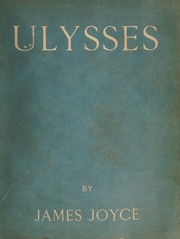
The supreme achievement of modernist fiction, and the culmination of everything this curriculum has built toward. Every prior book — Woolf's interiority, Faulkner's fragmentation, Eliot's allusiveness, Joyce's own Portrait — has been preparation for this. Read it slowly, with a good guide, and trust the process.

Ellmann's definitive biography is the best companion to close a modernist curriculum: it situates every major work in the lived reality of Joyce's life and the broader modernist milieu, and reading it last lets you re-see the entire movement through the lens of its greatest practitioner.
Discussion
Keep reading
Paths that share books, cover the same subject, or open a related topic.