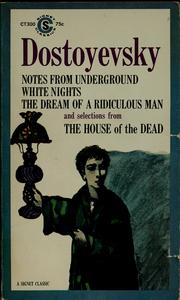
Start with Notes From Underground. It is about a hundred and forty pages, it is the first thing Dostoevsky wrote in his mature voice, and it contains in miniature the argument the whole late work is having: a brilliant, spiteful narrator demolishing the idea that human beings will act in their own rational interest. Ivan Karamazov is that narrator with a conscience and a theology. Our catalogue lists it inside a bookseller-style bundle — Notes From Underground packaged with White Nights, The Dream of a Ridiculous Man and selections from The House of the Dead — so you may find yourself buying four works at once. The others are worth having; the first is the one you need.
The destination is The Brothers Karamazov, and it is long, digressive, and structured as three things at once: a murder mystery with a courtroom finale, a family melodrama, and a sustained argument about whether God can be believed in given the suffering of children. Readers who expect only the novel find the theology heavy, and readers who come for the theology find the farce baffling. It helps enormously to know in advance that both are load-bearing.
Two novels first
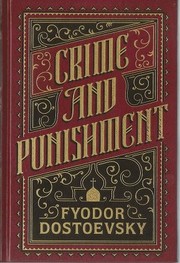
Crime and Punishment is the obvious next step and the right one: tighter, faster, and built on the same question of whether an idea can license a murder. It is the most propulsive thing Dostoevsky wrote and it will tell you whether the fever-pitch register works for you.
The Idiot is the harder recommendation and the more useful preparation. Its saintly, epileptic prince is the first serious attempt at the figure Dostoevsky finally gets right in Alyosha, and the novel's structural mess — brilliant scenes, weak plotting — shows you what he was still solving. Skip it if time is short; read it if you want to see the machinery.
The Russia underneath
Orlando Figes's Natasha's Dance is a cultural history of Russia from Peter the Great onward, and it supplies the argument between Westernisers and Slavophiles that every Dostoevsky character is standing somewhere inside. Figes has been criticised by other historians over accuracy and over his conduct as a reviewer, so read him for the sweep and check specifics elsewhere.
The Gospel in Dostoyevsky is an anthology of the religious passages — the Grand Inquisitor, Zosima, the Marmeladov confession — compiled by an editor and catalogued under Dostoevsky's own name. It is a useful preview of the novel's spiritual argument, though reading the Grand Inquisitor chapter out of context does spoil some of its force.
It is worth knowing that Dostoevsky's late journalism is nationalist and, in places, openly antisemitic. Readers meet this and are startled. It is documented, it is argued about in relation to the fiction, and this path does not attempt to settle that argument.
The critical apparatus
Dostoevsky, by Joseph Frank, is the great biography — originally five volumes, later condensed by the author into one, and our record does not say which edition you are getting, so check before buying. It reads the life through the intellectual history and is the single best guide to what the novels were arguing with.
Dostoevsky, by Rowan Williams, is a short critical study by a theologian, concentrated on language, faith and the possibility of speaking about evil. It is the most useful companion for the Ivan chapters specifically.
Problems of Dostoevsky's poetics is Mikhail Bakhtin's theoretical study, the origin of the idea that these novels are polyphonic — that the characters' voices are genuinely independent of the author's. It is real literary theory and heavy going; read the first chapter and stop unless it grips you.
A Karamazov companion is Victor Terras's annotation volume, used alongside the novel rather than read through. It glosses the Russian jokes, the church references and the legal procedure, and it is keyed to the text section by section.
Reading it
Translations differ sharply. The Constance Garnett versions are fluent and Edwardian, the Pevear and Volokhonsky versions are closer to the syntax and rougher in English, and readers argue about this with some heat; sample a page of each. Note also that the catalogue spells the name both Dostoevsky and Dostoyevsky, so search both. Then read it in long sittings — the set pieces are built to be taken whole. Readers who like this kind of preparation often want the Moby-Dick run-up next.
Follow the full ordered path here: What to Read Before The Brothers Karamazov: The Dostoevsky Run-Up, in Order.