James Joyce Reading Order: Where to Start
Joyce wrote four books of fiction, and they get harder in the exact order he wrote them — which makes his career one of the few that genuinely should be read front to back. This path starts with Dubliners, the most immediately readable thing he ever published, moves through the autobiographical Portrait, then spends a full stage on how to actually approach Ulysses rather than pretending you can simply pick it up. Finnegans Wake comes last and is treated honestly: it is a book most readers should never start with, and many will reasonably choose never to finish.
The way in
IntermediateRead the two Joyce books that require no apparatus at all, and learn to recognize the epiphany, the free-indirect voice, and the Dublin geography that everything later depends on
▸ Study plan for this stage
Pace: 3–4 weeks. Dubliners is fifteen stories — read one a night, and give 'The Dead' an evening of its own, since it runs nearly as long as the six stories before it. Then A Portrait of the Artist as a Young Man at ~25 pages a day over ten days (252 pages), ideally taking each of its five chapters in a s
- The epiphany — a sudden disclosure produced by a mundane detail, which is the shape of nearly every ending in Dubliners and the thing Stephen Dedalus later turns into a theory
- Paralysis: Joyce's own word for the Dublin condition, and the reason the collection is ordered childhood → adolescence → maturity → public life, with 'The Dead' standing outside the scheme
- Free indirect style — narration that quietly takes on the vocabulary of whoever it is standing next to, so the prose reports a character's mind without quoting it
- Portrait's central device: the style grows up with its hero, from the baby-talk opening through schoolboy plainness to the university aesthetics of chapter 5
- The hellfire sermon in chapter 3 as sustained ventriloquism — Joyce writing an entire borrowed rhetoric straight, which is the technique that later governs all of Ulysses
- Dublin as a literal map: named streets, Sandymount Strand, real pubs and churches. The geography is not decoration, and you will walk it again
- Stephen as a figure Joyce both identifies with and judges — the arrogance of chapter 5 is deliberately unattractive
- Recurring people: Gabriel Conroy, the Dedalus family, and the minor Dubliners who reappear as living characters later in the path
- In 'Araby' or 'Eveline', where exactly does the epiphany fall, and what does the narration do in the sentence immediately after it?
- What is the ordering principle of the fifteen stories, and why is 'The Dead' placed outside it?
- Trace the vocabulary of Portrait's opening pages — how does the sentence structure alone tell you the age of the mind reporting?
- What does Stephen's aesthetic theory in chapter 5 actually claim, and how much of it does the novel appear to endorse?
- Where in Portrait does the prose stop being sympathetic to Stephen, and how can you tell without being told?
- Copy out the final paragraph of 'The Dead' by hand, then the opening page of Portrait. Hearing the difference between Joyce's lyric register and his mimetic one is worth more than any commentary.
- Keep a one-line note per Dubliners story naming who has the epiphany and what triggers it. You will want the list when several of these people walk through the later books.
- Pull up a map of Dublin and mark the settings of three stories. Keep the map — the rest of the path assumes the city is real.
- Read the Christmas dinner argument in Portrait chapter 1 aloud with someone else; it is written as overlapping speech and collapses when read silently.
- Write 200 words describing one event as a six-year-old would, then rewrite it as a university student. That is Joyce's method at small scale.
Next up: You now have Joyce's people, his city, and his habit of writing each section in the voice its subject demands — the three things Ulysses assumes you already possess before it starts changing style every forty pages.

Fifteen short stories in plain, exact prose — the one Joyce book you can hand to anyone. Start here because 'The Dead' alone teaches you what a Joycean epiphany is, and because half of Ulysses is populated by people first met in these pages.
The prose style grows up alongside its hero, from baby-talk to university aesthetics, which is the clearest possible demonstration of Joyce's method. Read it second because Stephen Dedalus walks straight out of this book into the opening chapters of Ulysses.
Prepare for Ulysses
BeginnerAcquire the two things that make Ulysses navigable — the Homeric frame it is built on, and a chapter-by-chapter map you can read alongside it
▸ Study plan for this stage
Pace: 2–3 weeks, and only one of these two is a reading assignment. The Odyssey's 352 pages at ~35 a day is about ten days; a verse translation read aloud in the evenings works far better than silent skimming. Harry Blamires's The New Bloomsday Book is a tool, not a book to read through — spend one evenin
- The Homeric frame: Ulysses maps eighteen episodes onto the Odyssey, with Bloom as Odysseus, Stephen as Telemachus and Molly as Penelope — and the correspondences are comic and ironic far more often than reverent
- The Telemachy — Homer's first four books belong to the son, which is why Joyce's opening three episodes belong to Stephen rather than Bloom
- Nostos, the homecoming, as structural principle: Odysseus takes ten years and the Mediterranean, Bloom takes one day and a few Dublin miles
- The episode names (Calypso, Lestrygonians, Cyclops, Circe, Ithaca, Penelope) are not printed in the novel — Joyce circulated them privately, and every companion is organised by them
- How to use a companion correctly: read the episode first, then Blamires's entry for it, never the reverse. A summary read in advance flattens the pleasure of orientation
- Homer's own digressive habit — stories told inside stories, by narrators of varying reliability — is closer to Joyce's method than any of the plot correspondences
- Where the parody will be heaviest: the Cyclops, the Sirens and the Circe episodes are the ones whose Homeric source Joyce most visibly enlarges and mocks
- What becomes of Odysseus's twenty-year absence in Joyce's single day, and what is the joke in that compression?
- Which Homeric figure does Bloom correspond to, and which does Stephen — and what does the pairing predict about the shape of the novel?
- Given how The New Bloomsday Book is organised, how exactly would you look up a page you are lost on?
- What happens in Homer's Cyclops episode, and which element of it would you expect Joyce to blow up to comic scale?
- Why is Penelope last in both books, and what does Homer's ending suggest about the chapter that closes Ulysses?
- Write out the eighteen episode names in order with a one-line Homeric gloss for each, and tape the list inside the cover of your Ulysses.
- Read Odyssey books 9 and 12 closely — three of Joyce's most stylistically extreme episodes grow directly out of them.
- Open Blamires at random and read one entry with the novel closed. Notice how little sense it makes alone: that is the correct relationship — it answers questions, it does not create them.
- Schedule the next stage now, one episode per sitting, eighteen sittings, with dates in a calendar. Ulysses is defeated by drift far more often than by difficulty.
Next up: With Homer's shape in your head and a page-by-page companion on the desk, you can start Ulysses knowing what is happening even in the episodes where you cannot yet tell how it is being said.
Ulysses is one Dublin day laid over Odysseus's ten-year voyage, episode by episode. Reading or rereading Homer first turns Joyce's structure from a rumor into something you can actually see working.

A plain-English page-by-page summary of what is literally happening in each episode of Ulysses. Get it before you start, not after you are lost — used as a companion it removes almost all of the plot-level confusion.
Ulysses
BeginnerRead Ulysses episode by episode with a working understanding of its shifting styles, and stop expecting to catch everything on a first pass
▸ Study plan for this stage
Pace: 6–10 weeks. The novel runs 736 pages, but pace it by episode rather than by page: eighteen sittings, with Cyclops, Circe and Ithaca each given a night of their own. Fifteen to twenty pages a day is realistic. Don Gifford's Ulysses Annotated is never read forward — its 645 pages are lookup entries, s
- Interior monologue: Bloom's thought is rendered without introduction, clipped and associative — learn to read the ellipses as the thought moving rather than as omissions
- From Aeolus onward each episode has its own style, and the style is the content — newspaper headlines, musical fugue, comic gigantism, parodied romance, a history of English prose, hallucinatory stage drama, catechism, and finally unpunctuated flow
- Bloom is the argument: an advertising canvasser, Jewish, cuckolded, curious and kind. Joyce's hero is ordinary, and the book's claim is that ordinariness is sufficient
- The three-part shape — Stephen's opening three episodes, Bloom's long day, and the homecoming of the last three
- Three separable kinds of being lost: not following the plot (Blamires fixes it), not recognising an allusion (Gifford fixes it), and not liking the style (neither can, and that is a legitimate response)
- The day is precisely clocked — the funeral at eleven, the Ormond bar at four, the strand at eight, the brothel at midnight — and characters cross paths on schedule
- Molly's closing monologue is an answer to the book rather than an appendix to it
- Disorientation is designed. Oxen of the Sun and Circe are built to unsettle, and not catching everything on a first pass is the normal outcome, not a failure of comprehension
- What is the style of the Aeolus episode, and what does the newspaper office have to do with it?
- Bloom's thoughts in Lestrygonians circle a few fixed obsessions — name three and say where each comes from in his life.
- How does the narration of Cyclops differ from that of Nausicaa, and what is each one parodying?
- The last time you were lost, was it plot, allusion or style? Find one instance of each and say which tool, if any, resolved it.
- What does Ithaca's question-and-answer form do to the emotional climax it is describing?
- What is Molly answering, and what does the final word do to the whole book?
- Keep a one-page log per episode: style, Homeric parallel, time of day, and what actually happens. By Circe you will be relying on your own notes more than on anyone else's.
- Read the opening two pages of Sirens aloud. They are unreadable as sense and coherent as sound, which is the demonstration.
- Limit yourself to five Gifford lookups per episode. It has an entry for nearly every line and will eat the novel if you let it.
- Stop after Nausicaa and write 300 words on what kind of person Bloom is. Compare it with what you would have written after episode 4.
- Reread Calypso once you have finished. Bloom's breakfast is a different scene entirely when you know his day and his marriage.
Next up: Having actually read the novel, you are finally in a position to see how much of it came out of Joyce's own life — and to decide, on evidence rather than reputation, whether the book after it is one you want to attempt.
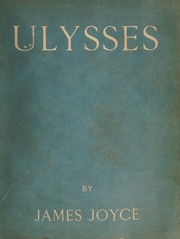
The book the whole path exists to reach. Read it slowly, one episode per sitting, and accept that the middle chapters change style so violently that confusion is the intended experience rather than a failure on your part.
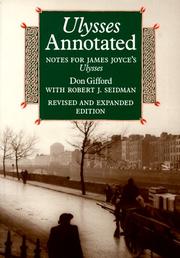
The reference work that glosses the Dublin slang, songs, newspaper items, and Latin tags line by line. Keep it open beside the novel; it is a lookup tool, not something to read straight through.
The life, and the book most readers should skip
BeginnerUnderstand how the fiction grew out of Joyce's life, and make an informed decision about whether Finnegans Wake is a book you want to attempt at all
▸ Study plan for this stage
Pace: 6–8 weeks, then an honest decision. Richard Ellmann's biography is 842 pages and reads like a novel — ~25 pages a day is about five weeks. Joseph Campbell's A Skeleton Key to Finnegans Wake is 331 pages and takes a week. For the Wake itself a page count misleads: planning to read its 467 pages at an
- Ellmann's central revelation — what happened on 16 June 1904, and how a private anniversary with Nora Barnacle became the date of Ulysses
- The biographical facts that keep resurfacing in the fiction: Trieste, chronic poverty, the failing eyes and repeated operations, and Lucia's illness
- Joyce's method of composition — the notebooks, the crossing-out of phrases as they were used, and the seventeen years the Wake consumed
- Ellmann is a literary biography with a thesis (the ordinary made luminous), not a neutral chronicle. Read it as an argument you are entitled to resist
- The Wake's language: portmanteau compounds built from dozens of tongues, a deliberate night-language set against the day-language of Ulysses
- Campbell's structural account — the Earwicker family, HCE and ALP, the cyclical scheme, and the sentence that runs off the last page and back onto the first
- Why sampling works: the Wake rewards rereading small passages aloud, and its best-known pages stand up perfectly well on their own
- The Skeleton Key is itself a reading from 1944, confident in places where scholarship has since moved. Useful scaffolding, not a decoder ring
- What does Ellmann identify as the significance of 16 June 1904, and how does knowing it change the tone of Ulysses?
- Which characters and episodes in the earlier fiction does the biography show to be closest to life, and where is Joyce plainly inventing?
- On Campbell's account, who are HCE and ALP, and how does the Wake's last sentence relate to its first?
- Read one page of the Wake aloud. What can you make out by sound that you could not by eye?
- Having sampled it, what is your honest answer: is Finnegans Wake a book you want to read, and what is your actual reason?
- Read the Anna Livia Plurabelle section aloud with the Skeleton Key's summary of it open beside you. It is the best single test of whether the Wake is for you.
- If you want the payoff first, read Ellmann's chapters on 1904 and on the writing of Ulysses, then go back and read the biography straight through.
- Set an explicit Wake budget in advance — say twenty pages read aloud over four evenings — and decide at the end of it. Deciding beforehand keeps the choice honest.
- Reread 'The Dead' after Ellmann's account of its sources. Almost nothing else in this path changes as much on a second reading.
- Write a one-paragraph recommendation for a friend: which Joyce book you would hand them, and why not the others.
Next up: That is the whole career, apparatus included — you can now reread any of the four books with the life behind them, and say which of Joyce's difficulties are earned and which you would refuse.

Widely regarded as one of the great literary biographies, and it retroactively explains a hundred details in the fiction. Read it after Ulysses so the revelations land on books you already know.
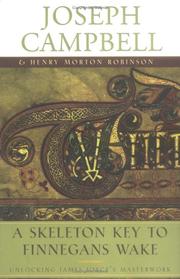
The classic chapter-by-chapter decoding of the Wake, and honestly the only reason most readers get past page ten. Read it before, and probably instead of, attempting the novel cold.
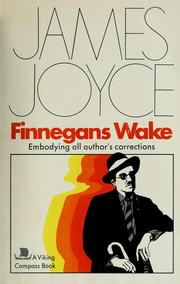
Written in a dream-language of invented compounds and multilingual puns, this is genuinely the hardest book in English and a terrible place to begin with Joyce. Placed last because it should be attempted only by readers who finished Ulysses and wanted more, ideally read aloud and in company.
Discussion
Keep reading
Paths that share books, cover the same subject, or open a related topic.