Start with Alain de Botton's How Proust can change your life. It is short, funny, faintly ridiculous in its self-help framing, and it does the one job that matters here: it gives you a reason to spend a year with a French novel about a man remembering things. Read it in two evenings. The destination is In Search of Lost Time, and almost nobody abandons it because the sentences are difficult. They abandon it because at page two hundred nothing has happened and no one told them that was the point.
Be clear about the scale. The complete novel runs to seven volumes and something over four thousand pages. This path takes you as far as volume two and then leaves you to it, which is honest — by then you either have the habit or you do not.
Reasons to care, before you commit
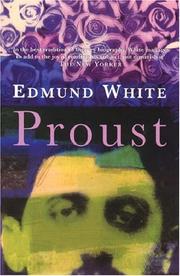
Edmund White's Proust is a compact biography, brisk about the asthma, the closeted social life and the twelve years of cork-lined seclusion in which the novel was written. It is the fastest route to understanding why the book is shaped the way it is.
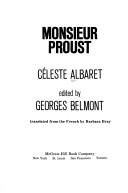
Monsieur Proust is the strangest and best of these. Céleste Albaret was Proust's housekeeper for the last nine years of his life and dictated this memoir decades later — the midnight meals, the fumigation powders, the manuscript sheets pinned together and expanding. Read it for the texture of the mind that produced the sentences, and read it knowing it is a devoted servant's account recorded at a great distance in time, not a documentary record.
Roger Shattuck's Proust's way is the critical guide, and it is where you learn what to actually watch for: how involuntary memory works structurally, why the narrator is unreliable about his own project, how the last volume rewrites the first. Shattuck is opinionated, and other Proust critics disagree with him about how much the novel coheres as a designed whole. That disagreement is live and worth knowing about rather than settling.
Paintings in Proust is the outlier and a pure pleasure. Eric Karpeles reproduces every painting the novel mentions or evokes, plate beside passage. Proust describes pictures constantly and assumes you can see them; this book means you can.
Reading it
Swann's Way is volume one. Its opening seventy pages — the bedtime scene, the drift of half-sleep — are the famous obstacle. Push through them; the Combray section that follows is warm and concrete, and the novella-length Swann in Love that closes the volume is the most conventionally gripping thing Proust wrote.
In the Shadow of Young Girls in Flower is volume two, and it is the volume that converts people: the seaside at Balbec, the arrival of Albertine, the comedy sharpening. If you finish this one you will finish the others.
A word on editions, because it causes real confusion. The novel appears in English as both In Search of Lost Time and Remembrance of Things Past, and the individual volumes have competing titles — volume two is also sold as Within a Budding Grove. The older Scott Moncrieff translation and the newer Penguin translation by different hands for each volume read very differently, and Proust readers argue about which to use; try a page of each and pick the voice you would rather live inside.
One catalogue warning. The record we list as the destination, In Search of Lost Time, is the series title attached to volume one — which is the same text as Swann's Way. Buy one or the other, not both.
After you begin
Phyllis Rose's Year of Reading Proust a Memoir In Real, published as The Year of Reading Proust: A Memoir in Real Time, is company rather than instruction: an account of reading the whole thing over a year while an ordinary life carried on around it. Save it for when you are underway. If you want a second long novel with the same demands, the Karamazov on-ramp is the natural next one.
Follow the full ordered path here: What to Read Before In Search of Lost Time: Getting Started with Proust, in Order.