Russian literature: where to start & how to go deep
This curriculum moves from accessible short fiction and essential context into the great novels, then deeper into Dostoevsky's philosophical world, and finally into the broader Russian literary tradition. Each stage builds the cultural vocabulary, narrative stamina, and thematic intuition needed to fully appreciate the next — so that by the end, Tolstoy and Dostoevsky feel like old friends rather than intimidating monuments.
First Steps: Short Fiction & Context
BeginnerGet comfortable with Russian storytelling rhythms, recurring themes (the 'little man', suffering, fate, the soul), and the historical world the novels inhabit — without committing to 800 pages on day one.
▸ Study plan for this stage
Pace: 4–5 weeks, ~20–25 pages/day. Saunders structures the book around 7 Russian short stories (by Chekhov, Turgenev, Tolstoy, and Gogol), each followed by his craft commentary — read one story + its commentary section as a single sitting, then pause for a day of reflection before moving on. Weekends work
- The 'little man' (Malen'kiy Chelovek): the recurring Russian archetype of the humble, downtrodden everyman whose inner life is treated with full moral seriousness
- Escalation & the 'gun on the wall': how Russian short fiction builds pressure through small, incremental decisions rather than dramatic plot twists — Saunders calls this the story's 'forward lean'
- Specificity as empathy: Chekhov's and Tolstoy's technique of grounding universal suffering in hyper-specific, mundane detail so the reader cannot look away
- The soul (dusha) as a narrative preoccupation: characters are judged not by success or failure but by whether they remain spiritually alive or have deadened themselves
- Fate, resignation, and the 'superfluous man': the tension between characters who accept their lot and those who rage against it — and why Russian fiction rarely resolves this cleanly
- Irony without cruelty: Saunders unpacks how Chekhov in particular uses ironic distance to expose self-deception while still loving his characters
- The role of the narrator's tone: how shifts in narrative voice (from detached to intimate) signal moral weight in these stories
- Historical & social texture: serfdom's aftermath, the rigid class hierarchy of 19th-century Russia, and how these structures function as invisible walls around characters' choices
- After reading Saunders's commentary on any single story, can you identify the moment he calls the story's 'turn' — and explain in your own words why that moment carries the weight it does?
- What does the 'little man' archetype look like in at least two of the stories Saunders selects, and how does each author treat that figure differently (with pity, irony, admiration)?
- How does Saunders describe the relationship between a story's surface action and its deeper 'subterranean' emotional logic — and can you point to a specific passage in one story that illustrates this gap?
- What social or historical condition (serfdom, class immobility, censorship) is silently pressuring the characters in at least one of the stories, and how does the author make that pressure felt without stating it directly?
- Saunders argues that these stories work by 'making us revise our opinion of a character.' Choose one story and trace the exact sequence of moments that caused your opinion to shift.
- In what ways does reading Saunders's craft commentary change — or complicate — your emotional experience of the story itself? What is gained and what, if anything, is lost?
- The 'Beat Sheet' exercise: For one story of your choice, write a one-sentence summary of every scene or paragraph-level beat. Then mark with an asterisk every beat where your feeling toward the main character changed. Compare your asterisks to what Saunders highlights — where do you agree or diverge?
- Rewrite the ending: Pick one story and write a 200-word alternative final paragraph that resolves the tension more neatly and happily. Then write a short reflection on what is lost — thematically and emotionally — by tidying it up. This makes Saunders's point about earned ambiguity visceral.
- The 'little man' character sketch: Write a 300-word portrait of a contemporary 'little man' figure from your own life or culture — someone overlooked by society whose inner life deserves full attention. Use at least one hyper-specific, mundane detail (in the Chekhov mode) to make them real.
- Vocabulary & context journal: Keep a running two-column journal — left column for unfamiliar Russian cultural references (e.g., the zemstvo, the dacha, the civil-rank system), right column for a one-sentence explanation sourced from Saunders's footnotes or a quick search. Aim for 15–20 entries by the end of the book.
- The 'subterranean story' diagram: For two stories, draw a simple two-lane diagram: the top lane is the surface plot (what literally happens), the bottom lane is the emotional/spiritual story (what is really happening to the character's soul). Identify the moments where the two lanes diverge most sharply.
- Discussion or journal prompt — 'Which character am I?': After finishing the book, write one page answering honestly: which character from the seven stories do you find most uncomfortably recognizable in yourself, and what does Saunders's analysis of that story reveal about why?
Next up: By internalizing the craft mechanics and thematic vocabulary (the little man, the soul, fate, irony, escalation) through Saunders's guided close-reading, the reader now has a reliable analytical toolkit and emotional familiarity with Russian storytelling rhythms — making the leap to reading full-length Russian novels independently far less daunting.

Saunders reads seven classic Russian short stories (Chekhov, Turgenev, Tolstoy, Gogol) alongside you and explains exactly how they work — an ideal guide that builds close-reading skills and cultural context simultaneously.
Tolstoy: The Human Scale
BeginnerRead Tolstoy in a natural order — from his most accessible novella up to his supreme masterpiece — so that his moral vision and epic style feel earned rather than overwhelming.
▸ Study plan for this stage
Pace: 14–16 weeks total. Week 1–2: "The Death of Ivan Ilyich and The Devil" (~30–40 pages/day; both novellas are short, so read each twice — once for story, once for craft). Weeks 3–8: "Anna Karenina" (~40–50 pages/day across 6 weeks; pause at the end of each of the 8 parts to reflect). Weeks 9–16: "War a
- Tolstoy's moral realism: the idea that authentic ethical life must be lived from the inside out, not imposed by society or doctrine
- The death-as-mirror technique: in 'The Death of Ivan Ilyich,' physical dying strips away social pretense and forces the protagonist — and the reader — to confront what a life well-lived actually means
- Gerasim as the moral foil: the peasant's uncomplicated, unselfconscious goodness in 'Ivan Ilyich' introduces Tolstoy's recurring belief that simplicity and sincerity outrank sophistication
- The Devil and erotic temptation: the second novella shows Tolstoy's lifelong tension between flesh and spirit, foreshadowing the moral crises in both 'Anna Karenina' and 'War and Peace'
- Parallel-lives structure in 'Anna Karenina': the Anna/Vronsky plot and the Levin/Kitty plot are deliberately counterweighted so that romantic passion and domestic spiritual growth illuminate each other
- Levin's search for meaning: Levin's arc — from social anxiety through agricultural reform to a sudden, wordless religious conversion — is Tolstoy's most autobiographical portrait of a soul in progress
- Epic breadth vs. intimate depth in 'War and Peace': Tolstoy uses the Napoleonic Wars not as backdrop but as a philosophical argument that history is driven by countless small human acts, not great men
- Pierre, Andrei, and Natasha as a triptych of consciousness: each embodies a different path (intellectual seeking, aristocratic disillusionment, vital spontaneity) toward the same Tolstoyan ideal of living truthfully
- In 'The Death of Ivan Ilyich,' what specific moment signals Ivan's spiritual awakening, and how does Tolstoy use physical sensation (pain, light) to dramatize an inward transformation?
- How does Gerasim's behavior toward Ivan function as an implicit critique of every other character in the novella, and what does this reveal about Tolstoy's view of class and moral authenticity?
- In 'Anna Karenina,' why does Tolstoy give Levin's storyline roughly equal page-time to Anna's, and what argument does the structural pairing make about the nature of happiness?
- Anna's tragedy is often called inevitable — but at what point, if any, does she have a genuine choice, and what forces (social, psychological, spiritual) close off her options?
- In 'War and Peace,' Tolstoy argues in the Second Epilogue that 'great men' do not make history. How does the narrative itself — through characters like Kutuzov vs. Napoleon — dramatize this philosophical claim?
- Trace Pierre Bezukhov's transformation from the opening salon scene to the Second Epilogue. What experiences constitute his education, and how does his final state compare with Levin's conversion at the end of 'Anna Karenina'?
- 'Ivan Ilyich' close-read journal: After your first read, go back and annotate every moment where a physical detail (the curtain, the black sack, the light) carries symbolic weight. Write a one-page note on how Tolstoy fuses the bodily and the spiritual.
- Character contrast chart for 'Anna Karenina': Draw a two-column table tracking Anna and Levin chapter by chapter through Part 4 (the novel's midpoint). Note their emotional state, their relationship to society, and what each wants. Revisit the chart at the end of Part 8 and write a paragraph on how your reading of each character changed.
- Moral foil mapping: Identify one 'Gerasim-type' character in 'Anna Karenina' (a figure of uncomplicated goodness) and one in 'War and Peace.' Write a short comparative essay (300–400 words) arguing what function these figures serve in Tolstoy's moral architecture.
- Battle scene slow-read in 'War and Peace': Choose one battle sequence (Austerlitz, Borodino, or Schöngraben) and read it at half your normal pace, noting every shift in point-of-view. Write a paragraph explaining how Tolstoy's use of fragmented, ground-level perspective supports his anti-'great man' thesis.
- Epilogue engagement: Read the Second Epilogue of 'War and Peace' — Tolstoy's philosophical essay on history and free will — twice. On the second read, annotate every claim that is directly illustrated by a scene or character earlier in the novel. Discuss in a reading journal whether the essay enriches or interrupts the novel for you.
- Personal resonance reflection: After finishing all three works, write a one-page response to this prompt: 'Which single character — Ivan Ilyich, Anna, Levin, Pierre, or Andrei — do you find most morally instructive, and why?' Use at least two specific scenes as evidence. This exercise trains the close-reading habit essential for the next stage.
Next up: By internalizing Tolstoy's techniques — moral realism, the spiritually charged detail, the counterweighted plot — the reader has developed the close-reading stamina and ethical attentiveness needed to engage with the more psychologically extreme and formally experimental worlds of Dostoevsky, where the same ultimate questions (suffering, faith, freedom) are answered in a far darker and more urgent
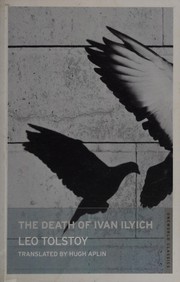
At roughly 90 pages, this is Tolstoy's most perfectly formed work and the ideal entry point: it contains his entire moral universe — hypocrisy, suffering, spiritual awakening — in a single sitting.

After Ivan Ilyich you already understand Tolstoy's moral lens; Anna Karenina applies it on a grand social canvas and is widely considered his most readable long novel — a better first big Tolstoy than War and Peace.

The summit of Tolstoy — and of the novel form itself. Reading it here, after Anna Karenina has trained your stamina and intuition, transforms it from a daunting obligation into a genuine pleasure.
Dostoevsky: The Underground & the Abyss
IntermediateEnter Dostoevsky's world through his most accessible works first, then tackle the two great novels that define his philosophical vision of freedom, guilt, and redemption.
▸ Study plan for this stage
Pace: 14–16 weeks total. Week 1–3: Notes from Underground, White Nights, The Dream of a Ridiculous Man, and selected House of the Dead passages (~20–25 pages/day, re-reading key monologues). Weeks 4–8: Crime and Punishment (Katz translation, ~30 pages/day, pausing at each of the 6 parts before moving on).
- The Underground Man as archetype: hyper-consciousness, spite, and the refusal of rational self-interest as a form of freedom
- Dostoevsky's polyphonic novel (Bakhtin's concept): each character as a fully autonomous ideological voice, not a mouthpiece for the author
- The dialectic of freedom and suffering: why characters in all three major works choose or court pain, and what this reveals about Dostoevsky's anthropology
- Guilt, confession, and the psychology of crime: Raskolnikov's 'extraordinary man' theory in Crime and Punishment and its self-destruction through conscience
- Redemption through humility and love: Sonya's role in Crime and Punishment vs. Alyosha's role in The Brothers Karamazov as counter-models to nihilism
- The Grand Inquisitor's argument (Brothers Karamazov, Book V): the tension between human freedom and the desire for bread, miracle, and authority — and Ivan's silent Christ as answer
- Faith vs. rebellion: Ivan's intellectual atheism and the 'rebellion' chapter contrasted with Father Zosima's theology of active love and universal responsibility
- The House of the Dead as autobiographical crucible: how Dostoevsky's prison experience in Omsk shaped his later vision of suffering, the peasant soul, and moral regeneration
- After reading Notes from Underground, can you explain in your own words why the Underground Man rejects the 'Crystal Palace' and what this rejection reveals about Dostoevsky's critique of utopian rationalism and Chernyshevsky's What Is to Be Done?
- How does Raskolnikov's 'extraordinary man' theory in Crime and Punishment contradict itself, and at what precise moment in the novel does his psychological unraveling begin — and why?
- What is Sonya Marmeladova's ideological function in Crime and Punishment? How does her faith operate as a structural counterweight to Raskolnikov's Napoleonic individualism?
- Summarize Ivan Karamazov's argument in the 'Rebellion' chapter and the Grand Inquisitor's parable. Why does Ivan return the ticket to God, and how does Alyosha's single response — the kiss — function as Dostoevsky's theological answer?
- How do the selections from The House of the Dead foreshadow themes that appear in both Crime and Punishment and The Brothers Karamazov? Identify at least two specific thematic or character-level connections.
- Across all the works in this stage, what does Dostoevsky consistently suggest is the relationship between suffering and moral transformation? Does he romanticize suffering, or is his view more nuanced — use textual evidence to argue your position.
- Underground Man dialogue journal: After finishing Notes from Underground, write a 500-word first-person monologue in the Underground Man's voice responding to a modern convenience — social media, algorithmic recommendation, GPS navigation — as a new 'Crystal Palace.' This forces you to internalize his rhetorical style and ideological position.
- Crime and Punishment chapter headers: At the end of each of the novel's six parts, write a one-paragraph 'ideological summary' — what theory or belief is Raskolnikov holding at the start of the part, and how has it shifted by the end? Track the arc across all six summaries to visualize his psychological collapse.
- Grand Inquisitor close-reading: Re-read the Grand Inquisitor chapter twice — once for argument, once for drama. Then write a structured debate outline: list every claim the Inquisitor makes, then find a counter-argument from either Alyosha, Father Zosima's teachings, or Sonya's example in Crime and Punishment. This builds cross-book synthesis.
- Character voice comparison: Choose one theme (e.g., freedom, guilt, or God) and write a 300-word statement on it from the perspective of three different characters: the Underground Man, Raskolnikov, and Ivan Karamazov. Then write a fourth statement from Alyosha or Sonya. Notice where the voices converge and diverge.
- House of the Dead bridge exercise: Select two passages from the House of the Dead selections that feel like 'seeds' of later works. Write a short annotation for each explaining which character, scene, or theme in Crime and Punishment or The Brothers Karamazov they seem to anticipate and why.
- Final synthesis essay (600–800 words): Answer the question — 'Is freedom, in Dostoevsky's world, a gift or a burden?' — drawing on at least one work from each of the three books in this stage. Force yourself to represent the strongest version of both sides before landing on a conclusion.
Next up: By mastering Dostoevsky's polyphonic method, his dialectic of faith and rebellion, and his psychological realism, the reader is now equipped to encounter the broader sweep of 19th-century Russian prose — particularly Tolstoy's competing moral vision — where the same questions of freedom, death, and the good life are answered in a strikingly different register.
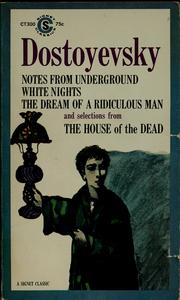
Short, ferocious, and foundational — this novella introduces the 'underground man' archetype and Dostoevsky's signature style of feverish internal monologue; reading it first makes Crime and Punishment immediately richer.
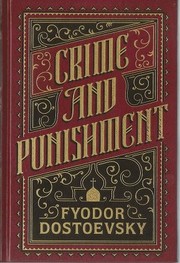
The most gripping and plot-driven of the great Dostoevsky novels, making it the right first full-length entry: the psychological thriller structure carries you through the philosophy before you even realize you're doing philosophy.

Dostoevsky's final and greatest novel — a synthesis of everything he ever thought about God, free will, family, and suffering. Saved for last in this stage because Crime and Punishment has already calibrated your ear for his voice.
Broadening the Canon
ExpertDiscover that Russian literature is far larger than two names — encountering Gogol's dark comedy, Turgenev's elegiac realism, and Bulgakov's surreal Soviet masterpiece to complete a full picture of the tradition.
▸ Study plan for this stage
Pace: 8–10 weeks total, reading roughly 25–35 pages per day. Suggested breakdown: Weeks 1–3 for Dead Souls (~350 pp.), Weeks 4–5 for Fathers and Sons (~220 pp.), Weeks 6–9 for The Master and Margarita (~400 pp.), with Week 10 reserved for review, re-reading key passages, and completing exercises.
- The Picaresque and the Anti-Hero: How Chichikov in Dead Souls subverts the European picaresque tradition by making greed and moral vacancy the engine of the plot, rather than roguish charm.
- Satirical Allegory and the 'Dead Soul' as Metaphor: Gogol's central conceit — buying deceased serfs as living assets — as a sustained allegory for spiritual emptiness, bureaucratic absurdity, and the hollowness of Russian provincial society.
- Elegiac Realism and the Superfluous Man: Turgenev's Bazarov in Fathers and Sons as the defining portrait of the 'superfluous man' — the intellectual who is too radical for the old world and too idealistic for the new — and how Turgenev mourns rather than celebrates him.
- Nihilism as Ideology and Tragedy: The philosophical content of nihilism as Bazarov articulates it, and how Fathers and Sons dramatizes the collision between the nihilist worldview and the irreducible facts of love, death, and human connection.
- Generational and Political Conflict: How the father–son dynamic in Turgenev's novel maps onto the broader 1860s Russian debate between liberal Westernizers and radical nihilists, making the domestic drama a vehicle for national argument.
- Surrealism, Satire, and Soviet Censorship: How Bulgakov uses the Devil's visit to Moscow in The Master and Margarita as a satirical lens on Soviet bureaucracy, cowardice, and moral corruption — and why the novel had to circulate in samizdat for decades.
- The Novel-Within-a-Novel Structure: The embedded Pontius Pilate chapters in The Master and Margarita and how they function as a counterpoint to the Moscow narrative — exploring timeless questions of power, truth, and cowardice against the backdrop of contemporary Soviet absurdity.
- The Continuity of the Russian Literary Tradition: How all three books form a chain — Gogol's dark comedy feeding into Turgenev's realism, which in turn is transfigured by Bulgakov's modernist surrealism — demonstrating that Russian literature is a living, self-aware conversation across centuries.
- In Dead Souls, what does Chichikov's scheme of purchasing 'dead souls' reveal about the Russian serf economy, and how does Gogol use it to satirize the moral and spiritual state of the Russian gentry and bureaucracy?
- Bazarov declares himself a nihilist and rejects all authority, art, and sentiment — yet by the end of Fathers and Sons he has fallen in love and died of a preventable illness. How does Turgenev use Bazarov's fate to interrogate, rather than simply endorse or condemn, the nihilist philosophy?
- The title Fathers and Sons encodes a generational conflict. Who represents the 'fathers' and who the 'sons,' and is Turgenev's sympathy clearly on one side, or does the novel resist that simplicity?
- Woland (Satan) and his retinue arrive in Soviet Moscow and expose its citizens' corruption and pettiness. What specific Soviet institutions and behaviors does Bulgakov target through their pranks, and what does this suggest about the relationship between power and moral cowardice?
- The Pontius Pilate chapters in The Master and Margarita are presented as the Master's novel-within-the-novel. What thematic parallels does Bulgakov draw between Pilate's Jerusalem and Stalin's Moscow, and why does the novel insist that 'cowardice is the greatest sin'?
- Taken together, how do Dead Souls, Fathers and Sons, and The Master and Margarita expand or complicate the image of Russian literature that a reader might have formed from Tolstoy and Dostoevsky alone?
- Character Moral Inventory: For each book, create a one-page 'moral ledger' for the central character (Chichikov, Bazarov, the Master). List their stated values, their actual actions, and the gap between the two. Compare the three ledgers: what does each author seem to believe about the relationship between ideology and character?
- Satirical Target Mapping: While reading Dead Souls and The Master and Margarita, keep a running log of every institution, social type, or behavior that is mocked or exposed. After finishing both books, write a 400-word comparison: what targets do Gogol and Bulgakov share across a century of Russian history, and what does that continuity suggest?
- The 'Superfluous Man' Essay: Write a 500-word argumentative essay answering: Is Bazarov a superfluous man, a tragic hero, or something else entirely? Use at least three specific scenes from Fathers and Sons as evidence, and engage with at least one counterargument.
- Structural Diagram of The Master and Margarita: Draw or map the novel's dual narrative structure — the Moscow plot and the Yershalaim (Jerusalem) chapters. For each major scene in the Pilate storyline, identify its thematic echo in the Moscow storyline. Annotate with one sentence per pairing explaining the connection.
- Close-Reading Passage Exchange: Select one passage of 1–2 pages from each of the three books that you consider the most stylistically distinctive. Write a paragraph on each explaining how the prose style (sentence rhythm, imagery, tone, narrative voice) embodies the author's larger artistic vision.
- Tradition Timeline and Influence Web: After completing all three books, construct a visual timeline placing Gogol (1842), Turgenev (1862), and Bulgakov (1967, publication) in historical context. Draw arrows showing documented or plausible literary influence between them, and annotate each arrow with a specific technique or theme that travels across the connection.
Next up: Having moved beyond the two giants to encounter Gogol's satirical grotesque, Turgenev's elegiac realism, and Bulgakov's surrealist dissent, the reader now possesses a full-spectrum map of the Russian literary tradition and is equipped to pursue deeper specialist study — whether that means diving into the poetry of the Silver Age, the short fiction of Chekhov, or the 20th-century dissident voices t
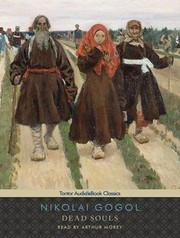
Gogol is the ancestor Dostoevsky and Tolstoy both claimed — his grotesque, satirical road novel shows where Russian literature came from and why it is so unlike anything Western European.

The novel that coined the word 'nihilism' and captured the generational clash of 19th-century Russia; reading it here shows the political and social debates that Dostoevsky was directly arguing against.
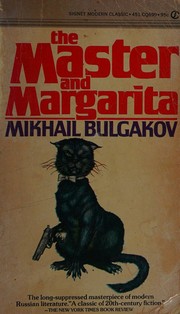
A dazzling leap into the 20th century — part satire, part love story, part theological fantasy — that proves the Russian literary tradition survived and transformed under Soviet rule, and makes a perfect, unforgettable finale.
Discussion
Keep reading
Paths that share books, cover the same subject, or open a related topic.