Dostoevsky and the Russian novel: where to begin reading
This curriculum guides a beginner from the accessible shores of the Russian novel all the way into the philosophical depths of Dostoevsky, using a carefully staged path through Turgenev, Tolstoy, and Dostoevsky himself. Each stage builds the literary and cultural vocabulary needed for the next, and companion guides are woven in at the moments they will be most useful — not before the reader has something to anchor them to.
First Steps: The Russian World
BeginnerGet comfortable with 19th-century Russian prose, its social world, and its emotional register — without being overwhelmed — by reading two short, welcoming masterpieces and a slim orienting guide.
▸ Study plan for this stage
Pace: 8–10 weeks, ~20–25 pages/day (with reflection pauses)
- The 19th-century Russian social world: serfdom, generational conflict, and the tension between Western ideas and Russian tradition
- Turgenev's technique of character-driven narrative and ideological debate through dialogue and action
- Tolstoy's psychological depth: how interior monologue and sensory detail reveal a character's spiritual crisis
- The Russian novel's emotional register: intensity, moral seriousness, and the search for meaning in ordinary suffering
- How close reading of prose style (sentence rhythm, imagery, point of view) unlocks character and theme
- The role of death, mortality, and self-deception as engines of Russian narrative
- Reading as a conversation: how Saunders' essays teach you to notice what the novels are doing and why it matters
- What is the central ideological conflict in *Fathers and Sons*, and how does Turgenev embody it in Bazarov and Nikolai Kirsanov? What is his own position?
- How does Tolstoy use physical sensation and memory in *The Death of Ivan Ilyich* to show Ivan's spiritual awakening? What does he realize too late?
- What is the difference between how Turgenev and Tolstoy use dialogue—what does each writer's style reveal about character and theme?
- In *The Devil*, how does Tolstoy's treatment of Pozdnyshev's confession differ from the psychological realism of *Ivan Ilyich*? What is he exploring?
- How does Saunders' close reading in *A Swim in a Pond in the Rain* change the way you understand a scene you've already read? Give a specific example.
- What do these three works teach you about the Russian novel's obsession with moral crisis and self-knowledge?
- Read *Fathers and Sons* (Week 1–2) and keep a two-column notebook: on the left, write down what Bazarov says about nihilism; on the right, write down what his *actions* reveal. Do they match? What does the gap tell you?
- Choose one scene from *Fathers and Sons* (e.g., Bazarov's first conversation with Nikolai, or his final illness) and rewrite it from another character's point of view. What changes in tone and understanding?
- Read *The Death of Ivan Ilyich* (Week 3–4) and annotate every moment where Tolstoy describes a physical sensation or memory. Mark them in different colors by type (pain, pleasure, shame, joy). What pattern emerges?
- Write a one-page character study of Ivan Ilyich at three points: before his illness, midway through, and at the end. How does his self-understanding shift? What triggers each shift?
- Read the corresponding Saunders essay for each work *after* finishing it. Underline one insight per essay that makes you want to reread a passage. Then reread that passage and write 2–3 sentences on what you now see.
- Compare a death scene from *Fathers and Sons* (Bazarov's) with Ivan Ilyich's death. How does each writer use the approach of death to reveal character? Which feels more true to you, and why?
Next up: By learning to read Turgenev's ideological clarity and Tolstoy's psychological depth—and by practicing close reading with Saunders as your guide—you'll be ready to tackle longer, more structurally complex Russian novels with confidence and the tools to navigate their moral and emotional intensity.

The perfect entry point: short, propulsive, and full of the generational and ideological tensions that define the Russian novel. Turgenev's clean, European-influenced style eases beginners into the Russian literary world before the longer, denser works ahead.
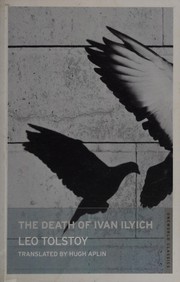
A novella-length masterpiece that introduces Tolstoy's moral seriousness and psychological precision in a single, devastating sitting. Reading it here, after Turgenev, shows how Russian writers move from social critique to existential crisis — the exact territory Dostoevsky will occupy.

A celebrated writer's close-reading guide to seven Russian short stories (Chekhov, Turgenev, Tolstoy, Gogol). Read after the first two books, it gives beginners a practical, joyful toolkit for understanding how Russian fiction works at the sentence and scene level.
Tolstoy: The Grand Realist
BeginnerExperience the full scope of the 19th-century Russian realist novel — its epic scale, its moral philosophy, and its portrait of society — so that Dostoevsky's radical departure from this tradition becomes vivid and meaningful.
▸ Study plan for this stage
Pace: 8–10 weeks, ~40–50 pages/day (accounting for re-reading key passages and reflection)
- Tolstoy's omniscient narrator and the illusion of objective reality: how the narrator's voice shapes our understanding of character and morality
- The interconnected plot structure: how multiple storylines (Anna-Vronsky, Levin-Kitty, Oblonsky-Dolly) mirror and comment on each other
- The realist portrait of Russian society: class, family, marriage, and social obligation as the primary forces shaping individual lives
- Moral philosophy embedded in narrative: Tolstoy's exploration of happiness, meaning, and redemption through concrete human experience rather than abstract doctrine
- The tension between passion and duty: how characters navigate desire, social convention, and spiritual growth
- Tolstoy's treatment of women and gender: the constraints of female agency and the radical nature of Anna's transgression
- The role of the land and rural life: Levin's spiritual quest and the contrast between city and country as moral landscapes
- How does Tolstoy's omniscient narrator create the effect of 'reality' in the novel, and how does this differ from the subjective, fragmented narration you might expect in modernist fiction?
- What are the major parallels and contrasts between the Anna-Vronsky plot and the Levin-Kitty plot, and what does Tolstoy suggest about the different paths to happiness or ruin?
- How does Tolstoy portray the constraints on women in 19th-century Russian society, and what makes Anna's choice to leave her husband so transgressive?
- What is Levin's spiritual crisis in the novel, and how does his engagement with farming, family, and faith offer a resolution (or non-resolution) to his search for meaning?
- How does Tolstoy use the social world—balls, salons, estates, Petersburg society—as both a setting and a moral force in the characters' lives?
- What is the significance of the novel's famous opening line ('All happy families are alike; each unhappy family is unhappy in its own way'), and how does the novel bear out or complicate this claim?
- Create a detailed character map showing the relationships between Anna, Vronsky, Levin, Kitty, Dolly, and Oblonsky; annotate it with key turning points and how each character's arc intersects with the others
- Track Levin's spiritual and philosophical development across the novel: identify 3–4 major moments of crisis or insight, and write a short paragraph explaining what each reveals about Tolstoy's conception of meaning and faith
- Analyze 2–3 key scenes (e.g., Anna's first meeting with Vronsky, Levin's proposal to Kitty, Anna's final night) by examining Tolstoy's use of physical sensation, dialogue, and interior monologue—how does he convey psychological states?
- Write a comparative essay (1,500–2,000 words) on the two marriages in the novel: Levin-Kitty vs. Anna-Vronsky. What does each marriage reveal about Tolstoy's views on love, commitment, and social order?
- Reread the opening and closing chapters (or sections) of the novel; write a reflection on how Tolstoy's treatment of happiness, family, and faith evolves from beginning to end
- Select one scene that exemplifies Tolstoy's 'realist' method (vivid social detail, psychological depth, moral ambiguity) and annotate it closely, noting how his style differs from Romantic or Gothic conventions
Next up: By mastering Tolstoy's epic realism—his faith in the power of narrative to capture the full complexity of human life and society—you will be prepared to understand how Dostoevsky radically rejected this approach, turning instead to psychological extremity, spiritual crisis, and the irrational forces that Tolstoy's omniscient narrator seemed to control.

The most accessible of Tolstoy's two great novels, with a gripping plot and unforgettable characters. It establishes the benchmark of Russian realism — social panorama, psychological depth, moral weight — against which Dostoevsky's fevered, underground world will feel all the more electric.

Not a separate book, but a note: the Pevear & Volokhonsky translation (Penguin Classics) is the most celebrated modern English version of Anna Karenina and should be the edition used — its fidelity to Tolstoy's rhythms is essential preparation for reading Dostoevsky in the same translators' hands.
Into Dostoevsky: The Underground & the Doubles
IntermediateEnter Dostoevsky's world through his shorter, stranger works — absorbing his psychological intensity, his dark humor, and his obsession with consciousness and suffering — before tackling the great novels.
▸ Study plan for this stage
Pace: 4–5 weeks, ~25–30 pages/day (approximately 150–180 pages per week). Week 1: Notes from Underground. Week 2: White Nights & The Dream of a Ridiculous Man. Week 3: Selections from The House of the Dead. Week 4–5: The Double, with review and reflection time.
- The Underground Man as prototype: consciousness as suffering, rationality vs. irrationality, and the rebellion against determinism
- Dostoevsky's use of the confession/monologue form to expose the narrator's inner contradictions and self-deception
- Psychological doubling and fragmentation: how characters split, mirror, and torment versions of themselves
- The theme of humiliation and wounded pride as drivers of human behavior and moral crisis
- Suffering as a path to consciousness and spiritual awakening (vs. utilitarian happiness)
- The grotesque and dark humor as tools for revealing psychological and spiritual truths
- Isolation, alienation, and the desperate hunger for human connection despite self-sabotage
- The critique of rationalist ideology (socialism, utilitarianism) through the lens of irrational human desire
- What is the Underground Man's central argument against rationalism and determinism, and how does his own behavior contradict or prove his point?
- How does Dostoevsky use the confession form in Notes from Underground and The Double to expose the narrator's self-deception and psychological fragmentation?
- What role does humiliation play in the psychological crises of the Underground Man, Nastenka, and Golyadkin, and what does it reveal about human nature?
- How do The Double and Notes from Underground explore the theme of doubling—literal (Golyadkin and his double) and psychological (the Underground Man's contradictions)?
- What does Dostoevsky suggest about the relationship between suffering, consciousness, and spiritual truth through the experiences of his narrators and characters?
- How do the prison sketches from The House of the Dead deepen your understanding of Dostoevsky's vision of human suffering and redemption?
- Close-read the Underground Man's 'Letter to the Reader' and opening tirade (Part I of Notes from Underground): annotate his key logical contradictions and mark where he seems most self-aware vs. most self-deluded.
- Write a 2–3 page character analysis of the Underground Man as a psychological portrait: what does his neurosis reveal about consciousness itself, and how does it anticipate the characters in your later reading?
- Create a 'doubling map' for The Double: track every instance where Golyadkin encounters, imagines, or is haunted by his double, and note how his sense of reality fractures with each encounter.
- Write a comparative monologue: compose a 1–2 page internal monologue in Dostoevsky's style (first-person, contradictory, confessional) from the perspective of either Nastenka or Golyadkin, capturing their psychological state.
- Analyze the role of humiliation in at least two texts (e.g., the Underground Man's encounter with the officer, Golyadkin's social failures, or a scene from The House of the Dead): how does shame drive the plot and reveal character?
- Reflect in a reading journal: which character or narrator most unsettled you, and why? What did Dostoevsky seem to be saying about human nature through that character's suffering?
Next up: Having absorbed Dostoevsky's psychological intensity, his exploration of consciousness and suffering, and his mastery of the fragmented, confessional voice through these shorter works, you are now prepared to enter the vast, polyphonic world of the great novels—where these same obsessions will unfold across multiple characters, ideologies, and moral crises on an epic scale.
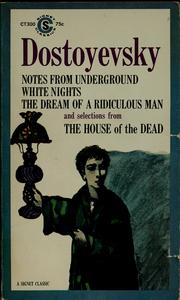
The essential gateway to Dostoevsky: short, furious, and philosophically radical. The Underground Man's tortured monologue introduces the anti-hero, the crisis of free will, and the confrontation with rationalism that will run through every major novel that follows.

A darkly comic, psychologically dizzying novella about identity and paranoia. Reading it alongside Notes from Underground reveals Dostoevsky's early obsessions and his debt to Gogol, and prepares the reader for the split, tormented characters of the great novels.
The Great Novels: Crime, Idiocy & Possession
IntermediateRead three of Dostoevsky's supreme masterworks in the order that best builds comprehension and emotional endurance, experiencing the full range of his genius — from crime and guilt to sainthood to political nihilism.
▸ Study plan for this stage
Pace: 12–14 weeks, ~40–50 pages/day. Crime and Punishment (4–5 weeks), The Idiot (4–5 weeks), The Brothers Karamazov (4–5 weeks), with 1–2 weeks for integration and reflection.
- Guilt, conscience, and the psychology of crime: Raskolnikov's theory of the extraordinary man and his descent into psychological torment in Crime and Punishment
- Redemption through suffering and Christian love: the transformative power of faith and human connection across all three novels
- The problem of evil and theodicy: why suffering exists and how it relates to God's justice, especially in The Brothers Karamazov's 'Grand Inquisitor' chapter
- Nihilism and the death of traditional values: the collision between rational materialism and spiritual meaning in modern Russia
- The idiot as moral ideal: Prince Myshkin's Christ-like innocence and his tragic inability to reform a corrupt society in The Idiot
- Family as microcosm of Russian society: how familial relationships reveal larger philosophical and political tensions
- Dostoevsky's polyphonic narrative: multiple perspectives and competing ideologies within a single work, requiring active interpretation
- What is Raskolnikov's theory of the extraordinary man, and how does his crime test and ultimately refute it in Crime and Punishment?
- How does Prince Myshkin's Christian humility and love contrast with the worldly ambitions of other characters in The Idiot, and what does his fate suggest about the possibility of sainthood in modern society?
- What is the significance of Ivan's 'Grand Inquisitor' chapter in The Brothers Karamazov, and how does Alyosha's response represent an alternative to Ivan's rational rejection of God?
- How do the three brothers in The Brothers Karamazov—Dmitri, Ivan, and Alyosha—embody different responses to the problem of suffering and faith?
- What role does Sonya play in Raskolnikov's redemption in Crime and Punishment, and what does her character suggest about the power of love and faith?
- How does Dostoevsky use the concept of freedom in these novels, particularly the tension between rational determinism and moral responsibility?
- Character tracking journal: As you read each novel, maintain a chart tracking the spiritual and psychological evolution of the protagonist (Raskolnikov, Myshkin, the Karamazov brothers). Note key turning points, moments of doubt, and shifts in their understanding of guilt, faith, or meaning.
- Philosophical debate reconstruction: After finishing Crime and Punishment, write a 2–3 page dialogue between Raskolnikov's theory of the extraordinary man and Sonya's faith-based morality. Repeat this exercise after The Idiot (Myshkin vs. Rogozhin) and The Brothers Karamazov (Ivan vs. Alyosha).
- Close reading of pivotal chapters: Select and annotate 3–4 crucial passages from each novel (e.g., Raskolnikov's fever dream, Myshkin's epileptic vision, the Grand Inquisitor chapter). Write 1–2 pages analyzing how Dostoevsky uses these moments to crystallize his philosophical concerns.
- Thematic comparison essay: Write a 4–5 page essay comparing how Crime and Punishment and The Brothers Karamazov each address the question 'Can a person live without faith?' Use specific textual evidence from both novels.
- Suffering and redemption timeline: Create a visual or written timeline for each protagonist showing the progression from crisis/crime through suffering to potential redemption. Identify what role other characters (Sonya, Myshkin, Alyosha) play as catalysts.
- Dostoevsky's polyphony exercise: Select one major ideological conflict from each novel (e.g., Raskolnikov vs. Sonya, Myshkin vs. Rogozhin, Ivan vs. Alyosha) and write competing monologues from each character's perspective, capturing their distinct worldviews without authorial judgment.
Next up: This stage immerses you in Dostoevsky's mature philosophical vision—the tension between reason and faith, crime and redemption, nihilism and love—preparing you to engage with secondary criticism, comparative analysis of Russian literature, and deeper exploration of how these novels influenced 20th-century thought and literature.
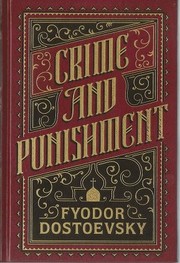
The natural first great novel: its thriller-like momentum makes it the most gripping entry point, while its exploration of guilt, pride, and redemption establishes the moral architecture of all Dostoevsky's major work.

After the dark intensity of Crime and Punishment, The Idiot offers Dostoevsky's most radical experiment: a truly good man placed into a corrupt world. Its tragic beauty deepens the reader's understanding of his spiritual vision before the full complexity of The Brothers Karamazov.

The summit of the Russian novel and one of the greatest books ever written. Saved for last because it synthesizes everything — philosophy, faith, family, murder, and love — and rewards every mile of the journey that precedes it.
Deep Companions: Understanding What You've Read
ExpertReturn to the tradition with two essential critical companions that illuminate Dostoevsky's place in world literature and unlock layers of meaning invisible on a first reading.
▸ Study plan for this stage
Pace: 8–10 weeks, ~40–50 pages/day (Frank's biography first: 4–5 weeks; Levine's critical study second: 3–4 weeks). Allow 1 week for integration and synthesis.
- Dostoevsky's biographical arc and psychological development as a lens for understanding his artistic vision and ideological evolution
- The relationship between Dostoevsky's lived experience (exile, suffering, faith crisis) and the philosophical conflicts embedded in his novels
- Realism as a contested literary mode: how Levine defines realism beyond surface mimesis to include psychological depth and moral imagination
- The role of consciousness, doubt, and interior contradiction as central to both Dostoevsky's method and Levine's theory of the realistic imagination
- How Dostoevsky's novels function as philosophical investigations rather than mere narratives—the marriage of form and idea
- The tradition of the Russian novel as distinct from Western European realism: Dostoevsky's place within and against that tradition
- Levine's argument that realism is fundamentally about ethical engagement and the reader's imaginative participation, not detached observation
- How do the major turning points in Dostoevsky's biography (his arrest, Siberian exile, spiritual crisis, return to faith) manifest thematically and structurally in his novels?
- What does Frank argue about the relationship between Dostoevsky's personal suffering and his artistic genius? How does this complicate romantic notions of the tortured artist?
- According to Levine, what distinguishes the 'realistic imagination' from mere realism or naturalism? How does this definition apply to Dostoevsky's practice?
- How do Dostoevsky's novels embody Levine's claim that realism requires the reader to imaginatively inhabit consciousness and moral ambiguity rather than passively consume a story?
- What is the relationship between doubt, contradiction, and psychological authenticity in Dostoevsky's characterization, as illuminated by both Frank and Levine?
- How does understanding Dostoevsky's place in the Russian literary tradition (via Frank) reshape your reading of his formal and philosophical choices (via Levine)?
- Create a detailed timeline of Dostoevsky's life (using Frank) and annotate it with the novels he was writing at each stage; identify 3–4 biographical crises and trace their thematic echoes in specific scenes from the novels you've already read.
- Write a 2–3 page analytical essay on one major character from a Dostoevsky novel (e.g., Raskolnikov, Ivan Karamazov, Myshkin) using Frank's biographical insights to explain the character's psychological contradictions.
- Read Levine's introduction and conclusion closely, then return to a single chapter from one of Dostoevsky's novels and annotate it for evidence of the 'realistic imagination'—moments where consciousness, doubt, or moral ambiguity become the true subject.
- Comparative exercise: select one scene from Dostoevsky and one from a Western European realist (Balzac, Flaubert, George Eliot) and analyze how Levine's framework reveals different approaches to representing consciousness and moral life.
- Create a concept map showing how Frank's biographical narrative and Levine's critical theory intersect—where does lived experience become literary form? Use specific examples from both books.
- Write a reading journal entry (500–750 words) reflecting on how Frank's portrait of Dostoevsky's spiritual crisis and Levine's theory of realism as ethical imagination have changed your understanding of one novel you've already completed.
Next up: This stage anchors Dostoevsky firmly within literary history and critical theory, equipping you with both biographical context and a sophisticated vocabulary for analyzing realism itself—preparing you to engage with comparative studies, later critical interpretations, or a deeper return to the novels with these frameworks fully internalized.
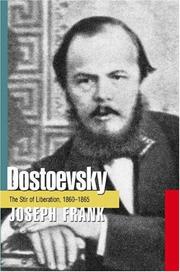
Joseph Frank's five-volume biography is the definitive life-and-works study in English; this final volume (covering the great novels) is the ideal companion after reading them. Frank reads the novels through their historical and intellectual context in a way that permanently enriches them.
A landmark study of 19th-century realism that places the Russian novel in its broader European context, helping the reader understand what Tolstoy and Dostoevsky were reacting to and transforming — the perfect capstone for a curriculum built on that contrast.
Discussion
Keep reading
Paths that share books, cover the same subject, or open a related topic.