Russia & Ukraine: how we got here
This curriculum moves from accessible narrative history through deep structural analysis to frontline journalism and geopolitical consequence. Each stage builds the vocabulary — imperial, Soviet, post-Soviet, and military — needed to fully absorb the next, turning a beginner into a genuinely informed reader on one of the defining conflicts of the 21st century.
Foundations: Land, People & Empire
BeginnerGrasp the deep historical roots of Russia and Ukraine as distinct yet entangled civilizations, and understand why their shared imperial past makes the present conflict so charged.
▸ Study plan for this stage
Pace: 8–10 weeks total: Weeks 1–5 for "The Gates of Europe" (~25–30 pages/day, 5 days/week), and Weeks 6–10 for "Natasha's Dance" (~25–30 pages/day, 5 days/week). Reserve one day per week for review, map work, and journaling. Both books are accessible to beginners but are dense with names and places, so a
- Ukraine as a borderland civilization: Plokhy's central argument that Ukraine is not a peripheral footnote to Russian history but a distinct civilization shaped by its position at the crossroads of empires (Mongol, Polish-Lithuanian, Ottoman, Russian)
- Kyivan Rus' as a contested origin myth: both Russia and Ukraine claim Kyivan Rus' as their founding civilization — understanding why this matters to national identity today
- The Cossack identity and the Hetmanate: how the Zaporozhian Cossacks forged a proto-national Ukrainian identity and why the destruction of the Hetmanate by Catherine the Great was a defining trauma
- Imperial absorption and the erasure of Ukrainian identity: the Ems Decree and repeated Tsarist/Soviet suppression of the Ukrainian language and culture as tools of imperial consolidation
- Russian cultural identity as a constructed 'myth of the people': Figes shows how Russian intellectuals, artists, and tsars actively invented and romanticized a 'Russian soul' — and how that myth was used to justify imperial expansion
- The peasant and the intelligentsia: Figes's exploration of the tension between the Westernized Russian elite and the vast peasant majority, and how this shaped Russian cultural nationalism
- Overlapping yet distinct cultural memories: both books together reveal that Russians and Ukrainians share many historical experiences but have built fundamentally different — and often competing — national narratives from them
- Empire as a lived cultural experience: how centuries of imperial rule shaped language, religion, art, and self-perception in both Russia and Ukraine in ways that still reverberate today
- According to Plokhy, why is the name 'Ukraine' (meaning 'borderland') both historically accurate and politically loaded — and how has that label been used to deny Ukrainian statehood?
- How did the Pereyaslav Agreement of 1654 come to be interpreted so differently by Russian and Ukrainian historians, and why does Plokhy treat this ambiguity as central to understanding the conflict?
- In 'Natasha's Dance,' how does Figes argue that the Russian cultural identity forged in the 18th and 19th centuries was simultaneously anti-Western and deeply indebted to Western European ideas — and what contradictions did this create?
- How did the Romanov Empire's treatment of Ukrainian language and culture (e.g., the Ems Decree of 1876) reflect a broader imperial logic that Plokhy traces across multiple centuries?
- Figes describes the Russian intelligentsia's idealization of the peasant ('going to the people'). How does this romantic nationalism compare to the Cossack-centered national mythology Plokhy describes in Ukrainian history?
- Having read both books: in what specific ways are Russian and Ukrainian national identities entangled, and in what ways are they genuinely distinct? What does each author see as the most important dividing line?
- Mapwork journal: As you read 'The Gates of Europe,' draw or annotate a series of simple maps showing how the territory of modern Ukraine changed hands across key periods (Kyivan Rus', Mongol invasion, Polish-Lithuanian Commonwealth, Cossack Hetmanate, Russian Empire). Label each map with one sentence explaining what that shift meant for Ukrainian identity.
- Parallel timeline: Create a two-column timeline — one column for events Plokhy highlights as formative for Ukraine, one for events Figes highlights as formative for Russia. Look for moments where the two columns intersect or directly conflict, and write 2–3 sentences on what each side 'remembers' about that shared moment.
- Close-reading response: After finishing Plokhy's chapters on the Cossack era, write a one-page informal response to this prompt: 'Who were the Cossacks, and why does it matter whether they are claimed as Ukrainian heroes or Russian imperial subjects?'
- Cultural artifact hunt: While reading 'Natasha's Dance,' choose ONE cultural artifact Figes analyzes in depth (e.g., a Tolstoy novel, a Tchaikovsky ballet, a folk song tradition) and spend 30 minutes engaging with it directly — read an excerpt, listen to a piece, or look at a painting. Then write a paragraph connecting it back to Figes's argument about Russian identity.
- Contested concept glossary: Build a personal glossary of 10–15 terms that appear in both books but carry different weight depending on who is using them (e.g., 'Little Russia,' 'Slavic brotherhood,' 'the steppe,' 'Orthodox civilization'). For each term, write one sentence from a Russian imperial perspective and one from a Ukrainian national perspective.
- Synthesis essay (end of stage): Write a 400–600 word response to the question: 'How did the Russian Empire's cultural and political project make the existence of a separate Ukrainian national identity both inevitable and dangerous?' Draw explicitly on specific arguments and examples from both Plokhy and Figes.
Next up: By establishing that Russia and Ukraine are neither simply 'one people' nor entirely separate strangers, but civilizations whose identities were forged in deliberate opposition to each other within the same imperial crucible, this stage equips the reader to engage with the modern political and military history of the conflict — where those deep identity questions exploded into 20th- and 21st-centu

The single best starting point: a clear, chronological history of Ukraine from antiquity to the Maidan revolution, written by the world's leading scholar of the region. It establishes Ukraine's identity as a real, distinct nation — the essential foundation for everything that follows.
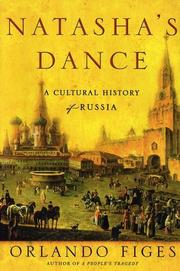
A sweeping cultural history of Russia that explains the myths, messianism, and imperial imagination that Putin later weaponizes. Reading it after Plokhy lets you see both sides of the civilizational argument simultaneously.
The Soviet Century & Its Collapse
BeginnerUnderstand how Soviet rule shaped both Russia and Ukraine — including the Holodomor, WWII memory, and the chaotic 1991 collapse — and why that legacy is still a live battlefield today.
▸ Study plan for this stage
Pace: 8–10 weeks total. Week 1–6: "Red Famine" by Anne Applebaum (~25–30 pages/day, reading in thematic chunks — grain requisitions, resistance, the famine itself, and cover-up). Week 7–10: "The Soviet Union" by Stephen Lovell (~20–25 pages/day, reading chronologically to trace the arc from Lenin through
- The Holodomor as deliberate policy: Applebaum's argument that Stalin's grain requisition campaigns in Ukraine were not merely a byproduct of collectivization but a targeted assault on Ukrainian national identity and peasant resistance
- Collectivization and the destruction of the peasantry: how the Soviet state's war on private farming dismantled traditional Ukrainian rural life and created the structural conditions for mass starvation
- Soviet nationalities policy: the tension between the early Bolshevik promotion of Ukrainian language and culture (Ukrainization) and its violent reversal under Stalin, as traced in both Applebaum and Lovell
- Propaganda, denial, and historical memory: how the Soviet state suppressed knowledge of the famine internally and internationally, and why this silence became a contested legacy — a theme central to Applebaum's final chapters
- WWII and competing victimhood narratives: Lovell's account of how the 'Great Patriotic War' became the Soviet Union's founding myth, and how Ukraine's wartime experience (including collaboration and resistance) complicated that myth
- The Brezhnev stagnation and the seeds of collapse: Lovell's analysis of how ideological exhaustion, economic dysfunction, and nationalist stirrings across Soviet republics made the USSR brittle long before 1991
- Gorbachev's reforms and the unraveling: glasnost and perestroika as Lovell presents them — well-intentioned attempts to save the system that instead unleashed the forces that destroyed it
- 1991 and the birth of post-Soviet states: the chaotic, negotiated, and deeply incomplete nature of the USSR's dissolution, and why both Russia and Ukraine emerged from it with unresolved questions of identity, borders, and legitimacy
- According to Applebaum in 'Red Famine,' what specific policy decisions transformed a food shortage into a deliberate famine, and what evidence does she use to distinguish the Ukrainian famine from the broader Soviet famine of the same period?
- How did Stalin's reversal of Ukrainization — the suppression of Ukrainian language, intellectuals, and cultural institutions — relate to the famine, and why does Applebaum treat these as connected rather than separate events?
- Using Lovell's account of the Soviet system, how did the Communist Party maintain control across such a vast, multi-ethnic empire, and what were the structural weaknesses that this system concealed?
- How does Lovell characterize the role of WWII memory in Soviet political culture, and why did the 'Great Patriotic War' narrative become more, not less, dominant in the Brezhnev era rather than fading over time?
- What does Lovell identify as the key reasons Gorbachev's reforms accelerated the USSR's collapse rather than stabilizing it, and which of those factors were most relevant to Ukraine's push for independence?
- Taken together, what do Applebaum and Lovell suggest about why the Soviet past remains a 'live battlefield' between Russia and Ukraine today — specifically around questions of victimhood, historical responsibility, and national identity?
- Famine policy timeline: After finishing 'Red Famine,' build a chronological timeline (1929–1934) mapping each key Soviet policy decision Applebaum describes — dekulakization, grain quotas, the internal passport system, blacklisting of villages — and annotate each entry with its specific impact on Ukraine vs. other Soviet regions. This forces you to track her argument step by step.
- Applebaum's evidence audit: Choose one chapter from 'Red Famine' and list every type of source Applebaum cites (survivor testimony, Soviet archives, diplomatic cables, etc.). Write a short paragraph assessing: what does each source type prove, and what are its limits? This builds critical reading habits essential for contested history.
- Soviet system diagram: After reading Lovell, draw a simple diagram of how the Soviet state actually functioned — Party, state, secret police, republics, economy — and annotate where the system's key pressure points and failure modes were. Then mark on the diagram where Ukraine sat and how it was controlled.
- Competing narratives comparison: Write one page from the perspective of official Soviet historiography on the 1932–33 famine (using Lovell's account of Soviet propaganda culture) and one page from the perspective Applebaum reconstructs from survivor testimony. Then write a short reflection on what each narrative omits and why.
- 1991 independence research exercise: Using Lovell's account of the collapse as your framework, look up Ukraine's August 1991 independence declaration and the December 1991 referendum result (90% in favor). Write 200 words connecting what Lovell describes about Soviet nationalities policy to why that number was so high — including in historically Russian-speaking regions.
- Living legacy journal: After completing both books, write a one-page personal reflection answering: 'Which single event or policy from this stage do you think has had the longest shadow over Russia-Ukraine relations, and why?' Revisit this entry after completing the next stage of the curriculum to see if your answer changes.
Next up: By establishing how Soviet rule created deep, unresolved tensions — over Ukrainian identity, historical memory, and the legitimacy of borders — this stage sets up the next stage's examination of how those tensions erupted in the post-Soviet political arena, from the Orange Revolution through the Maidan and beyond.

A rigorous, deeply researched account of Stalin's deliberate famine in Ukraine (1932–33). It explains why Ukrainians experience Soviet history so differently from Russians, and why the Holodomor is central to Ukrainian national consciousness.

A compact, authoritative overview of the entire Soviet arc — ideology, nationalities policy, and collapse. Placed here to give the reader a structural map of the USSR before diving into the messy post-Soviet world.
Putin's Russia & Ukraine's Awakening
IntermediateUnderstand how Putin rebuilt Russian power and identity, why Ukraine repeatedly chose a European path, and how the 2014 Maidan revolution and annexation of Crimea set the stage for full-scale war.
▸ Study plan for this stage
Pace: 8–10 weeks total; ~25–30 pages/day, 5 days/week. Week 1–3: "The Man Without a Face" (Gessen) — read in three roughly equal chunks, pausing after each to journal. Week 4–6: "Ukraine Crisis" (Wilson) — denser analytical text; slow to ~20 pages/day and take structured notes. Week 7–9: "Nothing Is True
- Putin's biography as a KGB product: how his formative years in Soviet intelligence shaped his worldview, his contempt for democratic norms, and his model of power (Gessen)
- The 'managed democracy' system: how the Kremlin hollowed out Russian institutions — courts, media, elections — while maintaining a democratic facade (Gessen & Pomerantsev)
- Russian national identity reconstruction: the post-Soviet search for a usable past, the revival of Orthodox nationalism, and the myth of a 'Russian world' (Russkiy Mir) that explicitly includes Ukraine (Gessen & Wilson)
- Ukraine's fractured political geography: the deep regional, linguistic, and historical fault lines that Russian propaganda exploited, and why they do not map neatly onto a 'pro-Russia East vs. pro-EU West' binary (Wilson)
- The Maidan revolution (2013–14): its grassroots origins, the role of civil society, Yanukovych's flight, and why Ukrainians framed it as a civic rather than ethnic uprising (Wilson)
- Annexation of Crimea and the Donbas war: the legal, military, and information-warfare dimensions; how 'little green men' and hybrid war became a template (Wilson)
- Postmodern authoritarianism and the weaponization of unreality: Pomerantsev's thesis that the Kremlin does not push a single ideology but deliberately floods the information space with contradictions to paralyze critical thought (Pomerantsev)
- The role of oligarchs, TV, and performance in Putinist Russia: how wealth, celebrity culture, and surrealist media spectacle became tools of political control (Pomerantsev)
- According to Gessen, which specific episodes in Putin's KGB career and early political rise reveal the methods he would later apply at the national level — and what does his handling of the Kursk submarine disaster tell us about his relationship with truth and accountability?
- Wilson argues that Ukraine's repeated 'European choice' cannot be reduced to simple ethnic or linguistic identity. What structural, historical, and civic factors does he identify as driving Ukrainian agency, and how does this challenge the 'divided Ukraine' narrative promoted by Moscow?
- How did the Kremlin's information strategy during the Crimea annexation and Donbas conflict, as analyzed by Wilson, reflect the broader logic of 'nothing is true and everything is possible' that Pomerantsev documents inside Russia itself?
- Pomerantsev describes a Russia where ideology has been replaced by performance and cynicism. How does this 'postmodern authoritarianism' differ from Soviet-era totalitarianism, and why does it make resistance harder to organize?
- Taken together, what do all three books suggest about the relationship between domestic repression inside Russia and Russian aggression toward Ukraine — are they the same system expressing itself in two directions?
- What blind spots or limitations does each author bring? Consider Gessen's focus on Putin as an individual, Wilson's policy-analyst framing, and Pomerantsev's literary-journalist lens — how do they complement and correct each other?
- Character & event timeline: Build a single shared timeline across all three books. Mark Putin's key career moves (Gessen), Ukrainian political crises — Orange Revolution, Maidan, Crimea (Wilson), and Pomerantsev's dated vignettes. Look for moments where all three narratives intersect and annotate them.
- Propaganda deconstruction log: While reading Pomerantsev, collect 5–8 specific Kremlin media techniques he names or illustrates. Then go back to Wilson's chapters on the Donbas information war and match each technique to a real-world example Wilson documents. Write a one-page synthesis.
- Competing narratives exercise: Write two short paragraphs (150 words each) describing the 2014 Maidan — one from the Kremlin's framing as reconstructed across the three books, one from the Ukrainian civic perspective Wilson presents. Then write a third paragraph explaining which evidence you find more persuasive and why.
- Biographical power-mapping: After finishing Gessen, draw a network diagram of Putin's inner circle as she describes it — siloviki, oligarchs, loyalists. Annotate each node with the mechanism of loyalty (fear, money, ideology). Revisit the diagram after Pomerantsev to add the media and cultural figures he profiles.
- Weekly reading journal (one entry per book): After finishing each book, write 400–500 words answering: What is the author's central argument? What is the strongest piece of evidence? What am I most skeptical of? This trains critical reading and prepares you for the synthesis week.
- Comparative essay (end of stage): Write a 600–800 word essay answering: 'Do Gessen, Wilson, and Pomerantsev agree on why full-scale conflict between Russia and Ukraine became likely after 2014?' Identify at least one point of genuine disagreement between the authors and take a position on it.
Next up: By understanding how Putin consolidated power, how Ukraine developed its own civic identity, and how the Kremlin weaponized information and hybrid warfare through 2014, the reader has the causal foundation needed to study the full-scale invasion of 2022 — its military execution, international response, and the deeper question of whether this war represents a turning point for the post-Cold War Eur
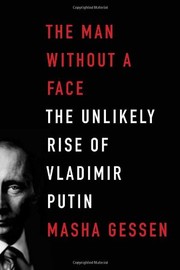
The definitive critical biography of Putin — his KGB formation, his seizure of the state, and the authoritarian system he built. Essential for understanding the decision-maker at the center of the war.

A clear, expert account of the 2013–14 Maidan revolution and Russia's annexation of Crimea — the direct prequel to the 2022 invasion. Wilson explains Ukrainian politics from the inside, correcting Western misconceptions.
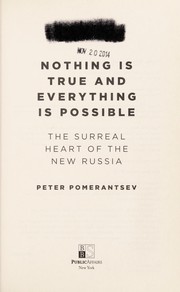
A firsthand account of working inside Putin's media machine, revealing how reality itself became a weapon of the Russian state. Builds crucial intuition for understanding Russian information warfare, which is inseparable from the military war.
The War: On the Ground & In the World
IntermediateFollow the 2022 invasion in real time through frontline reporting and strategic analysis, and understand how the war is reshaping NATO, energy markets, and the global order.
▸ Study plan for this stage
Pace: 3–4 weeks, ~25–30 pages/day — Harding's narrative moves fast with short, punchy chapters, so a brisk daily pace keeps the momentum of the unfolding invasion intact; allow extra time on weeks 2–3 to pause and cross-reference maps and news timelines.
- The strategic logic (and miscalculations) behind Putin's decision to launch the full-scale invasion on 24 February 2022 — why the Kremlin expected a 72-hour victory and why that assumption collapsed
- Frontline geography: the significance of Kyiv, Kharkiv, Mariupol, Kherson, and the Donbas as distinct military theaters with different tactical and symbolic stakes
- Ukrainian civilian and military resistance as a political and moral force — how ordinary Ukrainians, the Zelensky government, and the Territorial Defense Forces shaped the war's early trajectory
- The role of Western intelligence (particularly US and UK) in warning of the invasion and the subsequent flow of military aid (Javelins, NLAWs, HIMARS) as a new model of proxy-support warfare
- Information warfare and narrative control: Russian state media's framing vs. on-the-ground reporting, and how Harding's embedded journalism itself becomes a primary source
- NATO's transformation: from 'brain-dead' alliance (Macron, 2019) to reinvigorated collective-defense body, including Finland and Sweden's accession bids
- Energy as a weapon: Russia's gas leverage over Europe, the Nord Stream sabotage, and the accelerated European pivot to LNG and renewables
- The emerging multipolar world order — how the war exposed fault lines between the Global South, China's ambiguous position, and the Western-led rules-based international system
- According to Harding's reporting, what were the principal intelligence and strategic failures on the Russian side that caused the initial Kyiv offensive to stall, and what does this reveal about the Kremlin's decision-making culture?
- How does Harding portray the experience of Ukrainian civilians under occupation or bombardment, and in what ways does their agency challenge the Russian narrative of a 'liberation' operation?
- What specific Western weapons systems or intelligence-sharing arrangements does Harding identify as turning points, and how did their introduction change battlefield dynamics?
- How did the invasion immediately reshape European energy policy, and what does Harding's account suggest about the long-term geopolitical consequences of Europe's prior dependence on Russian gas?
- In what ways does the war described in 'Invasion' represent a stress-test of the post-Cold War international order — and which institutions or norms does Harding imply are most at risk?
- How does Harding's own position as a journalist who was previously expelled from Russia color his narrative voice, and what does this ask of the reader in terms of source criticism?
- Map the war: As you read each chapter, mark on a printed or digital map of Ukraine the locations Harding mentions. Annotate each with the date, the military event, and the outcome. By the end of the book you should have a living operational map of the 2022 campaign.
- Timeline reconstruction: Build a week-by-week chronology of the invasion's first six months using only Harding's text, then compare it against a publicly available timeline (e.g., BBC, Institute for the Study of War). Note where Harding's frontline perspective adds detail — or where the fog of war creates gaps.
- Narrative voice audit: Choose three passages where Harding editorializes or expresses clear moral judgment. Write a one-paragraph analysis of each: What is he claiming? What evidence does he cite? What counterargument is he implicitly dismissing? This builds critical reading habits for war journalism.
- Energy dependency deep-dive: After finishing the book's sections on energy, research (via public EU or IEA data) Europe's actual gas import figures from Russia in 2021 vs. 2023. Write a one-page memo explaining how the war accelerated the energy transition and what vulnerabilities remain.
- Strategic memo exercise: Imagine you are a NATO policy analyst in March 2022. Using only the information Harding provides up to that point in the book, write a 300-word memo advising the Secretary-General on the single most urgent alliance decision. Then re-read the memo after finishing the book and annotate what you got right or wrong.
- Comparative perspective journal: After every 50 pages, write a short journal entry (150–200 words) from the perspective of one of the following actors Harding mentions — a Ukrainian refugee, a Russian conscript, a German energy minister, or a NATO planner. This forces active engagement with the book's multiple levels of analysis.
Next up: Harding's ground-level and geopolitical account of the 2022 invasion establishes the living stakes and current dynamics of the conflict, providing the essential contemporary anchor from which the next stage can zoom out to examine deeper historical, cultural, or diplomatic frameworks that explain how Russia, Ukraine, and the West arrived at this moment.

A fast-paced, on-the-ground account of the 2022 Russian invasion by a veteran Guardian correspondent who has covered Russia for decades. Provides the narrative texture and human cost that structural histories cannot.
Deep Dive: Empire, Democracy & the New World Order
ExpertAnalyze the war as a symptom of larger forces — the crisis of liberal democracy, the return of great-power competition, and the contest between imperial and post-imperial visions of sovereignty.
▸ Study plan for this stage
Pace: 6–7 weeks total: Weeks 1–3 cover "Twilight of Democracy" (~25–30 pages/day, including re-reading key passages and note-taking); Weeks 4–7 cover "New Cold Wars" (~30–35 pages/day, given its denser geopolitical scope). Reserve the final 2–3 days of each book for synthesis and reflection before moving
- Authoritarian nostalgia and the intellectual defection from liberal democracy — Applebaum's argument that educated elites, not just populist masses, are drawn to autocracy out of resentment, status anxiety, and a longing for clarity over pluralism
- The 'clerisy' and the role of ideological entrepreneurs — how writers, media figures, and political operatives construct and legitimize illiberal narratives in Poland, Hungary, the UK, and beyond
- Lumpers vs. splitters: Applebaum's framework for understanding why some people thrive in open, ambiguous democracies while others crave hierarchy and singular national myths
- Imperial vs. post-imperial sovereignty — the contest between Russia's civilizational-imperial vision of a sphere of privileged interests and Ukraine's post-colonial insistence on full sovereign self-determination
- The return of great-power competition — Sanger's documentation of how the US, China, and Russia are simultaneously waging conventional, cyber, economic, and informational conflicts that defy Cold War-era categories
- The crisis of the liberal international order — how institutions built after 1945 (NATO, the UN, WTO) are strained by revisionist powers and eroded by internal democratic backsliding among their own members
- Nuclear deterrence in the 21st century — Sanger's analysis of how Putin's nuclear signaling and China's arsenal expansion are rewriting the rules of escalation management that governed the original Cold War
- Information warfare as a systemic tool — how disinformation, social media manipulation, and the corruption of domestic political discourse in Western democracies are integral weapons in the new great-power contest
- According to Applebaum, what psychological and sociological factors make liberal democracy vulnerable to betrayal from within its own educated elite — and how do the specific cases she examines (Poland, Hungary, UK) illustrate a common pattern rather than isolated national stories?
- How does Applebaum's concept of 'authoritarian nostalgia' help explain the ideological environment in which Putin's revisionism finds sympathizers and useful idiots in the West?
- In Sanger's account, in what concrete ways does the war in Ukraine represent both a test case and a turning point for the post-Cold War liberal order — and what does the Western response reveal about the order's remaining strengths and structural weaknesses?
- How does Sanger characterize the relationship between the Russia conflict and the broader US-China rivalry — are they separate theaters or deeply intertwined, and what are the implications for American strategy?
- Taken together, what do Applebaum and Sanger suggest about the internal and external threats to liberal democracy — and do their diagnoses point toward compatible or conflicting prescriptions for democratic resilience?
- How do both authors treat the agency of smaller or mid-sized states (Ukraine, Poland, Taiwan) — as pawns of great powers or as active shapers of the new world order?
- Comparative annotation log: As you read each book, maintain a two-column running log — one column for 'internal threats to democracy' (Applebaum's terrain) and one for 'external/geopolitical threats' (Sanger's terrain). At the end of Stage 4, write a 400-word synthesis identifying where the two columns intersect.
- Case-study mapping: Choose one country discussed prominently in both books (e.g., Poland or Hungary). Write a 500-word profile tracing how that country appears in Applebaum's domestic-politics lens versus Sanger's geopolitical lens — what does each perspective reveal that the other misses?
- Argument stress-test: Applebaum argues that the turn toward authoritarianism is driven significantly by elite psychology rather than economic grievance. Write a one-page devil's advocate rebuttal using evidence from Sanger's reporting on populist movements and great-power exploitation of democratic discontent.
- Nuclear escalation timeline: Using Sanger's chapters on nuclear signaling, construct a chronological timeline of Russian and Chinese nuclear posture changes since 2014. Annotate each event with a one-sentence note on how it affected Western deterrence calculations.
- Op-ed drafting exercise: Write a 600-word op-ed (as if for a serious policy publication) arguing either FOR or AGAINST the proposition: 'The greatest threat to the liberal world order comes from within democracies, not from authoritarian great powers.' Draw explicitly on both Applebaum and Sanger for evidence and counterevidence.
- Discussion question set: Draft five seminar-style discussion questions that could only be answered by someone who has read both books — questions that force integration of Applebaum's cultural/political analysis with Sanger's strategic/geopolitical reporting. Then write brief model answers for each.
Next up: By mapping both the internal rot of democratic institutions (Applebaum) and the external architecture of great-power rivalry (Sanger), the reader is now equipped to move into a final synthesis stage that asks what a durable, reformed liberal order — and a just resolution in Ukraine — might actually look like in practice.
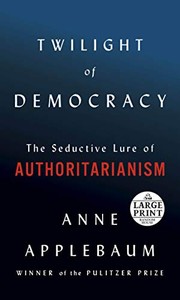
Applebaum examines why intellectuals across Eastern Europe and the West turned toward authoritarianism, providing the ideological framework that connects Putin's Russia to broader democratic backsliding globally.

A senior New York Times correspondent maps how the Ukraine war intersects with US-China rivalry, nuclear risk, and the fracturing of the post-1945 international order — the essential final lens for understanding the war's full global consequence.
Discussion
Keep reading
Paths that share books, cover the same subject, or open a related topic.