How to learn Great fiction
This curriculum builds a deep appreciation for great fiction by moving from accessible, plot-driven classics to psychologically complex masterworks and finally to formally ambitious, challenging literature. Each stage sharpens a new layer of reading skill — story and character first, then theme and voice, then structure and meaning — so that by the end the reader can engage with any great novel on its own terms.
Foundations: Story & Character
BeginnerDevelop the habit of deep reading by experiencing gripping plots, vivid characters, and clear moral stakes — building the emotional vocabulary that all great fiction demands.
▸ Study plan for this stage
Pace: 6–8 weeks total. Week 1: "Of Mice and Men" (~30 pages/day, finish in 3–4 days, then 2–3 days for reflection). Weeks 2–3: "The Old Man and the Sea" (~20 pages/day, finish in ~5 days, then 1 week for deeper re-reading and journaling). Weeks 4–8: "Jane Eyre" (~25–30 pages/day across 4 weeks, with one m
- Plot architecture and inevitability: how Steinbeck builds every scene in 'Of Mice and Men' toward a tragic, unavoidable conclusion — teaching readers to feel narrative momentum
- Character as desire: understanding characters by what they want (Lennie's rabbits, George's farm, Santiago's marlin, Jane's dignity and love) and how that want drives every decision
- Moral stakes and dramatic irony: recognizing when the reader knows more than a character does, and how that gap creates dread, sympathy, or tension (e.g., Lennie's danger to Curley's wife)
- Symbolism grounded in the concrete: the rabbits and the farm in 'Of Mice and Men', the marlin and the lions in 'The Old Man and the Sea', the red room and Thornfield Hall in 'Jane Eyre' — objects and places that carry emotional weight beyond their literal meaning
- The interior life of a protagonist: Hemingway's Santiago thinks aloud to himself at sea; Jane Eyre's first-person narration gives direct access to her reasoning and self-respect — two contrasting techniques for revealing inner character
- Endurance as a moral theme: both Santiago and Jane Eyre are tested to their limits and refuse to surrender their core identity — recognizing how fiction uses suffering to define character
- Voice and narrative distance: the stark, almost biblical third-person of Steinbeck and Hemingway versus Brontë's intimate, confessional first-person 'Reader, I married him' — how narrative voice shapes emotional closeness
- Social constraint and the individual: how class, gender, and poverty operate as invisible forces on George and Lennie, on Santiago, and especially on Jane — building awareness of fiction's power to illuminate systemic injustice
- In 'Of Mice and Men', why does George make the choice he does at the end — and does Steinbeck frame it as mercy, tragedy, or both? What specific details in the preceding chapters prepare you to feel it as inevitable?
- Hemingway famously described his 'Iceberg Theory' — that the dignity of movement of an iceberg is due to only one-eighth of it being above water. Where in 'The Old Man and the Sea' do you feel the seven-eighths beneath the surface? What is Santiago's struggle really about beyond catching a fish?
- Jane Eyre refuses Rochester's offer to keep her as his mistress even though she loves him and it would end her suffering. What does this scene reveal about how Brontë defines self-respect, and how does Jane's reasoning differ from what a purely plot-driven character would do?
- Compare the role of a dream or goal in all three books: George and Lennie's farm, Santiago's great fish, Jane's search for belonging and equality. How does each author use that dream to reveal character and generate plot?
- Each of these three books has a moment of devastating loss. How does the emotional impact differ across the three, and what craft choices (pacing, point of view, language) does each author use to control how the reader feels that loss?
- By the end of 'Jane Eyre', how has Jane changed from the child in the red room — and how has she stayed exactly the same? What does Brontë suggest about the relationship between identity and circumstance?
- 'One-sentence want' character cards: For every major character in each book (George, Lennie, Curley's wife, Santiago, Jane, Rochester, St. John Rivers), write a single sentence stating what they want and what stands in their way. Pin them up and revise them as you read — this trains the habit of reading character through desire.
- Annotate a key scene for craft: Choose one scene from each book — recommended: the barn scene in 'Of Mice and Men', Santiago's first night alone at sea, and Jane's confrontation with Rochester after the wedding is stopped. Underline every word choice, sentence rhythm, or detail that seems deliberate. Write two sentences in the margin explaining what effect each choice creates.
- Rewrite a paragraph in a different voice: Take one paragraph of Hemingway's spare prose from 'The Old Man and the Sea' and rewrite it in Brontë's intimate first-person style — then reverse it. This makes the difference between narrative voices visceral and unforgettable.
- Moral stakes journal: After finishing each book, write a half-page entry answering: 'What was the hardest choice a character had to make, and what would I have done?' Ground every claim in a specific scene. This builds the emotional vocabulary the stage is designed to develop.
- Symbolic object tracker: Keep a running list of recurring objects or images in each book (the rabbits, the puppy, and Candy's dog in Steinbeck; the lions and the marlin's skeleton in Hemingway; fire, ice, and the red room in Brontë). After finishing each book, write a short paragraph explaining how one object accumulates meaning across the whole narrative.
- Comparative essay (300–500 words): After completing all three books, write a short essay on this prompt — 'All three protagonists face a moment where they must choose between survival and integrity. Compare how one character from each book navigates that choice.' This synthesizes the stage's key concepts and prepares you for more analytical reading ahead.
Next up: By internalizing how plot, character desire, moral stakes, and narrative voice work in these three compact, emotionally clear novels, the reader has built the foundational emotional and craft vocabulary needed to tackle longer, more structurally complex, or more ambiguous works of great fiction with confidence and analytical depth.
Short, perfectly constructed, and emotionally devastating — it teaches how economy of prose and character can carry enormous weight. An ideal first lesson in what fiction can do.
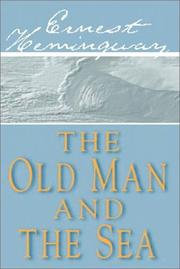
Introduces Hemingway's iceberg theory: meaning lives beneath the surface of plain sentences. Trains the reader to listen for what is left unsaid.
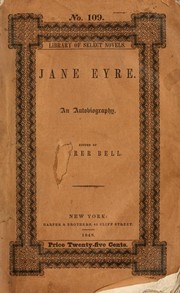
A propulsive, emotionally rich novel that shows how a strong first-person voice can make a reader inhabit another life completely — a cornerstone of character-driven fiction.
Voice & Moral Complexity
BeginnerUnderstand how an author's narrative voice shapes meaning, and begin to sit with moral ambiguity rather than expecting simple answers from fiction.
▸ Study plan for this stage
Pace: 10–12 weeks total, roughly 20–25 pages/day. Week 1–3: The Great Gatsby (read slowly — it's short but dense with voice); Week 4–7: To Kill a Mockingbird (a comfortable pace, pausing at key trial chapters); Week 8–12: Crime and Punishment (the longest and most demanding — allow extra days for Raskolni
- Narrative voice vs. author's voice: understanding that the narrator (e.g., Nick Carraway in The Great Gatsby) is a constructed persona with biases, blind spots, and desires distinct from Fitzgerald's own
- Unreliable narration: how Nick's admiration for Gatsby distorts what the reader is told, and how readers learn to read between the lines
- Free indirect discourse: how Harper Lee and Dostoevsky slip into a character's thoughts without formal attribution, blurring the line between narrator and character
- Moral ambiguity in protagonists: Gatsby is a criminal dreamer, Atticus Finch is a hero with real limitations, and Raskolnikov is a murderer we are made to empathize with — none are simply 'good' or 'bad'
- The gap between a character's self-perception and reality: Raskolnikov believes his theory justifies murder; Nick believes he is 'one of the few honest people' he knows — both are self-deceived
- Social context as moral pressure: class and the American Dream in The Great Gatsby, race and justice in To Kill a Mockingbird, and poverty and ideology in Crime and Punishment all shape what characters believe is right
- Tone as meaning: Fitzgerald's lyrical, elegiac tone signals loss before the plot confirms it; Lee's warm but ironic tone holds innocence and injustice in tension simultaneously
- Sitting with unresolved endings: none of these three novels offer clean moral resolution — learning to find that discomfort productive rather than frustrating
- In The Great Gatsby, Nick claims to be an objective observer — what specific moments in the text reveal that his narration is partial or self-serving, and how does that change your reading of Gatsby himself?
- Harper Lee gives Scout a child's narrative voice looking back as an adult — how does that double perspective (child experiencing, adult remembering) create irony, and where does it complicate the moral picture of Atticus?
- Raskolnikov's 'extraordinary man' theory is presented from inside his own consciousness — at what point, if any, does the novel's narrative voice signal that we should not accept his reasoning at face value?
- All three books center on a character who believes they understand justice better than the society around them (Gatsby pursuing his dream, Atticus defending Tom Robinson, Raskolnikov acting as judge and executioner) — how does each author use voice to either endorse or undercut that belief?
- Where does each novel leave its central moral question unanswered, and what effect does that open-endedness have on you as a reader?
- How does the social or economic world depicted in each book function as a silent moral argument — what is each author implying about the society they portray, even without stating it directly?
- Voice imitation journal: After finishing each book, write one page of a scene from the story in the narrator's voice (Nick, Scout, or the third-person voice shadowing Raskolnikov). Then write the same scene from a different character's point of view. Compare what changes — this makes the constructed nature of voice visceral.
- Reliability audit: As you read The Great Gatsby, keep a running list of moments where Nick's account seems inconsistent, self-flattering, or suspiciously vague. At the end, write a one-paragraph 'case' for why Nick is or is not a trustworthy narrator, citing your list.
- Moral spectrum chart: Draw a simple spectrum from 'morally justified' to 'morally condemned' and, at three points during each book (beginning, middle, end), place the protagonist on it. Track how your judgment shifts chapter by chapter — notice what the author does to move you.
- Close-reading annotation: Choose one paragraph of interior monologue from Crime and Punishment (Raskolnikov's reasoning before or after the murder) and annotate it line by line: mark where you feel sympathy, where you feel horror, and what specific word choices trigger each reaction.
- Socratic discussion (solo or with a partner): After To Kill a Mockingbird, write out the strongest possible argument that Atticus is a flawed or even harmful figure, then write the strongest counterargument. The goal is not to reach a verdict but to practice holding both sides simultaneously.
- Thematic synthesis essay (end of stage): Write a 500-word response to this prompt: 'Each of these three novels asks you to sympathize with someone whose worldview is at least partly wrong. What does that demand teach you about reading — and about moral judgment in real life?' Draw on all three books.
Next up: Mastering how voice shapes moral perception in these three novels builds the critical lens needed for the next stage, where narrative structures become more experimental and the ethical stakes of form itself — not just character — come to the foreground.
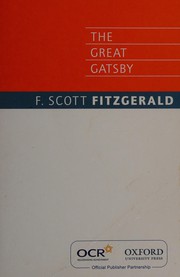
A masterclass in unreliable narration and lyrical prose — the reader must learn to read Nick Carraway critically, not just trust him, which is a crucial interpretive skill.
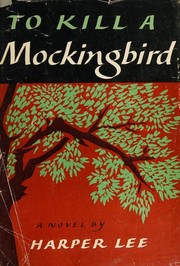
Deepens the study of voice (Scout's innocent perspective) while introducing the tension between a novel's emotional appeal and its moral complexity.
Escalates the moral stakes dramatically: the reader lives inside a murderer's rationalizing mind, learning how great fiction can make us empathize with the deeply flawed.
Theme, Symbol & the Novel's Architecture
IntermediateRecognize how great novelists use structure, symbol, and recurring motifs to build meaning — moving from reading what happens to understanding how and why the novel is built the way it is.
▸ Study plan for this stage
Pace: 8–10 weeks total: Weeks 1–4 for Beloved (~30 pages/day, allowing time to re-read dense passages), Weeks 5–9 for One Hundred Years of Solitude (~35 pages/day), with Week 10 reserved for comparative reflection, journal review, and exercise completion.
- Structural fragmentation as meaning-making: Morrison's non-linear, circling narrative in Beloved mirrors the traumatic memory (rememory) it depicts — the form IS the content.
- Symbol as load-bearing architecture: The color red, the tree scar on Sethe's back, and the crawling-already baby in Beloved are not decorations but structural pillars that accumulate meaning across the whole novel.
- Repetition and the refrain: The repeated phrase 'This is not a story to pass on' in Beloved and the recurring cycles of the Buendía family in One Hundred Years of Solitude show how great novelists use repetition to create irony, ritual, and thematic resonance.
- Magical realism as symbolic language: In One Hundred Years of Solitude, the supernatural (Remedios ascending, the plague of insomnia, the rain of yellow flowers) is not fantasy for its own sake — each miracle is a symbolic statement about history, memory, or human nature.
- The family/house as structural metaphor: The Buendía house in Macondo and the house at 124 Bluestone Road in Beloved function as living symbols — their physical states map directly onto the psychological and historical states of the characters inside.
- Cyclical vs. linear time: Both novels reject straightforward chronology. Morrison's trauma-time spirals inward; García Márquez's mythic time spirals outward across generations — understanding each author's chosen time-structure is key to understanding their meaning.
- The named and the unnamed — how titles and naming function symbolically: 'Beloved' is a name, a gravestone word, a prayer, and a category of person all at once. The Buendía men sharing names across generations collapses individual identity into collective fate.
- Motif tracking: Identifying a recurring image (water in Beloved; ice/cold in One Hundred Years of Solitude) and following it through the entire novel is a core intermediate reading skill this stage develops.
- In Beloved, how does Morrison's decision to begin in medias res — inside a haunted house, with no orientation — prepare the reader structurally for the novel's central argument about trauma and memory?
- The tree scar on Sethe's back is described differently by different characters. What does the gap between those descriptions reveal about the novel's themes of perspective, ownership of the body, and the legacy of slavery?
- One Hundred Years of Solitude ends with the revelation that the entire story was written in Melquíades's manuscripts. How does this 'novel within a novel' frame change the meaning of everything that came before, and what does it say about the relationship between storytelling and fate?
- Both novels use a physical dwelling (124 Bluestone Road; the Buendía house in Macondo) as a central symbol. Compare how each house's condition and history mirrors the inner lives of its inhabitants and the broader historical forces at work in each novel.
- Repetition of names, events, and phrases is central to both books. Choose one specific repetition from each novel and explain precisely how it builds meaning differently each time it recurs — what changes, and what the change signals thematically.
- Morrison's novel ends with the three-part 'Beloved' incantation chapters (stream-of-consciousness). García Márquez ends with apocalypse and the deciphering of the manuscript. What structural 'logic' does each ending fulfill, and why would a conventional chronological ending have failed each book?
- Motif map: As you read Beloved, keep a running log of every appearance of the color red and water imagery. After finishing, draw a simple diagram showing where each cluster appears in the novel's structure. Write a one-paragraph argument about what that distribution pattern means.
- Structural outline against the grain: After finishing Beloved, reconstruct the story's events in strict chronological order on paper. Then compare that timeline to Morrison's actual chapter order. Write 200 words on what is gained — and what would be catastrophically lost — by telling it chronologically.
- Symbol biography: Choose one symbol from One Hundred Years of Solitude (the flying carpet, the ice, the almond tree, yellow butterflies around Mauricio Babilonia). Write a 'biography' of that symbol: its first appearance, how it evolves, what it means at the end, and which thematic argument it supports.
- Naming exercise: List every Buendía named José Arcadio or Aureliano and write one sentence per character describing how their shared name creates either irony, echo, or tragic inevitability. Then reflect: what would be lost if García Márquez had given them all unique names?
- Comparative architecture essay (500–700 words): Both novels use non-linear or cyclical structures. Write a focused essay arguing that each author's chosen structure is the only structure that could have carried their specific theme — use at least two concrete textual examples from each book.
- Close-reading journal: Select one passage of no more than one page from each novel that you find structurally or symbolically dense. Copy it out by hand, then annotate every word or phrase that seems to be doing double or triple duty (literal + symbolic + structural). Share or review your annotations after a 48-hour gap to see what you missed on first pass.
Next up: Mastering how individual novels build internal symbolic architecture prepares the reader to zoom out to the next level — examining how an author's entire body of work, or a literary movement, sustains and evolves those same structural and thematic strategies across multiple books.

Morrison's non-linear structure and dense symbolism demand active reconstruction by the reader — a turning point in learning to trust a difficult novel's design.

Introduces magical realism and the idea that a novel can operate on mythic as well as realistic registers simultaneously, expanding the reader's sense of what fiction can be.
Form as Meaning: Advanced Masterworks
ExpertEngage with novels where the form itself — stream of consciousness, fragmented time, radical point of view — is inseparable from the meaning, completing the reader's toolkit for any great fiction.
▸ Study plan for this stage
Pace: 10–12 weeks total, reading at roughly 25–35 pages per day: Anna Karenina (~4 weeks, ~820 pages), Mrs. Dalloway (~2 weeks, ~200 pages including re-reading and close study), Middlemarch (~4–5 weeks, ~800 pages). Allow at least 2–3 days between books for reflection journaling before moving on.
- Stream of consciousness and free indirect discourse: how Woolf in Mrs. Dalloway and Tolstoy in Anna Karenina dissolve the boundary between narrator and character mind
- Fragmented and non-linear time: Mrs. Dalloway's single-day structure as a vessel for a lifetime of memory, versus Tolstoy's panoramic multi-year sweep — two opposite formal solutions to the same problem of rendering lived time
- Dual-plot architecture and thematic counterpoint: how Tolstoy braids Anna's and Levin's storylines so that each illuminates the other's meaning, and how Eliot does the same with Dorothea and Lydgate in Middlemarch
- The omniscient narrator as moral presence: George Eliot's essayistic, philosophically engaged narrator in Middlemarch as a formal choice that is itself an argument about sympathy and knowledge
- Point of view as epistemology: what each novel claims we can and cannot know about another person's inner life, and how form enacts that claim
- The social novel and the individual: how all three books use their formal structures to show the collision between a character's interior world and the external social order
- Symbolic motifs as structural glue: the recurring images (trains and light in Anna Karenina, clocks and flowers in Mrs. Dalloway, the web and the pier-glass in Middlemarch) that give formally complex novels their coherence
- The relationship between sentence-level style and large-scale structure: how Woolf's lyric prose, Tolstoy's accumulative realism, and Eliot's aphoristic commentary each create meaning at every scale simultaneously
- In Anna Karenina, how does Tolstoy's decision to give Levin and Anna parallel but never-intersecting narrative arcs shape the novel's moral argument? What would be lost if it were Anna's story alone?
- Mrs. Dalloway takes place in a single day yet spans decades of memory. How does Woolf use free indirect discourse and the 'tunneling' technique to make the past structurally present — and what does this formal choice say about identity and time?
- George Eliot's narrator in Middlemarch frequently steps outside the story to address the reader directly with philosophical commentary. Is this a flaw that breaks immersion, or is it itself a formal argument? What is Eliot claiming by doing it?
- Choose one recurring symbol from each of the three novels (e.g., the train in Anna Karenina, Big Ben's chime in Mrs. Dalloway, the pier-glass prelude in Middlemarch). How does each symbol do structural work — not just thematic work — across the whole novel?
- All three novels depict characters whose inner lives are richer and more complex than the social world will accommodate. How does each author's formal choices (point of view, time structure, narrative voice) make the reader feel that gap rather than merely understand it intellectually?
- After reading all three, how would you define 'form as meaning'? Write a one-paragraph definition grounded in specific evidence from at least two of the novels.
- Parallel passage analysis: Find one passage of interior monologue or free indirect discourse from Anna Karenina (e.g., Anna's final train journey) and one from Mrs. Dalloway (e.g., Clarissa's opening walk). Write a 400-word comparison of how each author renders consciousness — what is on the page, what is withheld, and what formal techniques create the effect.
- Timeline mapping: Draw a physical timeline for Mrs. Dalloway marking (a) the chronological present-day events and (b) every memory intrusion, noting whose memory it is. Then write a paragraph on what the pattern reveals about which characters the novel treats as having a 'deep' past.
- Dual-plot mirror exercise: Identify the chapter or moment in Anna Karenina where Levin's storyline most directly 'answers' or reframes something happening in Anna's storyline. Write a short essay (300–500 words) explaining the thematic conversation Tolstoy is staging between the two plots.
- Narrator voice imitation: Write one page of narrative about a mundane modern event (a commute, a dinner party) in the style of George Eliot's Middlemarch narrator — including at least one direct philosophical address to the reader. Then reflect: what does the exercise reveal about what Eliot's narratorial intrusions cost and gain?
- Motif tracking journal: As you read Middlemarch, keep a running log of every instance of web/weaving/mesh imagery. At the end, write a paragraph arguing how this motif functions structurally (not just decoratively) in the novel's architecture.
- Synthesis essay: After finishing all three books, write a 600–800 word essay responding to this prompt: 'Of the three novels in this stage, which makes the most radical argument through its form rather than its content — and why?' Require yourself to cite specific formal features (not just plot or theme) as evidence.
Next up: Mastering how form and meaning are inseparable in these three masterworks gives the reader the critical vocabulary and perceptual habits needed to tackle even more experimental or genre-defying fiction, where conventional story expectations are abandoned altogether and form becomes the primary — sometimes the only — carrier of meaning.

The supreme example of the realist novel: Tolstoy orchestrates dozens of characters and competing philosophies of life into a unified whole, showing how scale and structure can coexist.
Woolf's stream-of-consciousness technique makes the reader experience time and interiority in a radically new way — essential for understanding modernist fiction.
Widely considered the greatest novel in the English language: it synthesizes everything — voice, character, theme, structure, and moral philosophy — into a single, humane masterpiece.
Discussion
Keep reading
Paths that share books, cover the same subject, or open a related topic.