The car business is unusually easy to read badly, because almost every book about it is also an argument about who was to blame. Founders write vindications. Reformers write indictments. Consultants write management theory. Journalists write post-mortems. All of them use the same events, and if you read them in a random order you end up with a strong opinion assembled from four incompatible sources.
The order that works is roughly chronological, and the thing to hold in mind at every step is what kind of book you have in your hands. An insider memoir is a primary source about how a decision was justified, not evidence that the justification was correct. An advocacy book is trying to change a law. A business history is trying to explain an outcome after the fact, with the advantage of knowing it.
The founders, and the first serious critic
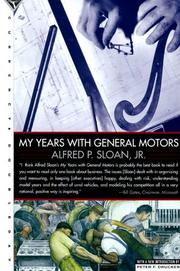
Start with Ford, the men and the machine, a business biography that keeps in what the company's own literature leaves out — the antisemitism, the goon squads, the succession chaos — while still explaining how the moving assembly line reorganised industrial work. Then read My years with General Motors, which is the insider document of the whole subject: Sloan built the modern multidivisional corporation and describes it from the chairman's seat. Treat it as evidence rather than as an account. It was written long after the events, vetted by lawyers, and is quiet about nearly everything that did not fit on an org chart, including labour relations and GM's interwar operations in Germany.
Unsafe at any speed is advocacy, and it is the most consequential book on this list: it produced federal vehicle safety regulation and the agency that enforces it. Be precise about what has aged. A 1972 federal study found the Corvair handled no worse than comparable cars of its era, so the specific vehicle indictment is contested. The general argument — that design choices are decisions with body counts, and that manufacturers will not regulate themselves — is what survived.
The manufacturing revolution
The machine that changed the world reports a five-year MIT study and gave the world the phrase "lean production." Its value is that it measured the Japanese productivity advantage instead of speculating about it, and showed the gap was organisational rather than cultural. The Toyota Way is the management-book treatment of the same system, useful for the principles and written in a consulting register that is almost entirely uncritical; the 2009 and 2010 recall crises complicated its confidence, so read it for the method and not the verdict. The reckoning is the narrative companion to both, following Ford and Nissan in parallel, and it is the best-written book here.
Detroit's long decline
Iacocca was one of the bestselling business books ever published and is also a campaign document — an insider account by a man building a public persona. Rude Awakening is the correction: a former analyst reporting GM from the inside through the 1980s, and it holds up better than almost anything written at the time. Crash course carries the story to the 2009 bankruptcies and the bailout. Car Guys vs. Bean Counters is Bob Lutz arguing that product people should outrank finance people, which is simultaneously persuasive and exactly what you would expect a product person to argue.
The modern scandals
Faster, Higher, Farther is investigative journalism on Volkswagen's diesel defeat devices, and it explains the engineering fraud clearly enough that a non-engineer can follow how it was hidden. On Tesla, Power Play is reported and broadly even-handed while Ludicrous is a sceptic's brief. Note the dates: Ludicrous was written before the production ramp turned durably profitable, so its predictions about viability read differently now, even as its criticisms of driver-assistance marketing and build quality remain live. If you want to see the same defend-the-product playbook run in another sector, the tobacco industry path covers a century of it.
Work through the full path in order and the industry stops being a set of brand loyalties and starts being a business with a legible structure.
Follow the full ordered path here: The Best Books on the Automotive Industry, in Reading Order.
Ready to learn something deeply?
Build a reading path — free