Publishing produces more books about itself than almost any other industry, and the great majority of them are memoirs. That is a problem for a reader trying to understand the business, because a memoir explains what it felt like to acquire a novel in 1978 and says nothing about the balance sheet, the returns system, or why the advance was that number and not another.
So the order here is deliberate: get the structural account first, read the insiders once you can place them, then finish with retail and the digital turn, which is where the actual power in the industry moved. A second reason to watch dates closely — several of the best-known books were written just before the two events that reorganised the trade, ebooks and Amazon, and their forecasts did not survive contact with either.
The structural account first
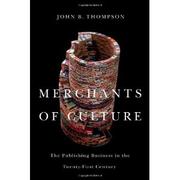
Merchants of Culture is a sociologist's anatomy of Anglo-American trade publishing: the agents, the chains, the retail concentration, the returns system, the arithmetic of an advance. It is the one book on the list that will let you read every other one critically, which is why it goes first rather than last. Its sequel, Book Wars, comes at the end of the path and covers the digital decade — ebooks, audio, self-publishing, Amazon — with the same method. They are sequential rather than overlapping, so read both.
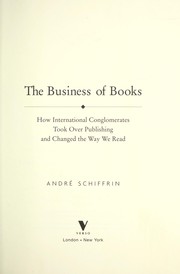
Book Business and The business of books are the two famous insider arguments about conglomeration, and both are advocacy. Jason Epstein founded the Library of America and the trade paperback, and Book Business argues that digital printing would decentralise the industry back toward editorial values. André Schiffrin was pushed out of Pantheon after its corporate takeover, and The business of books is his polemic against what replaced him. Both were published around 2000. Neither anticipated that consolidation would deepen and that the decisive new power would be a single retailer rather than a technology.
What editors actually do
Editors on editing and What editors do are both anthologies of working editors describing the job, and they overlap heavily. Read What editors do if you only read one — it is more recent and covers acquisitions and marketing alongside line editing. Max Perkins: Editor of Genius is the biography that created the modern romantic image of the editor, through Fitzgerald, Hemingway and Wolfe. It is excellent and it is also the source of a myth the rest of the path quietly dismantles.
Hothouse is a narrative history of Farrar, Straus and Giroux and the best account of how a literary house is actually run, gossip and all. Another life is Michael Korda's insider memoir of Simon and Schuster across four decades. Stet is Diana Athill on fifty years at André Deutsch, and it is the finest piece of writing in the whole path — a memoir with no interest in self-promotion, which among publishing memoirs is close to unique.
Bookselling, Amazon and the digital turn
Publishing does not sell to readers; it sells to retailers. Reluctant capitalists is an academic study of bookselling and the independent-versus-chain fight that preceded the Amazon era, and it complicates the usual morality tale in useful ways. The late age of print examines what the book became as a commodity and as a cultural object. Then The Everything Store on Amazon, which is reported journalism rather than industry analysis and stops around 2013 — accurate on how the company thinks, and now a decade short of the story. Finish with Book Wars, which brings the structural account up to the present.
If you want the writing craft rather than the business, browse the paths for editing and publishing your own work; this one is about the industry.
Read them in this sequence and the trade stops looking like a mystery and starts looking like a supply chain with unusually strong opinions.
Follow the full ordered path here: How Book Publishing Actually Works: The Best Books, in Order.