How the Fashion Industry Really Works: The Best Books, in Order
Fashion is two businesses wearing one name: a luxury-conglomerate machine that sells handbags and perfume off the reputation of clothes almost nobody buys, and a mass-market machine that has compressed the design-to-shelf cycle to weeks by moving the cost onto garment workers and landfill. This path builds the first business, then reads the designers and houses that supply its mythology, then follows the supply chain to what mass production actually costs, and closes with the branding and theory that explain why any of it works.
How the Modern Luxury Business Was Assembled
BeginnerUnderstand the shift from couture houses serving a few hundred private clients to publicly-traded conglomerates monetising heritage names, and why licensing, accessories and fragrance — not clothing — carry the profit.
▸ Study plan for this stage
Pace: 4 weeks for about 1,050 pages of reported non-fiction, all of it fast. Agins's The End of Fashion (324pp) in a week, Thomas's Deluxe (380pp) in a week and a half, Forden's The House of Gucci (351pp) in a week — it reads like a thriller because it partly is one.
- Agins's thesis, written in 1999 and still the frame everything else uses: the designer stopped being a couturier and became a brand, and marketing budgets overtook design budgets. The book's subtitle claim is that fashion 'died' when it became a business of image.
- The profit does not come from clothes. Licensing, handbags, sunglasses, fragrance and cosmetics carry the margin; the runway show is an advertisement for the accessories counter.
- Thomas's Deluxe is the reporting on the conglomerate structure — LVMH and Kering assembling portfolios of heritage names, and 'accessible luxury' as the mechanism for selling to a mass market without conceding that you are.
- Outsourcing is the quiet centre of Deluxe: what happens to a luxury claim when the goods are made in the same places as everything else.
- Forden's Gucci is the same story at family scale — a Florentine leather workshop, licensing until the name meant nothing, a turnaround, a public listing and a murder. Use it as the concrete case for the abstractions in the other two.
- Heritage is an asset with a balance-sheet value. Once you see a house name as intellectual property that can be bought, revived and licensed, the industry's behaviour stops looking irrational.
- What specifically ended, in Agins's account, and in roughly which years does she locate the change?
- Take one conglomerate house from Deluxe and describe its revenue mix. What proportion of the business is the clothing you see on a runway?
- What did over-licensing do to Gucci by the late 1980s, and how was it reversed?
- Thomas argues luxury has been democratised and thereby hollowed out. What would a defender of the conglomerates say in reply?
- Why does a group need to own many houses rather than one, and what does that tell you about where the risk sits?
- Pull the most recent annual report of LVMH or Kering and find the segment breakdown. Compare the fashion-and-leather-goods figure against perfumes and cosmetics, then hold both against what Thomas describes. Note where the business has moved since Deluxe was published.
- Agins and Thomas disagree about how much creative control a designer retains inside a group. Find the passage where each makes the claim and write out which one is arguing from named examples and which from a general trend.
- Take one house Forden covers and one Thomas covers and build a two-column timeline of ownership changes. The pattern — family firm, licensing, decline, acquisition, revival — is the industry's single most repeated story.
- Walk through a department store or its website and count how many products carrying a fashion house's name are not clothing. Then reread the first ten pages of Agins.
Next up: You now know who owns these names and where the money is; next comes the machinery that makes the names worth owning.
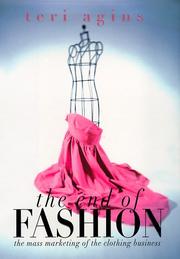
The Wall Street Journal reporter's 1999 account of how designers became brands and marketing overtook design. Start here: it is the clearest statement of the structural change everything else on this path assumes.
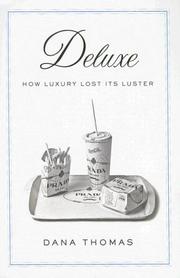
The definitive reported book on the luxury conglomerates — LVMH, Kering, the outsourcing, the accessible-luxury logic. Read second to see Agins's thesis fully built out at scale.
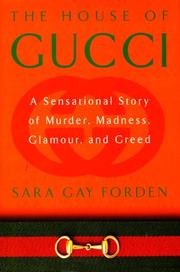
One family firm's route from Florentine leather goods to public company, takeover and murder. A case study that makes the conglomerate story concrete, and far better business reporting than its film reputation suggests.
Designers, Houses and the Myth-Making
BeginnerSee how creative reputation is manufactured and monetised, and how much power a designer actually holds inside a company owned by someone else.
▸ Study plan for this stage
Pace: 5 weeks for around 1,590 pages, but Coddington's Grace and Drake's The Beautiful Fall are both narrative and go quickly. Drake (448pp) and Thomas's Gods and Kings (422pp) deserve a week and a half each; Givhan's The Battle of Versailles (310pp) a week; Grace (408pp) a week, and it is illustrated.
- Drake's subject is the making of designer celebrity: Lagerfeld and Saint Laurent in 1970s Paris, and the point at which the personality became more valuable than the collection.
- Givhan uses one evening in 1973 — American ready-to-wear shown against French couture at Versailles — to date a permanent shift in commercial power away from Paris, and to record how much of the American win depended on Black models who got no lasting benefit from it.
- Gods and Kings is Deluxe's human cost: McQueen and Galliano producing collections at conglomerate cadence, and what that rate of production did to both men. Thomas is arguing that the schedule was causal, and you should test whether she proves it.
- Coddington's memoir shows that the image, not the garment, is the product — a Vogue shoot is a manufacturing process with a crew, a budget and a deadline.
- Creative authorship and corporate ownership pull against each other throughout this stage. A designer with total aesthetic freedom and no equity has a specific and precarious kind of power.
- Myth-making is a job performed by named people — editors, stylists, publicists, photographers — not an atmosphere. This stage is about identifying who does it.
- The archive is a resource being mined: reviving a dead house means inventing a continuity, and the books here show that invention in progress.
- What made Saint Laurent's and Lagerfeld's careers diverge, on Drake's account, and how much weight does she put on temperament versus business structure?
- Who actually won at Versailles in 1973, and what did the win change for the American industry in the following decade?
- Thomas connects the conglomerate production calendar to McQueen's and Galliano's collapses. What is her evidence, and where does the causal claim outrun it?
- From Coddington: what does a creative director on a shoot decide that a designer does not?
- If the designer is the myth and the accessories are the revenue, what is a house actually buying when it hires a famous name?
- Trace one claim across two authors who disagree: Thomas argues the schedule broke McQueen; Drake's account of the 1970s suggests the pressures are older than the conglomerates. Set the two passages side by side and write which case the evidence better supports.
- Find footage or photographs of the 1973 Versailles show and watch it against Givhan's account. Note one thing she emphasises that the images do not obviously show, and ask what she is drawing on for it.
- Take one McQueen collection described in Gods and Kings and find the contemporary reviews. Compare what critics said then with how Thomas narrates it in hindsight.
- Pick a single editorial spread Coddington describes producing and count the named contributors. Then decide whether 'the designer's vision' is a useful description of what you are looking at.
- Write a paragraph making the industry's own case: that creative directors are well paid, well protected and free, and that the tortured-genius narrative sells books. Then rebut it with specifics from Thomas.
Next up: Having seen how value is manufactured at the top, follow the same garments down the chain to the people who actually make them.

Lagerfeld and Saint Laurent in 1970s Paris, and the moment couture's centre of gravity moved from the atelier to the personality. The best-written book here and the origin story for modern designer celebrity.

The 1973 show where American ready-to-wear beat French couture in front of the whole industry. A single evening used to explain a permanent shift in commercial power.

Alexander McQueen and John Galliano inside the conglomerate system, and what its production demands did to both. Read after Deluxe: this is that book's human cost.

The Vogue creative director's memoir, and the best available account of how editorial imagery — the thing that sells the brand — actually gets made. The Open Library record shortens the title from Grace: A Memoir.
What Mass Production Costs
IntermediateFollow the fast-fashion supply chain from design brief to Rana Plaza to landfill, and be able to reason about labour, water, fibre and volume rather than about consumer guilt.
▸ Study plan for this stage
Pace: 3 weeks for roughly 965 pages. Cline's Overdressed (258pp) in four or five days, Siegle's To Die For (339pp) in a week — it is heavier on data — and Thomas's Fashionopolis (368pp) in a week. Rana Plaza, in which 1,134 garment workers were killed in 2013, is described directly in Siegle and Thomas.
- Cline's mechanism: compressed design-to-shelf cycles, low unit prices, high volume, and the collapse of American domestic garment manufacturing that made it possible. She works from her own shopping habits outward, which is why the book converted a general readership.
- Siegle is the material accounting — cotton's water and pesticide load, synthetic fibres, dyeing, and the difference between an environmental claim and an audited figure.
- Thomas's Fashionopolis returns to the industry from the supply-chain end a decade after Deluxe, and covers the proposed technical fixes: on-demand manufacture, robotics, lab-grown and recycled fibre.
- Auditing is the weak joint in the whole system. Brands contract to a supplier who subcontracts, and the subcontract is where the unsafe building usually is.
- Volume, not price, is the load-bearing number. A more expensive garment made in the same factory at the same rate changes nothing if the same number of units are produced.
- All three authors are careful to distinguish structural change from consumer virtue. Reason about the chain, not about whether you personally shop well.
- Post-consumer waste — the textile bale exported to Ghana or Chile — is the end of the chain, and it is where the volume figure becomes physical.
- How is a $7 shirt possible? Reconstruct the cost stack from Cline as far as you can, and name the line item that absorbs the pressure.
- What are the two or three environmental figures Siegle relies on most heavily, and what are their sources?
- What happened at Rana Plaza, what did the subcontracting structure have to do with it, and what changed afterwards in binding rather than voluntary terms?
- Which of the fixes Thomas reports on has actual scale behind it, and which are pilots being described as solutions?
- Where do Cline, Siegle and Thomas disagree about whether the industry can be reformed from inside?
- Check a statistic against its source. Take one of Siegle's headline figures — the water cost of a cotton t-shirt is the obvious candidate — find her citation, and follow it to the original study. Note the assumptions in it that the headline drops.
- Take one garment you own, find the country of manufacture on the label, and see how far you can get toward the actual factory using the brand's published supplier list. How far you get is the answer to the transparency question.
- Cline argues quality collapsed alongside price. Test it: compare the fibre content and construction of a garment made before 2000 with a current equivalent, and write down what you find.
- Write the opposing case in a paragraph — that fast fashion moved millions into waged manufacturing work and that the alternative on offer is no factory at all. Make it the strongest version. Then say precisely which of Siegle's or Thomas's findings it fails to answer.
Next up: You now have the operations and the costs; the last stage asks why any of it works on us in the first place.

The book that put fast fashion's economics in front of a general readership: how a $7 shirt is possible, and what happened to American garment manufacturing. The essential entry point to this stage.

The British counterpart, harder on the environmental accounting and on cotton in particular. Read second for the material and water side that Cline covers more lightly.

Thomas returns a decade after Deluxe to the same industry from the supply-chain end, reporting on both the damage and the technologies claimed as fixes. The most recent survey and the right synthesis for this stage.
Brands, Meaning and Why It Works
IntermediateMove from operations to meaning: understand fashion as a signalling system and a branding discipline, and be able to explain why a garment's price bears so little relation to its cost.
▸ Study plan for this stage
Pace: 4 weeks and the hardest reading on the path. Tungate's Fashion Brands (254pp) and Agins's Hijacking the Runway (272pp) are brisk trade books — a week for the pair. Evans's Fashion at the Edge (334pp) is academic and deserves two weeks. Barthes's The Fashion System is short in pages and slow in every
- Tungate writes from inside marketing, and the value of that is vocabulary: brand equity, positioning, brand extension, the codes of a house. You need the industry's own terms before you can criticise them.
- Agins's Hijacking the Runway carries The End of Fashion forward: celebrity lines, endorsement collapsing into authorship, and the point at which a famous name is a more efficient design credential than a design education.
- Evans's subject is the experimental designers of the 1990s — spectacle, damage, death and memory on the runway — and what fashion does when it is not obviously trying to sell you something.
- Barthes's move is to analyse not garments but written fashion: the magazine caption that converts a piece of cloth into a meaning. The system he describes is the one every book in this path has been assuming.
- The signalling logic is what makes the price-cost gap intelligible. A garment's price is a function of what it communicates, not of what it cost to produce, which is why the supply-chain findings in the previous stage do not by themselves change consumer behaviour.
- Evans and Barthes together are the theory ballast for a subject that is otherwise reported almost entirely by journalists. Note how differently each of them treats the same runway.
- Barthes is difficult and the difficulty is partly structuralist apparatus that has dated. Take the core operation — garment plus written commentary equals meaning — and do not get stranded in the terminology.
- Define brand equity as Tungate uses it, then say what a heritage house owns that a new label cannot buy.
- In Agins's account, what does a celebrity actually contribute to a collection, and who does the designing?
- What is Evans arguing that the 1990s spectacle designers were doing, and why does she resist reading it as marketing?
- Explain in plain language how Barthes's written garment differs from the real garment and from the image-garment.
- Why does a handbag with a four-figure price and a two-figure production cost sell, on the combined account of these four books?
- Which of the four authors would most strongly dispute the reform arguments in the previous stage, and on what grounds?
- Do Barthes's exercise on live material: take five current fashion captions and, for each, separate the garment described from the meaning the words attach to it. Five is enough to see the machinery.
- Take one designer Evans discusses and one campaign Tungate discusses and write 200 words arguing they are doing the same thing. Then 200 words arguing they are not. The disagreement is real and unresolved.
- Trace one claim across two authors who disagree: Agins treats celebrity lines as a debasement of authorship; Tungate treats brand extension as ordinary competent marketing. Find both passages and decide which is describing and which is judging.
- Return to Stage One and reread the first chapter of The End of Fashion. Having done the supply chain and the theory, note which of Agins's 1999 predictions came true and which did not.
- Write the closing paragraph of the path yourself: one page on whether the luxury business and the fast-fashion business are two industries or one, citing at least three books from the path by name.
Next up: The path closes on the mechanism rather than the indictment, which is the equipment you need to read the industry's next claim about itself sceptically.
A practical branding history of the major names, useful precisely because it is written from inside marketing rather than against it. Start the stage here for the industry's own vocabulary.

Agins's follow-up on celebrity-designer lines and the collapse of the line between endorsement and authorship. It carries The End of Fashion's argument into the present.
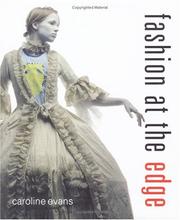
A serious critical study of the darker experimental designers of the 1990s, and the best account of what fashion does when it is not trying to sell anything. Denser than the rest of the path and worth the effort.
Barthes's structural analysis of how fashion writing turns garments into meanings — difficult, foundational, and the theoretical bedrock under every book above. Open Library stores the record with an all-caps display title.
Discussion
Keep reading
Paths that share books, cover the same subject, or open a related topic.