Corporate Lobbying: The Best Books on How Business Shapes Policy, in Order
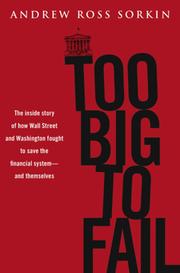
Most writing about lobbying is either an exposé or a trade manual, and neither tells you whether it works. This path deliberately puts the empirical literature second, right after the descriptive accounts, because the best large-scale study of the question found that lobbying usually fails and that the status quo usually wins — a finding that sits awkwardly with almost everything else written on the subject. The path then covers how the modern lobbying industry was built, and ends with the money and the manufactured-doubt campaigns, flagging where the scholarship is contested.
What the Job Actually Is
IntermediateGet a concrete picture of corporate government affairs — who is employed, what they do all day, and how the industry is organised.
▸ Study plan for this stage
Pace: About four weeks for roughly 1,075 pages. Drutman's The Business of America Is Lobbying (269 pp) first, ten days - it is an academic study built on disclosure data and interviews, not a polemic, and it is the best single book on the subject. So Damn Much Money (406 pp) next, two weeks: Robert Kaiser
- What corporate government affairs work actually consists of - monitoring, informational supply to allied staff, coalition management, defensive watching - and how little of it resembles the persuasion of a legislator
- Drutman's central finding: corporate lobbying grew because firms that began lobbying kept lobbying, largely independent of measurable returns, so the expansion is institutional habit rather than demonstrated payoff
- In-house government affairs offices versus contract lobbying firms, and the different incentives of each
- The defensive majority: most lobbying aims to prevent change rather than to obtain it, which is why the status quo bias in the system compounds
- The earmark business Cassidy built, and how a small trade became a large industry with a specific commercial product to sell
- The revolving door as a labour market rather than as a scandal - what a former staffer is actually being paid for
- The Washington social economy Leibovich describes, and why almost nobody leaves - which is an incentive fact, not a moral one
- Federal lobbying disclosure: what must be reported, what need not be, and the substantial activity that falls outside the definition
- Describe a week in a corporate government affairs office from Drutman's evidence. How much of it is persuasion?
- If lobbying expenditure does not correlate with measurable returns, why do firms keep increasing it? Give Drutman's explanation and one alternative.
- What did Cassidy invent commercially, and why was it so profitable?
- What activity is captured by federal lobbying disclosure and what falls outside it? What does that do to any spending figure you read?
- Leibovich is describing a social world, not a policy process. What does his account explain that Drutman's data cannot?
- Pick one large public company and pull its federal lobbying disclosure filings for the last five years: total spend, registered lobbyists, issues listed, bills named. Then check how many of those lobbyists previously worked in government. This is Drutman's dataset in miniature and takes an afternoon.
- Using the same filings, classify each listed issue as offensive or defensive as best you can. Drutman's claim is that the defensive column dominates; test it on your one company.
- Trace Cassidy's business model from Kaiser's account as a sequence: client problem, product sold, appropriations mechanism, fee. Then check whether the mechanism still exists after the earmark moratorium.
- Take three people Leibovich profiles and construct their career paths - government, lobbying, media, back again. The shape of those paths is the labour market argument, and seeing three of them makes it concrete.
Next up: Having seen what lobbyists do, the obvious question is whether it works - and the next stage puts the quantitative literature before the money books, because the answer is more surprising than the exposés suggest.

The best single book on the subject: Drutman shows that corporate lobbying grew because firms that started lobbying kept doing it, not because it paid off in any measurable way, and that most of the work is defensive and informational. Start here.

The history of the modern K Street industry told through Gerald Cassidy, who essentially invented the earmark business. The best narrative account of how a small trade became a large one.

A journalist's account of the Washington social economy — the revolving door, the funerals, the parties, the fact that almost nobody leaves. Read it third; it is gossip, and it is the most accurate description of the incentive structure on this list.
Does It Work? The Empirical Answer
IntermediateLearn what the quantitative political science literature actually finds about business influence, and be able to state the disagreement between the competing findings precisely.
▸ Study plan for this stage
Pace: About five weeks for roughly 1,115 pages, and all three are academic political science with substantial quantitative apparatus - expect regression tables, coding schemes and appendices, and read the methods sections rather than skipping them. Lobbying and Policy Change (341 pp) first, two weeks: Bau
- The random-issue sampling design in Baumgartner and colleagues, and why sampling issues rather than victories avoids the selection bias that ruins most lobbying research
- Their central finding: resources correlate weakly with outcomes, and the status quo prevails on most issues most of the time
- Why inertia beating money is not the same as money not mattering - what the finding actually licenses you to say
- Gilens's opposing design: policy outcomes against the preferences of citizens at different income percentiles, finding that when preferences diverge, policy tracks the affluent
- The reconciliation problem - Baumgartner samples issues and Gilens samples preference divergences, so they are measuring different things, and neither has settled the question
- Bartels's contribution: the longest time series, partisan differences in income growth, and senatorial responsiveness by constituent income
- The methodological questions that decide the dispute - unit of analysis, what counts as an outcome, and the treatment of issues where nothing happens
- How to state a genuine scholarly disagreement precisely rather than picking the finding you prefer
- Describe the Baumgartner design and explain why random issue selection matters so much for this question.
- State their finding precisely, including its confidence limits. What claim does it rule out, and what does it leave open?
- What does Gilens measure, and how does his finding coexist with theirs?
- Where exactly do the two studies differ in unit of analysis, and could both be correct?
- What does Bartels add that the other two do not, and what does his longer time series show about when the pattern emerged?
- If you had to design a study to settle the disagreement, what would it measure?
- Take five issues from your own reading of current politics and code them the way Baumgartner and colleagues coded theirs - sides, resources on each side, outcome after four years. The coding decisions you find hard are the ones their appendix spends most time on.
- Reproduce Gilens's central figure conceptually: pick three policy questions where public opinion is split by income, find the polling, and find the outcome. Three cases is not a study, but it will show you what his data actually consists of.
- Write a one-page statement of the Baumgartner-Gilens disagreement that both authors would accept as fair. This is harder than arguing for either, and it is the skill the stage exists to build.
- Check the Bartels partisan income-growth series against more recent data. The finding either extends or it does not, and knowing which is more useful than repeating the original claim.
- Return to your lobbying disclosure data from stage one and ask which of the three books' frameworks best explains what that company actually spent money on.
Next up: With the empirical picture established, the next stage explains how the apparatus was constructed in the first place - and includes the case where it lost.

Baumgartner, Berry, Kimball and Leech tracked ninety-eight randomly selected policy issues over four years. Their central finding — that resources correlate weakly with outcomes and that inertia beats money most of the time — is the strongest challenge to the exposé literature, and it is why this stage comes before the money books rather than after.

The opposing finding, from a different design: when preferences diverge across income groups, policy tracks the affluent almost exclusively. Read it directly after Baumgartner and hold the two together — the disagreement is partly about the unit of analysis, and neither has settled it.

Bartels on the political economy of the widening income distribution, including partisan differences in income growth and the responsiveness of senators to constituents by income. The third data point, and the one with the longest time series.
How the System Was Built
IntermediateTrace the construction of the modern business-political apparatus from the 1970s onward, and see one major statute pass against it.
▸ Study plan for this stage
Pace: About five weeks for roughly 1,275 pages. Waterhouse's Lobbying America (368 pp) first, ten days - it is an academic history and supplies the chronology the other three assume. Winner-Take-All Politics (368 pp) next, ten days: political science written for a general audience. The Captured Economy (2
- Waterhouse's finding that organised business mobilisation in the 1970s began from a position of perceived weakness rather than confidence, which changes the standard story about its motives
- The institutional build-out: the Business Roundtable, the transformation of the Chamber of Commerce, trade association growth, and the arrival of permanent corporate Washington offices
- Hacker and Pierson's argument that the decisive changes were organisational rather than electoral, and their concept of drift - policy changing through deliberate non-adjustment rather than through new legislation
- The Captured Economy's four rent-generating mechanisms: occupational licensing, land-use restriction, financial subsidy and intellectual property - chosen because each has beneficiaries on both sides of the usual political divide
- Why Lindsey and Teles's cross-ideological authorship matters analytically and not just presentationally
- The 1986 Tax Reform Act as the counter-case: a statute that closed loopholes against unified industry opposition, and the specific procedural conditions that allowed it
- What Gucci Gulch shows about when lobbying loses - visibility, a bipartisan sponsor pair, and a package that made defections costly
- Why did organised business mobilise in the 1970s, according to Waterhouse, and what did it think it was defending against?
- What does Hacker and Pierson's concept of drift mean operationally, and give an example of a policy that changed through drift?
- Name the four mechanisms in The Captured Economy and identify who benefits from each. Which of the four is politically hardest to reform, and why?
- What conditions made the 1986 Tax Reform Act possible, and how many of them are reproducible?
- Does Gucci Gulch confirm or refute the Baumgartner finding from the previous stage? Argue it.
- Build a timeline from 1967 to 2000 from Waterhouse - each new organisation, each strategic shift - and add to it the major statutes from Hacker and Pierson. Then mark which statutes the organisations were built to influence.
- Take one of the four Captured Economy mechanisms - occupational licensing is the most tractable - and find the licensing requirements for one occupation in your own jurisdiction: hours of training, fees, and who sits on the board. That board composition is the argument of the book in one document.
- Reconstruct the passage of the 1986 Act from Birnbaum and Murray as a sequence of procedural decisions, and identify the two or three points at which it nearly died. Those points are the conditions the counter-case depends on.
- Find a policy area that has changed substantially without new legislation - a threshold not indexed to inflation is the classic case - and write it up as an instance of drift, with the numbers.
- Score the Gucci Gulch case against your stage-one company's lobbying disclosures. If that company would have opposed the 1986 Act, ask what it would do differently today.
Next up: The final stage leaves the formal lobbying system for the ideological infrastructure funded outside it, and for the specific technique of manufacturing scientific uncertainty.

The history of organised business politics from 1967 to 2000 — the Business Roundtable, the Chamber's transformation, and the fact that business mobilisation began from a position of perceived weakness. Read it first here; it supplies the chronology the other three assume.
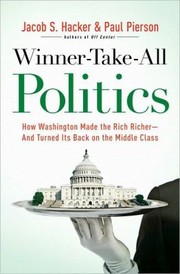
Hacker and Pierson's argument that the crucial policy shifts were organisational rather than electoral, and that they were achieved through drift as much as through legislation. The most influential political-science account of the period.

Lindsey and Teles — one from the libertarian tradition, one from the left — on regulatory capture through occupational licensing, land-use rules, financial subsidies and intellectual property. Included because it is the rare account of rent-seeking that neither side of the usual argument can dismiss as partisan.
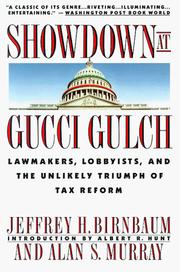
Birnbaum and Murray on the 1986 Tax Reform Act, which closed loopholes over unified industry opposition. Read it last in this stage as the counter-case: it is the book that proves lobbying can lose, and it is the one most often forgotten.
The Money and the Manufactured Doubt
IntermediateUnderstand the ideological infrastructure funded outside the formal lobbying system, and the specific technique of producing scientific uncertainty as a political product.
▸ Study plan for this stage
Pace: About five weeks for roughly 1,505 pages. Dark Money (464 pp) first, two weeks - investigative journalism by a New Yorker staff writer, describing the donor network the next three books analyse. Kochland (353 pp) next, ten days: business journalism about Koch Industries as a company rather than as a
- The donor network as an institutional system - foundations, think tanks, endowed academic centres, litigation shops and electoral operations - and the division of labour between them
- Why funding a research institution is a different political instrument from funding a campaign, and operates on a different timescale
- Kochland's commercial account: trading operations, acquisitions, safety and environmental record, and the business logic that made the political spending rational
- The manufactured doubt technique as Oreskes and Conway document it: the objective is not to win the scientific argument but to sustain the appearance of one, and the same small group ran it for tobacco, acid rain, the ozone layer and climate change
- The archival evidence base for Merchants of Doubt - internal documents and correspondence - and why that makes it hard to dispute on the facts
- MacLean's argument about public choice theory, and the specific methodological objections raised to it, which concern quotation in context and inference about intent
- How to read a book that is contested on its evidence without either accepting or dismissing it wholesale
- The relationship between this stage and stage two: none of this infrastructure appears in lobbying disclosure data, which is a limit on the empirical literature rather than a refutation of it
- How is the donor network Mayer describes organised, and what does each type of institution in it do?
- What does Kochland explain about the commercial side that Dark Money does not, and does it change how you read the political spending?
- State the manufactured doubt technique in operational terms. What are its steps, and what does it need to succeed?
- What archival evidence do Oreskes and Conway rely on, and what would it take to dispute their central claim?
- What specifically have MacLean's critics objected to, and which parts of her argument survive those objections?
- None of this activity appears in lobbying disclosure. What does that do to the findings in stage two?
- Take one policy question covered in Merchants of Doubt and assemble a timeline of the scientific consensus alongside a timeline of public opinion. The lag between the two is the product the technique was selling.
- Pick one think tank named by Mayer, find its published funding disclosures and its output for one year, and match the two. The exercise shows how much of the network is visible from public sources and how much is not.
- Read one of the passages of Buchanan that MacLean quotes, in its original and full context, and judge for yourself whether the quotation is fair. Do this for two passages before forming a view. It is the honest way to handle a contested book.
- Compare Mayer's and Leonard's accounts of the same Koch Industries episode and note where the political frame and the commercial frame produce different explanations of the same decision.
- Write a final two pages answering the question the whole path poses: does corporate political activity change outcomes? Cite Baumgartner, Gilens, Waterhouse, Gucci Gulch and Oreskes, and state honestly where the evidence does not settle it.
Next up: This closes the path: the reader can describe what lobbying is, what the evidence says about its effect, how the apparatus was built, and where the argument remains genuinely open.

The reported account of the donor network built around Charles and David Koch — foundations, think tanks, academic centres and political operations. Read it first; it describes the machinery the next three books analyse.

Koch Industries as a company rather than as a political project: the trading operations, the safety record, the acquisitions. Better than Mayer on how the money was made and on the commercial logic behind the political spending.
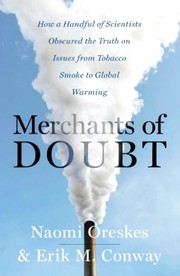
Oreskes and Conway on the small group of physicists who ran the same playbook for tobacco, acid rain, the ozone layer and climate change. The most-cited book on this list, and the one that named the technique.
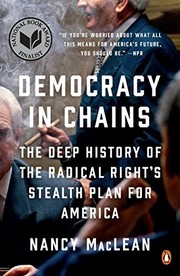
MacLean's argument that James Buchanan's public choice economics supplied a deliberate strategy for constraining majority rule. Include it, and read it knowing that it drew unusually sharp criticism from historians and economists across the political spectrum over its handling of Buchanan's archive and its reading of his intent. It belongs here as a live dispute, not as an established account.
Discussion
Keep reading
Paths that share books, cover the same subject, or open a related topic.