Tobacco: The Best Books on Cigarettes, the Industry and Public Health, in Order
The cigarette is the most lethal consumer product ever manufactured and the best-documented corporate deception in history, and those two facts are connected: the industry lost its lawsuits, and losing meant surrendering tens of millions of pages of internal memoranda that are now a public archive. That archive is why this subject can be read with unusual confidence. Where most business histories rest on interviews and inference, the central books here quote the companies' own scientists telling their own executives what they knew and when. This path is built around that principle — the industry's internal record is preferred to any account written from the outside. It runs from how tobacco spread at all, through the twentieth-century rise of the cigarette, into the documents, out to the doubt-manufacturing template the industry invented and other industries then borrowed, and ends with the one honest counter-reading: that people smoked because smoking meant something to them, and a public-health history that cannot say why is incomplete. It is a history of an industry and a campaign against it, not a programme for quitting.
How Tobacco Became a Global Habit
IntermediateEstablish the long history before the cigarette, so the twentieth century reads as a rupture rather than a continuation. By the end you should be able to explain how a New World plant became a world commodity in under a century, why the machine-rolled cigarette of the 1880s was a different product from anything before it, and that organised anti-tobacco campaigning long predates the cancer evidence — the first American anti-cigarette movement had nothing to do with health data.
▸ Study plan for this stage
Pace: Six to eight weeks for 1,023 pages of narrative and cultural history, none of it technical. Gately's Tobacco is 403 pages of broad narrative - Mesoamerican ritual use, European adoption, the colonial economies the plant built - and reads at 30-40 pages a sitting; three weeks. Gilman and Zhou's Smoke
- How a New World plant became a world commodity in under a century, and the colonial labour and trade systems that carried it
- The machine-rolled cigarette of the 1880s as a genuinely new product - in dose, in inhalability, in price and in the scale at which it could be made
- Why inhalation is the pivotal change: earlier tobacco use largely was not inhaled, and the disease pattern of the twentieth century follows from the fact that cigarette smoke is
- Smoking as a practice with different meanings in different societies, which is what Gilman and Zhou supply and Gately's Anglophone narrative does not
- That organised opposition to the cigarette predates the cancer evidence by decades, and rested on moral, religious and nativist grounds
- The first anti-cigarette movement's collapse, and the uncomfortable implication that having the evidence is not what made the later campaign work
- What changed about tobacco with machine rolling? Name at least three properties of the product that were different, and say which one matters most for disease.
- Why is inhalation the hinge of this whole subject? What would the twentieth-century history look like if the cigarette had not been inhaled?
- On what grounds did the earlier American anti-cigarette movement object, and why did those grounds prove insufficient to sustain the bans?
- Tate's movement had prohibition in fifteen states and lost; the later campaign had evidence and won slowly. What does the comparison suggest about the role of evidence in the outcome?
- Using Gilman and Zhou, describe one society in which smoking carried a meaning quite unlike its meaning in twentieth-century America. What does that comparison do to the idea of a single global habit?
- Build a timeline from Gately marking the points at which tobacco changed form - leaf, pipe, snuff, cigar, machine-rolled cigarette - and beside each note who used it and how much. The step change at the 1880s should be visible on the page, and it is the fact the next stage depends on.
- Read three regionally distinct chapters of Gilman and Zhou and write, for each, one sentence on what smoking signified there. Then write down what Gately's narrative assumes it signifies. The gap between them is the reason both books are here.
- List every argument Tate records the early anti-cigarette campaigners making, then mark which ones reappear in the modern campaign and which vanished entirely. Keep the list; you will want it when you reach the manufactured-doubt stage and its framing of regulation as an assault on freedom.
- Take one colonial tobacco economy Gately describes and follow it from planting to sale, noting who bore the cost at each step. It is the earliest form of a pattern the later books describe in a different vocabulary.
Next up: With the pre-history in place and the machine-rolled cigarette established as a new kind of product, the next stage takes up the two major narrative histories of what that product did in the twentieth century.
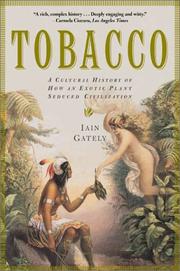
The broad narrative history: tobacco from Mesoamerican ritual use through European adoption, the colonial economies it built, and its spread across the world. The right first book because it makes the plant strange again before the modern argument starts.

A global cultural history of smoking in many forms, assembled by many hands and heavily illustrated. It supplies the comparative frame Gately's Anglophone narrative lacks — smoking as a practice with different meanings in different societies.
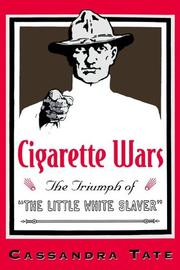
The surprise of the stage: the American anti-cigarette movement of 1880 to 1930, which banned cigarettes in fifteen states on moral rather than medical grounds and then collapsed. It shows that opposition to smoking existed long before the evidence, and that having the evidence was not what made the later campaign work.
The Century of the Cigarette
IntermediateGet the two major narrative histories of the American cigarette in the twentieth century — the rise, the epidemiology, the 1964 Surgeon General's report, and the litigation. By the end you should be able to date the key evidence, name the mechanisms by which the industry contested it, and explain why decades of lawsuits failed before the state attorneys general finally succeeded in the 1990s. These are both long books and they overlap; if you read only one, read Brandt.
▸ Study plan for this stage
Pace: Three to four months for 1,447 pages across just two books, and both are long enough to defeat a casual pace. Brandt's The Cigarette Century is 640 pages and is the spine of the path: a medical historian's account of the cigarette's manufacture into a mass product, the accumulation of the science, a
- The construction of the cigarette as a mass consumer product: advertising, distribution, wartime supply and the making of a female market
- How the epidemiological evidence actually accumulated - case-control studies, then the large prospective cohorts - and why the design of those studies mattered to whether the finding could be dismissed
- The 1964 Surgeon General's report as the point at which the scientific question closed in public, and what did and did not change afterwards
- The specific mechanisms by which the industry contested the evidence: funded research, the demand for a mechanism, the appeal to statistical caution, and the framing of the question as unsettled
- Why decades of private lawsuits failed - assumption of risk, the warning label as a shield, and the burden on individual plaintiffs
- What the state attorneys general changed in the 1990s: a different plaintiff, a different theory of harm, and a different remedy
- The distinction between what the industry said in public and what it was doing internally, which the following stage documents directly
- Set out the sequence by which the link between smoking and lung cancer became scientifically settled. Which studies were decisive, and what about their design made them so?
- The industry demanded a biological mechanism before accepting causation. Was that a legitimate scientific demand, and at what point did it stop being one?
- Why did individual smokers lose their cases for decades? Name the two defences that did most of the work.
- What was different about the state attorneys general's suits - in who sued, what they claimed, and what they asked for?
- Brandt is a medical historian and Kluger a journalist writing corporate and legal history. Name one thing each sees that the other does not.
- After the Surgeon General's report the science was public and consumption did not collapse. What does that tell you about the relationship between information and behaviour?
- Build a two-column chronology from Brandt: on the left, each significant piece of evidence with its date; on the right, the industry's public response to it. Keeping them aligned by date is the exercise, because the pattern only becomes visible when the two columns are read across rather than down.
- Take one lawsuit Kluger covers in detail and reconstruct it as a legal argument - the plaintiff's theory, the defence, the outcome, and the reason. Then do the same for one of the attorneys general suits. The difference between the two structures is the answer to why one worked.
- Read Brandt's account of an advertising campaign against the arguments Tate's early campaigners made in the previous stage. Note where the industry is answering an objection that was raised half a century earlier.
- Choose three claims Brandt makes about industry conduct and write down what evidence he offers for each. Mark which rest on internal documents and which on inference from public behaviour - the next stage will let you check the difference.
- Where Brandt and Kluger cover the same episode, read both accounts and note any point of factual disagreement. There will be few, and finding them is a good calibration of how settled this history is.
Next up: Both of these histories draw on the industry's internal record; the next stage goes to that record directly, and to the books built on nothing else.
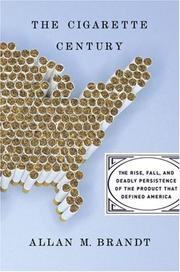
The best single history of the subject: a medical historian's account of how the cigarette was made into a mass product, how the science against it accumulated, and how the industry fought it in public relations, in Congress and in court. This is the spine of the path.
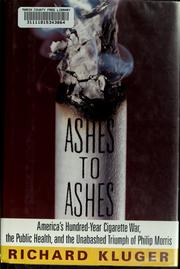
The Pulitzer-winning corporate and legal history, longer and more granular than Brandt on the companies themselves and on the litigation. Read it second, as the detailed account of what Brandt summarises — and read it knowing it was published in 1996, at the moment the industry's position finally broke.
The Documents: What the Industry Knew
IntermediateRead the books built directly on the internal record, which is what makes this subject different from most corporate history. By the end you should be able to say what tobacco companies' own scientists concluded about carcinogenicity and about nicotine's addictiveness, roughly when, and what the companies did with those conclusions — and you should know where the archive lives, because it is public and searchable. Treat quoted memoranda as the strongest evidence on this path and secondary charac
▸ Study plan for this stage
Pace: Four to five months for 1,973 pages, the longest stage on the path and the one that carries its central claim. Glantz's The Cigarette Papers is 560 pages and opens the stage because everything after it depends on the archive it opened: the analysis of the Brown and Williamson papers delivered anonym
- The industry's own scientific conclusions on carcinogenicity and on nicotine's addictiveness, roughly when they were reached, and what was done with them
- Nicotine delivery as an engineered property: pH manipulation, additives, filter and ventilation design, and the difference between the dose a machine measures and the dose a smoker takes
- Compensatory smoking, and why light and low-tar products did not deliver the reduction their measurements implied
- What the Master Settlement Agreement produced beyond money: a public, searchable archive of tens of millions of pages, and where it lives
- The evidentiary hierarchy this stage teaches: a company scientist's memorandum to his own executives outranks any external reconstruction of what the company believed
- The legal route by which the documents became public - discovery in a suit brought by a state rather than by a smoker
- Proctor's abolition argument as a separable position, and how to read a scholar whose documentary work is unimpeachable and whose conclusion is contested
- What did the Brown and Williamson papers show, specifically, and why was their delivery to Glantz consequential beyond the one company?
- Explain how nicotine delivery was engineered rather than merely present. Name two design levers and what each does to the dose a smoker receives.
- Why did low-tar products fail to reduce harm proportionally? What does compensatory smoking tell you about testing a product on a machine?
- Where does the document archive live, how would you search it, and what would you need to know to read a single memorandum responsibly?
- Proctor's documentation is separable from his conclusion. State his abolition argument fairly, then state the strongest objection to it that his own documents do not answer.
- Orey shows the legal theory that finally worked. Why did that theory make discovery of internal documents possible where earlier suits had not?
- Pick three memoranda quoted at length in Glantz or Proctor. For each, write down who wrote it, to whom, what it says, and what the company's public position was at the same time. Then find the document itself in the public archive and read the whole thing rather than the quoted portion. This is the single most valuable exercise on the path.
- Build a table of what the industry knew and when, with a row per finding - carcinogenicity, addictiveness, compensatory smoking, targeting of young smokers - and columns for the internal date, the source document, and the date of the corresponding public admission. The gap in the last two columns is the subject of the stage stated as a measurement.
- Read Hilts's account of the 1994 hearings and then find the testimony he describes. Comparing the reporting with the transcript is a lesson in how much of a documentary record survives its summary.
- Take one claim from Proctor's argumentative chapters and try to support it using only the documents he cites. Where the documents carry it, note that; where they do not, note what additional evidence would be needed. Doing this once will permanently change how you read the rest of the book.
- Reconstruct the Mississippi case from Orey as a chain from legal theory to document release, then connect the last link to the archive Proctor works in. The stage's evidentiary strength exists because of a specific litigation strategy, and seeing the connection is the point.
Next up: The doubt-manufacturing strategy documented here did not stay in tobacco, and the next stage follows it outward - carefully, because the lineage is real in some cases and merely rhetorical in others.
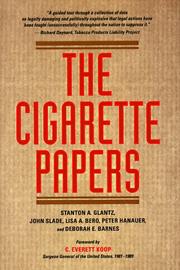
The foundational document book: the analysis of the Brown and Williamson papers delivered anonymously to Glantz in 1994, showing the company's own research on addiction and disease. Start the stage here — everything after depends on the archive this book opened.

The most thorough scholarly use of the full document archive released by the Master Settlement Agreement, and the book that documents the deliberate construction of scientific doubt as a strategy. Proctor argues for abolition of the cigarette, and that is a position rather than a finding — the documentary chapters are the reason to read him.
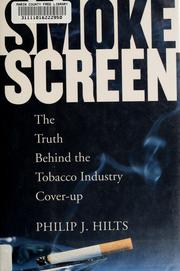
A reporter's account of the same revelations as they broke, including the industry's manipulation of nicotine delivery and the 1994 congressional hearings. Shorter and more immediate than Proctor, and useful for how the disclosures actually reached the public.
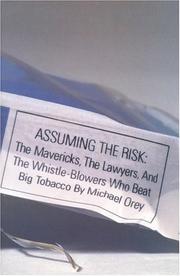
The litigation from the plaintiffs' side: the Mississippi case and the lawyers who finally found a theory that worked against an industry that had never lost. It explains the legal mechanism by which the documents became public in the first place.
Manufactured Doubt as a Template
IntermediateFollow the strategy outward. The tobacco playbook — fund contrarian research, demand impossible certainty, frame regulation as an assault on freedom — was subsequently applied to lead, asbestos, industrial chemicals and climate. By the end you should be able to identify the technique in a live controversy and also state its limits honestly: the tobacco parallel is a real historical lineage in several documented cases, but it is also invoked loosely as a rhetorical move, and a reader who cannot t
▸ Study plan for this stage
Pace: Two to three months. Proctor's Cancer Wars is 368 pages and comes first because it establishes the larger claim the stage rests on: that the contest was over the research agenda itself - what got studied and what got called a carcinogen - and not only over conclusions. Three to four weeks. Michaels'
- The playbook itself, stated as steps: fund contrarian research, demand a standard of certainty no observational science can meet, contest the research agenda upstream of any finding, and frame regulation as an assault on freedom
- Manufacturing doubt as distinct from lying: the objective is to keep a question open, not to win it
- Proctor's upstream point - that deciding what gets studied and what gets classified is more powerful than disputing results
- The product-defence industry as an actual trade with clients and fees, which is Michaels's contribution and the least rhetorical part of the stage
- How regulatory standards of proof differ from scientific ones, and why the difference is the lever the technique pulls
- The Oreskes and Conway thesis of personnel continuity across controversies, and the methodological criticism that the connections are drawn more tightly than the evidence supports
- Telling a documented lineage from a loose rhetorical comparison - the stage's stated limit, and the thing a reader most needs to take away from it
- State the doubt playbook as a numbered sequence. Which step is doing the most work, and why is it not the funding of contrarian research?
- Why does demanding certainty function as a delaying tactic against observational evidence in particular?
- Michaels writes from inside regulation. What does a regulator need in order to act, and where in that requirement does the technique intervene?
- Proctor argues the fight is over the research agenda. Give one example from Cancer Wars of a question that did not get asked, and say what determined that.
- Oreskes and Conway trace the same individuals across several controversies. For one of their cases, is the connection documented in the tobacco sense - internal records - or inferred from public activity? Does the difference matter to their argument?
- Take a live controversy of your own choosing. Which elements of the playbook can you actually document there, and which would you merely be asserting by analogy?
- Write the playbook out as a checklist from Proctor and Michaels, then apply it to a current dispute you know something about. Mark each item as documented, plausible or unsupported. The unsupported column is the one that keeps you honest, and the stage goal says as much.
- For three of Oreskes and Conway's links, go to their notes and classify the evidence: internal documents, public testimony, funding records, or biographical coincidence. Their strongest and weakest cases are quite far apart, and this is how you find out which is which.
- Take one substance covered in Cancer Wars and trace how it came to be classified as it was - who studied it, who paid, what was published and what was not. Then set that alongside the tobacco chronology you built two stages ago and note where the shapes match and where they do not.
- Compare how Michaels and Oreskes and Conway handle a case they both cover. One is writing about regulatory process and the other about intellectual history; the divergence in what each treats as the decisive fact is the most instructive thing in the stage.
- Write a paragraph making the strongest case against the template thesis - that industries facing similar evidence behave similarly without any borrowing, and that some contested science is genuinely contested. Then answer it with the documented cases. A reader who cannot state the objection has learned the wrong lesson from this stage.
Next up: Every stage so far has treated the smoker as the object of a campaign or a deception; the final stage turns to the question none of them can answer, which is what people were getting out of it.
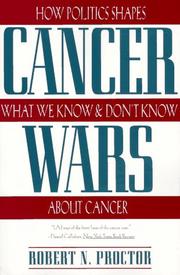
Proctor's earlier book, on how political and commercial interests shaped what got studied and what got called a carcinogen. Read it before Merchants of Doubt: it establishes that the contest was over the research agenda itself, not just over conclusions.
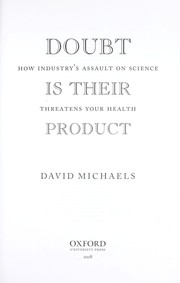
Written by an epidemiologist who ran a US regulatory agency, on the product-defence industry that grew out of tobacco's methods and now works for hire. The most operational account of the technique, with the strongest grounding in regulatory practice.
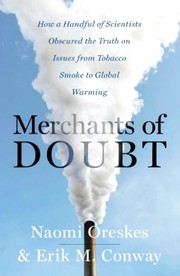
The best-known statement of the thesis, tracing a small group of scientists from tobacco through acid rain and ozone to climate change. It has drawn methodological criticism for how tightly it draws those connections, so read it last, after Proctor and Michaels have given you the material to judge it against.
The Counter-Reading
IntermediateClose with the case the public-health literature cannot make: that smoking was meaningful, and that a history which treats a billion smokers as merely deceived explains very little. Neither book here disputes the medical evidence; both ask what the cigarette was for. Read them as an argument about culture and desire rather than a defence of the product, and be aware that Klein's book is a deliberate provocation written against the grain of the field.
▸ Study plan for this stage
Pace: Three to four weeks, and after the document stage this one is deliberately short: 386 pages between the two books. Klein's Cigarettes Are Sublime is 210 pages of literary criticism arguing that the cigarette's appeal is aesthetic - that it belongs to the sublime rather than the merely pleasant, whic
- Klein's central move: locating the cigarette's appeal in the sublime - something bound up with danger and negation - rather than in pleasure, comfort or mere addiction
- Why an aesthetic account explains something the pharmacological one does not, namely the failure of accurate health information to shift behaviour
- The gap between addiction as a mechanism and smoking as a practice with structure, ritual and meaning
- Hens's texture: what the habit actually consisted of, cigarette by cigarette, and what quitting removed besides nicotine
- The limit of a public-health history that treats a billion smokers as merely deceived, and what it fails to explain
- How to read a contrarian argument that does not contest the evidence but contests the frame around it
- What does Klein mean by calling the cigarette sublime rather than pleasant, and what work does that distinction do that 'addictive' does not?
- If Klein is right, what should we expect health communication to achieve, and does the twentieth-century record match that expectation?
- Hens writes with no argument to make. What does his account establish about smoking that Klein's argument only asserts?
- Neither book disputes the medical evidence. What exactly are they disputing, and is it compatible with everything in the previous four stages?
- Return to the industry documents. Does anything in the internal record suggest the companies understood what Klein describes? What would that imply about who was deceiving whom about what?
- Write down Klein's thesis in one sentence and then list every fact from the earlier stages that supports it and every fact that undercuts it. This stage only earns its place if you actually test it, and the industry documents are the sharpest test available.
- Read Hens for the structure of the habit rather than the story: mark every passage where a cigarette is doing something other than delivering nicotine - marking a transition, filling a wait, ending a meal. The collection is the empirical content of Klein's argument, supplied by someone not making it.
- Take the modern anti-smoking campaign as described by Brandt and ask what it offers in place of what Klein and Hens describe. Write a paragraph on where it addresses that and where it does not.
- Set the early moral campaigners from Tate against Klein. Both are arguing that the cigarette means something rather than merely does something; write down where their accounts of the meaning agree, which is a genuinely odd result and the closing surprise of this path.
Next up: This closes the path: the history, the documents, the exported strategy and the counter-reading are all in place, and the natural next step is the public document archive itself rather than another book about it.

A literary critic's argument that the cigarette's appeal is aesthetic — that it belongs to the sublime rather than the merely pleasant, which is why health information never touched it. Deliberately contrarian, and the most interesting objection to everything above.

A memoir of a lifetime's smoking and of quitting, written with no polemical purpose at all, and the human close the subject needs. It answers Klein's question from the inside: what the habit actually consisted of, cigarette by cigarette.
Discussion
Keep reading
Paths that share books, cover the same subject, or open a related topic.