Rachel Carson Reading Order: The Sea Books Before Silent Spring
Carson was a bestselling nature writer for two decades before she wrote the book that started the modern environmental movement, and Silent Spring reads very differently once you know what came before it — three books about the ocean by a marine biologist who could write. This path takes the sea trilogy in order, then Silent Spring, then the shorter late writing, and closes with the biographies and the history of the campaign that was mounted against her, which is where the argument about her legacy still sits.
The sea, from underneath
BeginnerMeet Carson as a working marine biologist and a stylist, in the book that almost nobody read when it came out.
▸ Study plan for this stage
Pace: About a week and a half. Under the Sea-Wind runs to roughly 240 pages in three parts — the shore, the open sea, the river — so 25 pages an evening finishes it comfortably. Do not rush it; this is the shortest book on the path and the one whose method everything later depends on.
- Carson's central technique: the narrative has protagonists — Silverbar the sanderling, Scomber the mackerel, Anguilla the eel — but no human characters and no human vantage point. The science is delivered through what an animal does, not through explanation addressed to you.
- The three parts are three habitats, arranged outward: the edge of the shore, the open ocean, and the eel's migration between fresh water and the Sargasso. That outward movement is the shape she keeps returning to in the later books.
- She names individual animals but refuses to give them thoughts or motives. Watch how she gets you to care about a fish without a single sentence of anthropomorphism.
- The eel migration section is doing something unusual: it follows a life cycle that no observer had ever watched end to end, so she is narrating an inference from evidence as though it were an eyewitness account.
- This book sold almost nothing on release and is the reason there is a decade-long gap before The Sea Around Us. Commercial failure, not a change of interest, explains the shape of her career.
- Carson trained as a marine biologist and worked for the US Bureau of Fisheries writing radio scripts and public information. The prose is a government science writer's discipline about accuracy applied to literary ends.
- How does Carson convey a scientific fact — tidal rhythm, migration, predation — without ever stepping outside the animal's world to explain it to the reader?
- Why does she give the animals names but not thoughts, and what would be lost if she had given them either less or more?
- What does the eel section reveal about how she handles a phenomenon that had never been directly observed?
- Which of the three parts feels least like the others in method, and what changes when the setting changes?
- Having read this, what would you expect a Carson book about pesticides to look like — and what does that expectation tell you about why Silent Spring surprised people?
- Pick any three consecutive pages and mark every sentence that states a fact about biology. Count how many of them are framed as an action rather than as a statement — that ratio is her whole style.
- Rewrite one paragraph of the mackerel section as it would appear in a textbook, then compare lengths. Note what the textbook version gains in clarity and loses.
- Write 200 words on what the book would look like if a human observer had been present on the beach, and what specifically would have to be cut.
- Keep a running list of the animals given proper names versus those left generic; look for the rule Carson is following about which creatures get one.
Next up: You now know Carson's method at its purest and smallest; the next stage shows what happens when she scales the same technique up to an entire ocean and then back down to a single tide pool.
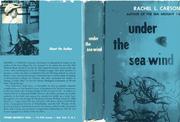
Her first book, published a month before Pearl Harbor and effectively ignored, narrating the lives of a sanderling, a mackerel and an eel with no human in view. Start here: it is short, it is the purest example of her method, and its commercial failure explains the ten-year gap before the next book.
The sea, entire
BeginnerRead the two books that made her famous and see the range — from deep-ocean geology to what is under a single rock at low tide.
▸ Study plan for this stage
Pace: Four to five weeks. The Sea Around Us is about 245 pages and The Edge of the Sea about 275, so roughly 20 pages a day covers both with room to reread. Read them in the listed order — The Edge of the Sea assumes the ocean-scale picture the earlier book builds.
- The Sea Around Us is structured as a biography of the ocean: how it formed, how it moves, how islands are made and destroyed, what lives in the deep. The organising question is always origin and process rather than description.
- Carson was writing at the moment when wartime sonar, deep-sound-channel work and bathymetry had suddenly made the deep ocean legible. Much of what feels routine in the book was fresh evidence when she assembled it.
- The Edge of the Sea inverts the scale: it is organised by substrate — rocky shore, sand beach, coral coast — because what lives where is decided by what an organism can hold on to.
- The Edge of the Sea is a field guide that refuses the field-guide form. It is meant to be carried to a beach, but it is arranged by ecological logic rather than by taxonomy, so you find an animal by knowing where you are standing.
- Both books stage a recurring argument: living things are shaped by physical conditions — temperature, salinity, wave energy, tide — rather than existing independently of them. That is the thought that makes contamination legible as a biological problem later.
- The Sea Around Us made her financially independent and gave her a public reputation as an authoritative scientific voice. Hold on to that fact; the third stage depends on it.
- Notice how rarely Carson uses the first person, and how much weight the few moments of direct observation in The Edge of the Sea carry because of that restraint.
- The Sea Around Us moves from geological time to a single wave. Where does the book change register, and how does Carson manage the transitions in scale?
- Why organise The Edge of the Sea by rock, sand and coral rather than by species or by region? What does that arrangement make visible that a taxonomy would hide?
- Which passages in The Sea Around Us are reporting evidence that was new at the time, and how does Carson signal the difference between settled and provisional knowledge?
- Compare the treatment of a single organism in Under the Sea-Wind with an equivalent passage in The Edge of the Sea. What has changed in her handling of the reader?
- What in these two books gave a general audience reason to trust her when she later made a contested argument about chemicals?
- Take the island chapter of The Sea Around Us and write a one-page summary of its argument about how island life is assembled — arrival, isolation, vulnerability. That argument reappears in a different form in Silent Spring.
- Go to any shoreline with The Edge of the Sea and identify which of Carson's three substrate chapters applies before opening the book to it. Note what she predicts you will find and what you actually find.
- List every place in the two books where Carson describes human activity. It is a short list — write 200 words on what that scarcity is doing.
- Draw the structure of The Sea Around Us as a diagram of scales, from the formation of the oceans down to the smallest thing she describes, and mark where each chapter sits.
Next up: You have now watched Carson build both a public reputation and a habit of thinking about organisms as inseparable from their physical surroundings — the two things that make the next book both possible and hard to dismiss.
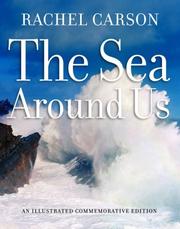
The National Book Award winner that sat on the bestseller list for over a year and let her leave government work to write full time. A biography of the ocean itself — origins, currents, islands, the deep — and the book that established her public authority, which is what made Silent Spring impossible to dismiss.

The third of the sea books and the most practical: a guide to the Atlantic shoreline organised by rock, sand and coral, meant to be carried. Read it after The Sea Around Us, whose ocean-scale picture it zooms into.
The book that changed the law
IntermediateRead Silent Spring as the carefully evidenced scientific argument it is, and understand what it claimed and what it did not.
▸ Study plan for this stage
Pace: Three weeks for about 335 pages, at a slower pace than the sea books deserve — perhaps 15 pages a sitting. Read the reference apparatus at the back alongside the chapters rather than after, since checking a claim against its source is most of the point here.
- The structure is an argument, not a survey: an opening fable, then a case that synthetic pesticides move through soil, water and living tissue, then chapters on specific harms, then a closing section on alternatives such as biological control.
- The book carries a long list of principal sources because Carson expected to be attacked on the facts. Treating that apparatus as part of the text, rather than as back matter, is how you read the book as she built it.
- The core mechanism she is teaching is that a chemical does not stay where it is applied. Persistence, movement through water and soil, and concentration in tissue up a food chain are the ideas the whole argument rests on.
- 'A Fable for Tomorrow' is explicitly a composite, not a report of a real town. Carson says so. How you feel about that opening move is worth settling early, because critics then and since have made a great deal of it.
- Her stated target is indiscriminate broadcast application and the assumption that more is better — and she argues that heavy use breeds resistant insects, which is an argument against overuse from within pest control rather than against chemistry as such.
- Silent Spring is credited with driving the creation of the US Environmental Protection Agency and the American ban on agricultural DDT.
- A persistent line of criticism holds that restrictions on DDT carried a cost in malaria deaths; historians of the period contest that account and dispute what Carson actually called for. The disagreement is live, and reading the book itself is how you form your own view of what it claims.
- Carson was seriously ill while writing and testifying. That is context for the book's tone of urgency, not a substitute for assessing its evidence.
- What precisely does Carson call for, chapter by chapter — and where does the text sit between restriction, regulation and prohibition?
- Trace one claim from the text to its entry in the source list. Does the source support the strength of the claim as she states it?
- Does the opening fable strengthen or weaken the book's standing as scientific argument? Make the case both ways before deciding.
- How does she handle uncertainty about human health effects compared with the effects on birds and fish, where the evidence was more direct?
- The critics say she was alarmist; her defenders say she was careful and was attacked for being effective. Which passages would each side cite, and what would settle it?
- Her chapters on biological control propose alternatives. How persuasive are they on their own terms, independent of the case against pesticides?
- Summarise the argument of the whole book in 300 words with no adjectives. If the summary still persuades, the argument is doing the work; if it collapses, the prose was.
- Pick five factual claims from different chapters, look each up in the book's own source list, and write one line on how directly the cited source supports it.
- Write the strongest one-page case against Silent Spring using only what is inside the book — its own hedges, gaps and rhetorical choices — without appealing to later commentary.
- Diagram the food-chain concentration argument as it appears in the text, then find every later chapter that depends on that diagram being right.
- List the specific chemicals Carson names and note which she treats as different from one another. Readers on both sides of the argument tend to flatten this.
Next up: With the argument itself in hand, you are ready for the shorter late writing, where the same convictions appear stripped of evidence and stated as feeling.
The 1962 book on synthetic pesticides, written while she was dying of breast cancer and armed with fifty-five pages of references because she expected to be attacked. Two things worth holding at once: it is credited with the creation of the EPA and the US ban on agricultural DDT, and a persistent line of criticism holds that restrictions on DDT cost lives to malaria in the decades after. Historians of the period dispute that account, noting that Carson argued against indiscriminate agricultural
The shorter Carson
BeginnerRead the late and posthumous work where the argument becomes personal rather than evidential.
▸ Study plan for this stage
Pace: Two weeks and comfortably less. The Sense of Wonder is under 90 pages and is genuinely an hour's reading; Lost Woods runs to about 320 pages but is a collection, so read it in pieces — two or three items a sitting, in whatever order the table of contents tempts you.
- The Sense of Wonder makes an argument about children and the outdoors that is emotional rather than evidential: that the capacity for wonder matters more than the ability to name things.
- It is the clearest statement of what Silent Spring was defending. Read backwards from it and the pesticide book looks less like a technical complaint and more like a defence of something she had already described.
- The essay was published in book form after her death and paired with photographs; the text you are reading was originally a magazine piece, so its brevity is a format, not a late loss of ambition.
- Lost Woods is edited by Linda Lear, who also wrote the biography in the next stage. The selection is an argument about Carson made by the person who knew the papers best — treat the editorial framing as a reading, not as neutral.
- The collection spans letters, speeches, magazine work and unpublished drafts across her whole career, so it is the one place you can watch an idea appear in a private letter years before it reaches a book.
- The speeches are the most useful surprise: Carson speaking to an audience is more explicitly argumentative than Carson writing for a reader, and states positions the books leave implicit.
- The Sense of Wonder argues that feeling precedes knowledge. Does anything in the sea books support that ordering, or is this a position she only states directly here?
- Which pieces in Lost Woods contain an idea that later became a chapter or a book, and how much did it change on the way?
- How does Carson's voice change between a private letter, a public speech and a published book? Find one idea expressed in all three registers.
- What does Lear's selection emphasise, and what would a differently minded editor have chosen to foreground instead?
- Having read the short late work, would you now describe Carson primarily as a scientist, a writer, or an advocate — and does the distinction survive contact with the material?
- Read The Sense of Wonder in one sitting, then write 200 words on what it claims about the relationship between naming and noticing.
- Working through Lost Woods, keep a two-column list: idea, and where it later appears in one of the four books on this path.
- Choose one speech in Lost Woods and mark every sentence that would not have survived into one of her books. Write a paragraph on why.
- Pick a single passage from The Sense of Wonder and one from Silent Spring that make the same underlying claim, and set them side by side to see how the register changes when evidence is added.
Next up: You have now read everything Carson wrote that this path covers; the final stage moves from her words to the record other people have made of her.

A short essay, published as a book after her death and illustrated, about taking a child outdoors. An hour's reading, and the clearest statement of the affection underneath the science — the thing Silent Spring was defending.
Collected uncollected writing — letters, speeches, magazine pieces and unpublished drafts spanning her whole career, edited by her biographer Linda Lear. A collection rather than a single work, and the place to see the ideas forming.
Carson in the record
BeginnerRead the biographies and the history of the opposition, and be able to separate what Carson wrote from what has since been said about her.
▸ Study plan for this stage
Pace: Seven to eight weeks — this is the heaviest stage by a wide margin, roughly 2,000 pages across four books. Lear's biography alone runs past 600 pages; give it three weeks, then two for Souder, one for Oreskes and Conway, and two for Brinkley.
- Lear's biography is the factual baseline, built directly on Carson's papers, and it is where the chronology of the Silent Spring years, the industry response and her illness is established. Read it first so the other three have something to disagree with.
- Souder is stronger on the science and on the Cold War frame — the fallout debates that had already taught the American public to worry about invisible contamination they could not detect themselves.
- That fallout context matters more than it first appears: it explains why an argument about undetectable chemical accumulation found a ready audience, which is a fact about the moment rather than about the book.
- Merchants of Doubt argues that the same strategy of manufacturing scientific doubt recurs across tobacco, acid rain, ozone and climate, and includes a chapter on the posthumous campaign against Carson. It argues one side of the DDT controversy forcefully and has its own critics; read it as an argued
- Brinkley's book is a political history of American environmentalism across the Kennedy, Johnson and Nixon years, and answers the question the biographies leave open — what legislative and institutional change actually followed.
- The four books disagree about how much credit Carson deserves and about what the DDT restrictions cost and achieved. The disagreement is genuine and unresolved, and this path does not adjudicate it — the point of reading all four is to see the shape of the argument, not to be handed a verdict.
- A biography built on an author's own papers has a structural bias toward her account of events. Notice where Lear is relying on Carson's letters for a scene, and check whether Souder reconstructs it from other sources.
- Where do Lear and Souder describe the same event differently, and what kind of source is each relying on at that point?
- Merchants of Doubt and its critics disagree about the posthumous campaign against Carson. What evidence does the book offer, what would its critics say is missing, and what would resolve it?
- Brinkley traces institutional consequences. How much of what followed can be attributed to Silent Spring specifically rather than to the political conditions he describes?
- Having read the criticism of Carson alongside her own text, does the criticism engage with what Silent Spring actually says, or with a version of it?
- What does the Cold War fallout context in Souder change about how you read the reception of Silent Spring — as opposed to how you read the book itself?
- If you had to state the strongest surviving objection to Carson's legacy and the strongest reply, what would each be?
- Build a single timeline from Lear and Souder together, marking each entry with which book it came from and flagging every date or sequence where they diverge.
- Take the Carson chapter of Merchants of Doubt and list its claims one by one, then note for each whether Lear or Souder corroborates it, contradicts it, or is silent.
- Write 400 words stating the DDT dispute as fairly as you can — the strongest form of each position, with the evidence each side relies on — without concluding.
- Reread the passages of Silent Spring that the critics in these books cite, and write one line each on whether the quotation is representative of its chapter.
- Using Brinkley, list the specific laws and agencies created in the decade after Silent Spring and mark which ones the book he is writing about is actually cited in.
Next up: This is the end of the path: you can now separate what Carson wrote from what has been said about her since, and read any new claim about her legacy against the primary text.
The standard biography, built on her papers and the definitive account of the Silent Spring years, the industry response and her illness. Catalogued under the shorter form of the title. Read this before the others; it is the factual baseline.

The later biography, and stronger on the science and on the Cold War context — the fallout debates that made an American public receptive to an argument about invisible contamination. A useful second reading rather than a replacement for Lear.
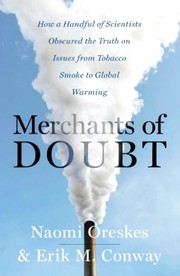
Oreskes and Conway trace an organised strategy of manufacturing scientific doubt across tobacco, acid rain, ozone and climate — and devote a chapter to the posthumous campaign against Carson. It argues one side of the DDT controversy forcefully and should be read as an argued case with its own critics, not as neutral background.

A political history of American environmentalism from Kennedy to Nixon, placing Carson inside the legislative story she set off. The right closing book because it answers the question the others leave open: what actually happened next.
Discussion
Keep reading
Paths that share books, cover the same subject, or open a related topic.