The Qing dynasty: the best books to read, in order
The Qing (1644-1912) was founded by Manchu conquerors, doubled the territory China governs today, presided over an eighteenth-century boom, and then spent a century absorbing invasions, rebellions and treaties. The central scholarly argument of the last thirty years is about what kind of state it was: a Chinese dynasty that happened to have Manchu rulers, or an Inner Asian empire of which China was one part. This path gives you the narrative first, then that argument in its own stage, then the society at its height, then the long nineteenth-century crisis.
The narrative
BeginnerHold the whole dynasty in sequence — conquest, the Kangxi-Yongzheng-Qianlong century, the Opium Wars, the Taiping, the reforms, 1911 — and know the basic institutions.
▸ Study plan for this stage
Pace: Ten to twelve weeks. Rowe's China's Last Empire is 368 pages of dense scholarly overview and is the slowest short book on this path — three weeks at fifteen pages a sitting, with notes. Spence's The Search for Modern China is 876 pages and should not be read straight through at first: read the Qing
- The dynastic shape in one sequence: Manchu conquest in 1644, the Kangxi-Yongzheng-Qianlong century of expansion and prosperity, the nineteenth century of war, rebellion and treaty, the late reforms, and 1912
- The banner system — the Manchu military and social organisation that conquered China and then governed as a hereditary caste alongside the civil bureaucracy
- The examination system and the scholar-official class, the institution that gave the empire an administrative elite and gave that elite a stake in the dynasty
- The doubling of territory: the Qing brought Mongolia, Xinjiang, Tibet and Taiwan under imperial control, which is why the dynasty's borders matter to the map of China today
- The eighteenth-century boom — population roughly tripling, commercialisation, internal migration — and the pressure that growth put on land and administration
- The unequal treaties and the treaty port system as a distinct kind of foreign presence: not colonisation, but a permanent legal exception carved into a sovereign state
- The Taiping, Nian and Muslim rebellions of the mid-century, and the fiscal and military devolution to provincial armies that the dynasty never reversed
- The self-strengthening reforms, the 1898 Hundred Days, the Boxer catastrophe and the late New Policies as four different answers to the same question, none of which saved the dynasty
- How does a Manchu force numbering in the hundreds of thousands come to rule a population of well over a hundred million? Name the mechanisms rather than the events.
- What was the banner system for at conquest, and what had it become by 1800?
- Rowe writes with the New Qing History debate absorbed and Spence largely predates it. Can you feel the difference in emphasis, and where?
- What made the eighteenth century prosperous, and what in that prosperity was storing up the nineteenth century's problems?
- The dynasty survived the Taiping and fell forty-five years later. What changed in the interval that made 1911 possible?
- Write a one-sentence answer to what kind of state the Qing was. Date it. This is your baseline and you will revise it in the next stage.
- Build a one-page timeline: reign, dates, two or three defining events each. Ten rows covers the dynasty and it is the reference you will use for the rest of the path.
- Draw the empire's territorial extent from Rowe's account at 1650, 1760 and 1860 on three rough sketches. The 1760 map is the one that makes the New Qing History argument visible before you have read a word of it.
- Make a glossary of institutions as you read: banner, bannerman, Grand Council, Board of Rites, magistrate, gentry, likin, taotai. Twelve to fifteen entries. Every later book uses these without definition.
- After Rowe, write 400 words summarising the dynasty's decline. After Spence's Qing chapters, write it again. The second version should be more contingent and less inevitable, and noticing that shift is the point.
- List, from Spence, every foreign war and treaty between 1839 and 1901 with its date and its main concession. Eight or nine entries, and it is the fastest way to see the pattern the fourth stage examines.
Next up: You now have the events, which is exactly what you need before the argument — because the New Qing History debate is not about what happened but about what to call the thing that was doing it.

The Qing volume of Harvard's History of Imperial China and the best short scholarly overview, written with the New Qing History debate fully absorbed. Start here.
The standard survey from the late Ming to the twentieth century, and the most readable long narrative on the subject. Read second and use it as the reference spine for everything that follows; its coverage extends well past 1912.
Manchus, banners and the New Qing History
IntermediateTake a position on whether the Qing were sinicised Chinese rulers or a distinct conquest elite governing a multi-ethnic empire, and know what evidence each side uses.
▸ Study plan for this stage
Pace: Twelve to fourteen weeks and the most demanding stage on this path. The Manchu Way is 608 pages of archival scholarship — four to five weeks, and read the introduction and conclusion first to get the thesis, then the evidence chapters at whatever pace they allow. Crossley's The Manchus is 248 pages
- The question this stage exists to let you answer: was the Qing a Chinese dynasty that happened to have Manchu rulers, or an Inner Asian empire of which China proper was one constituent part?
- The older sinicisation thesis — that conquest elites who ruled China were absorbed by Chinese civilisation — and why it dominated the field for decades
- Elliott's evidence: Manchu-language archives showing a banner population kept deliberately, expensively and legally separate for two and a half centuries, with its own garrisons, courts, language policy and marriage rules
- Ethnic sovereignty as Elliott's alternative frame: Manchu difference as the basis of the dynasty's claim to rule, maintained on purpose rather than eroding by accident
- Crossley on the Manchus as a people constituted by the dynasty rather than pre-existing it, which is a different argument from Elliott's and is often flattened into the same one
- Perdue's frame: the Qing conquest of Zungharia as one side of a contest between two expanding land empires, with Russia on the other, and the elimination of the Zunghar state as its outcome
- The multi-ethnic emperorship — the Qianlong emperor addressing Manchu, Mongol, Tibetan, Uyghur and Chinese constituencies in different idioms simultaneously, which is very hard to describe in purely Chinese terms
- That this scholarly debate is politically contested in China today, where the argument is read as bearing on national territorial claims. That contestation is a fact about the debate's reception and does not settle the historical question either way
- State the sinicisation thesis at its strongest, then state Elliott's objection. What kind of evidence would each side need to be wrong?
- What does the Manchu-language archive contain that the Chinese-language archive does not? Be specific — this is the empirical core of the whole dispute.
- How does Crossley's argument differ from Elliott's? They are usually grouped together and they are not making the same claim.
- Perdue frames the Zunghar campaigns as empire against empire rather than China against a frontier. What follows from that framing, and what does it obscure?
- The Qianlong emperor presented himself differently to different constituencies. Is that evidence of a distinct Inner Asian empire, or of a normal repertoire of imperial rule?
- Revise the one-sentence answer you wrote in the previous stage about what kind of state the Qing was. What moved you, and what evidence would move you back?
- Read Elliott's introduction and conclusion first, write down the thesis in 200 words, then read the evidence chapters and check whether the thesis you wrote is the one the evidence supports. This is a general technique for long monographs and this is the right book to learn it on.
- Build a two-column evidence sheet: claims that the banner population remained distinct, claims that it assimilated. Fill both from Elliott himself — he supplies material for each and the balance is the argument.
- Take Perdue's account of the Zunghar campaigns and write 300 words describing them from a Zunghar rather than a Qing perspective, using only Perdue's evidence. The exercise is in noticing how much the framing of a source determines the story.
- Write a 500-word statement of the New Qing History position and a 500-word statement of the case against, without indicating which you hold. If one of them is markedly weaker, you have not yet read the weaker side fairly.
- Return to your 1760 territorial sketch from the first stage. Annotate it with which regions were governed through which institutions. The administrative heterogeneity is the single most concrete piece of evidence in this stage.
Next up: The debate is conducted at the level of the state and the frontier; the next stage drops to the county, the village and the emperor's own desk, where the abstractions have to be visible in practice or they are not real.
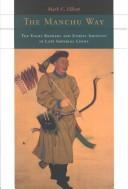
The book that made the case, using Manchu-language archives to show a banner population kept deliberately separate for two and a half centuries. The anchor text of the New Qing History and the one to read first in this stage.
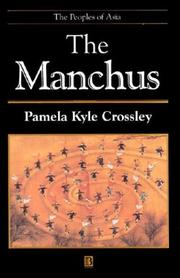
A shorter accessible history of the Manchus as a people before, during and after the dynasty. Crossley's fuller argument is in A Translucent Mirror; this is the readable entry to the same position.
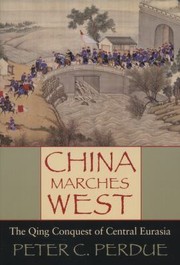
The conquest of Zungharia and Central Asia, argued as the Qing competing with Russia in a contest of expanding land empires. Long and demanding, and the strongest case that Qing rule cannot be described in purely Chinese terms. Note this whole debate is politically contested in China today, where it is read as a challenge to national territorial claims.
The eighteenth century from the inside
IntermediateSee High Qing society at ground level — how an emperor thought, how a county magistrate governed, how ordinary people experienced law, rumour and the state.
▸ Study plan for this stage
Pace: Eight to ten weeks, and the most enjoyable stage on the path. Emperor of China is 221 pages and reads in a week — a short, strange book to begin with. Naquin and Rawski's Chinese Society in the Eighteenth Century is 270 pages and is a reference synthesis rather than a narrative; two to three weeks,
- Spence assembling the Kangxi emperor's self-portrait entirely from his own edicts, letters and jottings — the closest thing available to hearing a Qing ruler think, and a reminder that the throne was occupied by a person with moods
- What the emperor personally did: reading memorials, hunting, worrying about sons, adjudicating disputes about grain. The workload of autocracy at its most literal
- Naquin and Rawski's regional organisation of High Qing society, and the demographic and commercial figures — population growth, internal migration, market integration — that every argument about the eighteenth century rests on
- Mobility as the period's defining social fact: people moving to frontiers, to cities, along waterways, in numbers the administrative system was not designed for
- Kuhn's 1768 sorcery panic as a purpose-built X-ray of the state: a rumour about queue-clipping travels from villages to county magistrates to provincial governors to the emperor, and the reader watches every filter it passes through
- The information problem at the heart of Qing government — the emperor's dependence on reports from officials whose careers depended on what those reports said
- Kuhn's account of the emperor using the panic to discipline his own bureaucracy, which is the book's real subject and a far more interesting one than sorcery
- Spence reconstructing rural Shandong in the 1670s from a local gazetteer, a magistrate's handbook and a writer's fiction — the smallest scale on this path, and a demonstration of what can be built from almost no sources
- What surprised you most about the Kangxi emperor as a person? Then ask what a self-portrait assembled from official documents can and cannot show.
- From Naquin and Rawski, what were the main demographic and economic pressures of the eighteenth century? Give numbers where you can.
- In Soulstealers, at how many points does information get distorted between a village and the throne? Name the mechanism at each.
- What does the emperor actually want from the sorcery investigation? Kuhn's answer is not the obvious one.
- The Death of Woman Wang is built from three very different kinds of source. What does each contribute, and where is Spence reconstructing rather than reporting?
- Do these four books support the New Qing History picture from the previous stage, complicate it, or simply operate at a level where it does not arise?
- Diagram the chain of communication in Soulstealers — village, county, prefecture, province, Grand Council, throne — and mark at each link what gets added, dropped or softened. One page, and it is the single best summary of how the Qing state worked.
- From Emperor of China, list five decisions Kangxi makes personally. Then ask how many such decisions a year the system required of him. The arithmetic is the argument about autocracy's limits.
- Use Naquin and Rawski to write a one-page profile of a single region — population, crops, trade, migration. Choose one that appears in Soulstealers or Woman Wang and read the other books against it.
- In The Death of Woman Wang, mark the passages drawn from Pu Songling's fiction. Then decide, in writing, whether Spence is entitled to them. It is a real methodological question and historians disagree about it.
- Take one institution from your first-stage glossary — the magistrate, say — and write 300 words on what it actually meant in practice, using all four books. The gap between the institutional description and the lived one is what this stage is for.
Next up: The eighteenth century's prosperity, mobility and administrative strain are precisely the conditions the nineteenth century's rebellions grew out of, which is why the crisis reads as a consequence rather than an invasion once you have seen the High Qing from underneath.
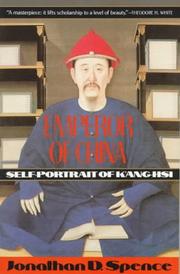
A self-portrait of the Kangxi emperor assembled entirely from his own edicts and letters. Short, strange and the closest thing to hearing a Qing ruler speak.

Written with Evelyn Rawski, this is the standard synthesis of High Qing social and economic life, organised by region. Use it as a reference: it is where the population, commerce and mobility figures come from.
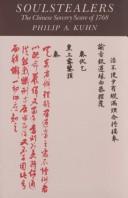
A 1768 sorcery panic followed from the villages up through the provincial bureaucracy to the emperor, showing exactly how information and pressure moved in the Qing state. Brilliantly constructed and the best single demonstration of how the system worked.
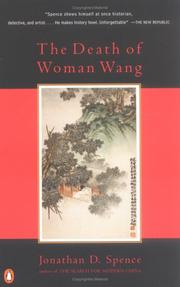
Rural Shandong in the 1670s, reconstructed from a local gazetteer, a magistrate's handbook and a writer's fiction. Read last in this stage: it is the smallest scale on the path and depends on knowing the institutions the other books describe.
The nineteenth-century crisis
IntermediateFollow the Opium Wars and the Taiping rebellion in depth, and be able to weigh internal causes against foreign pressure in explaining the dynasty's decline.
▸ Study plan for this stage
Pace: Nine to eleven weeks. Imperial Twilight is 560 pages of first-rate narrative history and moves quickly; three to four weeks. Lovell's The Opium War is 456 pages and is really two books — the war, and its long afterlife as a national grievance — so read it in two passes of two weeks each rather than
- The Canton system before 1839 — a single licensed port, the hong merchants, and a trade relationship that worked for a century before it broke
- Platt's central argument in Imperial Twilight: that the first Opium War was contingent rather than inevitable, produced by particular individuals making particular choices in a narrow window
- The opium trade's actual mechanics — silver flows, Indian production, private country traders — which matter because the war is usually explained by a moral shorthand that omits them
- Lovell's second subject, which is the larger one: how the Opium War became the founding grievance of modern Chinese nationalism, and how its meaning has been constructed and reconstructed since
- The century of humiliation as a historical narrative with a datable origin, deployed differently at different moments — a book about memory as much as about 1839-42
- The Taiping civil war of the 1850s and 60s, which killed perhaps twenty million people and is far less known in the West than the Opium Wars despite being incomparably larger
- Hong Xiuquan's movement as a genuinely revolutionary state with its own capital, ideology and administration, rather than a rebellion in the conventional sense
- The devolution that saved the dynasty and doomed it: provincial armies raised by Han officials defeated the Taiping and permanently shifted military and fiscal power away from the centre
- Platt argues the first Opium War was contingent. What would have had to be different, and how persuasive do you find the counterfactual?
- What did the Canton system actually do well, and why did it stop working? Answer before reaching for the moral framing of the war.
- Lovell traces how the Opium War's meaning has been used since. Name three distinct uses at three different periods, and say what each needed the war to have been.
- The Taiping war killed vastly more people than the Opium Wars and is far less known outside China. Why, and what does the imbalance suggest about how this century gets narrated?
- Weigh internal against external causes of the dynasty's decline. Take a position, and name the specific evidence from these three books that would most damage it.
- Now write the final version of your one-sentence answer to what kind of state the Qing was — and add a second sentence on what destroyed it.
- Write 400 words arguing the first Opium War was inevitable, using only Platt's own evidence. If you can do it convincingly, you have understood what a contingency argument does and does not prove.
- From Lovell, build a timeline of the Opium War's afterlife: date, who is invoking it, what for. Six or seven entries. It is a compact case study in how history gets used.
- Map the Taiping war's extent and duration against the Qing territorial sketches you made in the first stage. Seeing how much of the empire's richest territory was in rebellion for over a decade recalibrates the whole century.
- Compare the treaty concessions list you made in the first stage with the internal rebellions of the same decades, on one page, in parallel columns. The question of which column explains more is the question this stage asks.
- Write a 1,000-word answer to the path's governing question: what was the Qing, and why did it fall? Cite specific books. Compare it with the one-sentence version you wrote after the very first stage — the distance between them is what thirteen books bought you.
Next up: This is the end of the path. The natural next step is across the 1912 boundary rather than deeper into it — the Republic inherited the Qing's borders, its provincial armies and its unequal treaties, and none of the twentieth century makes sense without that inheritance.

The decades before the first Opium War, told through the Canton trade and the individuals on both sides, arguing that the war was contingent rather than inevitable. Narrative history at a very high level.

Covers the war and then, more importantly, its afterlife as the founding grievance of modern Chinese nationalism. Read it as a book about memory and politics as much as about 1839-42.
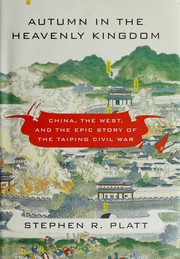
The Taiping civil war of the 1850s and 60s, which killed perhaps twenty million people and is far less known in the West than the Opium Wars. The best account of the internal collapse that foreign pressure was compounding.
Discussion
Keep reading
Paths that share books, cover the same subject, or open a related topic.