Best Books on the Great Leap Forward and the Chinese Famine, in Reading Order
The famine of 1958 to 1962 killed more people than any other event of the twentieth century and was denied for thirty years, so the historiography is unusually a story about archives. This path establishes the shape of Communist China first, then reads the three books that established the famine's scale, then goes back to how a system capable of it was built, and ends with the Cultural Revolution that followed and the memoir literature that carried the story out. The middle stage is brutal reading and is much easier to hold once the political context is in place.
The China the Leap happened in
BeginnerHave a working chronology of the revolution, land reform, the first Five-Year Plan and Mao's position in the leadership before touching the famine itself.
▸ Study plan for this stage
Pace: Eight to ten weeks for about 1,420 pages. Spence's The Search for Modern China is 876 pages covering four centuries; read the whole twentieth century closely and move faster through the Ming and Qing material, though the late imperial chapters explain more about the 1950s than you would expect. Meis
- The chronology every later book assumes: 1949 founding, land reform to 1952, the first Five-Year Plan on the Soviet model 1953 to 1957, collectivisation, the Hundred Flowers and the Anti-Rightist Campaign of 1957, then the Leap from 1958
- The Anti-Rightist Campaign as the immediate precondition — several hundred thousand people punished for criticism, which is what made honest reporting from below dangerous a year before the famine began
- Meisner's core point: the Leap had an ideology, not merely an ambition. Mao believed a mobilised peasantry could substitute for capital, that class consciousness could outrun material conditions, and that China could bypass the Soviet path to industrialisation
- The Sino-Soviet split developing across exactly these years, and the pressure to prove a distinctively Chinese road to socialism
- The Party's organisational structure — centre, province, county, commune — and the reporting chain along which grain figures travelled upward, which is the mechanism at the heart of the next stage
- Mao's position within the leadership: dominant but not unopposed, and the Lushan Conference of 1959 as the moment opposition was tested and destroyed
- The people's commune as an institution, and what it abolished: the household as a unit of production, private plots, and eventually private cooking
- Spence and Meisner as different kinds of book — Spence narrative and cautious, Meisner analytical and engaged with Marxism as a real motivating framework. Noticing the difference sharpens both
- Set out the chronology from 1949 to 1958 with the four or five turning points that matter most. You will use this repeatedly.
- What did the Anti-Rightist Campaign do to the incentives of an official asked to report a harvest figure?
- What was the Great Leap Forward supposed to achieve, in the terms its planners used? Meisner is the one who takes those terms seriously.
- Describe the Party's reporting chain from village to centre. At which links could a number be altered, and who would know?
- What happened at Lushan in 1959, and what did the outcome signal to every other official in the country?
- Build a timeline from 1949 to 1962 with three tracks: policy, leadership politics, and agriculture. This timeline is the single most useful thing you will carry into the next three stages.
- Draw the administrative hierarchy from the centre down to a production team, marking who reported what to whom. The famine's mechanics are legible on this diagram.
- Write 400 words on what Mao thought the Leap would accomplish, using Meisner and taking the ideology seriously as motivation. Whether you find it persuasive is beside the point; understanding it is required to explain the policy.
- Note every point in Spence's twentieth-century chapters where a Chinese government's food policy caused or worsened a famine. The Leap was not the first, and the longer view matters.
Next up: With the political context in place, the next stage takes up the famine itself and the three books that forced it into the historical record — and it is the hardest reading in the path.
The standard survey from the late Ming to the present, and the frame every specialist book here assumes you already have. Read the twentieth-century chapters closely.
A political history of the People's Republic that takes the ideology seriously as motivation rather than pretext. It explains what the Leap was supposed to achieve.
The three books that established the scale
IntermediateUnderstand how the famine happened mechanically — communes, backyard furnaces, inflated grain reports, procurement quotas — and how historians arrived at their death tolls.
▸ Study plan for this stage
Pace: Ten to twelve weeks for about 1,415 pages, and this stage should not be rushed or read in long sittings. Becker's Hungry Ghosts is 352 pages, Dikötter's Mao's Great Famine 434, Yang's Tombstone 629 in the English abridgement. Read them in that order — journalism from outside, provincial archives, th
- The mechanism, which all three books agree on: inflated harvest reports travelling up the reporting chain, procurement quotas set as a share of those inflated figures, and the resulting seizure of grain that did not exist as surplus, leaving the countryside without food
- The communes and the communal kitchens, which removed households' ability to hold or ration their own food, and the abolition of private plots that removed the fallback
- Backyard steel furnaces: labour diverted from the harvest at exactly the wrong season, tools and cooking pots melted down, and the output largely unusable
- The closed-village system and the restriction of movement, which prevented the ordinary famine response of leaving to find food — the same structural feature that appears in every modern famine literature
- The range of published estimates and where each comes from — Becker's roughly thirty million, Dikötter's minimum of forty-five million from provincial archives, Yang's thirty-six million from internal records — and the fact that specialists still disagree, with some demographers arguing for figures
- The intent question, which is the field's central dispute: Dikötter argues the leadership knew and continued, treating the deaths as policy; others argue for catastrophic misjudgement compounded by a system that could not deliver bad news upward. Both positions are held by serious scholars and both
- The evidentiary asymmetry between the three books: Becker had almost no archival access and worked from interviews and refugee accounts; Dikötter worked in provincial Party archives opened in the 2000s; Yang, as a Xinhua journalist, obtained internal records over twenty years and wrote from inside t
- Yang's personal position — his father starved in 1959, and Tombstone is a memorial as well as a history — which he states openly and which the reader should hold in view without using it to discount the evidence
- Trace the path of a false harvest figure from a production team to the centre and back down as a procurement quota. Where exactly does the grain that does not exist get taken from?
- Why did the communal kitchens make the famine worse rather than better? Be specific about what capacity they removed from households.
- How is excess mortality calculated for this period, and what are the specific weaknesses in the underlying Chinese data of 1953 to 1964?
- Set out Dikötter's argument for deliberate policy and the strongest counter-argument for catastrophic misjudgement, each in a paragraph, using the documents each side cites. Establish which documents the dispute actually turns on rather than choosing a side.
- Becker, Dikötter and Yang had radically different access to sources. For each, name one type of claim their sourcing supports well and one it supports poorly.
- Yang writes as a Party journalist whose father died in the famine. How should that shape your reading of Tombstone — and what would it mean to discount him for it?
- Build a table of the three books' death toll estimates with, for each, the method, the data source, and the stated uncertainty. Doing this makes visible that these are not three opinions but three procedures.
- Pick one province covered in detail by both Dikötter and Yang — Henan and Anhui are the best documented — and compare their accounts. Note where they agree on facts, where on interpretation, and where the archives simply differ.
- Add the famine to the timeline from stage one, marking the Lushan Conference, the peak mortality period, and the point at which policy changed. The gap between the second and third is the crux of the intent argument.
- Write 500 words on the procurement mechanism for someone who knows nothing about it. If you cannot explain it without using the word evil, you have not yet understood the machinery — which is not an argument about culpability, only about description.
- Look up one demographic reassessment of the famine's toll published in a journal and compare its estimate and method with the three books. The literature is technical and accessible, and seeing the range is part of reading this subject honestly.
Next up: Having seen what the system did, the next stage goes back to how it was built — the decade in which the checks that might have stopped it were dismantled one at a time.

The first book to put the famine in front of a general Western readership, written by a journalist working largely from interviews and refugee accounts. Read first for the narrative and note how little archival access he had.
Built from provincial Party archives opened in the 2000s, and the source of the widely cited forty-five-million figure. Dikötter argues for deliberate policy rather than tragic error.
A Xinhua journalist whose own father starved spent twenty years gathering internal records province by province. The most authoritative account, written from inside the system it indicts, and banned in China.
How the system became capable of it
IntermediateTrace the years between 1949 and 1958 — land reform, campaigns, the collapse of dissent within the Party — that removed every check on the policy.
▸ Study plan for this stage
Pace: Twelve to fourteen weeks for about 2,030 pages. Hinton's Fanshen is 637 pages of close village observation — three to four weeks. Dikötter's The Tragedy of Liberation is 406 pages, three weeks, and reads as the direct counter to Hinton. Li Zhisui's The Private Life of Chairman Mao is 682 pages and r
- Land reform as Hinton observed it in Long Bow village in 1948: the speak-bitterness meetings, the classification of households, the redistribution, and the violence, all recorded by a sympathetic participant-observer
- Why Hinton's enthusiasm is evidence rather than a flaw. He is documenting what the revolution looked like to a well-informed believer at the time, and reading him against Dikötter is a lesson in how the same events look under different commitments
- Class categorisation as an administrative act with lifelong consequences — landlord, rich peasant, middle, poor — assigned in village meetings and inherited by children
- Dikötter's account of 1945 to 1957: the campaigns against counter-revolutionaries, the Three-Anti and Five-Anti campaigns, thought reform, and the argument that coercion was the default from the beginning rather than a later degeneration
- Li Zhisui's view from the top: Mao's working habits, his isolation from unfiltered information, the inspection tours staged for him, and the court politics of the leadership. The 1958 tours and what Mao was shown are directly relevant to the intent question
- That Li's memoir is contested. It was written decades later in the United States, some Chinese contemporaries have disputed specific claims, and questions have been raised about the editing. It remains the closest available account of decision-making in Mao's presence, and should be read as valuable
- Shapiro's environmental argument: backyard steel and its deforestation, the Four Pests campaign against sparrows and the insect population explosion that followed, and deep ploughing and close planting as pseudo-scientific practices imposed by political authority
- Lysenkoist agronomy imported from the USSR, and the general principle Shapiro draws: that a political system able to override expert objection will convert ideology into ecological damage
- What did land reform actually consist of in Long Bow? Describe the process, not the outcome.
- Hinton and Dikötter describe the same years with opposite conclusions. Where do they disagree about what happened, and where only about what it meant?
- What did class categorisation determine for a family over the following thirty years?
- From Li Zhisui: what did Mao see on his 1958 inspection tours, and who arranged it? How does this bear on the intent argument from the previous stage?
- Which specific claims in Li's memoir would you want corroborated, and what kind of source would corroborate them?
- Explain the sparrow campaign from decision to consequence. Then state the general mechanism Shapiro is describing, of which the sparrows are only the most memorable case.
- Take one event covered by both Hinton and Dikötter and write a page on how each presents it. This is the best exercise in the path for learning how commitment shapes historical writing without either author being dishonest.
- Write 400 words on class categorisation as an administrative system: who decided, on what evidence, with what appeal, and with what consequences. It is the least dramatic and most consequential thing in Fanshen.
- Take three specific claims from Li Zhisui and check each against Dikötter, Yang or MacFarquhar in the next stage. Record which are corroborated, which contradicted and which uncorroborated.
- List every agronomic practice Shapiro describes as imposed for political rather than scientific reasons, with its actual effect on yield. The list is short, specific and damning.
- Add the 1949 to 1957 campaigns to your timeline. The density of them is the argument this stage is making.
Next up: The final stage follows the famine's political consequences into the catastrophe that followed it, and reads the memoir literature that carried this history to a world readership.
Land reform in one village, observed sympathetically as it happened in 1948. Its enthusiasm is part of the evidence: it shows what the revolution looked like to a well-informed believer.
Dikötter's account of 1945 to 1957, the volume that precedes his famine book and documents how quickly coercion became the system's default. Read directly after Hinton for the contrast.
The memoir of Mao's personal physician, and the closest available view of decision-making at the top during the Leap. Contested in its details, indispensable for its access.
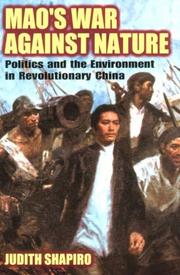
The environmental logic behind backyard steel, deforestation and the sparrow campaign, which is where the Leap's absurdity is most legible. Short and analytically sharp.
What came after
IntermediateFollow the political consequences of the famine into the Cultural Revolution, and read the memoirs that carried the experience into world literature.
▸ Study plan for this stage
Pace: Ten to twelve weeks for about 1,410 pages. MacFarquhar's The Origins of the Cultural Revolution is 455 pages of dense political history and is the first volume of a three-volume study — read it as such and expect to want the later volumes. Allow four weeks. Dikötter's The Cultural Revolution is 396
- MacFarquhar's thesis: that the Cultural Revolution's origins lie in the leadership conflict produced by the Leap's failure, and that 1966 is the consequence of 1959 rather than a separate event
- The retreat from the Leap and the recovery policies of the early 1960s associated with Liu Shaoqi and Deng Xiaoping, and Mao's reading of that retreat as a repudiation of himself
- Lushan revisited: Peng Dehuai's criticism, his destruction, and the demonstration to the entire leadership that raising the famine was fatal — which is why the recovery was conducted without ever naming what had happened
- The Cultural Revolution's mechanics in Dikötter: the Red Guards, the attacks on Party officials and intellectuals, the factional violence, the sent-down youth, and the death toll
- Wild Swans as a three-generation family history that runs from the warlord era through the revolution, the famine and the Cultural Revolution, and which was for millions of readers outside China the first encounter with any of it
- The memoir's limits and value: it is one family's experience, told by a participant with a clear view of the regime, and it is best read after the documentary record rather than instead of it. Its enormous readership and its ban in China are both part of its significance
- The continuing politics of this history: the famine remains largely absent from Chinese public education and discussion, Tombstone is banned, and archives that opened in the 2000s have since become harder to access — which affects what future research can establish
- The counterfactual that MacFarquhar makes unavoidable: whether the Cultural Revolution was possible without the Leap having failed first
- State MacFarquhar's causal argument from the Leap's failure to 1966 as a chain. Which link is weakest?
- What did the recovery policies of the early 1960s consist of, and why did Mao interpret them as a challenge?
- How was the famine discussed inside the Party after 1962, and what does the manner of that discussion tell you about the Cultural Revolution's targets?
- Dikötter's famine book and his Cultural Revolution book use the same archival method. Does the second face the same evidentiary objections as the first, or different ones?
- Wild Swans is one family's account. What does it establish, what does it illustrate, and what should it not be used to prove?
- After twelve books: what is your account of the famine's causes, and how much of your confidence rests on documents versus on the arguments historians have built from them? Name the question you would need new archival access to settle.
- Extend your timeline from 1962 to 1976 with the leadership conflict on one track and mass campaigns on the other. MacFarquhar's argument becomes visible once the two tracks are side by side.
- Write 600 words tracing the causal chain from the Leap's failure to the Cultural Revolution, marking each link as well documented, plausible, or contested.
- Read Wild Swans' famine chapters against Yang's account of the same province and period, and write a page on what the family narrative adds and where it should be checked.
- Return to the death toll table you built in stage two and add any figure MacFarquhar, Dikötter or later demographers give. Then write a paragraph on why a range rather than a number is the honest way to state it.
- Write a final 1,000-word assessment of the Great Leap famine citing at least one book from each stage, distinguishing throughout between what the archives show, what historians infer, and what remains genuinely disputed. Naming the unresolved questions is the mark of having read this path properly.
Next up: This is the end of the path — the context, the famine, the system that produced it and the catastrophe that followed — and the natural next step is the comparative famine literature, Amartya Sen and Cormac Ó Gráda above all, which asks what all modern famines have in common and where China's was genuinely different.

The definitive study of how the leadership's response to the Leap's failure led directly to 1966. Dense political history, and the necessary link between the two catastrophes.

The final volume of Dikötter's trilogy, archival like the others and continuous with the famine book you have already read.
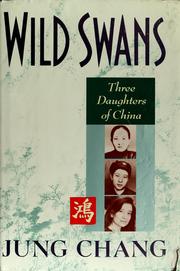
Three generations of one family across the whole century, and for millions of readers the first encounter with this history. Placed last so it confirms rather than supplies the record.
Discussion
Keep reading
Paths that share books, cover the same subject, or open a related topic.