Start with William T. Rowe's China's last empire. It is a single volume covering the whole dynasty, and it is written from inside the current scholarly consensus rather than the older one, which matters more here than in most subjects.
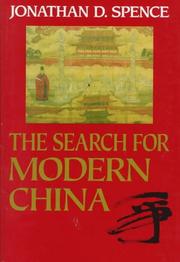
The alternative first book is Jonathan Spence's The search for modern China, and it is a marvellous book that starts too early and ends too late for this purpose — it runs from the late Ming to the twentieth century, so the Qing is a long middle section rather than the subject. Read it second, as the wider frame.
The argument that reorganised the field
The Qing were Manchus, not Han Chinese. For most of the twentieth century, the standard account held that they were progressively sinicised — that they adopted Chinese institutions and language and became, in effect, a Chinese dynasty. Since the 1990s a body of work usually called the New Qing History has argued the opposite: that the Qing maintained a distinct Manchu identity deliberately, ruled a multi-ethnic empire in which China proper was one component alongside Mongolia, Tibet and Xinjiang, and that reading them as simply Chinese misses what they were doing.
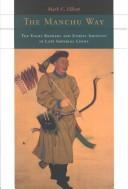
Mark Elliott's The Manchu Way and Pamela Kyle Crossley's The Manchus are the books to read for that case, and Peter C. Perdue's China Marches West makes it through the conquest of Central Asia. This is a live disagreement, and it is politically charged in China today, where the New Qing History has been publicly criticised as a challenge to the narrative of a continuous multi-ethnic Chinese state. Read the arguments; do not expect this path to settle them for you.
The Qing as lived experience
Spence is the master of this and three of his books earn their place. Emperor of China assembles the Kangxi emperor's own words into something close to an autobiography. The death of woman Wang reconstructs the lives of ordinary people in a poor county from tax records, a local gazetteer and a magistrate's handbook. Philip A. Kuhn's Soulstealers takes a 1768 panic about sorcerers stealing souls by clipping queues and uses it to show the machinery of the state under stress. Susan Naquin's Chinese society in the eighteenth century is the systematic version of the same material.
The collapse
Stephen R. Platt's Imperial Twilight covers the road to the first Opium War and is careful to show it as contingent rather than inevitable. Julia Lovell's The Opium War covers the war itself and, more interestingly, the century of mythmaking about it on both sides. Platt's Autumn in the Heavenly Kingdom handles the Taiping Rebellion, which killed something on the order of twenty million people and which most Western readers have never heard of.
Where to stop
Rowe, Spence's The search for modern China, one of the Manchu-identity books and Platt on the Opium War is a solid grounding. The Spence microhistories are the ones most readers enjoy most, and they can be read at any point — they assume very little. Naquin and Perdue are the specialist end.
Follow the full ordered path here: The Qing Dynasty: The Best Books to Read, in Order.
Ready to learn something deeply?
Build a reading path — free