The Ming dynasty: the best books to read, in order
The Ming (1368-1644) began as a deliberately agrarian, inward-facing regime founded by a peasant rebel and ended as the most commercialised society on earth, drowning in Spanish silver and unable to pay its own army. This path follows that inversion: a survey first, then the commercial and cultural boom that the dynasty's own ideology could not account for, then the voyages and the encounter with Europe, then the long collapse. Two of the stages deliberately pair a popular book with the scholarly work that corrects it.
The survey
BeginnerKnow the founding, the move of the capital to Beijing, the structure of Ming government, and why the dynasty is conventionally divided into an early authoritarian phase and a late commercial one.
▸ Study plan for this stage
Pace: Four weeks. Ming China is 155 pages of concise thematic history and reads in a week — do it first and quickly, as orientation rather than as study. The Troubled Empire is 329 pages and is the real work of this stage; three weeks at 20 pages a day, with a dynasty chart and a map of the two capitals b
- The founding shapes everything after it. The dynasty was established in 1368 by a man of peasant origin who had risen through rebellion, and his settlement was deliberately agrarian, anti-commercial, suspicious of officials, and organised around hereditary occupational households and self-sufficient
- He also abolished the chief ministership after a purge, which left the emperor personally responsible for a volume of business no individual could handle. The grand secretariat that grew up to fill the gap had influence without formal authority, and that mismatch runs through the whole dynasty.
- The capital moved from Nanjing to Beijing in the early fifteenth century, putting the government next to the northern frontier and requiring the Grand Canal to feed it. Every later fiscal and military problem is downstream of that decision.
- Dardess organises by theme rather than reign — founder, military, the outer world, the fall — and argues for the dynasty's resilience rather than its decline. Note that framing, because most of what follows on this path is about strain.
- Brook's volume is built around environmental and demographic pressure: cold periods, drought, flood, famine and epidemic recurring across the Yuan and Ming, and he uses the pattern as the frame for the political narrative rather than as background.
- The conventional division into an early authoritarian phase and a late commercial one is real but should be handled carefully. The commercial society of the sixteenth century grew inside institutions designed to prevent it, and the mismatch is the dynasty's central problem, not a stage it passed thr
- Two names to keep straight from the start: the reign-period names by which Ming emperors are conventionally known, and the difference between a reign name and a personal name. Every book on this path assumes you have that.
- What kind of society did the founder intend, and which of his institutions were designed to produce it?
- What did abolishing the chief ministership do to the practical business of government over the following two centuries?
- Why does moving the capital north create a permanent fiscal problem? Trace it from Beijing to the Yangtze delta.
- Dardess argues for resilience and Brook for strain. Are they disagreeing, or describing different things?
- Name three environmental episodes Brook treats as politically consequential, and say what each did.
- Make a single-page chart of the reigns with dates, and mark on it the founding, the move north, the maritime voyages, the Japanese war in Korea, and the fall. You will annotate it for the rest of the path.
- Draw the Grand Canal, the two capitals, the Yangtze delta and the northern frontier on one map. Almost every argument on this path is about the relationship between those four things.
- Write 300 words on the founder's intended society and the sixteenth-century society that actually existed, listing the specific institutions that failed to hold.
- From Brook, note every point where a climatic or epidemic event is given causal weight, and mark whether he treats it as a cause, a trigger or a condition.
Next up: You have the shape of the dynasty and an argument about pressure; the next stage is the commercial boom that the founder's institutions had been designed to prevent.

A short concise history organised around themes — the founder, the military, the outer world, the fall — by a leading Ming scholar. The quickest reliable orientation and the least demanding book on the path.

The Yuan and Ming volume of Harvard's History of Imperial China, built around climate, disease and environmental stress as much as politics. Read second: it supplies both the full narrative and an argument about why the dynasty was under pressure the whole time.
Commerce, luxury and paralysis
IntermediateUnderstand the sixteenth-century commercial revolution — silver, print, consumption, social mobility — and simultaneously how the imperial bureaucracy became unable to act.
▸ Study plan for this stage
Pace: Seven to eight weeks. The Confusions of Pleasure is 333 pages and is a pleasure to read; three weeks. Superfluous Things is 219 pages of art-historical argument and is denser than its length suggests; two weeks. 1587 is 280 pages in six linked portraits — one portrait a sitting, two weeks, and read
- Brook organises the dynasty by the seasons a late-Ming county gazetteer writer used to describe his own society's decline from frugal order to commercial confusion. Using a contemporary's moral scheme as the book's structure is the method, and it keeps the argument anchored in what people at the tim
- Silver is the mechanism. Enormous quantities arrived from Japan and, from the later sixteenth century, from Spanish America via Manila, at the same time as tax obligations were progressively commuted into silver payments. A society designed around grain and labour service was monetised from the outs
- Print, roads and water transport did the rest: cheap books, route guides, a national market in commodities and information, and a degree of geographic and social mobility the founding institutions had no category for.
- The visible consequence was status anxiety. Merchants had money and could buy the objects, houses and educations that had marked the scholar-official elite, and the elite responded by making taste harder to acquire than money could manage.
- Clunas reads the late-Ming manuals of connoisseurship as exactly that response: books that tell you which objects are correct, in what arrangement, and by implication which owners are not. Read after Brook, it is the close-up on the social panic he describes at scale.
- Huang's 1587 approaches the same period from the top: an emperor who withdrew from governing, a grand secretary who could not make the bureaucracy act, an incorruptible official whose rigour made him unusable, a successful general who could not get his reforms institutionalised, and a philosopher wh
- Huang's thesis is explicit and contestable: that the empire was governed through ritual and moral precept rather than through law and quantitative administration, and that this made problems structurally unmanageable rather than merely badly managed. It is a thesis book and should be read as an argu
- The two halves of this stage are the same problem seen from opposite ends — a society changing faster than its institutions can register, and institutions unable to act on what they can register.
- How does foreign silver reach a Chinese peasant household's tax obligation? Trace the chain.
- What is the gazetteer writer's complaint that Brook uses as his structure, and how much of it does Brook think was accurate?
- According to Clunas, what work do the taste manuals do that the objects themselves do not?
- Take any two of Huang's six figures. What does each want, and what specific feature of the system prevents it?
- Huang says the system governed by ritual rather than by law. What would count as evidence against that claim?
- Is late-Ming commercialisation, on this stage's evidence, a sign of vitality or of coming collapse? The books do not agree; say what your answer rests on.
- List the specific commodities, trades and services Brook shows entering the market economy, and mark which the founder's system had assumed would never be bought or sold.
- From Clunas, write out the criteria one manual gives for a correct object of some category, then write 200 words on who could and could not satisfy them.
- For each of Huang's six chapters, write one sentence naming the institutional obstacle. Read the six back; the repetition is his argument.
- Write 400 words testing Huang's thesis against Brook's evidence: does a commercialising society support or undermine the claim that the state could not think quantitatively?
- Track the silver argument specifically. Note where each author says the silver came from and what they claim its interruption would do; historians have disagreed sharply about that, and you should be able to state the disagreement.
Next up: The silver came by sea, and so did the Europeans carrying it — which makes the maritime stage the other half of the commercial story rather than a digression.
The standard account of Ming commerce and culture, structured by the seasons of the dynasty and full of individual voices complaining about money and status. The single best book on what changed between 1368 and 1644.

An art historian's study of late Ming manuals of taste, showing an anxious elite trying to police what newly rich merchants were allowed to own. Read after Brook, as the close-up on the status panic he describes at scale.
Six linked portraits — the Wanli emperor, his grand secretary, a general, a philosopher — showing a government in which nobody could make anything happen. Famous, unusually well written, and openly a thesis book: Huang thinks the system was doomed by governing through ritual rather than law.
The sea and the wider world
IntermediateFollow the Zheng He voyages and their abandonment, and the arrival of Europeans, and be able to distinguish what the sources support from what popular writing has added.
▸ Study plan for this stage
Pace: Eight weeks. Perpetual Happiness is 286 pages; two weeks. When China Ruled the Seas is 252 pages and reads in a week — take it fast and do not stop to check it. Zheng He is 247 pages of sober military history; two weeks, and read it directly afterwards. The Memory Palace of Matteo Ricci is 378 pages
- The voyages belong to one reign and one emperor's programme. The Yongle emperor took the throne by force from his nephew, moved the capital north, built the palace complex there, campaigned personally against the Mongols, invaded Vietnam and commissioned an enormous compilation of texts. The fleets
- Beginning with the biography reframes the standard question. Asking why the voyages stopped is less useful than asking why an emperor with that particular set of ambitions started them, and what happened to the rest of the programme after him.
- Levathes gives the narrative and the ships, and is vivid on the ports the fleets reached across Southeast Asia, the Indian Ocean and the East African coast. It dates from the early 1990s and romanticises in places; read it for the story.
- Dreyer then disciplines it. His argument is that the voyages were displays of imperial power and instruments of the tribute system rather than exploration or commercial ventures — they went to places already known, along established routes, with overwhelming force.
- Dreyer is also the clearest available refutation of the popular claim that the fleets reached the Americas, and he is careful about the reported dimensions of the largest ships, which do not sit easily with what is known about wooden shipbuilding.
- The encounter with Europe comes at the other end of the dynasty and by a different route. Spence's book follows a Jesuit who spent decades in China and worked by accommodation — learning the language and the classics, presenting Western learning as a supplement to Chinese scholarship rather than a r
- The memory system Ricci taught, and the images Spence builds his chapters on, make the book an unusual object: partly biography, partly an essay on how two intellectual traditions looked to each other. It is the best available way into the late-Ming encounter from both sides at once.
- Silver, Jesuits and the maritime trade arrive together and are the same phenomenon from three angles. That is the argument for putting this stage after the commercial one rather than in chronological place.
- What was the Yongle emperor trying to achieve overall, and where do the voyages sit among his priorities?
- What does Dreyer say the fleets were for? State the tribute-system argument in your own words.
- Which specific claims in Levathes does Dreyer contradict, and on what kind of evidence in each case?
- Why is the size of the largest treasure ships a question at all, and what does the disagreement turn on?
- What was Ricci's strategy of accommodation, and what did it require him to concede?
- Spence structures his book around memory images rather than chronologically. What does that let him show, and what does it obscure?
- Read Levathes first and list ten claims that struck you as remarkable. Then check each against Dreyer and mark it confirmed, qualified or contradicted. This is the single most useful exercise on the path.
- Plot the voyages' routes on your map and mark which destinations already had established Chinese trading contact. Dreyer's argument becomes visual.
- From Tsai, list the Yongle emperor's major undertakings with their costs where given, and write 200 words on what ended and what continued after his death.
- Write 300 words on how the Ricci encounter would look told from the Chinese side, using what Spence gives you about his interlocutors.
- Make a note of every place where a popular account and a scholarly one differ on this material, and what the popular version adds. The pattern is consistent and worth naming.
Next up: The last stage takes the same empire sixty years further, when the wars, the silver and the frontier all arrive at once.
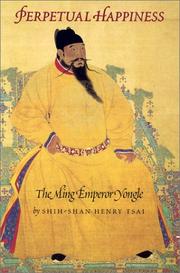
A biography of the Yongle emperor, who usurped the throne, moved the capital, invaded Vietnam and sent out the fleets. Start the stage here because the voyages only make sense as one part of one reign's ambitions.
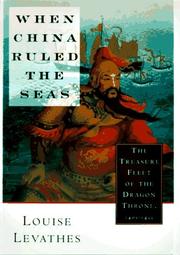
The popular narrative of the treasure fleets, vivid on the ships and the ports they reached. It is from 1994 and romanticises in places; read it for the story and then let the next book discipline it.
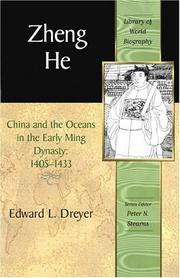
A military historian's sober reconstruction of what the voyages actually did, arguing they were displays of power rather than exploration or trade missions. Also the clearest refutation of the popular claims that the fleets reached the Americas.
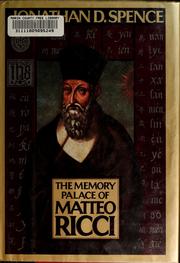
The Jesuit who spent decades in China, built around the memory system he taught there. An unusual, essayistic book, and the best way into the late Ming encounter with Europe from both sides.
The collapse
IntermediateWork through the wars, rebellions and fiscal failure of the last sixty years, and the Manchu conquest that followed, at monograph depth.
▸ Study plan for this stage
Pace: Fourteen to sixteen weeks, and the last book alone is a third of it. A Dragon's Head and a Serpent's Tail is 432 pages; three weeks. The Military Collapse is 291 pages; two and a half. The Great Enterprise runs to roughly 1,240 pages across two volumes of dense scholarship with enormous notes — allo
- The Korean war of the 1590s is usually narrated as Japanese or Korean history. Swope tells it from the Ming side and argues the intervention was competently run and strategically successful, against a long tradition of treating late-Ming military performance as uniformly incompetent.
- It was also enormously expensive, at exactly the point when the fiscal system was least able to absorb a shock. The war is therefore both evidence against the incompetence thesis and part of the explanation for what follows.
- Swope's second book covers the final quarter-century: internal rebellion spreading through a famine-struck northwest, garrisons left unpaid, commanders executed or defecting, and a rising Manchu state on the northeastern frontier consolidating into a serious rival.
- His argument across both books is that the dynasty was better generalled and less passive than the standard account allows, and that the collapse required a specific conjunction of events rather than following from long decline. Weigh that against Brook's environmental pressure and Huang's structura
- The conjunction matters: a cold, dry stretch with failed harvests, epidemic disease, unpaid armies, peasant rebellion, and a frontier war, all inside about fifteen years. Arguments about the fall are largely arguments about which of these was load-bearing.
- Beijing fell in 1644 to a rebel army, and the last emperor died by his own hand. The Manchus entered through the wall with the cooperation of a Ming general, which is why the conquest is not simply an invasion narrative.
- Wakeman's two volumes cover the conquest and the reconstruction of imperial order that followed, including the resistance in the south and the terms on which the new dynasty made itself acceptable to the elite it had defeated.
- Ending here rather than at 1644 is deliberate. The Ming does not stop being a live question in 1644 — the southern courts, the loyalists, and the Qing settlement are all part of what the dynasty turned into, and Wakeman is the hinge into any further reading.
- What does Swope claim about Ming military performance in the 1590s, and what evidence does he rest it on?
- How does the Korean war affect the fiscal position, and how directly can that be traced to the failures of the 1630s?
- List the elements of the mid-seventeenth-century conjunction. Which would have been survivable alone, and which not?
- Swope emphasises contingency and Brook emphasises pressure. Construct the strongest version of each and say what evidence would separate them.
- Why is the Manchu entry not simply a foreign conquest? Give the specific circumstances.
- From Wakeman, what did the new dynasty have to do to make itself acceptable, and what did it refuse to concede?
- Build a year-by-year chronology for 1618-1644 with four columns: frontier, rebellion, fiscal, environmental. The conjunction argument is only assessable once it is laid out this way.
- Write 400 words stating the long-decline explanation of the fall and 400 stating the contingency explanation, then a paragraph on what you would need to decide between them.
- Follow one Ming commander across Swope's second book from appointment to end. The pattern of unpaid troops, impossible orders and personal ruin repeats and is best seen through one case.
- Use Wakeman as a reference rather than reading it linearly: pick three episodes — the fall of Beijing, the southern resistance, and the imposition of the new order — and read those chapters closely with the notes.
- Return to the reign chart you made in the first stage and write one sentence per reign on what it contributed to the outcome. Read the chart back; it is the whole path in a page.
Next up: This closes the path: the founding settlement, the commercial society that grew inside it, the maritime and European encounters, and the conjunction that ended it — with the Qing conquest as the door into whatever you read next.
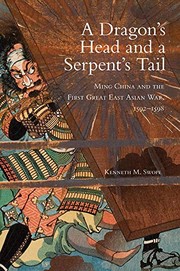
The Ming intervention in Korea against Hideyoshi in the 1590s, told from the Chinese side — a war usually narrated only as Japanese or Korean history, and a huge drain on Ming finances.

The military history of the final quarter-century: rebellion, mutiny, unpaid garrisons and the Manchu frontier. Swope argues the dynasty was better generalled and less passive than the standard account allows.
The monumental two-volume history of the Manchu conquest and the reconstruction of imperial order in the seventeenth century. Very long and genuinely scholarly — the right end point, and the hinge into any reading on the Qing.
Discussion
Keep reading
Paths that share books, cover the same subject, or open a related topic.