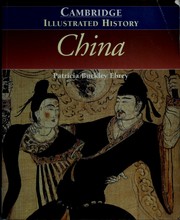
Start with Patricia Buckley Ebrey's The Cambridge illustrated history of China if you have no Chinese history at all, and go straight to Mark Edward Lewis' China's cosmopolitan empire if you have some. Lewis is the Tang volume of the Harvard history of imperial China, and it is organised by theme — cities, kinship, religion, writing — rather than by reign, which suits a dynasty whose interest is less in its emperors than in what its society was like.
The instinct is to start with the poetry, because the poetry is why most people come. Give it two books first. Du Fu writing about the An Lushan rebellion is a substantially different experience once you know what the An Lushan rebellion was.
What made the Tang cosmopolitan
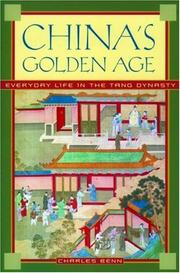
Charles Benn's China's Golden Age is the daily-life book: what people wore, ate, played and worried about. Edward H. Schafer's The golden peaches of Samarkand is a strange and wonderful catalogue of what arrived in Chang'an from abroad — the plants, the animals, the drugs, the dancers, the aromatics — and it makes the case for Tang cosmopolitanism through its imports. Susan Whitfield's Life along the Silk Road reconstructs the road itself through a set of individual lives.
The poetry, which is the point
Vikram Seth's Three Chinese poets is the gentlest entry — Wang Wei, Li Bai and Du Fu, rendered by a poet who is candid that he has chosen readability over literalness. David Hinton's Classical Chinese poetry is the larger anthology. The selected poems of Du Fu — the record files him under the older romanisation Tu Fu — is the one to sit with longest; he is the poet the Chinese tradition itself ranks first, and he is at his greatest writing about a state collapsing around his family.
A. C. Graham's Poems of the late T'ang covers the darker, denser poets of the dynasty's decline, and Graham's introduction on the problems of translating classical Chinese is worth the book on its own.
Every one of these is a translation, and translations of Chinese poetry differ from each other more than translations of European poetry do, because the source language works so differently. Reading two versions of the same poem is not a waste of time; it is the closest a reader without Chinese can get to seeing the original.
The specialist end
N. Harry Rothschild's Wu Zhao treats the only woman to rule China in her own name — a figure whose historical record was written almost entirely by men with reasons to condemn her. Jonathan Karam Skaff's Sui-Tang China and its Turko-Mongol neighbors looks at the dynasty from its northern frontier and argues that Tang power was built on steppe practices as much as Chinese ones. Nicolas Tackett's The Destruction Of The Medieval Chinese Aristocracy uses a database of tomb inscriptions to argue that the great families did not gradually decline but were physically annihilated in the ninth-century collapse.
Where to stop
Lewis, Benn, Schafer and Seth is a full and enjoyable command of the subject. Stay with Du Fu longer than feels necessary. Rothschild, Skaff and Tackett are for readers who want the arguments rather than the picture.
Follow the full ordered path here: The Tang Dynasty: The Best Books to Read, in Order.
Ready to learn something deeply?
Build a reading path — free