Best Books on the Opium Wars, in Reading Order
This curriculum builds from accessible narrative history into specialist scholarship, tracing the full arc of the Opium Wars — from the Canton trading system and the drug trade, through the two wars and their treaties, to China's broader "century of humiliation." Starting at an intermediate level, each stage deepens the political, economic, and cultural analysis, so that by the final stage the reader can engage with primary sources and historiographical debates like a serious scholar.
Narrative Foundations
IntermediateGain a vivid, story-driven command of the key events, personalities, and turning points of both Opium Wars and their immediate aftermath.
▸ Study plan for this stage
Pace: 8–10 weeks, ~40–50 pages/day (accounting for note-taking and reflection). Lovell's book (~350 pages) in weeks 1–3; Platt's book (~500 pages) in weeks 4–8; weeks 9–10 for review and synthesis exercises.
- The structural causes of conflict: British commercial ambitions, China's tributary system, and the incompatibility of free-trade ideology with Qing protectionism
- Key personalities and their worldviews: Lord Macartney, Lin Zexu, Lord Palmerston, the Qianlong Emperor, and how individual decisions shaped imperial policy
- The First Opium War (1840–1842) as a turning point: military tactics, the Treaty of Nanking, and the opening of treaty ports
- The Second Opium War (1856–1860) and the Arrow Incident: escalation, the role of France, the burning of the Summer Palace, and the Convention of Peking
- The concept of 'unequal treaties' and their immediate consequences: extraterritoriality, indemnities, and the erosion of Chinese sovereignty
- The human and social costs: opium addiction in China, the displacement of Chinese merchants, and the destabilization of Qing society
- The narrative arc of Western dominance: how these wars established the template for imperialism in Asia and reshaped global power dynamics
- What were the fundamental incompatibilities between the British commercial system and the Qing tributary system that made conflict inevitable?
- How did Lin Zexu's actions in Canton in 1839 trigger the First Opium War, and what were his strategic assumptions?
- What were the major terms of the Treaty of Nanking (1842), and how did they represent a departure from previous Sino-Western relations?
- Why did the Second Opium War break out in 1856, and how did the Arrow Incident serve as a catalyst?
- What role did individual leaders—Macartney, Palmerston, the Qianlong Emperor, and the Xianfeng Emperor—play in shaping the course of these conflicts?
- How did the concept of extraterritoriality and the treaty port system fundamentally alter China's political and economic sovereignty?
- Create a detailed timeline of key events from 1793–1860, marking turning points where different decisions could have altered outcomes (e.g., if Qianlong had accepted Macartney's trade proposals)
- Write character sketches (500–750 words each) for 4–5 major figures (Lin Zexu, Macartney, Palmerston, the Qianlong Emperor, the Xianfeng Emperor), capturing their worldviews, constraints, and fatal miscalculations
- Map the treaty ports and extraterritorial zones established after 1842 and 1860; annotate with economic data (opium imports, trade volumes) to visualize the transformation of China's coastal economy
- Debate exercise: Argue both the British justification for the wars (free trade, sovereignty of commerce) and the Chinese perspective (sovereignty, cultural integrity, the opium crisis), using specific evidence from both Lovell and Platt
- Trace the social impact: create a before-and-after comparison of Chinese society (merchant classes, addiction rates, regional stability) using details from both books to show how warfare translated into civilian disruption
- Write a 1,000–1,200 word analytical essay: 'How did the Opium Wars establish the template for Western imperialism in Asia?' Use specific examples from both texts
Next up: This stage equips you with a vivid, chronological command of events and personalities that will enable the next stage—whether focused on structural analysis, global consequences, or Chinese resistance and modernization—to move beyond narrative into deeper causal and thematic interpretation.

The single best entry point: a rigorous yet highly readable account of both wars that also traces how the conflict has been remembered and mythologized in China. Read this first to establish the full chronological skeleton.

Focuses on the decades leading up to the First Opium War, humanizing the Canton trade and the British merchants and officials who pushed for conflict. Reading it second deepens the causes and context Lovell surveys.
The Canton System and the Drug Trade
IntermediateUnderstand the economic machinery of the Canton trade, the role of opium as a commodity, and the merchant networks — Chinese, British, and Indian — that made the wars commercially inevitable.
▸ Study plan for this stage
Pace: 4–5 weeks, ~40–50 pages/day, with 2–3 days per week for review and note-taking
- The Canton System as a controlled monopoly: how the Qing government restricted foreign trade to a single port and licensed merchant guilds (the Cohong) to mediate all transactions
- Opium as a commodity and economic driver: the shift from luxury good to mass-market drug, and how it became the primary currency for balancing the British trade deficit with China
- The triangular trade network: the interconnected routes linking India (opium production), Britain (capital and manufactured goods), and China (silver and tea), and how each node depended on the others
- Merchant networks and agency: the roles of British East India Company traders, private merchants (country traders), Chinese compradors, and Indian opium cultivators in creating demand and circumventing restrictions
- Silver flows and monetary crisis: how opium sales drained Chinese silver reserves and destabilized the Qing economy, creating political pressure for military action
- Smuggling and enforcement: the cat-and-mouse game between Chinese officials attempting to suppress the drug trade and foreign merchants developing increasingly sophisticated distribution networks
- Ideological justifications: how British merchants and politicians rationalized the opium trade as 'free trade' and 'opening markets,' masking commercial self-interest as civilizational progress
- What was the Canton System, and how did the Cohong merchant guild function within it? Why did the Qing government maintain this restrictive trade monopoly?
- How and why did opium become the primary commodity for British merchants to exchange for Chinese tea and silk, and what role did the India-China connection play in this trade?
- Trace the triangular trade network: what was produced or sourced in India, Britain, and China, and how did the flow of these goods and silver create economic pressure on the Qing state?
- Who were the key merchant groups (British, Chinese, and Indian) involved in the opium trade, and what were their distinct interests and methods of operation?
- How did opium smuggling undermine the Canton System, and what methods did both Chinese authorities and foreign merchants use in their competition?
- What were the economic consequences of the opium trade for China, particularly regarding silver depletion and monetary instability?
- Create a detailed flow diagram of the triangular trade: map the movement of opium, tea, silver, and manufactured goods between India, Britain, and China, labeling key ports, merchant groups, and quantities where Brook provides them
- Compile a merchant network chart identifying the major players (EIC officials, country traders, Cohong merchants, compradors, Indian cultivators) and their relationships, conflicts, and profit motives—use Brook's case studies and examples
- Write a 2–3 page analysis: 'Why Opium?' Explain why opium, specifically, became the solution to the British trade deficit, drawing on Brook's discussion of commodity alternatives and market dynamics
- Create a timeline of key regulatory changes: track the Qing government's attempts to suppress opium (edicts, enforcement measures) and the merchant responses, showing the escalation of the conflict
- Analyze one primary source document (if Brook includes excerpts): a merchant letter, a Qing edict, or a trade report—identify the author's perspective, economic interests, and assumptions about the trade
- Construct a 'silver flow' diagram showing how opium sales drained silver from China, and write a short explanation of how this monetary crisis created political pressure for the wars
Next up: By mastering the economic machinery and merchant networks that made the opium trade structurally inevitable, you are now prepared to examine how political and military conflict erupted when the Qing state finally moved to suppress the trade, and how British military and diplomatic power was deployed to protect these commercial interests.
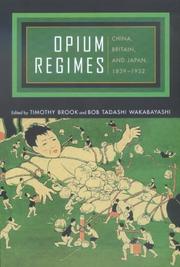
A landmark edited collection of scholarly essays situating opium within global commodity history and colonial governance; establishes the economic and moral frameworks you will need for deeper reading.
Diplomacy, War, and Unequal Treaties
IntermediateAnalyze the military campaigns, diplomatic negotiations, and treaty structures of both wars, and understand how the 'unequal treaty' system reshaped Chinese sovereignty.
▸ Study plan for this stage
Pace: 4–5 weeks, ~40–50 pages/day. Allocate 2 weeks to "The Arrow War" (~280 pages), then 2–3 weeks to "China's Last Empire" (~400 pages), with 3–4 days for review and synthesis.
- The First Opium War (1840–1842) as a clash between British commercial imperialism and Chinese tributary sovereignty, including the role of the British East India Company and opium trade economics
- The Arrow Incident (1856) and its escalation into the Second Opium War (1856–1860), demonstrating how minor diplomatic disputes triggered major military conflicts
- Military technology and tactics: British naval and firepower superiority versus Chinese defensive strategies and the inadequacy of traditional Chinese military responses
- The 'unequal treaty' system: Treaty of Nanking (1842), Treaty of Tientsin (1858), and Convention of Peking (1860) as instruments that dismantled Chinese sovereignty, imposed indemnities, opened treaty ports, and granted extraterritorial rights
- Diplomatic negotiation strategies: British demands for 'free trade' and diplomatic equality versus Chinese attempts to preserve the tributary system and limit foreign access
- The role of the Qing court, provincial officials, and foreign diplomats in shaping treaty outcomes and the internal Chinese debates over how to respond to foreign pressure
- Economic and territorial consequences: the expansion of foreign concessions, the creation of a treaty port system, and the beginning of China's 'century of humiliation'
- The transformation of China's international status from a self-perceived universal empire to a subordinate nation within a European-dominated international order
- What were the immediate causes of the First Opium War, and how did British commercial interests and the Chinese tributary system come into direct conflict?
- How did the Arrow Incident serve as a catalyst for the Second Opium War, and what does this reveal about the fragility of Sino-Western relations in the 1850s?
- Compare the military capabilities and strategies of British forces versus Chinese forces in both wars. Why was the outcome so decisive?
- What were the key provisions of the Treaty of Nanking, Treaty of Tientsin, and Convention of Peking, and how did they progressively undermine Chinese sovereignty?
- How did the 'unequal treaty' system reshape China's economy, territorial integrity, and international standing?
- What were the different perspectives within the Qing court and among Chinese officials regarding how to respond to foreign military and diplomatic pressure?
- Create a detailed timeline of the First and Second Opium Wars, marking key military engagements, diplomatic negotiations, and treaty signings. Annotate each entry with the strategic significance and outcome.
- Construct a comparative table of the three major treaties (Nanking, Tientsin, Peking) listing their key provisions, territorial concessions, indemnities, and extraterritorial clauses. Analyze how each treaty expanded foreign privileges.
- Write a 2–3 page analytical essay: 'How did the Arrow Incident escalate into the Second Opium War?' Use evidence from Hurd's account to trace the diplomatic breakdown.
- Map the treaty ports and foreign concessions established after each war. Visualize how the treaty port system fragmented Chinese territorial control and created zones of foreign dominance.
- Role-play exercise: Prepare two opposing position papers—one from a British diplomat/merchant arguing for 'free trade' and diplomatic equality, and one from a Qing official defending the tributary system. Debate the irreconcilable differences.
- Analyze primary source excerpts from the treaties themselves (as cited in both books). Identify the legal language used to justify extraterritoriality and most-favored-nation status, and explain how these concepts violated traditional Chinese sovereignty.
Next up: This stage establishes the military, diplomatic, and legal mechanisms through which Western powers dismantled Chinese sovereignty, setting the foundation for understanding how the Qing dynasty's internal responses, reform efforts, and eventual collapse unfolded in the subsequent stages of the curriculum.
A focused, authoritative account of the Second Opium War by a former British Foreign Secretary; its insider perspective on diplomacy and power makes the treaty system's logic viscerally clear.

Places both wars within the full arc of Qing dynasty decline, giving the reader the institutional and political context needed to understand why China's response to the treaties was so constrained.
The Century of Humiliation and Chinese Memory
ExpertGrasp how the Opium Wars became the founding trauma of modern Chinese nationalism, how historians have contested their meaning, and how that memory shapes China's worldview today.
▸ Study plan for this stage
Pace: 8–10 weeks, ~40–50 pages/day. Spence's "The Search for Modern China" (approximately 700 pages) will take 4–5 weeks; Perdue's "China Marches West" (approximately 500 pages) will take 3–4 weeks, with 1–2 weeks for review, synthesis, and written reflection.
- The Opium Wars as a rupture in Chinese self-perception: how military defeat shattered the Confucian worldview and triggered the search for 'wealth and power' (富強) as a national imperative
- Spence's narrative of institutional and ideological crisis: the collapse of the tributary system, the challenge to Qing legitimacy, and competing reform movements (Self-Strengthening, revolutionary nationalism)
- The role of trauma and humiliation in constructing modern Chinese identity: how the 'Century of Humiliation' (1840–1949) became a foundational myth that unified disparate Chinese groups and justified state modernization
- Perdue's long-durée perspective: how Qing expansion and frontier consolidation (17th–18th centuries) created the territorial and administrative preconditions that made the Opium Wars a threat to an already-fragile empire
- Historiographical contestation: how Chinese, Western, and revisionist historians have interpreted the Opium Wars differently—as imperialism, as catalyst for modernization, or as part of longer cycles of state formation
- The memory-power nexus: how contemporary China invokes the Opium Wars to justify state sovereignty, territorial claims, and resistance to Western hegemony
- Comparative modernization: how China's response to the Opium Wars differed from Japan's Meiji Restoration and other non-Western societies' encounters with imperialism
- The intellectual genealogy of modern Chinese nationalism: how Spence traces the emergence of new ideologies (liberalism, socialism, nationalism) as responses to the crisis exposed by the wars
- How did the Opium Wars fundamentally challenge the Confucian worldview and the Qing tributary system? What made this challenge so destabilizing compared to earlier foreign contacts?
- According to Spence, what were the main competing visions for China's modernization in the 19th and early 20th centuries, and how did each respond to the trauma of the Opium Wars?
- How does Perdue's account of Qing frontier expansion and consolidation (pre-1840) help explain why the Opium Wars were so catastrophic for the Qing state? What vulnerabilities did earlier expansion create?
- What is the 'Century of Humiliation' and how did it become a unifying narrative for Chinese nationalism? Which groups used this narrative and for what political purposes?
- How have historians contested the meaning and significance of the Opium Wars? What are the key differences between Western, Chinese, and revisionist interpretations?
- How does contemporary China's invocation of the Opium Wars in its foreign policy and territorial claims reflect the memory of this historical trauma?
- Create a timeline (1750–1950) mapping Qing territorial expansion (Perdue), the Opium Wars, and major reform/revolutionary movements (Spence). Annotate each event with its ideological or strategic significance.
- Write a 2–3 page comparative analysis: How did China's response to the Opium Wars differ from Japan's Meiji Restoration? Use Spence's account of Chinese reform movements and external knowledge of Japan to ground your argument.
- Construct a 'historiographical map' identifying 3–4 different interpretations of the Opium Wars (Western imperialist narrative, Chinese nationalist narrative, revisionist/modernization narrative). For each, note key historians, their central claims, and evidence from Spence and Perdue.
- Close-read 2–3 key passages from Spence on the intellectual crisis after the Opium Wars (e.g., on the Self-Strengthening Movement or early revolutionary thought). Annotate how each passage reveals the ideological stakes of the trauma.
- Research and write a 3–4 page case study on how one contemporary Chinese political leader or state document (post-1978) invokes the Opium Wars or 'Century of Humiliation.' Connect your findings to Spence's account of how nationalism was constructed.
- Debate exercise (solo or with a partner): Argue both sides—'The Opium Wars were primarily a catalyst for Chinese modernization' vs. 'The Opium Wars were primarily an imperialist catastrophe.' Use evidence from both Spence and Perdue to support each position.
Next up: This stage establishes the Opium Wars as a foundational trauma and the crucible of modern Chinese nationalism, positioning you to examine how specific ideological movements (socialism, communism, liberalism) attempted to resolve the crisis of the nation-state and how those movements shaped 20th-century Chinese politics and international relations.
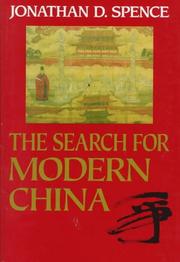
The canonical long-view history of China from the late Ming to the late 20th century; reading it here reframes the Opium Wars as one chapter in a much longer story of modernization and national identity.
Challenges Eurocentric narratives by showing Qing imperial power and expansion before the wars, making the 'humiliation' framework more historically nuanced and contested.
Discussion
Keep reading
Paths that share books, cover the same subject, or open a related topic.