The Tang dynasty: the best books to read, in order
The Tang (618-907) is the period later Chinese culture treated as its classical age: a cosmopolitan capital of a million people, a Buddhist establishment at its height, an examination system beginning to matter, and the greatest body of poetry in the language. This path sets the dynasty in the Chinese long view, then reconstructs everyday life and the foreign contacts that made Chang'an what it was, then spends a full stage on the poetry, because a Tang path that skips it is not really about the Tang. It ends with recent scholarship on the frontier, the empress and the aristocracy the An Lushan rebellion destroyed.
The frame
BeginnerPlace the Tang in the sequence of Chinese dynasties, and understand the Sui inheritance, the equal-field system, the An Lushan rebellion of 755 and the long decline after it.
▸ Study plan for this stage
Pace: Four to five weeks. Read only the relevant chapters of the Cambridge Illustrated History first — a week, treating it as orientation and as a reference to return to. China's Cosmopolitan Empire is 368 pages of real scholarship written for readers without Chinese; three weeks at 18 pages a day, with a
- The Tang inherits rather than invents. The short-lived Sui reunified the north and south after centuries of division, built the canal system that made a northern capital feedable, and destroyed itself on failed campaigns in Korea — and the Tang founders took over that apparatus intact.
- The early Tang land system allotted land to households and taxed them in grain, cloth and labour service, assuming a registered and relatively immobile population. Its gradual failure, and the shift in the late eighth century to a tax assessed twice yearly on property rather than on persons, is the
- The rebellion that began in 755 and took eight years to suppress is the hinge of the whole period. It devastated the central provinces, cost the dynasty control of much of the north to semi-independent military governors, and everything written about the Tang divides into before and after it.
- The dynasty did not fall for another century and a half after that, and the late Tang is not simply decline. Lewis is good on what the post-rebellion state actually was, which was a different kind of polity rather than a weakened version of the earlier one.
- The examination system existed and mattered, but it did not yet do what it would do later. Degree-holders were a small fraction of officials, and the great aristocratic families still dominated office — a point the last stage of this path takes apart in detail.
- Buddhism reaches its institutional height in this period and then meets a major state suppression in the mid-ninth century. Both facts matter: the monasteries were an economic force, not only a religious one.
- Romanisation will trip you up from here on. Older books use Wade-Giles and newer ones pinyin, so the same emperor, poet and capital appear under two spellings. Write out the equivalences now for the names you will meet repeatedly.
- What did the Tang inherit from the Sui, and what did they do differently with it?
- Explain the early land and tax system and why it could not survive population movement.
- What changed politically and militarily as a result of the rebellion of 755? Give three concrete consequences.
- How much did the examinations actually determine who held office in the seventh and eighth centuries?
- What was the position of Buddhist institutions in the Tang economy, and what happened to it in the ninth century?
- Make a one-page reign chart with dates and mark the founding, the reign of the second emperor, the woman who took the throne, the long reign that ends in 755, the rebellion, the tax reform, the Buddhist suppression and the fall.
- Draw a map with the two capitals, the canal, the northwestern corridor toward Central Asia, and the southeastern rice regions. Every later stage refers to it.
- Write out a romanisation crib for twenty names you will meet — emperors, poets, cities — in both Wade-Giles and pinyin, and keep it in whichever book you are reading.
- Write 300 words on what the Tang state was before 755 and what it was after, as if describing two different governments.
Next up: With the political frame in place, the next stage fills in what the frame contained — a city, a society and the goods and people arriving into it.
A one-volume illustrated survey of the whole of Chinese history, strong on material and social life. Read the relevant chapters first so the Tang has something to sit inside; it is also the book you will keep returning to for context.

The Tang volume of Harvard's History of Imperial China series, and the best single scholarly overview: government, cities, religion, kinship and the rebellion that broke the system. Written for readers without Chinese, but it does not simplify.
Chang'an, and the world coming into it
IntermediateReconstruct daily life across Tang society and understand the foreign trade, religion, music, food and people that gave the dynasty its reputation for openness.
▸ Study plan for this stage
Pace: Six to seven weeks. China's Golden Age is 344 pages, organised topically, and can be read out of order — two weeks. The Golden Peaches of Samarkand is 410 pages and is not a book to read straight through; three weeks, a category at a time. Life Along the Silk Road is 242 pages and reads quickly; two
- The capital was a planned grid of walled wards with gates closed at night, an imperial city at the north, and two enormous official markets. Its scale and regularity are the physical fact behind everything else in this stage, and the ward system is why Tang urban life has a curfew running through it
- Benn's social history is topical rather than narrative — housing, clothing, food, hygiene, festivals, travel, illness, burial, crime and punishment, and the position of women — and it is the fastest way to acquire the ordinary texture that the political histories assume.
- The same author published substantially this material under a second title aimed at a reference series. Read one; buying both gets you the same book twice.
- Schafer's study is organised by category of import — people, horses and other animals, plants, woods, foods, aromatics, drugs, textiles, pigments, minerals, jewels, books — and each entry is as much about what the object meant as about the trade in it.
- Two things about that book need saying. It dates from 1963, uses Wade-Giles throughout, and is philologically dense; and nothing since has replaced it for texture. Read it as a reference and a pleasure rather than as an argument.
- The cosmopolitanism was not only commercial. Foreign religions had communities and buildings in the capital, Central Asian music and dance were fashionable, and foreign residents included merchants, monks, envoys, entertainers and soldiers.
- Whitfield's book turns the routes into people by reconstructing individual lives — a merchant, a soldier, a nun, a courtesan, an official — from documents preserved in the dry northwest, above all the manuscript cache at Dunhuang.
- Those documents are the reason such reconstruction is possible at all, and the difference between what can be said about a Dunhuang household and about a household in the capital is a lesson in how evidence shapes history.
- Describe the layout of the capital and say what the ward and curfew system did to daily life.
- From Benn, pick three areas of life — say food, medicine and burial — and describe how each differed by social level.
- What does Schafer mean by an exotic, and what is he claiming about the difference between a good and its meaning?
- Name five imports from Schafer's categories and say, for each, what its arrival implies about the route it came by.
- How much of the foreign presence in the Tang was trade, and how much was religion, diplomacy and war?
- What kinds of question can the Dunhuang documents answer that court histories cannot, and what can they not answer?
- Sketch the capital's plan from the description — walls, wards, the two markets, the palace complex — and mark where foreigners and foreign temples were concentrated.
- Take one Schafer category and write 200 words on the whole chain: where the goods came from, who carried them, who bought them, and what they signified.
- For each of Whitfield's lives, note the type of document the reconstruction rests on. The list is a short course in Tang source materials.
- Write 300 words on a day in the capital for a specific person — an official, a market trader, a Buddhist nun — using only what Benn and Whitfield supply.
- Keep a note of every foreign origin mentioned across all three books and mark them on your map. The distribution is the argument for the word cosmopolitan.
Next up: That city, that court and that rebellion are the subject matter of the poetry, which is what the dynasty is actually remembered for.
A social history of Tang everyday life — clothing, houses, food, entertainment, funerals, women's lives — organised topically and very readable. Note that Benn published substantially the same material as Daily Life in Traditional China, so read one, not both.

A famous study of everything imported into Tang China, from horses and dwarfs to aromatics and books, and what those goods meant. From 1963 and philologically dense in places, but nothing since has replaced it for sheer texture.
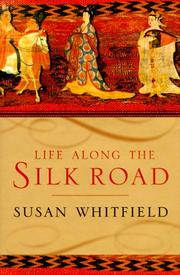
Reconstructs ten individual lives — a merchant, a soldier, a nun, a courtesan — from documents found at Dunhuang and elsewhere. Placed here because it turns the trade routes from an abstraction into biography.
The poetry
IntermediateRead enough Tang poetry, in enough different translations, to understand why the period is treated as the summit of Chinese literature and how much a translation decides.
▸ Study plan for this stage
Pace: Eight to ten weeks and unlike anything else on the path — poetry is read in short sittings and reread. Three Chinese Poets is 53 pages and should be read three times in the first week. The Hinton anthology is 475 pages and is for grazing over a month. The Du Fu selection is 182 pages; two weeks, slo
- Start with the three poets conventionally placed at the centre: one a Buddhist landscape poet of great stillness, one an extravagant Daoist-inflected romantic, and one the poet most Chinese critics rank first, whose life ran straight through the rebellion.
- Seth's versions rhyme and scan, and his preface explains why he chose to pay that price. Read the preface as part of the poetry — it is a short course in what a translator is deciding.
- Hinton translates the same poets into spare unrhymed free verse, and setting one of his versions beside Seth's version of the same poem is the fastest possible demonstration that translation is interpretation rather than transmission.
- The formal features that do not survive into English are worth knowing about even if you cannot read them: strict tonal patterning in regulated verse, and the parallel couplet, in which two lines match each other word class by word class across the whole line.
- Chinese classical poetry often omits the grammatical subject, so a line may not specify who is seeing or feeling. English requires a pronoun, so the translator must insert a person the original left open — which is why versions diverge so widely.
- Du Fu is a war poet and his greatest work assumes the rebellion. The poems written during the flight from the capital, in the years of displacement, and in the late southern years are inseparable from the history in your first stage, which is why the poetry stage comes third rather than first.
- Graham's late-Tang selection moves to a stranger and more difficult body of work — dense, hallucinatory, allusive — and his introduction is a genuine education in Chinese poetics, more useful than most books on the subject.
- The older translations here use Wade-Giles, so the same poets appear under different spellings across the four books. Have your crib to hand.
- Take one poem translated by both Seth and Hinton. List every difference and say which of them are choices about meaning rather than about sound.
- What is a parallel couplet, and what does it do that English verse form does not?
- Find a translated poem where the translator has supplied a subject. What else could the line have meant?
- Which of Du Fu's poems cannot be understood without the rebellion? Name three and say what history each needs.
- How does the late-Tang poetry in Graham's selection differ from the High Tang work — in subject, in diction, in difficulty?
- Why is this period treated as the summit of Chinese poetry rather than one high point among several? Give the case as a Chinese critical tradition would.
- Copy out one short poem in three translations side by side and annotate every divergence. Twenty minutes, and it settles more about translation than any essay.
- Read Seth's preface, then Graham's introduction, and write 300 words on where the two translators disagree about what a translation is for.
- Read the Du Fu selection with your reign chart open and date each poem against the rebellion. The arc is the biography.
- Learn one short poem by heart in a translation you like. It is the only way to notice how much of the effect is rhythm.
- Pick a poem from the Hinton anthology by a poet not among the famous three and write 200 words on what it does that they do not.
Next up: The surveys and the poems both compress questions that current scholarship has reopened — the frontier, the empress, and the families who actually ran the dynasty.
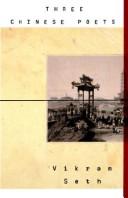
Wang Wei, Li Bai and Du Fu in rhymed English versions by a novelist-poet, with a preface on the choices involved. Short and immediately enjoyable — the right first taste.

A large anthology spanning three millennia with the Tang at its centre, in Hinton's spare free-verse idiom. Read after Seth to feel how differently the same poets can sound, and for the range beyond the famous three.
Burton Watson's selection of the poet most Chinese critics rank first, whose later work is inseparable from the An Lushan rebellion. Read once you know the history: Du Fu is a war poet and the poems assume you know which war.
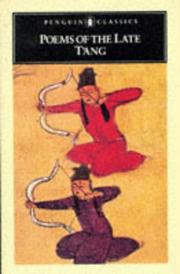
Graham's celebrated translations of Li He, Li Shangyin and their contemporaries, with an introduction that is itself a short education in Chinese poetics. The most difficult poetry here and the right place to finish.
The specialist end
IntermediateRead current scholarship on the questions the surveys compress — how the frontier was actually managed, how a woman took the throne, and what the medieval aristocracy was before it disappeared.
▸ Study plan for this stage
Pace: Eight to ten weeks. Wu Zhao is 256 pages and is written for students; two weeks and a good bridge into monographs. Sui-Tang China and Its Turko-Mongol Neighbors is 432 pages of genuine academic argument; four weeks, and read the introduction twice. The Destruction of the Medieval Chinese Aristocracy
- The only woman to rule China in her own name declared a new dynastic name and reigned for fifteen years, and almost everything written about her afterwards was written by people committed to explaining why she should not have. Separating the record from that tradition is the biography's main task.
- Her use of Buddhist scriptural authority to legitimate a female sovereign is the substantive part of the story, and it shows how much political work religion was doing in this period — which connects directly to the monastic wealth question from the first stage.
- Skaff argues that Tang power over the steppe worked through a shared Inner Asian political culture — marriage alliance, fictive kinship, hostage exchange, gift-giving, and the personal loyalty of subordinate rulers to a supreme khan — rather than through the export of Chinese institutions.
- That reframes the cosmopolitanism of the second stage. On this reading the Tang were not a Chinese empire that happened to be open to foreigners, but a hybrid regime whose ruling house and military practice were already part of a wider northern world.
- The book is properly academic and assumes the basics, which is why it comes here rather than earlier. Read the introduction and conclusion first, then the middle.
- Tackett's method is the striking thing: a database built from thousands of excavated tomb epitaphs, used to locate where members of the great clans actually lived, married and were buried across the dynasty.
- The finding overturns the standard account. The medieval aristocracy did not fade away in the face of the examination system; the great families concentrated themselves in the capital corridor and remained dominant to the end — and were then physically destroyed in the rebellions and purges around t
- That gives the dynasty's end a different character. It is not a long institutional decay but the annihilation of a social class, and it explains why the following period looks so unlike what preceded it.
- What can be established about the reign of the woman emperor, and what rests only on hostile later sources?
- How was Buddhist authority used politically in her legitimation, and what does that show about church and state in the Tang?
- State Skaff's argument in four sentences. What evidence does it rest on, and what would count against it?
- If Skaff is right, how should the word cosmopolitan be used about this dynasty? Does it still mean what the second stage implied?
- How does Tackett's database work, and what are the known biases of tomb epitaphs as a source?
- What replaces the standard story of aristocratic decline, and what does it imply about the relationship between the examination system and the great families?
- For the biography, list five claims about the empress that the book rejects and note the source of each.
- Write 400 words applying Skaff's frame to the Tang founding house and its early military practice, using what the first two stages gave you.
- Diagram Tackett's argument as a sequence — where the clans were, where they moved, what happened around 880 and after — and mark which step the epitaph data supports directly.
- Write 300 words on how the epitaph evidence could mislead, and what independent check you would want.
- Return to the reign chart from the first stage and annotate it with everything this stage changed. That annotated chart is the whole path in one page.
Next up: This closes the path: the political frame, the city and its imports, the poetry that is the dynasty's real legacy, and the current scholarship on the frontier, the throne and the class whose destruction ended it.
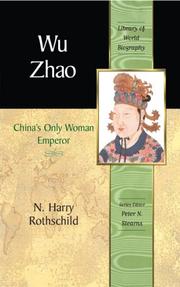
A short scholarly biography of the only woman to rule China in her own name, careful to separate her record from the hostile tradition built around her. A good bridge from the surveys into monograph reading.
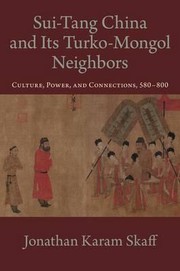
Argues that Tang rule over the steppe worked through shared Inner Asian political culture rather than Chinese institutions, which reframes the whole cosmopolitan story. Genuinely academic and assumes the basics.
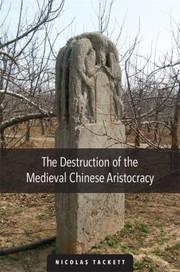
Uses a database of thousands of tomb epitaphs to show that the great clans survived far longer than assumed and were then physically annihilated around 880. Methodologically striking, and the best account of how the Tang actually ended.
Discussion
Keep reading
Paths that share books, cover the same subject, or open a related topic.