Joseon Korea is badly served by the usual approach of picking up whatever popular history is available, because there is very little popular history available in English. What exists instead is a small number of superb academic monographs, a couple of solid survey textbooks, and some translated primary sources. Read them in the wrong order and the monographs will feel impenetrable.
The order below therefore does something specific: it front-loads a survey so that the great books have somewhere to land, and it saves the two most rewarding reads — a court memoir and a war narrative — for when you can appreciate them.
Start with a survey
A concise history of premodern Korea by Michael J. Seth is the most approachable entry: a single readable volume from earliest times to 1800, with Joseon occupying the second half. It gives you the dynastic sequence, the institutions and the vocabulary.
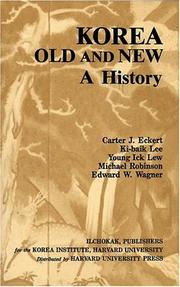
Korea, old and new is the standard university textbook and covers a longer span into the modern period. Our catalogue credits Carter J. Eckert alone; it is in fact a multi-author volume produced by a group of Korea specialists, which is part of why it is even-handed and part of why it reads like a textbook. Use it as a reference rather than a cover-to-cover read.
Then the central argument
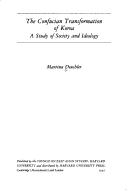
The Confucian Transformation of Korea by Martina Deuchler is the pivotal book on this subject in English. Its argument is that early Joseon deliberately remade Korean society along neo-Confucian lines — and that this was a genuine social revolution, altering inheritance, marriage residence, lineage, ancestor ritual and the position of women, none of which had previously looked the way we now think of as traditionally Korean.
Under the Ancestors' Eyes is Deuchler's much later and larger book, which extends the argument across the whole dynasty and into the aristocratic lineages that dominated it. It substantially supersedes and enlarges the earlier work. If you are reading one, read the earlier one for the sharp thesis and the later one only if you want the full development; reading both back to back is a great deal of the same terrain.
Korean spirituality by Don Baker is short and does something the political histories cannot: it lays out the religious landscape — Confucianism, Buddhism, shamanism, and later Catholicism — and how they coexisted in one society.
Rule, court and daily life
King Sejong the Great edited by Young-Key Kim-Renaud collects essays on the fifteenth-century monarch under whom the Korean alphabet was created, which is the single most consequential act of the dynasty. It is a scholarly collection rather than a biography, and no really satisfying English-language life of Sejong exists — that gap is ours as much as anyone's.
The Confucian Kingship in Korea by JaHyun Kim Haboush is the study of what it actually meant to rule as a Confucian monarch, built around the reign of Yeongjo. Read it before the next book.
The Memoirs of Lady Hyegyong is the reason to have read it. Haboush's translation of the memoirs of a crown princess whose husband, Prince Sado, was ordered by his own father to climb into a rice chest, where he died eight days later. She wrote four separate accounts of her life across decades. It is one of the great primary documents of any premodern court, and it is genuinely gripping.
Everyday Life in Joseon-Era Korea is an edited and translated collection of Korean scholarship — our record credits Michael D. Shin as author, and he is closer to editor — covering food, clothing, work and household life below the level of the court.
The war that defined the dynasty
The Imjin War by Samuel Hawley is the long, detailed narrative of the Japanese invasions of the 1590s, and it is the most readable big book on this list. Great East Asian War and the Birth of the Korean Nation by JaHyun Kim Haboush is the argument alongside it: that the war produced something recognisable as a Korean national consciousness. It was left unfinished at her death and completed by colleagues from her drafts, which shows in places.
Sourcebook of Korean Civilization edited by Peter H. Lee is the documentary collection to read alongside everything else; note that it runs to two volumes, and the first covers the period up to the sixteenth century.
Readers who want the regional frame will find the neighbouring paths on the Ming and Qing useful, since Joseon's diplomacy and its wars were conducted almost entirely in relation to them.
The full ordered path is below.
Follow the full ordered path here: The Joseon Dynasty of Korea: Books to Read, in Order.