Best Books on the Taiping Rebellion, in Reading Order
Between 1850 and 1864 a failed examination candidate who believed he was the younger brother of Jesus Christ raised an army, took Nanjing, and fought a civil war that killed somewhere between twenty and seventy million people — more than the First World War, and almost unknown outside China. This path builds the late-Qing context first, because the rebellion is incomprehensible without the Opium Wars and the dynasty's fiscal collapse, then reads Hong Xiuquan's movement, then the war itself, and finally the specialist scholarship. The interpretation is genuinely contested — Western, Nationalist and Communist historians have read the Taiping as a heresy, a proto-nationalist rising and a peasant revolution respectively — and the reading list is built to show you all three.
The Qing on the Eve
BeginnerUnderstand the empire the Taiping attacked: the treaty ports, the opium trade, the fiscal crisis and the loss of prestige after 1842.
▸ Study plan for this stage
Pace: Six weeks for about 1,020 pages — a long entry stage, but this is the context without which the rest is unreadable. Imperial Twilight (560pp) is narrative history with a large cast on both sides of the trade; 25 to 30 pages a session, and keep a list of the Canton merchants and Qing officials as you
- The Canton system before 1839: one legal port, the hong merchants as the sole licensed intermediaries, and why the arrangement suited the Qing and frustrated the British
- The silver problem — tea flowing out, silver flowing in, then opium reversing the direction — which turns the trade dispute into a fiscal crisis for the dynasty
- Lin Zexu's confiscation at Canton and the specific chain of decisions on both sides that Platt shows leading to war, none of them inevitable
- The Treaty of Nanjing and the treaty-port system: five ports, extraterritoriality, a fixed tariff, and the indemnity that had to be paid out of an already strained treasury
- Loss of prestige as a political fact rather than an emotion — a dynasty defeated by a small foreign force loses the presumption of competence that holds a vast empire together
- Lovell's argument about memory: how the Opium War was made into a founding humiliation by later Chinese governments, and why that shapes what gets remembered about the whole century
- The missionary presence opened by the treaties, including the tract distribution at Canton that becomes directly load-bearing two stages from now
- How did the Canton system work, and what did each side think it was getting from it?
- Trace the silver flow before and after opium. Why does a trade imbalance become a threat to the dynasty's finances specifically?
- What were the terms of the Treaty of Nanjing, and which of them did most long-term damage to Qing authority?
- What does Lovell say the Opium War came to mean in later Chinese politics, and how does she distinguish the event from its uses?
- Which specific consequences of 1842 do you expect to matter for a rebellion beginning in 1850? Write your prediction down now and check it after stage four.
- Build a timeline from 1793 to 1850 with the trade, the war, the treaty and the indemnity marked. You will extend it through 1864 in later stages and it is the spine of the whole path.
- Write 200 words explaining the opium-silver-tea triangle to someone who knows nothing about it. If you cannot do it without the book, reread the relevant chapter.
- Take one decision Platt describes on each side — one Qing, one British — and write a paragraph on what a different choice would plausibly have produced. Platt's book is built to make this possible.
- List the five treaty ports and locate them on a map, then mark the Guangxi and Guangdong interior where the next stage happens. The distance between the coast and where the rebellion starts is the point.
- Note every claim Lovell makes about later Chinese memory that she supports with a specific source. Separating her documented history from her interpretive argument is good practice for the historiography stage.
Next up: The wars and the treaties are the visible crisis; the next stage supplies the invisible one — population pressure, local violence and militarisation in exactly the region where the Taiping began.

The road to the First Opium War, told from both the Chinese and the British sides by the historian who also wrote the best book on the Taiping. Read it first: it is the same author's prequel in everything but name.

The war itself and, more usefully, its long afterlife in Chinese national memory. Lovell is sharp on how later Chinese governments turned the humiliation into a founding story, which matters for how the Taiping are remembered too.
A Dynasty Coming Apart
IntermediateGrasp the structural weaknesses — population pressure, banditry, local militarisation, ethnic tension between Han and Manchu — that made a rebellion of this scale possible.
▸ Study plan for this stage
Pace: Four weeks for about 550 pages, and the least narrative stage in the path. The Fall of Imperial China (276pp) is a compact analytical survey and should be read carefully rather than quickly — perhaps 20 pages a session, taking notes on structure rather than events. Strangers at the Gate (276pp) is a
- Population growth against a fixed agricultural base, and the resulting land hunger and downward mobility that Wakeman treats as the underlying pressure of the period
- The gentry-official system: a small imperial bureaucracy governing an enormous population through local degree-holders, and what happens to that arrangement under strain
- Fiscal weakness — a land tax that could not be raised, a treasury drained by the indemnity, and an army paid too little to be reliable
- Local militarisation as the crucial mechanism: militias raised by gentry for self-defence become the only effective armed force, which both suppresses rebellion and hollows out central authority
- Secret societies, feuds and banditry in the Canton delta, and Wakeman's account of how ordinary lawlessness scales into organised insurgency
- Han-Manchu ethnic tension and the Hakka-Punti conflicts in the southern provinces, which supply the Taiping with both a grievance and a recruiting base
- The Hakka as a distinct group — migrants, linguistically separate, often on marginal land and in conflict with settled neighbours — from whom Hong drew his first followers
- Why the same rebellion could not have started on the coast: Wakeman's regional specificity is the argument, and it explains the geography of everything that follows
- What are the structural pressures Wakeman identifies behind nineteenth-century Qing rebellion, and how do they interact?
- How did local militarisation both save the dynasty and weaken it? State the paradox precisely.
- Who were the Hakka, and what specifically about their position in Guangxi and Guangdong made them available for a movement like Hong's?
- What does Strangers at the Gate show about the relationship between village feuds, secret societies and organised rebellion?
- Given everything in this stage, why does a rising begin in the far south rather than near the treaty ports or the capital?
- Diagram the Qing governing system on one page — emperor, bureaucracy, provincial officials, local gentry, militia — and mark where money and force actually came from at each level.
- Write 200 words on local militarisation as Wakeman explains it, without using the word 'decline'. Forcing the mechanism rather than the verdict is the exercise.
- Map the Canton delta and Guangxi from Strangers at the Gate, marking the areas of Hakka settlement and the sites of the feuds Wakeman documents.
- List every group in the delta capable of organised armed action by 1850, with one line on what each wanted. The rebellion recruits from this list.
- Return to your timeline and add the structural items — population, tax, militia formation — as a second band beneath the events. Structure and narrative running in parallel is how this period is best held in mind.
Next up: The conditions are now in place and the population is armed; the next stage introduces the man whose visions gave all of it a programme, a scripture and a name.
The standard short account of the Qing collapse from 1800 to 1912, with the Taiping placed inside the wider pattern of rebellion. The clearest structural overview available; read it before the narrative books.
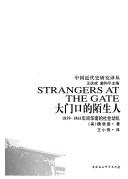
Social disorder in the Canton delta between 1839 and 1861 — the local militias, secret societies and village feuds out of which the Taiping actually emerged. Specific and archival, and it explains where Hong's first followers came from.
The Prophet
IntermediateUnderstand Hong Xiuquan's visions, his reading of missionary tracts, and how a private religious experience became a mass movement with a state.
▸ Study plan for this stage
Pace: Four weeks for 400 pages. God's Chinese Son is written in Spence's characteristic present tense and close to the primary sources, which makes it absorbing but also demands attention — 25 pages a session, with the maps at the front used constantly. Read it slowly through the vision chapters in partic
- Hong Xiuquan's repeated failure at the civil service examinations, and what those examinations meant for a man of his background — the standard route to status, closed
- The 1837 illness and visions, and Hong's later interpretation of them through Christian missionary tracts he had been given years earlier at Canton
- The resulting theology as the movement stated it: Hong as the younger brother of Jesus Christ, sent by a heavenly father to sweep away demons, with the Manchu rulers identified as those demons
- The God Worshipping Society in Guangxi: iconoclasm against local shrines, communal organisation, and the shift from a religious congregation to an armed community
- The Taiping social programme — land redistribution in principle, separation of the sexes, prohibition of opium, foot-binding, alcohol and gambling, and a calendar and examination system of its own
- The Heavenly Kingdom as an actual state after 1853: Nanjing as capital, a bureaucracy, a treasury, printed scriptures and edicts
- The problem of authority within the movement — other leaders also received divine communications, most consequentially Yang Xiuqing speaking as the voice of God, which is the fault line that later splits the leadership
- Why foreign missionaries were at first hopeful about the Taiping and then appalled, and what that reaction reveals about both parties
- What did Hong see in his 1837 visions, and when and how did he come to interpret them in Christian terms?
- What did the Taiping actually believe about God, Jesus, Hong and the Qing? State it as a Taiping believer would have stated it.
- How did a religious society become an army? Name the concrete steps between the God Worshipping Society and the march north.
- What did the Taiping social programme prohibit and prescribe, and how much of it was implemented in practice at Nanjing?
- Why did Western missionaries turn against the movement, and what were they objecting to specifically?
- What does Spence gain by taking the religion seriously as motivation, and what would a purely economic or ethnic explanation of the rebellion miss?
- Write a one-page statement of Taiping belief, drawn from Spence's quotations of their own documents, in neutral descriptive language. Doing it without either endorsement or ridicule is harder than it sounds and is the core discipline of the stage.
- Trace the movement's route from Guangxi to Nanjing on a map, marking dates and the growth in numbers. The scale of the march is the first indication of what kind of movement this was.
- Compare the Taiping social programme point by point with Qing practice, in two columns. The list explains both the appeal and the horror it provoked.
- Find the passages where Yang Xiuqing speaks as the voice of God and write 200 words on why a movement founded on personal revelation has no mechanism for settling competing revelations.
- Take the structural pressures you diagrammed in stage two and mark which ones the Taiping programme addressed. The overlap is a large part of the answer to why anyone joined.
Next up: You now know who the Taiping thought they were, which is the necessary preparation for the war stage — because the foreign powers, the Qing commanders and the Taiping themselves were all acting on very different understandings of that question.
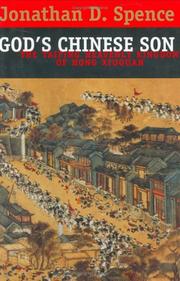
Spence's account of Hong and the Heavenly Kingdom, written close to the sources and unusually willing to take the religion seriously on its own terms rather than as pretext. The essential book on the movement's ideas.
The War
IntermediateFollow the military and diplomatic history of the civil war to its end at Nanjing, including the foreign powers' decision to back the Qing.
▸ Study plan for this stage
Pace: Three to four weeks for 300 pages, and the most propulsive book on the path. Autumn in the Heavenly Kingdom concentrates on the war's second half, roughly 1859 to 1864, and interleaves the Chinese campaign with British politics and the American Civil War running in parallel. Read it at 25 to 30 page
- Hong Rengan as the reformist late arrival — a cousin of Hong Xiuquan who had lived among missionaries in Hong Kong and arrived with a modernising programme, and whose failure Platt treats as one of the war's great counterfactuals
- Zeng Guofan and the Xiang Army: a Confucian scholar-official raising a provincial army on personal and regional loyalty, which is the militarisation mechanism from stage two operating at empire-saving scale
- Why that solution stored up a problem — regional armies loyal to their commanders rather than to the throne, which shapes Chinese politics for decades after
- The foreign decision as Platt's central subject: Britain moved from neutrality to effective support for the Qing, and he argues the choice was contingent, contested in Parliament, and decisive
- Shanghai as the pivot — foreign commercial interest in the treaty port, and the Ever Victorious Army under Ward and then Gordon
- The parallel with the American Civil War, running simultaneously and competing for British attention, cotton supply and moral argument
- The siege and fall of Nanjing in 1864 and the scale of the killing, and why casualty estimates range so widely — between twenty and seventy million is a measure of the state of the records, not a considered figure
- Platt's counterfactual, stated carefully: had Britain stayed neutral, the outcome was genuinely open — which is an argument about contingency rather than a claim about what would have happened
- What did Hong Rengan propose, and why did it fail? What would a successful version have required?
- How did Zeng Guofan raise and fund the Xiang Army, and why could the central government not have done the same directly?
- What made Britain shift from neutrality to intervention, and who argued which side of that decision in London?
- What was the Ever Victorious Army, and how significant was it militarily as opposed to symbolically?
- Why are the death-toll estimates so wide, and what does that range tell you about the sources historians are working from?
- How persuasive do you find Platt's counterfactual about British neutrality, and what evidence would strengthen or weaken it?
- Map the Yangtze corridor with Nanjing, Anqing, Suzhou and Shanghai marked, and follow the campaign on it as you read. Platt's argument does not survive being read without a map.
- Build a parallel timeline for 1859 to 1865 with the Chinese war on one side and the American Civil War and British politics on the other. Platt's structure is comparative and the timeline makes his point visible.
- Write 200 words on the British intervention decision as a supporter would have argued it in 1862, then 200 on the opposing case. Both were made at the time.
- Compare the death toll with the First World War, the An Lushan rebellion and the Second World War, then write a paragraph on why this war is so much less known outside China.
- Return to your prediction from stage one about which consequences of 1842 would matter. Check it. Most readers underestimate Shanghai and overestimate the treaty terms.
Next up: The narrative ends at Nanjing in 1864; the last stage asks what the rebellion has been taken to mean since, by scholars working in three traditions that read the same events very differently.
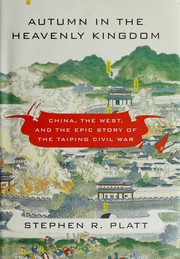
The definitive modern narrative of the war's second half, with British intervention placed at the centre and the American Civil War running in parallel. The best book on this path; read it once Spence has explained who the Taiping thought they were.
The Scholarship, and What Followed
IntermediateCompare how different historiographical traditions have interpreted the rebellion, and trace its influence on the Chinese twentieth century.
▸ Study plan for this stage
Pace: Three to four months, and explicitly a reference stage rather than a reading marathon. Michael and Chang's The Taiping Rebellion is the history volume of a larger project whose main value is its translated documents — read the interpretive volume and use the documents selectively. Jen Yu-wen's The T
- The three interpretive traditions this stage exists to display: the Taiping as a religious and dynastic phenomenon, as a proto-nationalist rising against Manchu rule, and as a peasant revolution — each supported by real evidence and each shaped by the politics of its writers
- Michael and Chang's reading, which centres the religion and the dynastic challenge, and the enormous documentary contribution of the accompanying translated sources
- Jen Yu-wen's very different weighting, drawn from decades in Chinese-language sources, which sees more revolutionary content in the movement's programme
- The Nationalist reading, which emphasised the anti-Manchu and Han-national dimension, and its relation to the 1911 revolution
- The Communist reading, which claimed the Taiping as peasant-revolutionary predecessors, and the specific features of the land programme that claim rests on
- What complicates that claim: the Taiping theology, the dynastic form of the Heavenly Kingdom, the harem at Nanjing, and the internal massacres — none of which fit a straightforward revolutionary narrative
- Spence's and Fairbank's differing weightings of internal decay against Western pressure as the driver of the Qing collapse, which is the oldest argument in the field
- The rebellion's downstream consequences: regional armies, the self-strengthening movement, and a weakened centre that runs directly toward 1911
- State the religious, nationalist and revolutionary readings of the Taiping, each in the terms its own proponents would use.
- Where do Michael and Jen actually disagree — name a specific question and show how each answers it and from what evidence.
- What in the Taiping programme supports the claim that they were revolutionary predecessors, and what in their practice cuts against it?
- How do Spence and Fairbank weight internal versus external causes differently, and which do you find better supported for this period?
- What were the long-run consequences of the way the rebellion was suppressed, and how do they connect to 1911?
- After the whole path: what was the Taiping Rebellion? Give your answer as a definition plus the evidence, and name which of your claims are contested.
- Pick one Taiping document from the Michael and Chang collection and read it directly, then read what Michael and Jen each make of it. This is the cleanest possible demonstration of how interpretation works on shared evidence.
- Build a three-column table — religious, nationalist, revolutionary — and fill each column with the evidence that best supports it. The columns will not be equally full, and that asymmetry is a finding.
- Read the Taiping chapters of Spence and Fairbank back to back and write 200 words on what each emphasises and omits.
- Trace one thread — regional armies, or the land question, or anti-Manchu sentiment — from 1864 through 1911 to 1949 using the two surveys, and write a page on it.
- Write a final two pages on what you now think the rebellion was, marking each claim as well established or contested and naming the book behind it. The path is built around a disagreement, so an answer that resolves everything cleanly is probably an answer that has stopped reading carefully.
Next up: This is the end of the path — the road to 1842, the dynasty's structural weakness, Hong's movement, the war and the historiography — and the natural next step is to reread God's Chinese Son, which reads very differently when you know both how the war ended and how many later regimes wanted to claim it.

Michael and Chang's three-volume history and document collection, the foundational Western scholarly treatment, which reads the Taiping primarily as a religious and dynastic phenomenon. Dated in places, and still the largest body of translated Taiping documents in English.

The lifetime work of a Chinese historian who spent decades on Taiping sources, and a markedly different reading from Michael's — closer to seeing the movement as revolutionary. Read the two together; the disagreement is the point of this stage.
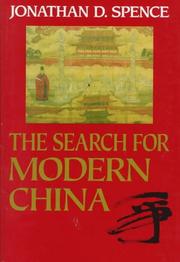
The standard survey from the late Ming to the present, which lets you see the Taiping as one link in a chain running to 1911 and 1949. Mao's regime claimed the Taiping as revolutionary predecessors, and this is where you can judge that claim.
The other standard survey, by the historian who shaped the American field, with a different weighting of internal versus Western causes than Spence gives. A reference to end on rather than a narrative — useful precisely because it disagrees.
Discussion
Keep reading
Paths that share books, cover the same subject, or open a related topic.