The history of China: a reader's path through 4,000 years of dynasties
This curriculum traces Chinese history from its mythic origins to the modern People's Republic across four carefully sequenced stages. Each stage builds on the last — starting with accessible narrative overviews, moving through dynastic deep-dives and cultural analysis, and culminating in rigorous modern scholarship on revolution, reform, and identity. By the end, the reader will have both the chronological backbone and the analytical tools to understand China's past and present.
Foundations: The Big Picture
BeginnerGain a confident, chronological overview of Chinese history from ancient origins to the 21st century, building the vocabulary of dynasties, key figures, and turning points needed for deeper reading.
▸ Study plan for this stage
Pace: 4–5 weeks, ~40–50 pages/day. Start with Wood's "The Story of China" (Week 1–2, ~250 pages), then move to Keay's "China A History" (Week 3–5, ~300+ pages). Allocate 2–3 days per week for review and exercises.
- The dynastic cycle: rise, stability, decline, and collapse as the organizing pattern of Chinese history from Shang through Qing
- Geography as destiny: how China's river valleys, mountains, and isolation shaped civilization, governance, and cultural continuity
- Confucianism and Daoism as competing philosophical frameworks that shaped statecraft, society, and individual conduct across dynasties
- The Great Wall, the Silk Road, and tributary systems as expressions of Chinese power, trade, and cultural influence
- Key turning points: the unification under Qin, the Tang golden age, the Song technological flowering, the Mongol conquest, the Ming restoration, and the Qing expansion
- The role of bureaucracy and the civil service examination system in maintaining imperial authority and cultural continuity
- The transition from imperial to modern China: the Opium Wars, the fall of the Qing, and the rise of the Republic and People's Republic
- Continuity within change: how Chinese civilization adapted to conquest, foreign influence, and modernization while preserving core cultural identity
- What is the dynastic cycle, and how does it explain the pattern of Chinese imperial history from the Shang dynasty to the Qing?
- How did China's geography—particularly its river systems and relative isolation—shape the development of its civilization and its relationship with neighboring regions?
- What are the core differences between Confucianism and Daoism, and how did each philosophy influence Chinese governance and society at different points in history?
- Describe the significance of three major turning points in Chinese history (e.g., Qin unification, Tang flourishing, the Opium Wars) and explain how each reshaped the empire.
- How did the civil service examination system and bureaucratic structure contribute to the stability and longevity of Chinese imperial rule?
- What role did the Silk Road and tributary systems play in projecting Chinese power and culture, and how did these change over time?
- Create a visual timeline of all major Chinese dynasties from the Shang to the 21st century, marking key dates, founders, and one defining achievement for each. Use Wood and Keay to verify accuracy.
- Draw or annotate a map of China showing the major river valleys (Yellow and Yangtze), the Great Wall, and the Silk Road routes. Explain in 2–3 sentences how each geographic feature influenced Chinese history.
- Write a one-page comparison of Confucianism and Daoism: their core beliefs, their influence on governance, and a concrete historical example of each from the books.
- Select three dynasties (e.g., Qin, Tang, Ming) and write a short paragraph for each explaining how it exemplifies the dynastic cycle (rise, stability, decline).
- Create a 'turning points' chart with five major historical breaks (e.g., Qin unification, Opium Wars, fall of Qing). For each, note the date, the cause, the key figures involved, and the immediate consequences.
- Conduct a close reading of Wood's or Keay's treatment of one dynasty (e.g., Song or Qing). Identify the author's main argument about why that dynasty mattered, and list three pieces of evidence they use to support it.
Next up: This stage equips you with a solid chronological scaffold and vocabulary of dynasties, figures, and turning points; the next stage will deepen your understanding by exploring specific themes (e.g., art, philosophy, daily life, military strategy) and regional variations within that framework.

A vivid, accessible narrative companion to the BBC documentary series, this is the ideal first book — it sweeps across 4,000 years of Chinese history in plain language, making dynasties and emperors feel human and memorable before tackling denser texts.

A single-volume chronological history from prehistory to the People's Republic, written for general readers. It fills in the factual skeleton introduced by Wood and gives the reader a reliable timeline to hang all future reading on.
Classical China: Dynasties, Philosophy, and Empire
BeginnerUnderstand the formative periods — the Zhou, Qin, Han, Tang, and Song dynasties — and the philosophical traditions (Confucianism, Daoism, Legalism) that shaped Chinese civilization for millennia.
▸ Study plan for this stage
Pace: 8–10 weeks, ~40–50 pages/day. Week 1–3: "The Early Chinese Empires" (dense historical narrative); Week 4–5: "The Complete Analects of Confucius" (shorter, philosophical, requires reflection); Week 6–8: "China's Golden Age" (narrative-driven, consolidates earlier concepts).
- The Zhou dynasty's feudal system and the Mandate of Heaven as justification for dynastic rule
- The Qin unification under Legalism: standardization, centralization, and the role of harsh law in state control
- The Han dynasty's synthesis of Legalism and Confucianism, creating a durable imperial bureaucracy
- Confucian ethics: ren (humaneness), li (ritual propriety), and filial piety as foundations for social harmony
- Daoist philosophy: wu wei (non-action), harmony with nature, and critique of artificial social structures
- The Tang and Song dynasties as periods of cultural and technological flourishing, building on earlier institutional foundations
- How philosophical schools competed for influence and shaped governance across dynasties
- The relationship between military conquest, administrative innovation, and cultural continuity in Chinese civilization
- How did the Mandate of Heaven concept evolve from the Zhou dynasty through the Han, and what role did it play in legitimizing dynastic succession?
- What were the core differences between Legalist and Confucian approaches to governance, and how did the Han dynasty synthesize these competing philosophies?
- Explain the key Confucian concepts of ren, li, and filial piety, and how they were intended to create social order.
- What is wu wei in Daoist thought, and how does it contrast with Confucian emphasis on ritual and self-cultivation?
- How did the Qin dynasty's standardization policies (writing, weights, measures) contribute to lasting Chinese institutional structures?
- What technological, cultural, and administrative achievements distinguished the Tang and Song dynasties, and how did they build upon earlier dynastic foundations?
- Create a timeline chart mapping the Zhou, Qin, Han, Tang, and Song dynasties with key events, rulers, and philosophical developments from 'The Early Chinese Empires' and 'China's Golden Age'.
- Read and annotate 10–15 passages from 'The Complete Analects' (focus on Books 1, 2, 4, 6, 12, 15), identifying recurring themes of ren, li, and filial piety; write a 2–3 page synthesis of Confucius's core ethical vision.
- Comparative essay: Using evidence from all three books, analyze how Legalism (Qin) and Confucianism (Han) offered competing solutions to the problem of social order, and explain why the Han synthesis proved more durable.
- Create a visual diagram showing the relationship between Confucianism, Daoism, and Legalism—their core principles, their critiques of each other, and their influence on different dynasties as presented in the texts.
- Write a 3–4 page reflection on a specific Confucian or Daoist concept (e.g., ren, wu wei, or filial piety) and how it might have functioned in the bureaucratic or social contexts described in 'The Early Chinese Empires' and 'China's Golden Age'.
- Conduct a close reading exercise: Select one chapter from 'China's Golden Age' on Tang or Song cultural achievements (poetry, art, technology) and trace how the philosophical and institutional foundations from earlier dynasties enabled these flourishings.
Next up: Mastering these foundational dynasties and philosophical schools equips you to understand how their legacies persisted through later imperial periods, and prepares you to examine how external pressures (Mongol invasion, European contact) challenged and transformed these classical structures in subsequent stages.
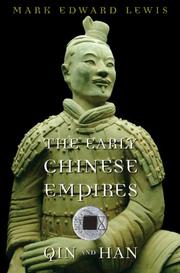
Part of the authoritative Harvard History of Imperial China series, this focused study explains how China's first unified empires were built and how they defined the imperial model that lasted 2,000 years — essential context for everything that follows.
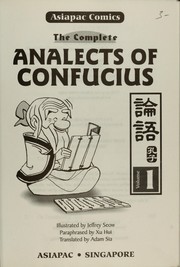
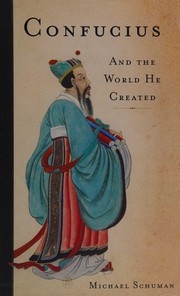
Reading Confucius in a good modern translation (e.g., D.C. Lau's Penguin edition) is indispensable: Confucian ethics underpinned Chinese governance, family life, and social order across virtually every dynasty, and no history of China makes full sense without it.
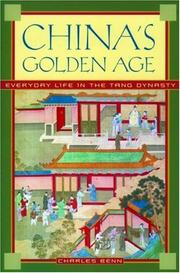
After grasping imperial structure and philosophy, this richly detailed social history of the Tang dynasty grounds abstract history in daily life — food, trade, religion, and cosmopolitan culture — building intuition for how ordinary Chinese people lived.
Encounter with the Modern World: Ming to Republic
IntermediateTrace China's trajectory from the height of Ming power through Qing expansion, the traumatic collision with Western imperialism, and the collapse of the imperial system, understanding why China's 19th and early 20th centuries were so catastrophic.
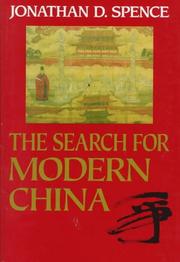
The single most celebrated English-language narrative of China from the late Ming to the late 20th century. Spence writes with literary grace and scholarly authority, making this the essential bridge between classical and modern Chinese history.
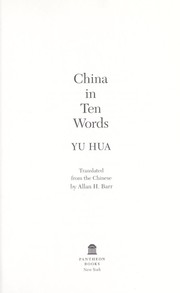
A celebrated Chinese novelist reflects on ten key words — Revolution, Disparity, Grassroots, Copycat — to illuminate how the Maoist era and its aftermath shaped the Chinese psyche. Reading a Chinese voice here deepens empathy and counters an exclusively Western perspective.
Revolution, Mao, and the People's Republic
IntermediateUnderstand the Communist Revolution, the Maoist decades, and the reform era through to the present, grasping both the political machinery and the human cost of 20th-century China's transformation.
▸ Study plan for this stage
Pace: 8–10 weeks, ~40–50 pages/day. "Mao" (650 pages) takes 4–5 weeks; "Wild Swans" (600 pages) takes 4–5 weeks. Allocate 1 week for review and synthesis.
- Mao's rise to power: peasant origins, guerrilla strategy, and the Long March as foundational to Communist victory
- The Great Leap Forward and the Great Famine: ideological ambition, central planning failures, and the human toll (30+ million deaths)
- The Cultural Revolution: Mao's consolidation of power, mass mobilization, persecution of intellectuals, and generational trauma
- The three-generation family saga in Wild Swans: how individual lives intersected with revolutionary upheaval, from imperial concubinage to Communist cadre to Red Guard
- The reform era under Deng Xiaoping: pragmatism over ideology, 'socialism with Chinese characteristics,' and economic liberalization
- The tension between revolutionary ideals and totalitarian practice: propaganda, surveillance, and the cost of utopian transformation
- Gender, family, and social disruption: how revolution reshaped intimate relationships and generational bonds
- The role of personality cult and charismatic authority in sustaining Maoist rule despite catastrophic failures
- What were the key stages of Mao's political ascent, and how did his early experiences shape his later policies?
- How did the Great Leap Forward's policies lead to famine, and what does Jung Chang reveal about Mao's response to the crisis?
- What were the stated goals and actual consequences of the Cultural Revolution for Chinese society and individuals?
- How do the three generations in Wild Swans (grandmother, mother, daughter) embody different relationships to the Communist revolution?
- What were the main economic and ideological shifts under Deng Xiaoping's reforms, and how did they differ from Maoist policies?
- How do the personal narratives in Wild Swans illustrate the gap between revolutionary propaganda and lived experience?
- Create a timeline of major events in Mao's life and rule (1893–1976), marking turning points in policy and personal authority.
- Write a 500-word analysis comparing one character's experience across both books (e.g., how a cadre's role changed from revolution to reform era).
- Map the three generations of the Yu family in Wild Swans: identify how each generation's political consciousness and choices were shaped by historical events.
- Research and summarize one primary source document from the Cultural Revolution (e.g., a Red Guard poster, a party directive, or a personal account) and analyze how it reflects the themes in the books.
- Create a chart comparing Maoist ideology (as presented in Mao) with actual outcomes in the Great Leap Forward and Cultural Revolution, noting the gap between theory and practice.
- Write a dialogue between Deng Xiaoping and Mao debating the role of ideology vs. pragmatism in governance, grounded in specific policies and outcomes from both books.
Next up: This stage equips you with a detailed understanding of 20th-century Communist China's political structures, ideological drivers, and human consequences—essential context for examining contemporary China's governance, economic model, and relationship with its revolutionary past.

A landmark, deeply researched biography of Mao Zedong that draws on newly opened archives and hundreds of interviews. It provides an unflinching account of the revolution, the Great Leap Forward, and the Cultural Revolution — essential for understanding the PRC's founding trauma.
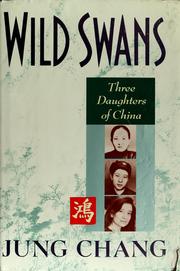
Read immediately after the Mao biography, this multigenerational memoir of three women across warlordism, Nationalist rule, and Communist revolution makes the abstract political history viscerally personal and emotionally resonant.
Discussion
Keep reading
Paths that share books, cover the same subject, or open a related topic.