Gunter Grass Reading Order: Where to Start
Grass built his whole career out of one place and one refusal: Danzig, and the refusal to let Germany forget what it did there. This order takes the Danzig Trilogy first, in its proper sequence, then the West German novels where he argues with his own country's prosperity, then the late books that reopen the war from unexpected angles, and finally the memoir that admitted his own Waffen-SS service. Read this way, the late scandal reads as the last chapter of the work rather than a footnote to it.
Start here: the Danzig Trilogy
BeginnerRead the three linked Danzig books in order and understand the technique that made Grass famous — grotesque comedy used as a moral instrument on the Nazi period.
▸ Study plan for this stage
Pace: Ten to twelve weeks. The Tin Drum is around 570 pages and is the hard one — budget six weeks and read it in daily sittings rather than long bursts, because Oskar's voice is exhausting in quantity. Cat and Mouse is a novella of about 180 pages and takes a weekend. Dog Years is back up to 550 pages an
- One city, three books. Danzig, now Gdansk, is the shared setting, and the trilogy is linked by place and period rather than by plot — the characters cross over only glancingly
- Oskar Matzerath decides at three to stop growing, and narrates from a mental institution. Both facts are unreliability signals, and Grass never resolves whether Oskar is a witness or a fantasist
- The grotesque as a moral instrument. Grass writes the Nazi period through drumming, eels, glass-shattering screams and a scene involving a horse's head, and the disgust is doing the work that solemnity would fail at
- You are reading in translation, and the translation is a real variable here: The Tin Drum has two English versions, the original from 1961 and a retranslation issued for the novel's fiftieth anniversary in 2009. Check which one you have. Grass's German is full of compound coinages and dialect, and n
- Cat and Mouse is short, brutal, and about a boy with an oversized Adam's apple and a stolen Knight's Cross. It is the most immediately readable thing Grass wrote and the best test of whether the trilogy is for you
- Dog Years splits into three narrators and follows two friends, one Jewish and one not, to a dog that ends up in Hitler's bunker. It assumes the Danzig geography the first two books teach you
- The trilogy's project is refusal: Grass will not let postwar Germany treat the Nazi years as an aberration performed by other people. Every ordinary character is implicated in something
- A practical note on editions: our catalogue's record for The Tin Drum comes from a split-volume edition. Make sure the copy you buy or borrow is the complete novel and not one half of it
- Is Oskar a reliable narrator about anything? Find one claim you can check against another character's account inside the book
- What does Grass gain by making the Nazi period grotesque rather than tragic, and where does the technique risk making it merely entertaining?
- Cat and Mouse turns on a single physical detail. Why does Grass build a novella on an Adam's apple, and what is the Knight's Cross standing in for?
- How do the three narrators of Dog Years differ, and which one does the book trust least?
- What do the three books say about ordinary Danzig citizens between 1933 and 1945 that a straightforward historical novel could not?
- Where does your translation visibly strain? Compound words and puns are the usual places
- Find a map of prewar Danzig before you start. The trilogy assumes districts, suburbs and the Baltic coast, and having the geography makes Dog Years markedly easier
- Keep a note of every time Oskar's account is contradicted or unsupported. The list is the argument about German memory in miniature
- Read Cat and Mouse in one sitting. At 180 pages it is designed for it, and the compression is the point
- After all three, write a paragraph on what Grass thinks a German novel written in 1959 was obliged to do. You will test that answer in the final stage
Next up: The trilogy prosecutes the war; the next stage is Grass turning the same suspicion on the prosperous country that came after it.
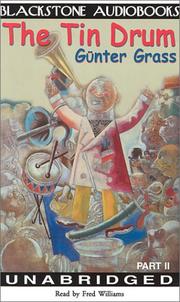
Oskar Matzerath refuses to grow after his third birthday and drums his way through the Third Reich. The book that restarted postwar German fiction, and the only correct place to begin.

A novella about a Danzig schoolboy, an oversized Adam's apple and a stolen Knight's Cross. Short, brutal, and it shares its world with The Tin Drum, so it belongs immediately after.

The trilogy's sprawling close: two friends, one Jewish, one not, and a dog that ends up in Hitler's bunker. It assumes the Danzig geography the first two books teach you.
The core: arguing with the Federal Republic
BeginnerFollow Grass out of the war and into the West German present, where his target becomes comfortable forgetting rather than open atrocity.
▸ Study plan for this stage
Pace: Twelve weeks or so. Local Anaesthetic is around 280 pages and From the Diary of a Snail around 320 — a month for both is comfortable. The Flounder is over 500 pages of digression across the whole of human history and is the most demanding book in this path; give it six weeks and expect to put it dow
- The target shifts. In the trilogy it was open atrocity; here it is comfortable forgetting, and Grass's West Germany is a country doing well by not looking backward
- Local Anaesthetic is set in 1967 and built around a student threatening to burn a dog in public as a protest against napalm, narrated from a dentist's chair. The dentistry is the metaphor: pain managed rather than cured
- Grass was an active Social Democrat who campaigned for Willy Brandt, and From the Diary of a Snail braids the campaign trail, a letter to his children, and the story of a Jewish teacher hidden in a cellar. It is the book where the activist and the novelist openly share a page
- The snail as Grass's image for political progress: slow, low, leaving a visible trail. He offered it against the revolutionary impatience of the 1968 left, which is the argument Local Anaesthetic is also having
- The Flounder takes the fairy tale of the fisherman and his wife and runs it across nine cooks and the entire history of human nutrition. It is a novel about food, women and power, and its treatment of its female characters has been argued about since 1977
- The digressive method reaches its extreme here. If you are looking for plot you will be frustrated; the pleasure is in the accumulation and in Grass's appetite for material
- Reading these three shows the cost of Grass's public role. He was Germany's most visible literary conscience for forty years, and the novels of this period are shaped by having an audience that expected him to pronounce
- What is Local Anaesthetic actually saying about protest, and whose side does the novel end up on?
- How does the snail work as a political image, and what is the argument it is aimed at?
- In From the Diary of a Snail, what does the hidden-teacher narrative do to the campaign material it is braided with?
- The Flounder is enormously digressive. Pick one digression and argue that the novel would be worse without it
- What do critics mean when they object to The Flounder's treatment of women, and how would you answer it from the text?
- How is the Grass of 1969 different from the Grass of 1959, in method rather than in subject?
- Read one short factual account of the West German student movement of 1967 and 1968 before Local Anaesthetic. The novel assumes it entirely
- Read The Flounder in fixed daily stints rather than trying to sustain momentum. It is built to be grazed and punishes marathon attempts
- Track the food in The Flounder — what is eaten, by whom, under what conditions. Grass is writing a materialist history and the meals are the evidence
- Write down what Grass wants from his readers in these books. It is different from what the trilogy wanted, and naming the difference is the point of the stage
Next up: With the postwar argument in hand you can read the late novels, where reunification reopens every question the Federal Republic thought it had closed.

A teacher in a dentist's chair, a student threatening to burn a dog in public, and the politics of 1967. The first book after the trilogy and the most direct engagement with the student left.

Campaign diary, family letter and the story of a hidden Jewish teacher, braided together. It is where Grass the SPD activist and Grass the novelist openly share a page.
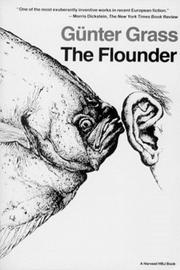
The huge, digressive novel about food, women and nine cooks across the whole of human history. The most demanding book here, and the right one to attempt only after three shorter ones.
Late fiction and the century in view
BeginnerSee how Grass handled reunification and the century's end, and judge the late-career shift from grotesque comedy to something closer to reckoning.
▸ Study plan for this stage
Pace: Fourteen to sixteen weeks. The Call of the Toad is short, around 250 pages, and the easiest of the four. Too Far Afield is the wall — over 650 pages, dense with allusion to Theodor Fontane, and the book most English readers abandon. My Century is a hundred short pieces and can be read in fragments o
- The Call of the Toad is a compact satire: a German widower and a Polish widow set up a business reburying the dead in their birthplaces, and the sentiment of reunification-era reconciliation turns into an industry
- Too Far Afield is Grass's long, hostile novel about reunification, filtered through an archivist modelled on the nineteenth-century novelist Fontane and shadowed by a Stasi minder. It was savaged in the German press on publication, and the attack is part of its history
- Too Far Afield assumes familiarity with Fontane that almost no English-language reader has. Read a short summary of who Fontane was before you start, or a large part of the book will be inert
- My Century gives one short piece to each year from 1900 to 1999, each in a different voice — a soldier, a shopkeeper, a journalist. It works as a summary of everything the earlier novels covered, which is why it sits here and not first
- A practical note: our catalogue's record for My Century is a dual-language edition listing the German title alongside the English. Make sure you have an English translation in hand
- Crabwalk is the best of the late novels. It takes the 1945 sinking of the Wilhelm Gustloff, a refugee ship torpedoed with enormous civilian loss of life, and follows three generations arguing about it — including a grandson radicalised online
- Crabwalk is Grass raising German civilian suffering as a subject, which he had spent his career warning against raising carelessly. The novel is about the danger of the subject as much as the subject itself, and it depends on your already trusting his motives
- The crabwalk of the title is the method: sideways, backwards, approaching the event obliquely. It is the clearest statement of how Grass thought history had to be handled
- What does The Call of the Toad satirise about reconciliation, and is the satire fair?
- Why was Too Far Afield attacked so violently in Germany, and does the book earn the hostility it provoked?
- My Century gives each year a different voice. Which years get the most oblique treatment, and what does that tell you?
- Why does Grass approach the Gustloff sideways in Crabwalk rather than head-on?
- Crabwalk raises German victimhood as a subject. What guards does the novel build against that subject being misused, and do they hold?
- Across these four, has the grotesque comedy of the trilogy gone, been transformed, or simply aged?
- Read a one-page account of Theodor Fontane before Too Far Afield. This single step is the difference between a difficult book and an impossible one
- Read My Century out of order — start with years you know something about — then read the run from 1933 to 1945 straight through
- Look up the basic facts of the Wilhelm Gustloff sinking before Crabwalk. Grass assumes you know roughly what happened and spends the novel on what people do with it
- If you are short of time, this is the stage to be selective. The Call of the Toad and Crabwalk are the essential pair; Too Far Afield is for readers who want the complete argument
Next up: Crabwalk is Grass writing about what a person conceals from themselves for decades, which is exactly what the memoir turned out to be about.

A German widower and a Polish widow set up a business reburying the dead in their birthplaces. A compact satire of reunification-era sentiment and the easiest of the late books.

His long, hostile novel about reunification, filtered through a Fontane-like archivist and a Stasi shadow. Widely attacked in Germany, and best read after The Call of the Toad primes you for the argument.
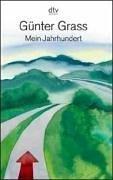
One short piece for each year from 1900 to 1999, each in a different voice. It works as a summary of everything the earlier novels covered, which is why it sits here rather than first.
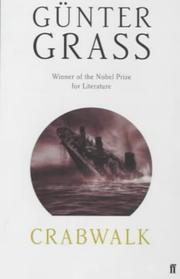
The sinking of the Wilhelm Gustloff and three generations arguing about German victimhood on the internet. The best late novel, and it depends on your already trusting his motives.
The completist tail: the memoir
BeginnerRead Grass's own account of his war, and be able to weigh the disclosure against the fifty years of work that preceded it.
▸ Study plan for this stage
Pace: Three to four weeks. Peeling the Onion is around 400 pages and reads quickly — Grass is a natural storyteller about his own life. Do not read it before the novels; almost all of its force comes from what it recontextualises.
- The fact, stated plainly: in Peeling the Onion, published in 2006, Grass disclosed that he had served in the Waffen-SS as a seventeen-year-old in the final months of the war. He had been drafted in late 1944, had previously described his war service only as a Flakhelfer and a soldier, and had let si
- Why it mattered so much. Grass had spent his entire public career as the loudest voice telling Germany to confront its past honestly, including publicly criticising others for evasions of exactly this kind. The disclosure did not change the facts of his war — he saw little combat and committed no kn
- The reaction split. Some, including Lech Walesa, initially called for him to give up his honorary Gdansk citizenship; others argued that a seventeen-year-old conscript in 1944 had no meaningful choice, and that the confession, however late, was the point of the book. Both responses are on the record
- The onion of the title is the book's method and its defence: memory peeled layer by layer, each one dissolving as you reach it. Whether that is a serious epistemology of memory or an elegant way of not being pinned down is the central question the memoir raises
- The memoir also covers the hunger years, the stonemason apprenticeship, art school, and the writing of The Tin Drum. It is a genuinely good book about becoming an artist, quite apart from the disclosure
- Reading order matters more here than anywhere in this path. Read this last and the disclosure lands as the final chapter of the work; read it first and everything before it arrives pre-judged
- Grass won the Nobel Prize in 1999, seven years before the disclosure. The Swedish Academy did not withdraw it, and the question of whether the work stands independently of the man is one this book forces rather than settles
- What does Peeling the Onion say about why he stayed silent, and do you find the account sufficient?
- Does the disclosure change how you read the trilogy? Name a specific passage that reads differently now
- Is the onion metaphor an honest account of how memory works, or a device that protects the author? Argue both
- Does a seventeen-year-old's conscription in late 1944 bear on his authority to lecture his country for fifty years? Separate the moral question from the question of standing
- Having read the novels first, what did the silence cost the work — and what, if anything, did it produce?
- Before you start, write down what you expect the confession to change. Compare it with what you actually think afterwards
- Read two contemporary responses from 2006 — one condemning, one defending — after finishing the book, not before
- Reread the last twenty pages of Crabwalk after the memoir. The novel about what a family will not say about itself becomes a different book
- Write a paragraph answering the question the path has been building toward: does the work stand? There is no consensus answer, and having your own is the point of reading in this order
Next up: This closes the path: Danzig, the Federal Republic, the century and the confession, in the order that lets each one judge the last.
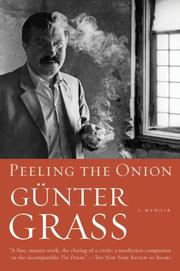
The memoir in which the country's leading moral conscience revealed he had served in the Waffen-SS at seventeen. It only carries its full weight once you have read the novels it recontextualises.
Discussion
Keep reading
Paths that share books, cover the same subject, or open a related topic.