Halldor Laxness Reading Order: Where to Start with Iceland's Nobel Laureate
Independent People is the famous one, and five hundred pages of Icelandic sheep farming is a hard first move even though the book is a masterpiece. This path starts with the short, funny late novel, so that Laxness's particular deadpan is familiar before the big books ask anything of you.
Start here
BeginnerBegin with the short comic novel, which is the cheapest way to meet the voice.
▸ Study plan for this stage
Pace: Two weeks for both. Under the Glacier is 256 pages and very funny — three or four sittings. The Fish Can Sing carries no page count on our record but is a mid-length novel of comparable size and moves much more slowly; give it a week and read it in the evenings, since almost nothing happens quickly
- Under the Glacier sends a young emissary from the Bishop of Iceland to investigate a parish under Snæfellsjökull where the church is boarded up, the pastor shoes horses instead of holding services, and there may be a body in the glacier.
- The emissary is instructed to record and not to interpret, so much of the novel is transcript. The deadpan is structural: the narrator is forbidden to react, and the reader has to do the reacting.
- Nobody in the parish will answer a question directly. The comedy comes from the gap between an official inquiry and a community that has quietly stopped participating in official reality.
- Susan Sontag admired it enormously and called it one of the strangest novels of its century. It is the cheapest possible way to meet Laxness's particular tone before committing to the long books.
- The Fish Can Sing is the warmest thing he wrote — a boy raised by an elderly couple in a turf-roofed house on the edge of Reykjavik, and a famous singer who may not be able to sing.
- Both books are about a false or absent authority: a pastor who has stopped pastoring, a celebrated artist who may be a fraud. That suspicion of official greatness runs through everything else in this path.
- What is Embi actually instructed to do, and how quickly does the assignment become impossible?
- How does the transcript form change the comedy? Try to imagine a scene rewritten with a narrator who comments.
- Is Pastor Jón a heretic, a saint, or simply someone who has stopped bothering? Does the novel decide?
- In The Fish Can Sing, what does Brekkukot represent, and what does the novel think has been lost when it goes?
- Garðar Hólm is celebrated abroad and never quite sings at home. What is Laxness saying about Icelandic fame?
- Read the first thirty pages of Under the Glacier aloud. The deadpan lives in the sentence rhythm and it is much funnier out loud than on the page.
- Keep a note of every question the emissary asks that receives no answer. The tally is the novel's structure.
- Read The Fish Can Sing second and note how differently Laxness writes an old man he admires versus an official he does not. The same authorial voice is doing both.
- Write down one sentence describing the Laxness tone as you have now met it. You will test that sentence against Independent People in the next stage, and it should survive.
Next up: The voice is now familiar, which is the whole reason for this stage: the next book is five hundred pages of it applied to something merciless.

A bishop's emissary is sent to investigate a parish where the church is boarded up and the pastor may have put a body in a glacier. Under two hundred pages and very funny. Susan Sontag admired it enormously.
A boy raised by an elderly couple in a turf-roofed house in Reykjavik. Gentle, and the warmest thing he wrote.
The big one
IntermediateNow the novel he won the Nobel for.
▸ Study plan for this stage
Pace: Four to five weeks. Independent People is 470 pages and dense — about 20 pages a day. The first hundred pages of sheep farming and land law are the hardest stretch in the path; push through them, because the novel only becomes a tragedy once you understand what Bjartur has bought and what it cost.
- Bjartur of Summerhouses has bought his own croft after eighteen years working for another man, and he will not be beholden to anyone for anything. That principle destroys his wives, his children and finally himself.
- The novel is a sustained argument that stubbornness can be a moral catastrophe rather than a virtue, and it refuses to let Bjartur be simply admirable or simply monstrous.
- Ásta Sóllilja is the emotional centre and the person the independence is practised on. What happens to her is the measure of the cost.
- The sheep are not background. The economics of a smallholding — debt, wool prices, the co-operative, the war boom and the crash — are the plot, and Laxness expects you to follow them.
- The old poetry and the Kólumkilli legend run under the book as a competing account of what is happening. Iceland's literary past is a live presence rather than a decoration.
- The Nobel came in 1955 and this is the novel most associated with it. It is genuinely bleak, and knowing that in advance makes the rare warmth in it register properly.
- What exactly does Bjartur mean by independence, and at what point does his definition become indefensible?
- How does Laxness keep him sympathetic while showing what he does to his family?
- Track the money: how do the war years and the crash change the croft's position, and does Bjartur ever understand what happened to him?
- What is Ásta Sóllilja's function in the novel's argument, and does that use of her feel just?
- What does the old poetry supply that the narrative cannot say directly?
- Keep a one-page ledger of Bjartur's finances — land, sheep, debt, prices — updated every fifty pages. The tragedy is economic and the ledger makes it legible in a way that reading alone does not.
- Mark every moment Bjartur is offered help and refuses. Count them at the end and note who paid for each refusal.
- Read the passages of verse and old story rather than skimming to the next scene. They are short and they are the novel's second voice.
- When you finish, return to the sentence you wrote about the Laxness tone after Under the Glacier. Decide whether the deadpan you found funny there is the same instrument being used here.
Next up: You have the modern croft and its ruin; the historical novels move the same argument about Iceland back two and three centuries.
Bjartur of Summerhouses will not be beholden to anyone, and it destroys everyone around him. It is a great novel about stubbornness as a moral catastrophe, and it is genuinely bleak.
The historical novels
IntermediateMove to the books about Iceland under Danish rule.
▸ Study plan for this stage
Pace: Eight to ten weeks, and there is no way to hurry this stage. Iceland's Bell is 448 pages in three linked parts — three weeks. World Light is 624 pages, the longest book in the path, and originally published as four separate novels; five weeks at 20 pages a day, and treating each of its four parts as
- Iceland's Bell is set in seventeenth-century Iceland under Danish rule and opens with the removal of an old bell. A poor farmer, Jón Hreggviðsson, is condemned and spends the book in and out of custody across two countries.
- It is his most directly political historical novel: colonial administration, a legal system that is not for Icelanders, and the collecting of the old manuscripts as an act of national salvage and of removal at once.
- The manuscript collector in the novel is drawn from Árni Magnússon, who really did gather the Icelandic manuscripts and take them to Copenhagen. The ambiguity of that act — rescue or theft — is the book's hardest question.
- World Light follows Ólafur Kárason, a pauper poet who believes absolutely in beauty while everything around him is squalid, cruel and cold. It is based on a real folk poet's life.
- It is the book his admirers most often argue is his best, and it is also the one most readers stall on. The pauper poet is not ennobled by his belief and the novel does not rescue him.
- Both novels ask what a small, poor country's culture is for and who owns it — a question the modern novels only reach obliquely.
- What does the bell of the title stand for, and how does Laxness avoid making that symbolism heavy-handed?
- Is Arnas Arnaeus saving the manuscripts or taking them? Where does the novel put its weight?
- Jón Hreggviðsson is not admirable. Why has Laxness made his suffering protagonist coarse rather than noble?
- In World Light, is Ólafur's faith in beauty a redemption or a delusion? Cite the passage that decided you.
- Both books are about culture surviving poverty. Do they give the same answer?
- Read Iceland's Bell first and keep a note of who has legal authority in each scene and where that authority comes from. The novel is about jurisdiction, and it is easy to lose.
- Treat World Light's four parts as four books with a gap between each. Reading it as one continuous novel is the commonest reason people abandon it.
- Copy out three of Ólafur's own verses or statements about beauty as you go. At the end, read them in sequence against what has happened to him — that juxtaposition is the novel.
- Set Bjartur beside Jón Hreggviðsson: two poor Icelandic men, three centuries apart, both refusing to be governed. Write a paragraph on what Laxness thinks that continuity means.
Next up: Three centuries of Icelandic poverty and stubbornness are behind you; the last book is what happened when he turned the same eye on the Iceland of his own moment.
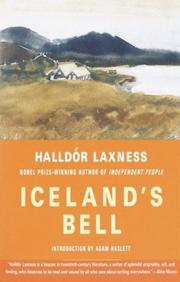
Seventeenth-century Iceland, a stolen bell and a man on trial. His most directly political historical novel.
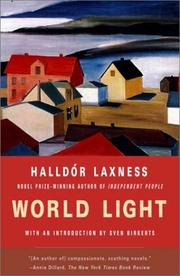
A pauper poet who believes in beauty while everything around him is squalid. The longest book here and the one his admirers argue is the best.
The satire
IntermediateFinish with the short postwar novel that got him into trouble at home.
▸ Study plan for this stage
Pace: One week. The Atom Station is 214 pages, short and angry, and reads in three or four sittings. It is the right book to end on precisely because it is fast — everything it satirises you now recognise.
- A young woman from the north comes to work as a maid in a Reykjavik politician's house at the moment the Americans want an airbase in Iceland. The whole country's postwar position is compressed into one household.
- It was published in 1948, immediately after the actual agreement over the Keflavík base, and it made him enemies in Iceland for years. This is a novel written into a live political fight.
- Ugla is an outsider inside the governing class, which gives Laxness the observational position he uses everywhere — the servant, the emissary, the pauper — at its sharpest.
- The satire is broader and cruder than the historical novels, and it is fair to say so. Anger costs him some of the deadpan control.
- The old rural Iceland of Independent People and the new republic negotiating with a superpower are set directly against each other here, so the book works as the path's summary.
- His politics are explicit in this novel in a way they are not elsewhere. Reading it last means you can see how much of it was already implied in the earlier books.
- What does the airbase represent to each faction in the novel, and does Laxness give any of them a fair hearing?
- How does Ugla's position as a servant let Laxness show the governing class from inside?
- Where does the satire become caricature, and does the book survive it?
- How does the north of the novel differ from the Reykjavik of it, and is that opposition honest?
- Having read all six books, what is Laxness's account of Iceland — what does he think the country is and what threatens it?
- Read The Atom Station immediately after finishing World Light. The move from a nineteenth-century pauper poet to a 1948 political salon in one sitting is the whole twentieth century of this path in a single jump.
- List the political positions represented in the politician's house and note which ones Laxness allows to be intelligent. The distribution is the honest measure of the satire.
- Set Ugla beside Embi in Under the Glacier — two young people sent into a world they must observe and not judge. The device is the same and the tone is entirely different; name what changed.
- Write a final paragraph answering the question the path has been circling: is Laxness a comic novelist who wrote tragedies, or a tragic novelist who could not stop being funny? You now have six books of evidence.
Next up: This closes the path: the short comic novels, the Nobel novel, the historical work his admirers argue for, and the political satire that made him unpopular at home.

Reykjavik at the moment the Americans want an airbase. Sharp, angry, and it made him enemies in Iceland for years.
Discussion
Keep reading
Paths that share books, cover the same subject, or open a related topic.