Han Kang Reading Order: Where to Start
Han Kang writes about bodies that refuse — refuse to eat, refuse to forget, refuse to be counted as debris. Her English-translated work is small enough to read in full, so this path is short by design: start with the novel that broke her internationally, then the two books that confront South Korean state massacres directly, then the quieter, more formally fragile late work that the Nobel citation singled out.
Start Here
BeginnerMeet Han Kang's central image — refusal enacted through the body — in the book that made her name in English.
▸ Study plan for this stage
Pace: 1 week for 168 pages, and read it in three sittings — one per section, because the novel is built as three novellas and the breaks between them are where the effect lands. Do not binge it in an evening; the gap between part one and part two is doing work.
- Yeong-hye never narrates. The three parts belong to her husband, her brother-in-law and her sister, and her refusal reaches you only through people who resent it
- The dream that starts everything is reported in italics and never explained — Han Kang withholds the cause on purpose
- Refusal is enacted through the body rather than argued: not eating, not wearing a bra, wanting to be a tree
- The violence in the book is almost entirely domestic and framed as concern — the father, the husband, the hospital all act for her own good
- The English is Deborah Smith's, and it is the most argued-over literary translation of the last decade: critics (notably Charse Yun) showed it heightens and elaborates the Korean's flatter register. It won the International Booker in 2016 and Han Kang has defended it. Read it knowing the English is
- The three parts were published separately in Korean before being assembled, which is why each has its own genre — marital comedy, art-film erotics, hospital elegy
- Whose interests does each of the three narrators have in telling you about Yeong-hye, and where does each one lie to himself?
- The middle section shifts into the brother-in-law's video art. What does that section want you to feel that the other two do not?
- At what point does the family's care become the book's actual violence — name the scene
- In-hye is the only narrator who has done nothing to Yeong-hye. Why does the novel give her the last word, and what does she conclude?
- What does the tree image mean by the end, and does the novel treat it as delusion, protest, or something it refuses to categorise?
- Mark every sentence that gives you Yeong-hye's interiority directly. There are very few — the count is the point
- Write down, after each section, what you think has physically happened to her body. You will revise this twice
- Read one paragraph aloud, then look up a page of the translation debate. Decide for yourself whether the English feels heightened, before Human Acts gives you a second sample of the same translator
- Note the food in the book — what is cooked, what is served, what is forced. It is the book's whole vocabulary of coercion
Next up: Now that you can see her refusal as a response to a violence that has no name in this book, the next two novels give that violence a date and a place.

A woman stops eating meat after a dream and is progressively destroyed by her husband, her sister and her brother-in-law for it. The universal entry point, and the three-part structure teaches you how she withholds a narrator's interiority.
The Historical Novels
IntermediateFollow her from private refusal to the two state atrocities that her most serious work is built on.
▸ Study plan for this stage
Pace: 5–6 weeks for about 490 pages, which is slow for the length and deliberately so. Human Acts (215pp) in 2 weeks, one chapter a sitting; then leave a real gap — a week of reading something else — before We Do Not Part (272pp) over 3 weeks. Read them back to back only if you are prepared for it.
- Human Acts is about the Gwangju uprising of May 1980, when the South Korean military killed civilians in the city; the official death toll and the credible estimates have never agreed, and the book is partly about that gap
- Its structure is seven voices across three decades — a boy, a soul, an editor, a prisoner, a factory worker, a mother, and finally Han Kang herself in an epilogue that explains her family's connection to the boy
- We Do Not Part concerns the Jeju massacre that began in 1948, in which tens of thousands were killed and which was legally unspeakable in South Korea for half a century
- That novel arrives at its history sideways — a snowstorm, a friend's bird, a hospital, and a house — so the atrocity is reached through domestic errand rather than testimony
- Both books treat the body after death as a subject: what happens to corpses, who counts them, who is allowed to bury them
- The chronological reading order is the reverse of the historical order — Gwangju 1980 first, Jeju 1948 second — because Human Acts teaches the grammar the later book assumes
- Han Kang's own family left Gwangju months before the uprising, and Human Acts says so; this is not a novel pretending to be invented
- Human Acts gives one section to a soul separated from its body. What can that narrator report that none of the living ones can?
- Why does Han Kang break the fictional frame in the epilogue, and does that strengthen or weaken what came before it?
- In We Do Not Part, what is the function of the bird, and how long does the novel take to admit what the trip is really about?
- Both books are structured around an absence of official record. What are the concrete objects each one substitutes for the missing archive?
- Compare the prose of the two: which sentences are doing the historical work, and which are refusing to?
- Having read both, what does The Vegetarian look like in retrospect — is it a private book or a political one?
- Before starting Human Acts, spend fifteen minutes on a factual account of Gwangju 1980. The novel does not brief you and reads very differently once you know what happened
- Do the same for the Jeju events of 1948 before We Do Not Part — the novel assumes a Korean reader's knowledge that an English-language reader will not have
- Keep a list of the seven Human Acts narrators and how each one is connected to Dong-ho. The connections are not announced
- In We Do Not Part, mark the point where the snow stops being weather and becomes something else
- Write one paragraph on why she wrote Gwangju first and Jeju second, given that the second event is older
Next up: You have now read the loudest books she has written, which is the only way the near-silence of the last two registers as a choice rather than a limitation.
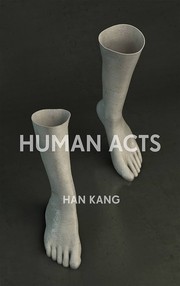
The 1980 Gwangju uprising told through a boy sorting corpses and the people who survive him by decades. Read second: it is the book where the violence of The Vegetarian is revealed to have a historical address.
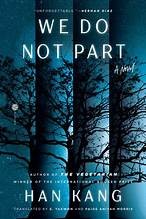
A woman travels to Jeju in a snowstorm to feed a friend's bird and is drawn into the 1948 massacre buried under the island. The late companion to Human Acts and the novel the Nobel committee leaned on hardest — take it after Gwangju, since it assumes that grammar of remembering.
The Quiet Books
IntermediateRead the short, fragmentary later work where the sentences thin out and the form itself becomes the subject.
▸ Study plan for this stage
Pace: 3 weeks for roughly 340 pages. The White Book (161pp) in a few sittings — it is 65 short pieces, and a dozen a night is right. Greek Lessons in 2 weeks, unhurried. Both are short enough to reread, and The White Book in particular improves enormously the second time.
- The White Book is a sequence of short prose pieces organised around white things — swaddling bands, salt, snow, a shroud — written around the sister who died two hours after being born
- It is barely a novel and does not want to be one; the white space on the page is part of the form
- The unborn sister is the book's addressee, so the second person is not a stylistic flourish but the entire premise
- Greek Lessons pairs a woman who has lost her speech with a man who is going blind, and puts them in a class studying ancient Greek — a language with no living speakers
- Its recurring grammatical idea is the Greek middle voice, where the subject acts on itself; that is the book's argument about the body in miniature
- Together these two show what Han Kang does when nothing is being done to anyone: the violence drops out and the attention to bodies remains
- The English of Greek Lessons is a co-translation, which is worth noticing if you have been tracking the register question since The Vegetarian
- What holds The White Book together, given that it has no plot — and would you call it a novel, an essay or a poem sequence?
- The narrator says she would not exist if her sister had lived. How does the book use that fact without stating it as a theme?
- In Greek Lessons, why is the lost language ancient Greek specifically rather than any dead language?
- The two characters in Greek Lessons never fully share a sense. What does the novel gain by keeping them from meeting on equal terms?
- Having now read all five, what is consistent across Han Kang's work — a subject, an image, or a technique?
- Read The White Book once fast and once slowly, a week apart, and note which pieces changed
- Pick five of the white objects and write down what each is standing in for. Some of them refuse to stand in for anything, and finding those is the exercise
- In Greek Lessons, mark the grammar lessons and read them as a continuous text on their own. They are a second book running under the first
- Assemble the five books in publication order rather than reading order and write two sentences on what changed between 2007 and 2025
- Read the Nobel citation for 2024 and check it against what you actually found — she is described in terms of historical trauma and the fragility of the body, and you are now in a position to say whether that is the right emphasis
Next up: That is the whole English-language Han Kang — five books, deliberately not more — and if you want to keep going the next step is her Korean-language work as it is translated, or Human Acts a second time now that you know where she ends up.

A sequence of prose fragments about white things, written around the sister who died two hours after birth. Barely a novel; read it once the earlier books have made her silences legible.

A woman who has lost her speech studies ancient Greek with a man who is losing his sight. The gentlest of her books and a fitting close: language and body failing at the same time, which is her subject stated plainly.
Discussion
Keep reading
Paths that share books, cover the same subject, or open a related topic.