Best Books on Systems Engineering, in Reading Order
Systems engineering is easy to reduce to a process diagram and a stack of documents, which is why this path starts with systems thinking and ends with failure, putting the standard process material in between rather than at either end. The middle stages cover the discipline as taught and as practised on large programmes — requirements, the V-model, life-cycle analysis, verification — alongside the two handbooks that function as its working standards. The last stage is the argument the field has with itself about whether complex systems can be made safe by better process at all, and it is the part most practitioners have never read.
Systems thinking first
BeginnerReason about stocks, flows, feedback, delays and leverage points, and recognize the failure modes that recur in every complex system regardless of domain.
▸ Study plan for this stage
Pace: 2–3 weeks. Thinking in Systems is 240 pages and The Systems Bible 315, and both read faster than their page counts suggest. Meadows deserves a fortnight with a pencil; Gall should be read quickly, in one or two sittings, treating the jokes as compressed field data.
- Stocks, flows and the fact that a stock can only change through its flows — the distinction most intuitive reasoning about systems gets wrong
- Balancing and reinforcing feedback loops, and identifying which loop currently dominates a system's behaviour
- Delays, and why a delay in a balancing loop produces oscillation rather than smooth convergence
- Meadows's twelve leverage points in increasing order of effectiveness, and her central observation that people intervene at the low-leverage end (parameters) and push in the wrong direction at the high-leverage end
- System archetypes: fixes that fail, shifting the burden, tragedy of the commons, escalation, success to the successful
- Bounded rationality — actors behaving sensibly on the information available to them locally while producing collective outcomes nobody wants
- Gall's central law: a complex system that works has invariably evolved from a simple system that worked, and a complex system designed from scratch does not work and cannot be patched into working
- Gall's corollaries that working engineers actually quote: the system always kicks back, systems tend to oppose their own proper function, and the system itself becomes the problem it was built to solve
- Draw the stock-and-flow structure of a system you know well and identify at least one balancing and one reinforcing loop. Which currently dominates?
- Why do delays cause oscillation? Give a concrete example from Meadows and one from your own experience.
- Rank Meadows's twelve leverage points from memory, then check. Which ones do organisations actually reach for, and why do the effective ones get used least?
- Explain 'shifting the burden' and give an example from an engineering programme rather than from Meadows's own domain.
- Gall claims a designed complex system cannot be made to work. Is that literally true, or a warning about a strong tendency? What would count as a counter-example?
- Take one system you work on and draw its causal loop diagram on a single page: variables, arrows, polarities, delays, and the loops labelled R or B. Then write 300 words identifying the dominant loop and where you would intervene.
- Implement a simple stock-and-flow simulation in Python — a thermostat with a delay, or Meadows's bathtub — and vary the delay length. Plot the response and demonstrate the onset of oscillation numerically rather than taking it on faith.
- Find three real project failures in your own experience or in the public record and classify each against a Meadows archetype. Write a paragraph on each explaining the fit and where it breaks down.
- Take five of Gall's laws and, for each, write down a specific instance you have seen. If you cannot find one for a law, note that — it is a useful signal about the domains he generalised from.
Next up: You now have the vocabulary the process literature assumes but never teaches, which makes the standard textbooks readable as a method rather than as bureaucracy.
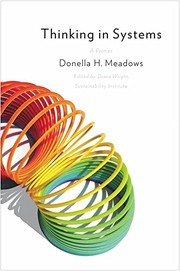
The clearest short introduction to systems thinking in print: feedback loops, delays, bounded rationality, and why intervening at the obvious place usually makes things worse. Start here — it supplies the conceptual vocabulary the process literature assumes but rarely teaches.
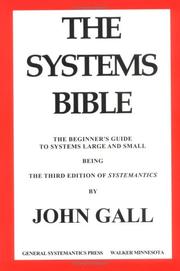
Gall's Systemantics is a comic catalogue of how large systems misbehave, and its central observation — that a complex system that works evolved from a simple system that worked — is quoted by working engineers more often than most textbooks. Read it second, quickly, and treat the jokes as data.
The discipline as taught
IntermediateRun the standard process: stakeholder needs into requirements, functional and physical architecture, interface definition, integration, verification and validation across a life cycle.
▸ Study plan for this stage
Pace: 4–6 months, and the core of the path. Kossiakoff's Systems Engineering Principles and Practice is 560 pages and should be the spine — a chapter a week with its exercises. Blanchard and Fabrycky is 803 pages and heavier on the analytical side; read it selectively for the quantitative chapters. The IN
- The life cycle: concept, development, production, utilisation, support and retirement, and the fact that decisions in the first phase commit most of the cost incurred in the last
- Stakeholder needs to system requirements: elicitation, the operational concept, and the translation from what someone wants to what can be verified
- Requirement quality: unambiguous, verifiable, necessary, feasible, singular, and traceable — and the ability to reject a requirement that fails any of these
- Functional analysis and allocation: what the system must do, decomposed and assigned to physical elements, with the functional and physical architectures kept deliberately separate
- Interfaces as the systems engineer's actual product — N² diagrams, interface control documents, and the observation that most integration failures are interface failures
- The V-model, and the correspondence between each decomposition level on the left and its verification activity on the right
- Verification versus validation: built the thing right, versus built the right thing, with distinct evidence for each
- Blanchard and Fabrycky's quantitative core — life-cycle cost analysis, reliability (MTBF, availability), maintainability (MTTR), and supportability as design parameters rather than afterthoughts
- Take a badly written requirement and rewrite it so it satisfies every quality criterion. What did you have to find out to do it, and who would you have had to ask?
- What is the difference between a functional architecture and a physical architecture, and what goes wrong when a team collapses the two?
- Explain the V-model in terms of the correspondence between levels. At what point in a programme is each verification activity actually planned?
- Give an example of something that passes verification and fails validation. Whose fault is that, structurally?
- How is availability computed from MTBF and MTTR, and what design decisions move each term?
- Kossiakoff and the INCOSE handbook describe overlapping process sets. Where do they differ, and does the difference matter in practice?
- Write a full requirements specification for a genuinely small system — a home irrigation controller, a rainwater harvesting system, a small drone payload — with at least thirty requirements, each verifiable and each with a stated verification method. Then have a critical read-through and reject every requirement that fails a quality criterion.
- Build the operational concept for the same system: the operational scenarios, the users, the environment, and the states and modes. Two to four pages.
- Do a functional decomposition of that system to three levels, then produce the allocation matrix mapping functions to physical elements, then draw the N² diagram of its interfaces. This trio is the actual work of systems engineering.
- Run a trade study for one design decision with four alternatives and at least five criteria, including a sensitivity analysis on the weights. Then write 300 words on whether the answer survives reasonable variation in the weights — if it does not, say what you would do.
- Compute the life-cycle cost of your system over ten years using Blanchard and Fabrycky's method: acquisition, operation, maintenance and disposal, discounted. Then identify which early design decision has the largest effect on the total.
- Build a reliability block diagram for the system and compute availability from assumed MTBF and MTTR values. Then find the single component whose improvement buys the most availability per unit cost.
Next up: The standard process assumes an agreed objective and a decomposable problem; the next stage is what to do when neither holds.

The best single textbook in the field, from the Johns Hopkins Applied Physics Laboratory: the full life cycle with concrete examples from real programmes, and unusually clear on what a systems engineer does day to day. This is the spine of the path.
Blanchard and Fabrycky is the other standard text and the stronger of the two on the analytical side — life-cycle cost, reliability, maintainability, supportability and trade studies. Read it after Kossiakoff for the quantitative methods he treats more briefly.

The professional body's own definition of the discipline, aligned to the ISO 15288 life-cycle processes and the basis of the certification exams. Use it as a reference rather than reading it through; its value is that it tells you what the field agrees on.
Architecting and large programmes
IntermediateHandle problems too ill-defined for the standard process — architecture, competing stakeholder framings and heuristics where no analysis exists.
▸ Study plan for this stage
Pace: 4–5 months. The Art of Systems Architecting is 472 pages, Checkland's Systems Thinking, Systems Practice 416, and the NASA Systems Engineering Handbook is free and long — download the current revision from NASA and use it as a reference against your own work rather than reading it front to back. ⚠ C
- Architecting as a distinct activity from engineering: performed earliest, when requirements are least certain, and governed by heuristics rather than by procedure
- Maier and Rechtin's heuristics as accumulated judgement — 'don't assume the original statement of the problem is necessarily the best or even the right one', 'simplify, simplify, simplify' — and how to use a heuristic without turning it into a rule
- Maier's criteria for a system of systems — operational and managerial independence of the elements, evolutionary development, emergent behaviour, geographic distribution — and why that class breaks the standard process
- The NASA handbook's technical management processes: technical reviews as decision gates, margin management, risk management, and requirements traceability at programme scale
- Margins and reserves as an explicit engineering quantity — mass, power, schedule and cost — and the discipline of who is allowed to spend them
- Checkland's hard/soft distinction: the hard-systems process assumes an agreed objective, and most real problem situations do not have one
- Soft systems methodology in practice: rich pictures, root definitions, the CATWOE mnemonic, conceptual models, and comparison with the real world to generate feasible and desirable change
- The recurring failure this stage names: applying a hard-systems process to a situation where the disagreement is about purpose, and producing an impeccably engineered solution to the wrong problem
- What does Maier mean by saying architecting is heuristic rather than procedural? Give a case where following the procedure correctly would produce the wrong architecture.
- Apply Maier's four system-of-systems criteria to something you know — air traffic management, an emergency response network, a large IT estate. Does it qualify, and what follows if it does?
- What does a NASA technical review actually decide, and what evidence has to exist for it to close? Compare with a review you have sat in.
- How does NASA manage mass and power margin over a programme's life? Why is the depletion curve, rather than the current value, the thing to watch?
- What is a root definition in soft systems methodology, and what does CATWOE force you to make explicit?
- Give a problem situation where Checkland's approach is right and Kossiakoff's is wrong, and explain what distinguishes it.
- Take the system you specified in the previous stage and write its architecture description in four views, then list the ten heuristics from Maier that most applied and what each changed.
- Draw a rich picture — literally, by hand, with people and arrows and speech bubbles — of a messy situation you are actually in. Then write root definitions from three different stakeholders' perspectives using CATWOE, and note where they are incompatible.
- Build a conceptual model from one of those root definitions and compare it with the real situation, producing a list of changes that are both systemically desirable and culturally feasible. That comparison step is the whole method.
- Take the NASA handbook's entrance and exit criteria for one technical review and write a self-assessment against them for a project you have worked on. Be specific about which artefacts did not exist.
- Set up a margin tracking spreadsheet for a design you are working on: allocated, current best estimate, and margin, by subsystem, with a monthly history. Then write 200 words on what the trend would have to look like for you to raise an alarm.
- Write 500 words applying Maier's heuristics to a public programme failure you have read about, identifying which heuristics were violated and whether following them would plausibly have helped.
Next up: The last stage asks the question the whole discipline exists to answer — whether better process can make complex systems safe — and gives you both sides of it.

Rechtin and Maier's argument is that architecting is a distinct activity from engineering, governed by heuristics rather than procedure, and applied earliest when requirements are least certain. The single most useful book here for anyone whose job is to decide what to build rather than how.

The most detailed public account of systems engineering as practised on programmes where failure is unaffordable — technical reviews, margins, risk management, verification planning. Free, specific, and the best available window into how a large organization really runs this process.
Checkland's soft systems methodology is the corrective to everything above: it addresses problems where stakeholders disagree about what the system is for, which is most of them. Placed here because it is only persuasive once you have seen the hard-systems process assume a settled objective.
Why complex systems fail
IntermediateTake a position on whether accidents in tightly coupled systems are preventable by better engineering, and understand the modern systems-theoretic approach to safety.
▸ Study plan for this stage
Pace: 3–4 months. Normal Accidents is 400 pages, Engineering a Safer World 560, and The Mythical Man-Month 195. Read Perrow and Leveson consecutively; Leveson is written as a direct reply and the sequence is the point. ⚠ Dating: Perrow's 1984 case material is nuclear, petrochemical, aviation and marine, a
- Perrow's two axes: interactive complexity and tight coupling, and the claim that a system high on both will have serious accidents regardless of how well it is managed
- The normal accident as an emergent property of the system's structure rather than a failure of any component or operator
- Perrow's policy conclusion, which is the part most often ignored: some systems should not be built, because no achievable level of operational excellence makes them acceptably safe
- The high-reliability organisation counter-argument — that carriers, air traffic control and nuclear navies have operated for decades without catastrophe — and what HRO researchers say produces that record
- Leveson's STAMP: accidents as failures of control rather than chains of component failures, with safety treated as an emergent property enforced by constraints
- STPA as a usable hazard analysis method: losses, hazards, safety constraints, the control structure, unsafe control actions, and causal scenarios — and how it differs from FMEA and fault trees
- Why chain-of-events models miss software and management failures: software does not fail randomly, and neither does a decision to defer maintenance
- Brooks on the human system: the man-month as a fallacy, adding people to a late project making it later, conceptual integrity as the most important attribute of a design, and the second-system effect
- Place three systems you know on Perrow's two axes and justify each placement. What would it take to move one of them?
- State the HRO objection to Perrow as strongly as you can. Which specific evidence does it rest on, and what does Perrow say about those cases?
- How does STAMP's account of an accident differ from a fault-tree account of the same accident? Work a real case both ways.
- What is an unsafe control action, and what are the four ways Leveson says a control action can be unsafe?
- Leveson says she accepts Perrow's diagnosis and rejects his fatalism. What exactly does she accept, and what is her ground for rejecting the conclusion?
- Why does adding people to a late project make it later? Give the mechanism, in terms of communication paths, rather than the slogan.
- Run a full STPA on the system you specified in stage two: define the losses, the hazards and the safety constraints; draw the hierarchical control structure; enumerate the unsafe control actions for each control action; and develop causal scenarios for the three you judge most serious. This is the single most valuable exercise on the path.
- Take one well-documented accident report — Challenger, Texas City, Air France 447, Boeing 737 MAX, Grenfell — and analyse it twice: once as a chain of events, once with STAMP. Write 800 words on what the second analysis surfaced that the first did not.
- Write a 600-word position paper on whether Perrow or the HRO researchers are right about a specific industry you know, stating what evidence would change your mind.
- Count the communication paths in a team of n people, plot the growth, and use it to compute how much of a new engineer's first three months is absorbed by onboarding and coordination. Then write 200 words on when adding a person is nonetheless right.
- Write down the three most recent times your organisation rediscovered something in Brooks. For each, identify what mechanism failed to retain it — documentation, staff turnover, or incentive.
Next up: This is the end of the path; the natural continuations are model-based systems engineering with SysML, resilience engineering and Hollnagel's Safety-II, or Vaughan's The Challenger Launch Decision on the organisational side of failure.
Perrow's thesis is that in systems with high interactive complexity and tight coupling, serious accidents are inevitable rather than exceptional. It is genuinely contested — high-reliability-organization researchers argue that some such systems do operate safely for decades — and reading it as an open argument rather than a verdict is the point.

The strongest reply to Perrow and the most important recent book on systems safety: Leveson's STAMP model treats accidents as control failures rather than component failures, and gives a usable hazard analysis method. Read directly after Perrow — it accepts his diagnosis and rejects his fatalism.

Ends the path on the human system. Brooks wrote it about software in 1975, but conceptual integrity, the second-system effect and the futility of adding people to a late project are systems engineering results, and every large programme keeps rediscovering them.
Discussion
Keep reading
Paths that share books, cover the same subject, or open a related topic.