Systems engineering is usually encountered as process: requirements, interfaces, verification, a V-model on a slide. Learned that way it looks like bureaucracy, and engineers who meet it that way spend years treating it as an obstacle. The process exists because complex systems fail in ways that no component review catches, and that is the thing to understand first.
So the order here runs backwards from most curricula. The mindset books come first, the standard process texts second, architecture third, and the failure literature last — not as an appendix, but as the payoff. That last section also contains a genuine disagreement between two serious authors, and this path deliberately leaves it unresolved.
The mindset
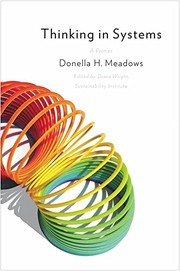
Thinking in systems by Donella H. Meadows is the best short introduction to stocks, flows, feedback, delays and leverage points, written by an author who modelled world systems for a living and could still explain a bathtub. It is not an engineering text and it changes how you read every engineering text after it.
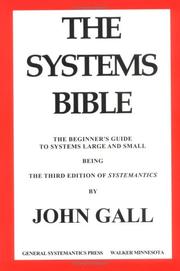
The Systems Bible by John Gall, published earlier as Systemantics, is satire that is also true. Its laws — complex systems that work evolved from simple systems that worked, systems tend to oppose their own function — are the kind of thing practitioners quote after a decade of watching programmes fail. Read it in an afternoon.
The process, done properly
Systems engineering principles and practice by Alexander Kossiakoff, with William Sweet and others, is the standard textbook: lifecycle, requirements, concept development, integration, and the engineering management around them.
Systems engineering and analysis by Benjamin S. Blanchard, written with Wolter Fabrycky, is the alternative and is stronger on the analytical and lifecycle-cost side. One is enough for a first pass.
INCOSE Systems Engineering Handbook is the professional body's own reference and the basis of its certification. It is a handbook, not a course — read Kossiakoff or Blanchard first and use this to see how the discipline formalises itself.
Architecting, which is the harder half
The Art of Systems Architecting by Mark W. Maier, written with Eberhardt Rechtin, is about the part of the job that resists process: making the early structural decisions under genuine uncertainty, with heuristics rather than procedures. It is the most useful book here for anyone who already knows the process and cannot make it produce good designs.
NASA Systems Engineering Handbook shows the discipline at its most demanding, on programmes where integration failures are unrecoverable. Our catalogue credits it to a publisher imprint rather than to the agency, which is a records artefact; it is a NASA institutional document and has long been available free from the agency.
Systems thinking, systems practice by Peter Checkland is the deliberate counterweight. Checkland's soft systems methodology addresses the situations where the problem itself is contested — where stakeholders do not agree on what the system is for — and no amount of requirements discipline resolves that.
Why complex systems fail
Normal Accidents by Charles Perrow argues that in systems with high complexity and tight coupling, catastrophic accidents are not aberrations but expected properties of the design, and that some technologies are therefore not worth having.
Engineering a Safer World by Nancy G. Leveson argues something close to the opposite: that accidents are failures of control structure rather than chains of component failures, and that they are preventable by designing the control structure explicitly. Her STAMP framework is a working method, freely available alongside the book.
These two positions are genuinely opposed and both are held by serious people. Read Perrow first, then Leveson, and notice where each one's argument is strongest.
The Mythical Man-Month by Frederick P. Brooks closes the path on the human side — why adding engineers to a late project makes it later, and why conceptual integrity matters more than throughput. It is fifty years old and it has not stopped being right about the things it was right about.
Related failure-mode reading sits under safety engineering.
Follow the full ordered path here: Systems Engineering Books to Read, in Order.