Become a great project manager
This four-stage curriculum takes a beginner from the core mindset and vocabulary of project management all the way to nuanced, battle-tested practices for estimation, agile critique, and stakeholder trust. Each stage builds on the last: you first internalize how projects succeed and fail, then learn structured planning, then interrogate agile deeply, and finally master the human and communication side that determines whether teams stay healthy and projects ship.
Foundations: How Projects Live and Die
BeginnerUnderstand why projects fail, what a project manager actually does, and develop the mental models needed to think clearly about scope, time, and people.
▸ Study plan for this stage
Pace: 6–8 weeks total: Weeks 1–3 cover "The Deadline" (~25–30 pages/day, reading it as both a novel and a management text — pause after each chapter to extract the lesson behind the story); Weeks 4–7 cover "Making Things Happen" (~20–25 pages/day, slower pace to work through its denser, prescriptive conte
- The anatomy of project failure — DeMarco's novel dramatizes how unrealistic schedules, fear-driven cultures, and poor communication kill projects before a line of code is written or a task is completed
- The manager-as-protector role — both books converge on the idea that a PM's primary job is to shield the team from chaos, bad decisions, and scope creep, not just to track tasks
- Scope, time, and resources as a constrained triangle — Making Things Happen introduces the iron triangle and why you can never optimize all three simultaneously without trade-offs
- The human side of estimation — The Deadline illustrates through story why people give optimistic estimates under pressure, and why a PM must create psychological safety to get honest ones
- Risk as a first-class citizen — DeMarco's characters run explicit risk simulations; Berkun formalizes this into a risk management practice of identifying, ranking, and mitigating threats early
- Specifications and clarity of intent — Berkun dedicates significant attention to how vague requirements are a leading cause of rework, conflict, and schedule collapse
- Decision-making and ownership — Making Things Happen distinguishes between who is consulted, who decides, and who is accountable, a distinction The Deadline dramatizes when characters dodge responsibility
- Leadership without authority — both books show that PMs rarely have direct power over people and must rely on trust, clarity, and influence to move work forward
- According to the lessons embedded in The Deadline, what are the top three conditions that reliably cause a software or complex project to fail, and how does the protagonist Tompkins work to reverse them?
- How does Scott Berkun in Making Things Happen define the difference between a project manager and a project leader, and why does that distinction matter for day-to-day behavior?
- What does the iron triangle (scope/time/resources) actually mean in practice — if a stakeholder demands more features without changing the deadline, what are the only honest options available to a PM?
- Both books treat estimation as a deeply human problem, not a math problem. What psychological and organizational forces cause teams to produce bad estimates, and what concrete techniques do the authors recommend to counter them?
- Berkun argues that writing a good specification is one of the highest-leverage things a PM can do. What makes a specification 'good' according to his framework, and what are the signs of a dangerously vague one?
- After reading both books, how would you describe what a project manager actually does on a typical day — and how does that reality differ from the common misconception that a PM just runs status meetings and updates Gantt charts?
- The Failure Autopsy: Think of a project, event, or group effort from your own life that went wrong (a school project, a move, a work initiative). Using the failure patterns named in The Deadline — schedule pressure, missing risk discussion, unclear roles — write a one-page post-mortem identifying which patterns appeared and what a PM could have done differently.
- Constraint Mapping: Pick any real or hypothetical project (launching a blog, planning a conference, building a feature). Draw the iron triangle and explicitly write down what is fixed, what is flexible, and what the honest trade-offs are if a stakeholder pushes on each corner. Practice saying the trade-off out loud as if to a real stakeholder.
- Estimation Interview: Ask two or three people (friends, colleagues) to estimate how long a familiar task will take (cooking a meal, writing a report). Record their estimates, then have them do the task. Debrief using Berkun's and DeMarco's insights: where did optimism bias appear? What would have produced a more honest estimate?
- One-Page Spec Draft: Choose a small, concrete project and write a mini-specification using Berkun's guidance — define the problem, the success criteria, the explicit out-of-scope items, and the open questions. Then share it with one other person and ask them to identify anything that is still ambiguous.
- Risk Register: For the same small project, build a simple risk register (a table with: risk description, likelihood 1–3, impact 1–3, and one mitigation action). This directly practices the simulation mindset DeMarco dramatizes and the formal risk process Berkun prescribes.
- Reading Journal — Character-to-Concept Log: While reading The Deadline, keep a two-column log: left column names a character's action or decision; right column names the management principle it illustrates (e.g., 'Tompkins refuses to cut the schedule arbitrarily → protecting estimation integrity'). This forces active reading and builds a personal reference you can revisit.
Next up: Mastering why projects fail and what a PM fundamentally does creates the essential mental scaffolding for the next stage, where the focus shifts from understanding the landscape to executing within it — applying planning, estimation, and stakeholder management techniques on real, messier problems.
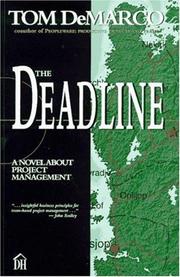
A novel-format primer that teaches core PM concepts — scope, staffing, pressure, and estimation — through story, making it highly accessible for beginners with zero jargon overhead.
A practical, honest guide to what project management looks like in the real world; covers planning, communication, and decision-making in plain language, building vocabulary for every later stage.
Planning & Estimation: The Craft of Scoping Work
BeginnerBuild reliable skills in breaking down work, estimating effort honestly, and creating plans that survive contact with reality without burning out the team.
▸ Study plan for this stage
Pace: 10–12 weeks total, reading roughly 20–25 pages per day: ~3 weeks for Peopleware (focus on team dynamics chapters), ~4 weeks for Software Estimation (the densest, most technical read — slow down here), ~3 weeks for The Mythical Man-Month (shorter but concept-rich; re-read key essays twice).
- The human cost of bad planning — Peopleware's core argument that most project failures are sociological, not technical, and that unrealistic schedules destroy team morale and productivity
- Flow state and the hidden cost of interruptions — DeMarco & Lister's concept of 'quiet hours' and uninterrupted focus time as a prerequisite for accurate estimation
- Cone of Uncertainty — McConnell's model showing how estimate accuracy can only improve as unknowns are resolved, and why early precise estimates are a myth
- Count, Compute, Judge — McConnell's disciplined hierarchy for producing estimates: prefer counting over gut feel, compute from historical data, and use judgment only as a last resort
- Ranges over point estimates — McConnell's insistence on expressing estimates as probability distributions (best/worst/most-likely) rather than single numbers to communicate real uncertainty
- Brooks's Law — 'Adding manpower to a late software project makes it later,' and the partitioning and communication overhead that explains why
- The Mythical Man-Month fallacy — Brooks's dismantling of the assumption that effort and time are interchangeable, and the concept of tasks that cannot be parallelized
- Second-system effect — Brooks's warning that a team's second project is the most dangerous due to overconfidence and scope creep born from lessons (mis)learned on the first
- According to Peopleware, what environmental and managerial conditions most reliably undermine a team's ability to produce accurate estimates and deliver on them — and what does DeMarco suggest instead?
- What is the Cone of Uncertainty, and at what specific project milestones does McConnell say estimate accuracy meaningfully improves? What are the practical implications for when you should commit to a schedule?
- McConnell distinguishes between an 'estimate,' a 'target,' and a 'commitment' — what is the difference, and why does conflating them lead to project failure?
- Walk through Brooks's Law step by step: why does adding people to a late project make it later, and what does this imply about how a project manager should respond to a schedule slip?
- How do the three books collectively reframe 'estimation error' — is it primarily a math problem, a people problem, or a process problem? Use specific arguments from each book to support your answer.
- What is the 'second-system effect' described by Brooks, and how can a beginner project manager use awareness of it to scope a follow-on project more honestly?
- Estimation audit: Take any past project or homework assignment you completed. Reconstruct what your original time estimate was, what actually happened, and map the gap onto McConnell's Cone of Uncertainty — at what stage was the estimate made, and was the error within the expected range for that stage?
- Range estimation practice: Pick three upcoming tasks (work, personal, or academic). For each, produce a three-point estimate (best case / most likely / worst case) with explicit assumptions written down. Track actual outcomes over the next two weeks and compare.
- Work breakdown decomposition: Choose a medium-complexity project (e.g., building a simple app, organizing an event). Break it into a full Work Breakdown Structure (WBS) of at least three levels deep, then apply McConnell's 'Count, Compute, Judge' hierarchy to estimate each leaf node.
- Brooks's Law simulation: Sketch a scenario where a 4-person team is 2 weeks behind on a 10-week project. Using Brooks's communication overhead formula (n(n-1)/2 communication channels), calculate how adding 2 new members changes the coordination load, and write a one-page memo to a fictional stakeholder explaining why you will NOT add headcount.
- Peopleware environment assessment: Evaluate your own current work or study environment against the conditions DeMarco & Lister identify as necessary for flow (noise level, interruption frequency, private space, meeting load). Write a concrete 3-item action plan to improve it.
- Second-system trap analysis: Find a real-world example of a software product's v2.0 that was delayed, over-scoped, or failed (e.g., look at public post-mortems or tech journalism). Write a one-page analysis mapping the failure to Brooks's second-system effect and identify three scope decisions that should have been made differently.
Next up: Mastering how to scope and estimate work honestly sets the foundation for the next stage, where you'll learn how to track, adapt, and communicate that plan in motion — moving from building a realistic schedule to managing the inevitable reality that diverges from it.

Establishes the foundational truth that project success is a people problem first; read before estimation books so you never treat estimates as a way to pressure humans.
The most rigorous and practical book on estimation available; teaches cone of uncertainty, calibration, and range-based estimates — essential tools for shipping on time.
Classic essays that explain why adding people to late projects makes them later, and why schedules slip; gives deep intuition for capacity and complexity that sharpens every estimate you'll ever make.
Agile in Depth — and Its Critics
IntermediateUnderstand agile and Scrum from first principles, apply them correctly, and develop a critical eye for where they help, where they hurt, and how to adapt them to your context.
▸ Study plan for this stage
Pace: 10–12 weeks total. Week 1–3: "Scrum" by Jeff Sutherland (~20–25 pages/day, ~3 sessions/week). Week 4–7: "Clean Agile" by Robert C. Martin (~15–20 pages/day, ~4 sessions/week — denser, more philosophical). Week 8–11: "Shape Up" by Ryan Singer (~20 pages/day, ~3 sessions/week — available free online,
- The Scrum framework from first principles: Sprints, Sprint Reviews, Retrospectives, the Product Backlog, and the three roles (Product Owner, Scrum Master, Development Team) as described by Sutherland — including the original Toyota/rugby inspiration and the empirical process-control theory underneat
- Velocity, story points, and the 'happiness metric': how Sutherland frames team measurement not just as a productivity tool but as a feedback loop for continuous improvement
- Martin's distinction between Agile-the-values (the 2001 Manifesto) and Agile-the-industry (certifications, SAFe, cargo-culted rituals) — and his argument that most modern 'Agile' has drifted far from the original intent
- The original XP practices Martin rehabilitates inside an Agile frame: TDD, refactoring, simple design, pair programming, and continuous integration — and why he insists technical discipline is inseparable from agility
- The Iron Cross of project management (Good, Fast, Cheap, Done — pick three) and how Agile manages scope as the primary variable rather than time or cost
- Shape Up's core departure from Scrum: fixed time/variable scope 'bets' in 6-week cycles, the 'appetite' concept replacing estimates, and the explicit 'circuit breaker' that kills work that doesn't ship in one cycle
- Shape Up's design tools — fat-marker sketches, breadboards, and hill charts — as a distinct vocabulary for scoping and communicating work before and during a cycle
- Critical synthesis: where Scrum excels (complex, collaborative, discovery-heavy work), where it struggles (fixed-scope contracts, small teams, creative/design work), and how Shape Up addresses some of those failure modes while introducing its own trade-offs
- According to Sutherland, what is the empirical foundation of Scrum, and how do the Sprint Review and Retrospective ceremonies operationalize it? What does he say goes wrong when teams skip or rush these events?
- Martin argues that the Agile movement has been 'taken over' and corrupted. What specific practices or industry trends does he critique, and what does he propose as the remedy? Do you find his argument convincing, and why or why not?
- How does Martin's Iron Cross framework explain why Agile manages scope rather than schedule — and how would you use it to push back on a stakeholder demanding a fixed-scope, fixed-date delivery?
- Shape Up replaces the Product Backlog and ongoing estimation with 'bets' and 'appetites.' What problem is Singer solving with this design, and what does a team or organization give up by adopting it?
- Compare the role of the 'Product Owner' in Sutherland's Scrum with the role of the 'shaper' in Singer's Shape Up. How do their responsibilities, authority, and relationship to the development team differ?
- After reading all three books, how would you advise a 5-person SaaS startup versus a 50-person enterprise software team on which framework (or hybrid) to adopt, and which specific practices from each book would you carry over?
- Sprint simulation: With at least one other person (or solo with a personal project), run two full 2-week Sprints using Sutherland's roles and ceremonies. Hold a real Sprint Review and Retrospective. Write a one-page after-action report comparing what the framework forced you to confront versus what you expected.
- Backlog autopsy: Take any existing project backlog (yours, a public GitHub repo, or a sample) and evaluate each item against Martin's criteria for a well-formed Agile story (independent, negotiable, valuable, estimable, small, testable — INVEST). Rewrite at least five items that fail the criteria.
- Iron Cross stress-test: Find a real or hypothetical project with a fixed deadline and fixed feature list. Apply Martin's Iron Cross to identify which constraint must flex. Write a one-page memo to a fictional stakeholder explaining the trade-off and proposing a scope-reduction plan.
- Shape Up a real problem: Pick a feature or project you know well. Write a full Shape Up 'pitch' document following Singer's structure — problem, appetite, solution (using a breadboard or fat-marker sketch), rabbit holes, and no-gos. Then draw a hill chart showing where each piece of work sits at the start of the imagined cycle.
- Framework comparison matrix: Build a two-page table comparing Scrum (Sutherland), disciplined Agile (Martin), and Shape Up (Singer) across at least eight dimensions: team size fit, ceremony overhead, handling of uncertainty, role of technical practices, stakeholder involvement, scalability, failure mode, and best-fit project type.
- Critical reading journal: After finishing each book, write a 300-word 'steelman and critique' entry — first make the strongest possible case FOR the author's approach, then identify the two most significant weaknesses or blind spots. Compare all three entries side-by-side during integration week.
Next up: By developing both a rigorous understanding of Agile/Scrum mechanics and a critical lens on their limits, the reader is now equipped to move into the broader discipline of project management — exploring planning, risk, stakeholder management, and delivery frameworks (such as traditional or hybrid PM) that operate effectively where Agile alone falls short.

The co-creator of Scrum explains the framework from the inside; read first in this stage to get the strongest possible case for agile before examining its limits.

Returns agile to its original technical and philosophical roots, correcting common misapplications of Scrum and SAFe; pairs perfectly after Sutherland to sharpen your critical lens.

Basecamp's alternative to Scrum — fixed time, variable scope, no sprints — offers a concrete counter-model that forces you to think about what agile principles actually require vs. what rituals just add overhead.
Stakeholder Trust & Leading Projects People Believe In
ExpertMaster stakeholder communication, manage up and across organizational boundaries, and run projects in a way that builds lasting trust so teams stay motivated and sponsors stay aligned.
▸ Study plan for this stage
Pace: 10–12 weeks total. Week 1–4: "Radical Candor" (~25–30 pages/day, including reflection time). Week 5–8: "The Art of Project Management" (~30–35 pages/day, focusing on communication and leadership chapters). Week 9–12: "Slack" (~20–25 pages/day, slower pace to absorb systemic thinking and counterintui
- Radical Candor's 2x2 framework: Care Personally × Challenge Directly — and how the failure modes (Ruinous Empathy, Obnoxious Aggression, Manipulative Insincerity) silently erode stakeholder trust on projects
- Giving and soliciting feedback as a continuous leadership practice, not a performance-review event — applied to sponsors, peers, and direct reports alike
- Scott Berkun's framework for managing up: translating project complexity into the language of business risk, priority, and decision rights that executives and sponsors actually care about
- The distinction between authority and influence — how project managers lead across organizational boundaries without formal power, using credibility, clarity, and consistency
- Berkun's perspective on making and communicating decisions under uncertainty: owning the call, documenting the rationale, and keeping stakeholders aligned when the plan changes
- Tom DeMarco's central argument that organizational slack — deliberately unscheduled time — is the prerequisite for learning, innovation, and sustainable team performance, not a sign of inefficiency
- The 'efficiency vs. effectiveness' tension: how over-optimized, fully-loaded teams lose the capacity to respond to change, killing the trust of both teams and sponsors when commitments inevitably slip
- Trust as a systemic property: how Radical Candor's interpersonal honesty, Berkun's communication discipline, and DeMarco's structural slack combine to create organizations where people believe in their projects
- After reading Radical Candor, can you identify a real stakeholder relationship where you defaulted to Ruinous Empathy or Manipulative Insincerity — and articulate what Radical Candor would have looked like instead?
- How does Berkun distinguish between a project manager's job of 'making things happen' and simply 'being busy'? What concrete behaviors separate the two when managing sponsors?
- According to Berkun, what are the most common ways project managers lose credibility with senior stakeholders, and what communication habits rebuild it?
- DeMarco argues that a team running at 100% utilization is actually a dysfunctional team. How would you explain and defend this argument to a skeptical executive sponsor who equates busyness with productivity?
- How do the feedback principles in Radical Candor apply specifically to delivering bad news upward — to a sponsor or steering committee — without losing their confidence?
- How can a project manager use the concept of slack (DeMarco) to design a project schedule that is both honest with stakeholders and resilient to the inevitable surprises Berkun describes?
- Stakeholder Candor Audit: Map your top 5 current stakeholders on the Radical Candor 2x2. For each one where you land outside the 'Radical Candor' quadrant, write one specific conversation you will initiate — including the opening sentence — to move toward honest, caring directness.
- Feedback Loop Design: Using Radical Candor's guidance on soliciting feedback, design a recurring 'project health check-in' ritual for a real or hypothetical project. Define the cadence, the 3 questions you'll ask sponsors, and the 3 questions you'll ask your team — then role-play the sponsor version with a peer.
- Executive Summary Rewrite (Berkun): Take a status report or project update you've written recently and rewrite it using Berkun's principle of translating project reality into business language. Remove jargon, surface the top decision or risk, and cut the length by 40%. Share both versions with a colleague and get their reaction.
- Slack Calculation Exercise (DeMarco): Take a current or recent project schedule and calculate the actual utilization rate of your team. Identify where the schedule assumes 100% availability. Redesign one critical path segment to build in explicit slack, then write a one-page brief explaining to your sponsor why this makes the delivery date more — not less — reliable.
- Cross-Boundary Influence Map (Berkun): Draw a stakeholder influence map for a project that crosses at least two organizational boundaries. For each key player, note: their primary concern, your current credibility with them (1–5), and one Berkun-inspired action to increase alignment this month.
- Integrated Trust Retrospective: After finishing all three books, run a personal retrospective using one lens from each book — one interpersonal feedback gap (Radical Candor), one communication or decision-making habit to fix (Berkun), and one structural change to protect team capacity (DeMarco). Write a one-page 'Trust Improvement Plan' you could actually present to your team.
Next up: By internalizing how trust is built through candid communication, disciplined stakeholder management, and structurally protected team capacity, the reader is now ready to tackle higher-order challenges — scaling these practices across programs, portfolios, or organizations where complexity, politics, and competing priorities demand even more sophisticated leadership frameworks.

Teaches the communication framework — caring personally while challenging directly — that underpins every difficult conversation with stakeholders, sponsors, and team members.
A deeper, more advanced companion to his earlier work; focuses on influence without authority, managing politics, and building credibility with executives and cross-functional partners.
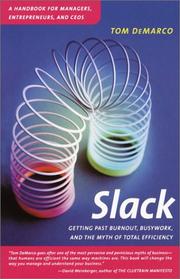
Argues powerfully that efficiency-obsessed organizations destroy their own capacity to deliver; gives you the language and evidence to protect team health and sustainable pace when stakeholders push for more.
Discussion
Keep reading
Paths that share books, cover the same subject, or open a related topic.