The Best Books to Learn Emergency Management, in Order
This curriculum builds from core emergency management concepts and disaster psychology up through operational frameworks, homeland security policy, and advanced professional practice. Each stage deepens vocabulary, situational awareness, and strategic thinking so that later books—which assume familiarity with ICS, NIMS, and federal doctrine—land with full force. Real-world training (FEMA IS courses, CERT, ICS-100/200/300) and professional certifications (CEM, CPM) remain essential complements to this reading path.
Foundations: How Disasters Work
BeginnerUnderstand what disasters actually are, how communities fail or succeed under stress, and the basic vocabulary of emergency management before touching any formal doctrine.
▸ Study plan for this stage
Pace: 4–5 weeks, ~40–50 pages/day. Start with "Disaster by Choice" (2–3 weeks), then move to "Five Days at Memorial" (2–3 weeks). Allow 2–3 days between books for reflection and note synthesis.
- Disasters are not natural events but products of human choice, vulnerability, and social systems—the intersection of hazard and exposure
- Community resilience depends on pre-existing social infrastructure, trust, and preparedness, not just emergency response
- Institutional failures during crises reveal how bureaucracy, hierarchy, and communication breakdowns amplify harm
- Ethical decision-making under extreme resource scarcity requires understanding competing values and accountability
- Vulnerability is socially constructed: poverty, marginalization, and inequality determine who bears disaster risk
- Real emergency management begins before the crisis, in how we design systems, allocate resources, and build relationships
- Individual actions and institutional policies are inseparable—personal choices reflect and reinforce systemic patterns
- According to Kelman, what is the fundamental difference between a hazard and a disaster, and why does this distinction matter for emergency management?
- What examples does 'Disaster by Choice' provide of how human decisions and social inequality create or amplify disaster risk?
- In 'Five Days at Memorial,' what specific communication and decision-making failures occurred during the crisis, and how did they affect patient outcomes?
- How did the pre-existing relationships, trust, and organizational culture at Memorial Medical Center influence staff behavior during Hurricane Katrina?
- What ethical dilemmas did medical staff face at Memorial, and how did resource scarcity force impossible choices?
- How do the cases in both books illustrate that disaster preparedness is fundamentally about social systems, not just emergency protocols?
- Create a 'hazard vs. disaster' matrix: list 3–4 natural hazards (earthquake, flood, hurricane) and map how human choices (zoning, infrastructure, inequality) transformed each into a disaster in real cases from the books
- Interview 2–3 people in your community (neighbors, local officials, business owners) about their disaster preparedness and perceived vulnerability; analyze their responses through Kelman's lens of choice and social systems
- Write a 2–3 page case study comparing how two different institutions or communities in the books responded to the same type of crisis; identify the pre-existing social factors that shaped their responses
- Map the decision-making chain at Memorial Medical Center during the hurricane: identify 3–4 key decision points, who made them, what information they had, and what they didn't know; reflect on how communication failures cascaded
- Design a hypothetical pre-crisis intervention: choose one vulnerability described in either book and propose a specific policy, infrastructure change, or community-building step that could have reduced risk beforehand
- Reflect in writing: identify one moment in 'Five Days at Memorial' where you would have made a different choice than the staff did, and honestly examine why (resource constraints, information, values, fear)
Next up: This stage establishes that disasters are human-made failures rooted in social systems, preparing you to learn formal emergency management doctrine and frameworks that attempt to systematize prevention, preparedness, response, and recovery.

Argues compellingly that disasters are not natural events but the result of human decisions. Reading this second reframes every later policy and planning discussion around vulnerability and risk reduction.

A Pulitzer-winning deep dive into a single catastrophic event (Hurricane Katrina at a New Orleans hospital). It concretizes the ethical, logistical, and command failures that formal doctrine is designed to prevent.
Core Doctrine: Planning and the ICS Framework
BeginnerMaster the Incident Command System, the National Incident Management System, and the structured planning cycle that professional emergency managers use every day.
▸ Study plan for this stage
Pace: 4–5 weeks, ~40–50 pages/day (approximately 200–250 pages total across both books)
- The Incident Command System (ICS) structure: hierarchy, roles, and span of control principles that enable coordinated response
- The National Incident Management System (NIMS) as the standardized framework that integrates ICS with broader emergency management practices
- The four phases of emergency management: mitigation, preparedness, response, and recovery, and how they interconnect
- The planning cycle: assessment, strategy development, plan documentation, and continuous improvement in emergency management
- Command, control, and coordination mechanisms that allow multiple agencies and jurisdictions to work together during incidents
- The relationship between strategic planning and tactical execution in emergency operations
- How ICS and NIMS principles apply across different types of hazards and scales of incidents
- What are the five major functional areas of the Incident Command System, and what does each do?
- How does NIMS differ from ICS, and why is NIMS necessary as a broader framework?
- Describe the four phases of emergency management and explain how they form a continuous cycle rather than a linear sequence
- What is the span of control principle in ICS, and why is it critical for effective incident management?
- How do pre-incident planning and the planning cycle help emergency managers prepare for and respond to incidents more effectively?
- What are the key differences between command and coordination, and when is each approach appropriate?
- Create a simplified ICS organizational chart for a hypothetical incident (e.g., a warehouse fire or flood) in your local area, identifying the Incident Commander and the five functional sections
- Map out the four phases of emergency management for a specific hazard relevant to your community (e.g., hurricanes, earthquakes, winter storms), with concrete examples of activities in each phase
- Develop a one-page pre-incident plan for a facility or event in your area, incorporating ICS principles and identifying key roles and responsibilities
- Compare two real incident after-action reports (available from FEMA or local emergency management agencies) and identify how ICS structure and NIMS principles were applied
- Conduct a span-of-control audit: take an existing organizational chart from a local government or business and evaluate whether it follows ICS principles; identify gaps or improvements
- Write a brief case study (2–3 pages) analyzing how a real emergency (from news or historical records) could have been managed more effectively using ICS and NIMS frameworks
Next up: This stage establishes the professional language, structural thinking, and foundational frameworks that emergency managers use daily; the next stage will build on this doctrine by exploring specific hazard types and how to adapt planning and response strategies to different threats.
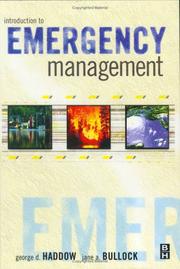
The field's most widely adopted textbook. It walks through the four phases (mitigation, preparedness, response, recovery), FEMA's history, and ICS/NIMS in plain language—the ideal bridge from the narrative stage to formal doctrine.

Focuses on the local government level where most emergency management actually happens. Read after Haddow to see how national frameworks translate into real jurisdictional responsibilities.
Homeland Security and the Policy Layer
IntermediateUnderstand how the post-9/11 homeland security apparatus was built, how it intersects with emergency management, and where the tensions between security and resilience live.
▸ Study plan for this stage
Pace: 6–7 weeks, ~40–50 pages/day (accounting for dense policy and historical content requiring careful note-taking)
- The post-9/11 institutional architecture: creation of DHS, reorganization of federal emergency management, and the shift from FEMA's disaster focus to security-first mandates
- How 'homeland security' redefined emergency management as a national security issue rather than purely a disaster response discipline
- The distinction between terrorism as a security threat versus natural disasters as resilience challenges, and how policy conflates them
- Bureaucratic tensions between FEMA's traditional all-hazards approach and DHS's security-centric priorities, illustrated through Hurricane Katrina and post-9/11 reorganization
- The role of threat assessment, intelligence integration, and surveillance in the post-9/11 emergency management framework
- How federal policy cascades to state and local levels, creating compliance burdens that may undermine local resilience capacity
- The balance (or lack thereof) between security spending and resilience investment in emergency management budgets and priorities
- What was FEMA's role and mandate before 9/11, and how did the creation of the Department of Homeland Security fundamentally alter its mission and authority?
- How does White distinguish between terrorism as a security threat and natural disasters as resilience challenges, and what policy consequences follow from conflating the two?
- According to Cooper's account of Hurricane Katrina, what specific ways did post-9/11 reorganization and security-first priorities hamper disaster response?
- What are the main sources of tension between federal security mandates and local emergency management capacity, as illustrated in these texts?
- How has the post-9/11 policy layer changed the relationship between intelligence/surveillance and emergency management at the federal level?
- What evidence do these books provide that security spending may come at the expense of resilience and all-hazards preparedness?
- Create a timeline comparing FEMA's organizational structure and priorities before and after 9/11, using specific examples from 'Disaster' and 'Terrorism and Homeland Security'
- Map the federal agencies involved in emergency management post-9/11 (DHS, FEMA, FBI, etc.) and document their overlapping jurisdictions and potential conflicts using the texts
- Write a policy brief (2–3 pages) analyzing how Hurricane Katrina exposed tensions between security-first and resilience-first approaches to emergency management
- Conduct a close reading of White's discussion of terrorism definitions and threat assessment; create a comparison chart showing how these shape policy differently than natural disaster frameworks
- Interview a local emergency manager (or research their public statements) about how federal post-9/11 mandates affect their local preparedness priorities; compare findings to the texts' arguments
- Develop a case study examining one post-9/11 policy initiative (e.g., NIMS, ICS adoption, fusion centers) and trace its intended versus actual effects on emergency management capacity using evidence from both books
Next up: This stage establishes the institutional and policy context that shaped modern emergency management; the next stage will likely examine how these tensions play out in specific operational domains (response, recovery, community resilience) or explore alternative frameworks that attempt to rebalance security and resilience.
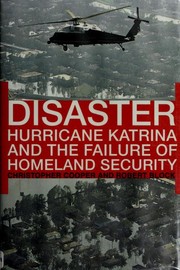
A detailed journalistic account of the governmental failures during Katrina. Pairs with the policy layer to show exactly where doctrine, coordination, and leadership broke down at the federal level.
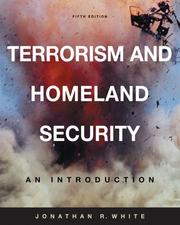
A widely used academic text covering threat types, intelligence, law enforcement, and civil liberties trade-offs. Rounds out the homeland security picture with the terrorism-specific dimension of the field.
Advanced Practice: Resilience, Risk, and Professional Mastery
ExpertThink at the systems level—understanding complex risk, organizational resilience, and the cutting edge of professional emergency management practice needed to lead programs and pursue certification.
▸ Study plan for this stage
Pace: 8–10 weeks, ~40–50 pages/day (alternating between the two books in 2-week cycles to allow comparative thinking)
- Normal accidents theory: how system complexity and tight coupling create inevitable failures that cannot be prevented through better design or training alone
- Interactive complexity vs. linear systems: understanding when accidents emerge from unexpected interactions rather than single-point failures
- Organizational culture and mindfulness in high-reliability organizations: how awareness and flexibility mitigate systemic risk
- Resilience as a dynamic capacity: the ability to anticipate, absorb, recover from, and adapt to disruption rather than merely resist it
- The resilience dividend: how investing in resilience generates co-benefits across economic, social, and environmental domains
- Systems thinking in emergency management: viewing organizations, infrastructure, and communities as interconnected wholes vulnerable to cascading failures
- Adaptive capacity and transformative change: building organizations and systems that learn and evolve in response to emerging risks
- What is the distinction between normal accidents and rare catastrophes, and why does Perrow argue that some accidents are inevitable in complex, tightly coupled systems?
- How do interactive complexity and tight coupling interact to create conditions where standard safety measures may be insufficient?
- What role does organizational culture and mindfulness play in managing risk in high-reliability organizations, according to Perrow's analysis?
- How does Rodin define resilience, and how does her definition differ from traditional notions of disaster preparedness or risk reduction?
- What is the resilience dividend, and what are concrete examples of co-benefits that emerge from investing in resilience?
- How can emergency management leaders apply systems-level thinking to build organizational and community resilience in the face of interconnected risks?
- Case study analysis: Select a major accident or disaster (e.g., Three Mile Island, Deepwater Horizon, a recent natural disaster). Map the system components, identify points of interactive complexity and tight coupling, and explain how Perrow's framework illuminates what happened.
- Organizational risk audit: Examine your own emergency management organization or a case study organization. Identify which systems are tightly coupled vs. loosely coupled, and which exhibit interactive complexity. Propose one structural or cultural change to reduce normal accident risk.
- Resilience assessment: Using Rodin's framework, evaluate a community or organization's resilience across economic, social, and environmental dimensions. Identify one resilience investment that could generate multiple co-benefits.
- High-reliability organization design: Design a hypothetical emergency management system (dispatch center, incident command structure, or multi-agency coordination) that incorporates principles from Perrow's analysis of mindful organizations. Document how you would foster awareness, flexibility, and deference to expertise.
- Comparative systems mapping: Create a visual comparison of two critical infrastructure systems (e.g., power grid and water treatment) in terms of complexity, coupling, and resilience. Explain where each is vulnerable and what resilience investments would be most impactful.
- Leadership reflection: Write a 2–3 page reflection on how understanding normal accidents and resilience changes your approach to emergency management leadership, certification preparation, and professional decision-making.
Next up: This stage equips you with the theoretical and practical frameworks to diagnose systemic vulnerabilities and design resilient systems—preparing you to lead evidence-based emergency management programs, mentor teams through complex risk environments, and pursue advanced professional certification with a sophisticated understanding of how organizations and communities actually function under stress.
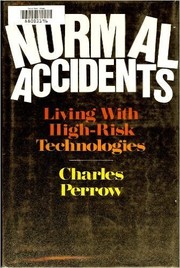
A landmark work arguing that catastrophic failures are inevitable in tightly coupled, complex systems. Every senior emergency manager needs this mental model to design systems that fail gracefully.

Written by the former Rockefeller Foundation president, this book translates resilience theory into actionable investment and planning strategies—bridging academic concepts and real-world program leadership.
Discussion
Keep reading
Paths that share books, cover the same subject, or open a related topic.