Medical Error: The Best Books on Patient Safety and Why Hospitals Harm People, in Order
Patient safety became a field in 1999, when a report put a number on how many Americans die each year from preventable medical error and made it impossible to keep treating mistakes as the failures of individual bad doctors. The core claim of everything that followed is that competent, well-intentioned clinicians harm patients because of how the work is organised — so the fix is systems design, not blame. This path opens with the surgeon-writer who made that argument readable, then reads the founding report and the safety textbooks, then goes to the human-factors and organisational-accident literature the field borrowed from, then to the culture and transparency fight, and closes with clinicians describing their own errors. No medical background is needed.
Start here
BeginnerUnderstand the central reframing — error as a property of systems rather than of individuals — from the two books that carried it to a general readership.
▸ Study plan for this stage
Pace: Two to three weeks. Complications is 288 pages of essays and The Checklist Manifesto 209 pages of argument; both read quickly, and a week each is comfortable. Read them in order. Note what they are: both are written by Atul Gawande, a practising surgeon writing about his own field from inside it, so
- Fallibility as normal rather than exceptional. Complications' premise is that competent, conscientious doctors err routinely, and every later book on this path builds on that premise rather than re-arguing it.
- The learning curve problem: someone has to be a surgeon's first patient, and Gawande states plainly that the necessary practice is done on real people who are not told.
- Uncertainty as distinct from error. A large fraction of what goes wrong in medicine is not a mistake but a decision made on insufficient information, and the two require different remedies.
- The volume-outcome relationship and specialisation — that where a procedure is done matters as much as who does it.
- The checklist as a response to complexity rather than to ignorance: Gawande's argument is that failure now comes from not reliably applying what is already known, not from not knowing.
- Borrowed models from aviation and construction, and the specific features Gawande takes from them — pause points, read-do versus do-confirm, and forcing verbal exchange between people who otherwise would not speak.
- The team-communication effect. In the WHO trial the checklist's benefit appears to come substantially from making people introduce themselves and speak, not only from the items ticked.
- The resistance, which Gawande records rather than dismisses: surgeons who found the checklist insulting to their expertise, and the fact that adoption without genuine team buy-in produces box-ticking.
- In Complications, pick one case Gawande describes as his own failure. Was it a slip, a knowledge gap or a judgement under uncertainty — and does he say?
- How does Gawande handle the learning-curve problem ethically, and does his answer satisfy you?
- What is the checklist actually solving? State the problem in one sentence without using the word 'error'.
- The WHO checklist trial reports substantial mortality reduction. What are the plausible reasons that result might overstate what a checklist alone achieves?
- Complications and The Checklist Manifesto are separated by several years. What changed in how Gawande frames the problem between them?
- Take three cases from Complications and, for each, write down where a checklist would and would not have helped. The list of 'would not' cases is the honest limit of stage 1.
- Reconstruct the WHO surgical safety checklist item by item from Gawande's account, then annotate each item with what specific failure it is designed to catch.
- Find a checklist in some part of your own working life — clinical or not — and test it against Gawande's design criteria: is it read-do or do-confirm, how long is it, does it force anyone to speak?
- Write down, before starting stage 2, your own one-paragraph theory of why medical errors happen. Date it, and check it against Reason and Perrow later.
Next up: Gawande establishes that good doctors err and offers one concrete fix; the next stage supplies the document that made this a field and the textbooks that codified it.

A surgical resident's essays on fallibility, uncertainty and the things medicine cannot explain, including his own mistakes described in detail. Read it first: it establishes that good doctors err routinely, which is the premise every later book builds on, and it does so without any systems vocabulary.

The best-known intervention in the field's history — the WHO surgical safety checklist — told as the story of its development and testing, with aviation and construction as the models. Read second, as the constructive answer to Complications' problem statement, and note that Gawande is honest about how strongly checklists were initially resented.
The report that started the field, and the textbooks
BeginnerRead the founding document and get systematic coverage of the actual failure modes — medication error, handoffs, diagnostic error, device design, fatigue — rather than the headline cases.
▸ Study plan for this stage
Pace: Six to eight weeks. To Err Is Human is 287 pages and is a government-commissioned expert-committee report rather than a book by an author — it reads like one, and reading the actual document rather than the summaries is worth the effort because most of the later literature is elaboration of its argu
- The systems argument as the report's actual thesis: that the problem is not bad people but bad systems, and that punitive responses to individual error make reporting worse and safety worse with it.
- The distinction between error and adverse event, and between preventable and non-preventable adverse events — the definitional work that determines every number anyone quotes.
- How the estimate was built: extrapolation from chart-review studies in a limited number of states, which is both why it was possible and why it is contested.
- The report's policy recommendations — a national reporting infrastructure, mandatory and voluntary reporting streams, safety as a regulatory and purchasing requirement — and how many of them were actually implemented.
- Wachter's error taxonomy in the textbook: medication error, diagnostic error, surgical error including wrong-site surgery, healthcare-associated infection, handoff and transition failure, and diagnostic delay.
- Root cause analysis and the failure modes analysis as the standard investigative tools, plus their known weaknesses — chiefly that they are performed retrospectively by people who already know the outcome.
- The hierarchy of interventions, from weakest to strongest: education and reminders at the bottom, forcing functions and system redesign at the top. This ranking is the most practically useful thing in the textbook.
- The relationship between the three books: the report is a primary source and an argument, the textbook is a codified curriculum, and Internal Bleeding is the same content written to be gripping rather than complete.
- State the report's systems argument in your own words, then identify the specific evidence it offers for the claim that punishment reduces safety.
- How were the 44,000 and 98,000 figures derived, and what would you need to know about the underlying chart reviews to evaluate them?
- Which of the report's recommendations were implemented in the following decade, and which were not? What does the pattern suggest about which reforms are politically possible?
- Using Wachter's hierarchy, rank four possible responses to a specific medication error from weakest to strongest, and say why the weakest ones are the ones institutions usually choose.
- Take a case from Internal Bleeding and identify every latent condition present before the active failure occurred.
- Wachter is both the textbook author and a co-author of the trade book. What does that let him do, and what does it mean you should check elsewhere?
- Read the report's executive summary and recommendations, then write a one-page audit of which recommendations you can find current evidence of being in force.
- Take one case from Internal Bleeding and perform your own root cause analysis on it before reading the authors' — then compare, noting what you missed and what you invented.
- Build a single-page reference sheet of Wachter's error types, with a real example of each drawn from Internal Bleeding or Complications.
- Apply Wachter's intervention hierarchy to a failure you have personally seen in any workplace, and write down what the strongest available intervention would have been and why it was not chosen.
- Trace the definitional chain from 'error' to 'preventable adverse event' to 'death attributable to preventable error', and identify at which step the most judgement enters.
Next up: The report asserts that systems cause error; the next stage is the cognitive and organisational science that explains how, and one book arguing that some of it cannot be fixed.

The 1999 Institute of Medicine report, edited by Kohn, Corrigan and Donaldson, whose estimate of 44,000 to 98,000 annual deaths from preventable error created the field. Read the actual document rather than the summaries: its argument is explicitly a systems argument, and much of the later literature is elaboration of it.

The standard teaching text, by the physician who coined the term hospitalist and who has spent his career on this. Systematic, current and organised by error type. This is the reference to read once and keep.
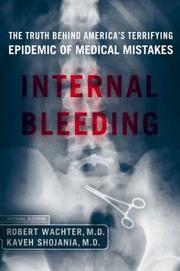
Wachter and Shojania's trade book, built from real cases with the systems analysis attached to each. Read alongside the textbook as its narrative companion — same author, same framework, but written to be gripping rather than complete.
Why competent people make mistakes
IntermediateGo to the human-factors and organisational-accident scholarship that patient safety imported wholesale, and get the concepts — latent conditions, the Swiss cheese model, normal accidents, just culture — at their source.
▸ Study plan for this stage
Pace: Three to four months, and this is the analytically heaviest stage on the path. Reason's Human Error is 311 pages and is an academic cognitive-psychology monograph with a technical vocabulary and a research-literature apparatus — it is not a trade book and should get a month. Managing the Risks of Or
- Reason's error taxonomy: slips and lapses as failures of execution in a correctly formed plan, mistakes as failures of the plan itself, and violations as deliberate departures from procedure. Different types, different causes, different remedies — and this taxonomy is what safety practitioners actua
- The skill-rule-knowledge framework and the performance levels at which each error type occurs, which explains why an expert's errors look different from a novice's rather than merely rarer.
- Active failures versus latent conditions: the difference between the thing that happened at the sharp end and the organisational conditions that were already in place waiting for it.
- The Swiss cheese model of defences in depth, from Managing the Risks — layers of protection each with holes, and an accident as a trajectory through aligned holes rather than as a single cause.
- Dekker's old view versus new view: the old view finds the bad apple, the new view treats error as a symptom of trouble deeper in the system. His book is polemical and knows it.
- Hindsight bias and the construction of retrospective inevitability — Dekker's demonstration that an investigation performed knowing the outcome will manufacture a causal chain that was not visible to anyone at the time.
- Local rationality: the principle that people's actions made sense to them given what they knew, and that an investigation's job is to reconstruct that view rather than to compare it with what you know now.
- Perrow's interactive complexity and tight coupling as the two structural properties that jointly make catastrophic accidents an expected output of a system rather than a preventable anomaly.
- Classify five specific errors from Complications or Internal Bleeding using Reason's taxonomy. Which were slips, which mistakes, which violations — and does the remedy differ in each case?
- Why does the skill-rule-knowledge framework predict that highly practised experts make a particular kind of error, and what kind is it?
- Draw the Swiss cheese diagram for one specific adverse event, labelling each layer with the actual defence and each hole with the actual condition.
- Dekker says investigations manufacture hindsight. What concrete procedural changes would reduce that, and what would they cost in investigative confidence?
- State Perrow's two axes precisely. Where does a hospital operating theatre fall on each, and where does a hospital as a whole institution?
- If Perrow is right, what is the honest limit of the patient safety project, and does anything in the earlier stages answer him?
- Take one detailed case from Internal Bleeding and analyse it twice: once with Reason's taxonomy identifying active failures and latent conditions, and once with Dekker's local-rationality method reconstructing what each actor knew at the time. Write down where the two analyses disagree about blame.
- Reconstruct the Three Mile Island sequence from Perrow's account and mark the points where an operator action that looks wrong now was the correct response to the information actually displayed.
- Place three systems you know — a hospital ward, a road network, a software deployment pipeline — on Perrow's coupling and complexity axes, justifying each placement with a specific property.
- Take an incident report you can obtain, from any industry, and rewrite it in Dekker's new-view idiom. Note what disappears from the report and what becomes visible.
- Apply Reason's violation categories to a workaround you have personally used, and trace how it became normal.
- Return to the theory of error you wrote at the end of stage 1 and revise it in writing, saying which of Reason, Dekker and Perrow forced each change.
Next up: The science says the system is at fault; the next stage is about why the profession's own culture resists acting on that, and what the leading proposed cultural remedies are.

The cognitive psychology underneath the entire field: slips, lapses, mistakes and violations as distinct failure types with distinct causes. Reason's taxonomy is what safety practitioners actually use, and this is where it is set out. Read it before anything else in this stage.

The organisational sequel, and the source of the Swiss cheese model of defences in depth and of the distinction between active failures and latent conditions. Read second — it moves Reason's argument from the individual mind to the institution, which is the move patient safety needed.
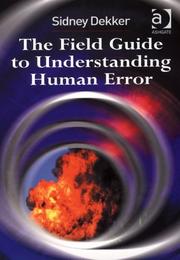
Dekker's short, combative book on the difference between the old view (find the bad apple) and the new view (error is a symptom of trouble deeper in the system), and on how retrospective investigation manufactures hindsight bias. The most practically useful book here for anyone who will ever sit on a review panel.
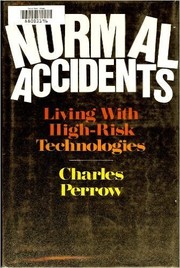
Perrow's argument, from Three Mile Island, that in systems that are both tightly coupled and interactively complex, catastrophic accidents are a structural property rather than a preventable anomaly. The most pessimistic book on the path and the necessary counterweight to the checklist optimism of stage 1.
Culture, transparency and disclosure
IntermediateExamine the professional and institutional obstacles — hierarchy, the reluctance to disclose, self-regulation, and what borrowing another industry's safety culture actually requires.
▸ Study plan for this stage
Pace: Six to eight weeks. Unaccountable is 246 pages, Why Hospitals Should Fly 225, and Forgive and Remember 262 — all short. Read them in the listed order but with the genres clearly separated in your head, because they are three completely different kinds of book. Makary is a Johns Hopkins surgeon writi
- The transparency argument in its strong form: publish surgeon-level and hospital-level outcomes and complication rates, and let patients act on them. Makary's case rests on the claim that opacity protects poor performance.
- The known objections to outcome publication, which Makary handles briskly: risk adjustment failures, gaming, and the incentive to refuse difficult patients. Read this chapter with a statistician's scepticism.
- Safety culture as a definable set of practices rather than an attitude: crew resource management, flattened hierarchy so a junior can challenge a senior, non-punitive incident reporting, and standardised communication protocols.
- The just culture distinction between human error, at-risk behaviour and reckless behaviour, and the argument that a blame-free culture and an accountable one are not opposites.
- The limits of the aviation analogy, which Nance's book invites and does not fully address: pilots are in the aircraft with the passengers, procedures are far more standardised, and patients are not identical airframes.
- Bosk's central finding: surgical residents are taught to treat technical errors — mistakes of skill, expected of a trainee — as forgivable, and normative errors — failures to report, to defer, to be honest about what happened — as unforgivable.
- Why that finding matters for everything else on this path: the profession's internal moral order already handles error, on terms that are about character and honesty rather than about systems, and that is what systems thinking is up against.
- Disclosure to patients after harm, and the difference between an apology, an admission and a legal position.
- What exactly does Makary want published, at what level of aggregation? Where is his proposal strongest and where does risk adjustment defeat it?
- List the aviation practices Nance imports. For each, name the specific feature of clinical work that makes it easier or harder to transplant than it was in aviation.
- Explain Bosk's technical/normative distinction using two examples from his own fieldwork.
- Bosk's residents forgive skill failures and punish honesty failures. Is that ordering irrational, or is it a reasonable adaptation to how surgical training works?
- Nance's book is fiction. What does that let him show that a case-study book could not, and what should you refuse to take from it as evidence?
- Does Bosk's account of professional culture explain the resistance to checklists that Gawande recorded in stage 1?
- Take Makary's transparency proposal and write the strongest counterargument to it that you can construct from Perrow and Dekker, then say which side you land on and why.
- For each crew resource management element Nance describes, find or design the clinical equivalent and identify who in the hierarchy would resist it.
- Reread one incident from Internal Bleeding and classify the behaviour involved under a just-culture scheme — human error, at-risk, or reckless — and state what response each classification implies.
- Using Bosk's categories, classify a set of errors from Complications as technical or normative, and note which ones Gawande himself treats as forgivable.
- Write a short disclosure conversation for one specific adverse event, then mark which sentences a hospital lawyer would strike and what that removal does to the patient's understanding.
Next up: Every argument so far is about institutions; the last stage returns the question to the individual clinician who has to live with what happened and asks what two decades of the safety movement actually achieved.

A Johns Hopkins surgeon's case for radical transparency: publish outcomes, publish complication rates, let patients see them. The strongest available statement of the transparency position, and worth reading critically — Makary is arguing a case, not surveying a literature.
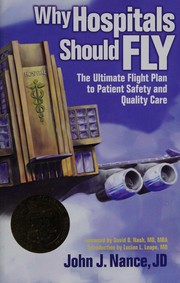
Written by an airline pilot and aviation-safety analyst as a fictionalised account of a hospital that has adopted aviation's methods — crew resource management, flattened hierarchy, non-punitive reporting. The device is didactic and the book knows it, but it is the clearest exposition of what safety culture means in daily practice.
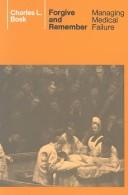
Bosk's 1979 ethnography of how surgical residents are actually taught to handle their own errors, and the distinction he found between technical errors, which are forgiven, and normative ones, which are not. Predates the field by twenty years and explains better than any later book why the profession's internal culture resists systems thinking.
The clinician's own account
BeginnerClose with doctors writing about the specific patients they harmed, and understand the second-victim problem and the personal cost of the reforms the earlier stages argue for.
▸ Study plan for this stage
Pace: Four to five weeks. When We Do Harm is 304 pages and Do No Harm 320; both read quickly and both should be read slowly. Read Ofri first, then Marsh. Both are clinician-authored: Ofri is an American internist writing a book-length reckoning with medical error two decades after To Err Is Human, and Mar
- Ofri's assessment of the movement's record: what two decades of safety work achieved — hand hygiene, checklists, surgical site marking, some infection reduction — and what it did not, chiefly diagnostic error, which remains the largest and least tractable category.
- Diagnostic error as the unsolved problem, and why it resists the interventions that worked elsewhere: there is no discrete moment to checklist and no clear signal that anything went wrong.
- Safety theatre — Ofri's account of how much of the apparatus has become documentation and box-ticking that consumes clinician time without changing outcomes, and the connection between that and burnout.
- The second victim — the clinician after an error — and the institutional response, which Ofri argues is still typically isolation rather than support.
- Marsh's subject: the irreducible fact that one person's hands were on the instrument. Every systems argument on this path is correct and none of it removes that.
- Surgical decision-making under uncertainty, and Marsh's repeated theme that the hardest cases are not technical failures but decisions to operate or not to operate that could only be judged afterwards.
- Hindsight in a memoir. Marsh is doing precisely what Dekker warns investigators against — reconstructing his own past decisions knowing the outcome — and reading him with Dekker in mind is the most useful thing in this stage.
- The complementarity that closes the path: the field's analytic literature explains why errors happen and cannot address what it is like to have caused one, and the memoirs do the reverse.
- What does Ofri identify as the safety movement's clearest genuine success, and what evidence does she give?
- Why has diagnostic error proved so resistant, and what would an intervention that actually addressed it have to look like?
- Ofri argues that much of the safety apparatus is now box-ticking. Which of the interventions from earlier stages does that charge apply to, and which survive it?
- Take one of Marsh's cases and analyse it with Reason's taxonomy and Dekker's local rationality. Does the analysis change your judgement of him?
- Marsh is a memoirist reconstructing his own decisions with the outcomes known. Where in the book can you see hindsight bias operating, and does it matter?
- After the whole path: if you had one intervention to make in one hospital, what would it be, and which authors here would object?
- Build a scorecard of the safety movement's interventions — checklists, reporting systems, root cause analysis, transparency, culture programmes — and grade each against Ofri's evidence and your own reading. Write one line of justification per row.
- Take one of Marsh's cases in full and perform a formal Swiss cheese analysis on it, then write a paragraph on what the analysis accounts for and what it leaves entirely untouched.
- Compare Gawande's account of his own errors in Complications with Marsh's, and describe the difference in how each positions himself relative to the reader.
- Write out the specific institutional supports a second victim would need, then check them against what Ofri says institutions actually provide.
- Write a final two-page synthesis for the whole path: state where you now stand between Perrow's structural pessimism, Reason and Dekker's systems reformism, Makary's transparency case and Marsh's individual reckoning, citing the specific passages that moved you.
Next up: The path closes here: with the analytic literature, the cultural arguments and the clinicians' own accounts in hand, the natural continuations are the current diagnostic-error literature, the high-reliability-organisation research that argues against Perrow, and your own institution's incident reports.

An internist's book-length reckoning with medical error two decades after To Err Is Human — what the movement achieved, what it did not, and how much of the apparatus of safety has become box-ticking. The best current assessment of where the field actually stands.
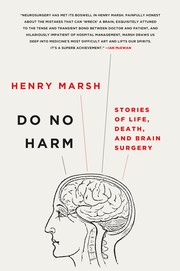
A British neurosurgeon's memoir, organised around the operations that went wrong and the patients he damaged, written with unusual absence of self-protection. Closes the path deliberately: every systems argument above is correct, and none of it removes the fact that one person's hands were on the instrument.
Discussion
Keep reading
Paths that share books, cover the same subject, or open a related topic.