Stephen Jay Gould Reading Order: Where to Start
Gould wrote for twenty-five years in two registers: monthly essays for Natural History magazine, collected into ten volumes, and a handful of full-length arguments about how evolution actually works. Start with the essays, because they are short, self-contained and where his voice is best — but pick the acknowledged strong collections rather than working through all ten, which repeat themselves. Then move to the big books, where the same ideas about contingency, hierarchy and the misuse of biology are argued at length, and finish with the technical monument he spent his life on.
Start With The Essays
BeginnerMeet Gould at his most enjoyable and learn his recurring moves — a baseball statistic or a snail shell opening onto a real argument in evolutionary theory.
▸ Study plan for this stage
Pace: 5-6 weeks for about 630 pages, and the format dictates the pace. These are collections of a monthly magazine column, so each essay was written to be read on its own with a month's gap after it. Read three or four a week rather than working through a volume in a run - read straight through and the re
- The Gould essay form: open on something small and concrete - a snail shell, a baseball statistic, a piece of Victorian nonsense - and open it onto a real argument in evolutionary theory
- The title essay's argument that imperfect design is the strongest evidence for evolution, because a designer would not have improvised a thumb out of a wrist bone
- Adaptation is not optimisation, and the assumption that every trait is a perfect solution is the error Gould spends a career attacking
- Ever Since Darwin is closer to straight Darwin exposition and is the best available introduction to what Darwin actually claimed
- History of science is Gould's second subject throughout - he is as interested in why scientists believed wrong things as in what is true
- The essays are where his voice is best: digressive, allusive, fond of Gilbert and Sullivan and baseball, and completely unembarrassed about it
- Ten collections exist and they repeat themselves; this path picks the acknowledged strong ones rather than sending you through all of them
- What is the argument of the panda's thumb essay, and why is imperfection better evidence than perfection?
- How does Gould get from a piece of trivia to a theoretical claim, and where does the move feel forced?
- What does Ever Since Darwin say Darwin actually argued, and how does that differ from the popular version?
- Why is Gould so interested in scientists who were wrong?
- What are the recurring moves you can already identify after two collections?
- Read no more than four essays in a sitting. They were published a month apart and they work at roughly that rhythm.
- Pick one essay and reconstruct its structure in five lines: the hook, the digression, the theory, the turn, the close. The template is remarkably consistent and seeing it makes the later volumes easier to read critically.
- Note every essay where the real subject is a mistake in the history of science rather than a fact about biology. The proportion is higher than most readers expect.
- Keep a running list of the theoretical terms he uses - adaptation, constraint, contingency - with his definition of each. The big books three stages from now assume them.
Next up: You now know the form and the voice, which is what makes the longer mid-career essays readable as scholarship rather than as journalism.
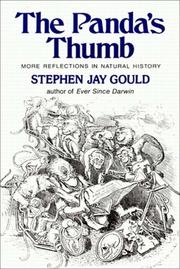
The best single collection and the usual recommendation: the title essay's argument that imperfect design is the real evidence for evolution is the cleanest thing he ever wrote.

The first collection, closer to straight Darwin exposition than the later ones. Read second, when you already like the voice and want the groundwork.
The Best Of The Later Collections
IntermediateRead the two strongest mid-career collections, where the essays get longer and the historical scholarship gets deeper.
▸ Study plan for this stage
Pace: 7-9 weeks for about 1,020 pages (Bully for Brontosaurus 540, The Flamingo's Smile 476). Same discipline: three or four essays a week, not a volume in a fortnight. The essays in these two volumes are noticeably longer than in the first collections and the historical scholarship is heavier, so an essa
- The mid-career essays get longer and more scholarly, with real archival work behind the historical pieces
- Gould's history-of-science essays are at their sharpest here - misattributed discoveries, forgotten figures, and the social reasons ideas were accepted or ignored
- The Flamingo's Smile is strong on extinction and sexual selection, and it begins the mass-extinction thinking that the Burgess Shale book develops
- Contingency starts to appear as an explicit theme: the argument that history's outcomes were not inevitable
- Gould uses baseball and Gilbert and Sullivan as recurring analytical resources rather than as decoration, and both come back in the big books
- These volumes assume comfort with the vocabulary the first two collections built and do not re-explain it
- Reading them at essay pace rather than book pace is what stops the mannerisms from becoming tiresome
- Which historical essay most changed your view of how a scientific idea gets accepted?
- How does Gould handle extinction - as a failure of adaptation, or as something else entirely?
- Where does contingency first appear as an explicit argument rather than an observation?
- What does Gould gain by writing about baseball, and where does the analogy stop working?
- Are these collections better or worse than the early ones? Be specific about what changed.
- For one history-of-science essay, look up the standard account of the episode before reading Gould's. His corrections are more impressive when you know what he is correcting.
- Note every essay that touches mass extinction and read them consecutively. They form an argument the volume's ordering conceals.
- Keep adding to your theory-vocabulary list. By the end of this stage you should be able to define contingency and constraint in Gould's own terms.
- Pick the weakest essay in either volume and say why. Gould is unusually easy to admire and the collections do contain filler; identifying it sharpens the rest.
Next up: The essays have introduced contingency, extinction and the misuse of biology in pieces; the big books argue all three at length and expect you to already have the vocabulary.

The most consistent of the later volumes, and the one where his essays on the history of science are at their sharpest. It assumes some comfort with the vocabulary the first two build.
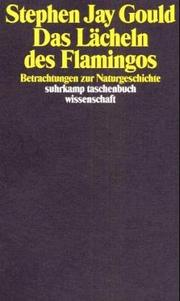
Strong on extinction, sexual selection and the odd corners of natural history, and it begins the mass-extinction thinking that Wonderful Life develops.
The Big Arguments
IntermediateMove to the full-length books, where Gould makes the three claims he is remembered for.
▸ Study plan for this stage
Pace: 8-10 weeks for about 1,040 pages (the Burgess Shale book 352, The Mismeasure of Man 432, Full House 256). These are sustained arguments rather than collections, so the essay-pace discipline no longer applies - read them as books, 25-30 pages a sitting. The Burgess Shale book has a long descriptive m
- The Burgess Shale book's argument: the Cambrian fauna were far more anatomically various than anything since, and replaying life's tape would produce something unrecognisable
- Contingency as the central claim - evolution's outcomes are historical accidents, not the working out of a tendency
- The reading of the Burgess fossils is contested; other palaeontologists argue the disparity was overstated and that convergence makes outcomes more predictable than Gould allowed
- The Mismeasure of Man is a history of attempts to rank human worth by measurement, from skull-filling to the IQ tradition
- Reification and ranking are its two named errors: turning a statistical abstraction into a thing, then ordering people by it
- That book is his most cited and most attacked; a later re-examination of one of his key case studies argued that Gould's own analysis was biased, and the dispute is worth chasing rather than ignoring
- Full House argues that evolutionary progress is a statistical illusion - the appearance of advance produced by a spreading distribution against a fixed wall
- The disappearance of the .400 hitter in baseball is the illustration, and it is the clearest example anywhere of Gould using sport to make a technical point
- What does replaying the tape of life mean, and what evidence would count against it?
- State the strongest objection to Gould's reading of the Burgess Shale fossils. Does it damage the contingency argument or only the example?
- What are reification and ranking, and how do they operate together in the traditions Mismeasure examines?
- How should a reader hold the criticisms of Mismeasure alongside its argument? Does a flawed case study sink the book?
- How does the statistical argument in Full House explain the appearance of progress without any progressive force?
- Draw the distribution Gould describes in Full House - the wall, the spreading tail, the moving maximum. It is a five-second sketch and it is the whole argument.
- Read a summary of the criticisms of Mismeasure of Man after finishing it, not before. Forming your own view first and then testing it is the honest sequence.
- For the Burgess Shale book, look at reconstructions of the animals as they are described. Gould is arguing from anatomy and the pictures make the disparity claim concrete.
- Write down what all three books share. They are usually treated as separate arguments and they are in fact one argument against inevitability.
- State Gould's position on IQ testing in your own words, and then state what he does not claim. The book is routinely misdescribed in both directions.
Next up: Having seen the three arguments he is remembered for, the next stage shows him working as a historian of ideas and as a public figure defining what science is allowed to say.
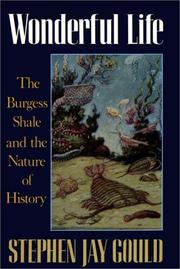
The Burgess Shale fossils and the argument that replaying life's tape would produce something unrecognisable. His most influential popular book and the best statement of contingency.

A history of attempts to rank human worth by measurement, from skull-filling to IQ. It is his most cited and most attacked book, so read it knowing the criticisms exist and are worth chasing.

The argument that evolutionary progress is a statistical illusion, illustrated by the disappearance of the .400 hitter in baseball. It is the natural sequel to Wonderful Life's case against inevitability.
The Historian Of Science
IntermediateSee Gould working as an intellectual historian and as a public arbiter of what science is for.
▸ Study plan for this stage
Pace: 3-4 weeks for about 470 pages (Time's Arrow, Time's Cycle 222, Rocks of Ages 249). Both are short and the first is the more rewarding: a tightly argued study of three geologists and the discovery of deep time, and probably his best scholarly book for a general reader. Rocks of Ages is essentially an
- Time's Arrow, Time's Cycle examines three figures in the discovery of geological deep time and how metaphor determined what each could see
- The two metaphors of the title - history as a directional arrow and history as a repeating cycle - are treated as cognitive constraints rather than rhetorical choices
- Gould's argument that the textbook heroes of geology were less empirical and more theory-driven than their reputations allow
- This is his most disciplined book: short, tightly argued, and free of the digressive habit the essays indulge
- Rocks of Ages proposes non-overlapping magisteria - that science and religion address separate domains and cannot conflict if each stays in its own
- The proposal drew fire from every direction, from religious critics who found it patronising to atheist critics who found it evasive, and both objections are worth taking seriously
- The book is slight next to the others but essential for understanding Gould's public role as an arbiter of what science is for
- Together these two show the historian and the public intellectual, which are the two hats the essays wear alternately
- What does Gould mean by claiming that metaphor determines what a scientist can see? Is that a strong or a weak claim?
- How does his account of the geologists differ from the standard heroic narrative of the discovery of deep time?
- What exactly are the non-overlapping magisteria, and what does each domain get?
- State the strongest objection to that proposal from a religious standpoint and from an atheist standpoint.
- Does Gould's public role help or hinder his scientific arguments? The essays and the big books give evidence both ways.
- Reconstruct Gould's argument in Time's Arrow, Time's Cycle in one page. It is compact enough to summarise fully, which is not true of any other book on this path.
- Apply the arrow-and-cycle distinction to a field you know. It is a genuinely portable analytical tool and testing it elsewhere is the fastest way to see its limits.
- Write out the non-overlapping magisteria proposal and then list three questions that plainly fall in both domains. That list is the objection to the book in concrete form.
- Compare Rocks of Ages with one of his essays on the history of religion and science. The essay form serves his position better than the book does, and noticing why is instructive.
Next up: The popular arguments are now complete, and the last stage is where you can see them in their professional form - which is a very different reading experience.
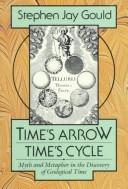
Three geologists and the discovery of deep time, treated as a study in how metaphor shapes what scientists can see. Short, tightly argued, and his best scholarly book for a general reader.
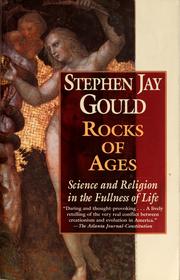
His proposal that science and religion occupy non-overlapping magisteria, which drew fire from every direction. Slight next to the others but essential for understanding his public role.
The Completist Tail
IntermediateTake on the technical work, where the popular arguments are made in their professional form.
▸ Study plan for this stage
Pace: Open-ended, and be realistic. Ontogeny and Phylogeny is 501 pages of academic prose and takes 6-8 weeks at a serious pace. The Structure of Evolutionary Theory is 1,464 pages and is a technical monument rather than a book to be read through - most readers who use it read chapters selectively, and do
- Ontogeny and Phylogeny is his first scholarly book, on the long history of the idea that individual development recapitulates evolutionary history
- Recapitulation was wrong but enormously influential, and the book is a history of a productive error - the theme the essays keep returning to
- Heterochrony - changes in the timing of development - is the constructive half of the book and is a real contribution rather than a history
- The Structure of Evolutionary Theory sets out his entire theoretical position: punctuated equilibrium, hierarchical selection, and constraint against pure adaptationism
- Published weeks before his death in 2002, it is deliberately a summation of a career rather than a new departure
- The register is professional: long, discursive, heavily referenced and openly polemical against the adaptationist tradition
- Reading it after the popular books means every argument arrives with an illustration you already know from an essay
- An unreasonable place to start and a legitimate place to finish - the distinction is the whole point of this stage's position in the path
- What was the recapitulation idea, why was it so attractive, and what killed it?
- What is heterochrony, and why does Gould think timing changes explain more than selection on adult form?
- What is punctuated equilibrium claiming, and what is it not claiming?
- What does hierarchical selection add to the standard account, and who does Gould think it is arguing against?
- Having read the whole shelf, is Gould's position a correction to the modern synthesis or a rival to it? He claims one; his critics say the other.
- Read the introduction and the concluding chapter of the big book first. Gould states his whole case in those two and the middle is the evidence.
- Pick the three chapters that correspond to arguments you met in the essays and read those in full. Selective reading of a 1,464-page monograph is a legitimate strategy, not a failure.
- Trace one idea - punctuated equilibrium is easiest - from its first appearance in an essay to its full treatment here. It is the clearest demonstration of what the popular writing was compressing.
- Write 500 words on what Gould got right and what he got wrong. Twenty years of subsequent argument means this is answerable, and anyone who has read this whole path has earned a view.
Next up: The shelf ends here; the natural continuations are the biologists who argued with him publicly for two decades, read now that you know his case in his own words.
His first scholarly book, on the long history of the idea that development recapitulates evolution. Academic in register, and the source of a lot of what the essays gesture at.
Fourteen hundred pages summarising his entire theoretical position, published weeks before his death. A genuine monument and an unreasonable place to start; read it only if the rest has left you wanting the full case.
Discussion
Keep reading
Paths that share books, cover the same subject, or open a related topic.