Best Books on the History of Eugenics, in Reading Order
Eugenics is usually remembered as a German crime, which obscures the fact that it was a mainstream Anglo-American reform movement with Supreme Court approval, Carnegie and Rockefeller funding, and tens of thousands of sterilisations to its name. This path starts with the single legal case that authorised it, widens to immigration restriction and the movement's institutions, moves to the standard scholarly histories, then follows the transmission line to Nazi Germany, and closes on the science itself and what survived.
One case, in full
BeginnerUnderstand Buck v. Bell — how a coached, collusive test case produced an eight-to-one ruling that has never been overturned — and use it as the anchor for everything else.
▸ Study plan for this stage
Pace: Three to four weeks for about 810 pages. Read Imbeciles (409 pages) first — Cohen structures it as five interlocking biographies and it moves like narrative, so ten days is realistic. Three Generations, No Imbeciles (404 pages) is a legal historian's book and needs slower reading, particularly the c
- Buck v. Bell, decided eight to one in 1927, upheld compulsory sterilisation as constitutional and has never been overturned — a fact that startles most readers and is the reason this stage comes first
- Oliver Wendell Holmes writing that three generations of imbeciles are enough, and the question of how a justice with Holmes's reputation came to write that sentence
- The five figures Cohen builds the book around — Carrie Buck, superintendent Albert Priddy, the statute's drafter Aubrey Strode, Harry Laughlin of the Eugenics Record Office, and Holmes — and how each one was necessary to the outcome
- Collusion: the case was engineered as a friendly test case, and Carrie Buck's own lawyer Irving Whitehead was working with the people trying to sterilise her
- Laughlin's Model Eugenical Sterilization Law, which Virginia's statute followed, and the deliberate design of a law built to survive review
- The evidence against Carrie Buck — that she was feebleminded, that her mother was, that her infant daughter Vivian was — and what the record actually shows about each claim, including that Vivian made the honour roll
- Lombardo's archival finding as the difference between a strong suspicion and a documented one: the Whitehead correspondence is why this is now a settled historical judgement rather than an inference
- What did Buck v. Bell actually hold, and on what constitutional grounds?
- How was Carrie Buck selected, and what was the real reason she had been institutionalised?
- What did Irving Whitehead do and fail to do as her counsel, and how does Lombardo prove it?
- Why did the eugenicists want a test case at all, given that Virginia already had a statute?
- Buck v. Bell has never been overturned. What has limited it since, and what has not?
- Read Holmes's opinion itself — it is barely more than a page and freely available — before finishing Cohen. Then note every factual claim in it that Lombardo later shows to be false.
- Write a two-page account of how the case was assembled, from the drafting of the statute to the Supreme Court, naming who did what at each step.
- List the evidence offered against Vivian Buck alongside what the school records showed. This single comparison is the clearest available demonstration of what the movement's science amounted to in practice.
- Write 200 words on why Cohen tells the story through five people rather than as legal history, and what Lombardo's method catches that Cohen's does not.
Next up: One case shows the machinery working; the next stage widens to the funded, organised campaign that built the machinery and won a far larger victory than a single sterilisation order.

A narrative history of the 1927 case through its five principal figures, including Oliver Wendell Holmes writing that three generations of imbeciles are enough. The most readable entry point to the whole subject.
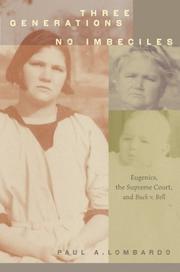
Lombardo is the legal historian who found the archival evidence that Carrie Buck's lawyer was working with her opponents. Read it after Cohen for the documentary proof behind the story.
How the movement was built
BeginnerSee eugenics as an organised, funded, respectable campaign — and trace its most durable victory, the 1924 immigration act.
▸ Study plan for this stage
Pace: Six to seven weeks for roughly 1,090 pages, which is the longest stage in the path. The Guarded Gate (496 pages) is tightly argued around one legislative outcome and reads in about three weeks. War Against the Weak (592 pages) is sweeping and sometimes repetitive; three weeks, and read it with the c
- Eugenics as respectable reform: university chairs, Carnegie and Rockefeller money, presidents and progressives, and mainstream scientific societies — not a fringe belief
- The Eugenics Record Office at Cold Spring Harbor under Charles Davenport, with Harry Laughlin running the field work, as the movement's institutional centre and data operation
- Madison Grant's The Passing of the Great Race and Lothrop Stoddard's writing as the popular race-science literature that made the political case
- Laughlin as expert eugenics agent to the House immigration committee, and the direct route from Record Office pedigree charts to congressional testimony
- The Immigration Act of 1924 and its national-origins quotas pegged to the 1890 census, chosen specifically to reduce southern and eastern European arrivals
- Okrent's closing argument: the door that 1924 shut was still shut in the 1930s, when the people trying to get through it were refugees from Germany
- Philanthropic funding as the enabling condition, which is Black's strongest and best-documented thread
- The historiographical caution on Black: his account has been criticised by academic historians for overstating direct causal lines, particularly from American eugenics to the Holocaust — the funding record is solid, the causal chain is where he outruns his evidence
- Who funded American eugenics, and what did the money buy — research, publicity, lobbying, or all three?
- What was the Eugenics Record Office actually doing day to day, and what was the evidentiary quality of the data it produced?
- How did Laughlin's material reach Congress, and what did the 1924 quotas do that earlier immigration restrictions had not?
- What is Okrent's argument about the 1930s, and how much weight can the counterfactual bear?
- Where specifically does Black assert influence that the sources cannot support? Pick two passages and say what a careful historian would need to establish them.
- Build a one-page organisational map of American eugenics around 1920: the institutions, their funders, their leading figures, and their publications. You will use it in every remaining stage.
- Read the 1924 quota formula and work out, using the 1890 census as the base year, why that base year was chosen. Doing the arithmetic yourself is more convincing than being told.
- Take one causal claim from War Against the Weak about the American-German link and hold it aside. In the fourth stage, check it against Kühl's archival record.
- Write 300 words on why the movement's respectability matters more historically than its cruelty. That is Okrent's real subject and it is easy to read past.
Next up: Two narrative books have given you the story; the next stage replaces the story with the academic literature that decides how much of it is true and what it means.

Okrent shows how eugenicists supplied the race science behind the Immigration Act of 1924, and what that closed door meant for refugees a decade later. The clearest account of eugenics as effective politics.
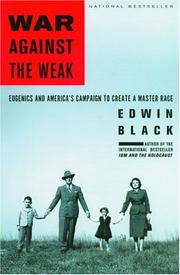
A journalist's sweeping account of American eugenics and its philanthropic funding, from the Eugenics Record Office to Cold Spring Harbor. Vigorous and sometimes criticised by historians for overstating direct causation — read it alongside the scholarly accounts that follow.
The scholarly histories
IntermediateReplace the narrative accounts with the academic literature on how eugenics related to genetics, class, gender and the state on both sides of the Atlantic.
▸ Study plan for this stage
Pace: Eight to ten weeks for about 1,350 pages, and this is the analytically hardest stage. In the Name of Eugenics (426 pages) is the foundation and needs three weeks. Controlling Human Heredity is only 158 pages but is extremely dense per page — read it slowly, in about a week, and reread the chapters o
- Galton's founding formulation and the split between the biometricians around Karl Pearson and the Mendelians — eugenics grew up entangled with genuine genetics, not alongside it
- Kevles's distinction between mainline eugenics, with its racial and class assumptions, and the later reform eugenics that tried to keep the programme while dropping the pseudoscience
- The transition Kevles traces from eugenics to human genetics and genetic counselling after 1945, which is the movement's actual afterlife rather than its disappearance
- Diane Paul's central corrective: eugenics was not exclusively a right-wing enthusiasm — socialists, Fabians and prominent geneticists including Muller and Haldane were advocates, which breaks the comfortable political story
- Class and gender as the operative categories alongside race: who was actually sterilised was determined by poverty, institutionalisation and perceived sexual behaviour more than by any measured trait
- Stern's regional argument: California performed roughly a third of all American sterilisations, and the programme there was continuous with public health, border medical inspection and conservation politics
- The long tail — California's law was not repealed until 1979, and coerced sterilisations continued in institutions and prisons well beyond the movement's official death
- Bruinius's method of narrating the campaign through the people subjected to it, which restores what three books of institutional analysis necessarily abstract away
- How does Kevles describe the relationship between eugenics and real genetics? Is eugenics a misapplication of good science, bad science, or something harder to classify?
- What is reform eugenics, and does it constitute an improvement or a rebranding?
- Name three prominent left-wing or progressive eugenicists from Paul's account, and say what each wanted eugenics to achieve.
- Why California? What does Stern identify as the specific state-level conditions that produced a third of the national total?
- After Bruinius, describe the typical person sterilised under these laws. How closely does that description match the movement's stated targets?
- Write a one-page synthesis reconciling Kevles, Paul and Stern on what eugenics was. They emphasise science, politics and region respectively, and forcing them into one account is the point of the exercise.
- Make a table of American sterilisation totals by state from Stern's figures. The distribution is far more uneven than the national number suggests and the shape of it is an argument.
- Go back to your organisational map from the previous stage and add the left-wing and progressive figures Paul names. The map will look different, which is her contribution.
- After Bruinius, write 300 words on one individual case from the book. Then reread Holmes's line about three generations. The exercise is the whole moral content of the path in one hour.
Next up: With the American record established scholarly rather than journalistically, you can finally test the claim everyone reaches for — that American eugenics fed Nazi racial policy — against the documents.
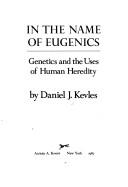
The standard history of eugenics and human heredity in Britain and America, and the book that established how entangled the movement was with real genetics. Everything after it is a refinement or a challenge.
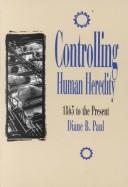
A concise, analytically sharp survey from 1865 to the present, unusually good on the left-wing and progressive eugenicists the popular accounts skip. The best short synthesis in the field.
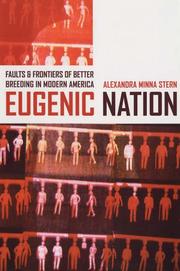
Moves the story west to California, which performed a third of all American sterilisations, and connects eugenics to public health, border policy and environmentalism. It shows the movement was regional and enduring, not a single national episode.
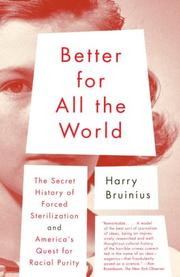
A narrative history of the sterilisation campaign built around the people subjected to it. Read it last in this stage as the human counterweight to three books of institutional analysis.
The transmission to Germany
IntermediateEstablish precisely what the documented links were between American eugenics and Nazi racial policy, and where the claims of influence outrun the evidence.
▸ Study plan for this stage
Pace: Two weeks for 184 pages, which is short but should not be rushed. The Nazi Connection is an archival monograph, and its value is entirely in the specificity of what it does and does not establish, so read it with a pen and mark every claim by strength of evidence. Reread the chapter on the 1930s exc
- What is documented: correspondence, mutual citation, journal exchanges, conference attendance, honorary degrees and philanthropic funding running between American and German eugenicists through the 1920s and 1930s
- Laughlin's honorary doctorate from Heidelberg in 1936, accepted from a Nazi-controlled university, as the single most concrete emblem of the relationship
- The 1933 German sterilisation law and its acknowledged debt to American statutory models, including Laughlin's model law — a documented influence on legal drafting, which is a narrower claim than influence on the Holocaust
- American eugenicists' public praise for German policy in the 1930s, printed in their own journals, which removes any question of ignorance
- Rockefeller Foundation support for German research institutes, and the difficulty of assigning intent to funding decisions made before 1933
- Kühl's evidentiary discipline as the point of the book: he distinguishes influence on sterilisation policy, which he can show, from causation of extermination policy, which he does not claim
- Where the popular accounts outrun this: the leap from a shared sterilisation programme to the death camps requires an argument Kühl deliberately does not make
- What specific exchanges between American and German eugenicists does Kühl document, and over what period?
- In what sense did the 1933 German law draw on American models, and in what sense did it not?
- What did American eugenicists say publicly about German policy after 1933, and did any of them recant?
- Where exactly is the line between what Kühl establishes and what Edwin Black asserts?
- Does the documented relationship change your assessment of the American movement, or only your assessment of the German one?
- Retrieve the causal claim from War Against the Weak you set aside two stages ago and check it against Kühl. Write a paragraph on the result — this is the single most useful exercise in the path.
- Make two lists as you read: claims Kühl supports with documents, and claims he identifies others as making without support. The lengths of the two lists are the book's argument.
- Write 300 words on the honorary degree episode, treating it as evidence. What does an accepted honorary doctorate prove and what does it not?
- Draft the strongest version of the case that American eugenics bears real responsibility for what followed in Germany, using only what Kühl documents. Then mark where you had to stretch.
Next up: The history is now as settled as it gets, which leaves the question the whole subject rests on: whether the measurements eugenics relied on ever meant anything, and what happened to the assumptions behind them.
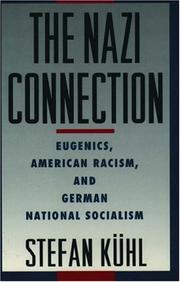
The careful archival study of the exchanges, citations, honorary degrees and funding that ran between American eugenicists and the Third Reich. It supplies the evidentiary discipline that Black's broader account lacks.
The science, and what survived
IntermediateExamine the measurement claims eugenics rested on, and be able to identify the assumptions that persist in modern arguments about heredity and intelligence.
▸ Study plan for this stage
Pace: Three to four weeks for 432 pages. The Mismeasure of Man is a polemic by a working scientist and reads more easily than its subject matter suggests, but the chapters on factor analysis and Spearman's g are technical and worth a second pass. Read it with the caveat below in front of you throughout, b
- Reification as Gould's central charge: taking a statistical abstraction such as g and treating it as a physical thing located in a person
- Craniometry as the nineteenth-century measurement programme — Samuel Morton's skulls and Paul Broca's brain weights — and Gould's argument that the numbers followed the expectations
- The American army intelligence testing of the First World War under Yerkes, and the route from those results to immigration and sterilisation policy
- Goddard, the Kallikak study and the invention of the moron as an administrative category, connecting directly back to Carrie Buck's classification
- Factor analysis explained for a general reader, and Gould's argument that a single dominant factor can be extracted from correlated data without implying a single underlying cause
- Biological determinism as a recurring political argument rather than a scientific finding, appearing in each generation in the vocabulary of that generation's science
- The essential caveat: Gould's own reanalysis of Morton's skull measurements was itself challenged by a 2011 study which found Morton's figures largely accurate and Gould's critique mistaken — which makes this book a live exercise in reading a polemic critically rather than a closing verdict
- What survived: the movement's institutions dissolved, but the assumptions about heritable group differences in intelligence recur, which is the reason this stage exists at all
- What is reification, and what is Gould's best example of it?
- How did the army testing data get from psychology into immigration policy, and who carried it?
- Explain in plain language what factor analysis does and what Gould says it cannot license.
- The 2011 reanalysis of Morton's skulls went against Gould. Does that damage the book's central argument, one of its examples, or both?
- Which of eugenics' assumptions do you now recognise in contemporary arguments about heredity and group differences, and which have genuinely gone?
- Read the Morton chapter, then read a summary of the 2011 reanalysis, then write 500 words judging both. This is deliberately the final exercise of the path: it asks you to apply to Gould exactly the scepticism he applies to Morton.
- Take the classification applied to Carrie Buck in the first stage and trace it back through Goddard's terminology in this book. The path closes where it opened, and the connection is direct.
- Write out, in one paragraph each, the strongest version and the weakest version of Gould's thesis. He is often attacked for the weakest and defended for the strongest.
- Finish by writing your own two-page answer to the question the whole path poses: what made eugenics possible, and which of those conditions still hold. Use at least one book from each stage.
Next up: This is the end of the path — one case, the movement, the scholarship, the German connection and the science — and the natural next step is the primary material itself: the Buck v. Bell opinion, Laughlin's model law and the Eugenics Record Office's own publications, all of which are public and all of which read differently now.

Gould's dissection of craniometry and early IQ testing as reification and biased measurement. Some of his own reanalyses have themselves been challenged, which makes it a useful final exercise in reading a polemic critically.
Discussion
Keep reading
Paths that share books, cover the same subject, or open a related topic.