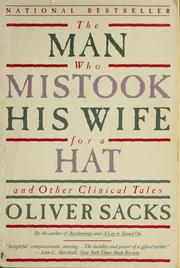
Start with The Man Who Mistook His Wife for a Hat. It is a collection of short case studies, most of them under fifteen pages, and it is the most efficient possible demonstration of what Oliver Sacks did that nobody else was doing: describing a neurological deficit from the inside, as a change in what it is like to be a person, rather than as a lesion on a scan.
The obvious alternative is Awakenings, which is the more serious book and the one with the film attached. It is also the hardest of his books and the least representative of the writing that made him famous. Save it. Read the case histories first, at one case per sitting rather than in bulk — they blur badly if you chain four together.
An honest note about what these books are
Sacks built a career out of writing about identifiable neurological patients, some of whom were his own, in books written for a general readership. That practice drew sustained criticism, most pointedly from disability writers who argued that his patients functioned as material and that the sympathy in the prose did not settle the question of consent. Sacks addressed the objection more than once in later work and in interviews, and On the Move is partly a reckoning with it. Readers land in different places on whether he answered it. Knowing the argument exists makes the books better to read, not worse.
Stage one: the case histories
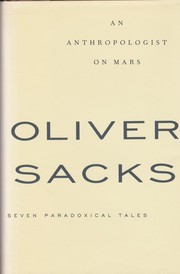
The Man Who Mistook His Wife for a Hat and An Anthropologist on Mars, two to three weeks. The second is seven long case studies rather than many short ones, and it is where the form matures — he stops collecting curiosities and starts following people over years.
Stage two: the single-subject books
Awakenings, Musicophilia and Hallucinations, about four weeks. Awakenings, on patients left frozen for decades by encephalitis lethargica and briefly revived by a new drug in 1969, is the hardest of the three and worth slowing to 20 pages a day. Its footnotes and appendices are substantial — decide early whether you are reading them and be consistent, because half-reading them is worse than either choice. Musicophilia and Hallucinations are episodic and go faster.
Stage three: the edges
Seeing Voices, The Island of the Colorblind and Cycad Island and The Mind's Eye, roughly three weeks. Seeing Voices, on deaf culture and sign language, is short but dense and heavily footnoted, and it is the book of his that has aged best politically — it takes deafness as a language community rather than a deficit. The island book is a travel narrative and reads quickly.
Stage four: the life behind the work
Uncle Tungsten, On the Move and Gratitude, about three weeks. Keep this order: childhood, then life, then the ending. Uncle Tungsten is a chemistry-obsessed wartime boyhood and is oddly the funniest thing he wrote. On the Move is the autobiography, published the year he died. Gratitude is 55 pages of four essays written after his terminal diagnosis, readable in one sitting — but read it alone, on its own day, and not stapled onto the end of something else.
Where to stop
The Man Who Mistook His Wife for a Hat, An Anthropologist on Mars and Musicophilia are the three that carry his reputation. Stopping there is entirely sensible. Everything after that is for readers who want either the science in more depth or the man behind it.
If the appeal is a serious writer being curious in public about the body, Mary Roach works the same instinct from outside medicine.
Follow the full ordered path here: Oliver Sacks Reading Order: Where to Start.