Mary Roach Reading Order: Where to Start
Mary Roach writes one book over and over in the best way: she picks a subject polite people avoid, follows the scientists who study it anyway, and reports back with footnotes that are funnier than most people's jokes. There is no chronology to respect and no series to track, so the order that matters is the order of nerve — start with the two that made her name, move through the flagship curious-science books, then take the later and stranger ones once you trust her judgement about when to stop laughing.
Start Here
BeginnerMeet the Roach method — a taboo subject, real laboratories, and a narrator who asks the question you were too embarrassed to ask — in the two books that define it.
▸ Study plan for this stage
Pace: 1–2 weeks. Stiff is 304 pages and Gulp 348, both built from self-contained chapters, so 40–50 pages a sitting works and putting the book down mid-chapter costs you nothing. Read Stiff first even if the subject repels you — it is the shorter, sharper book and it establishes the contract. Do not read
- The Roach method: choose a subject social convention forbids discussing, then find the people who study it professionally anyway and follow them to work
- Stiff is organised by what can happen to a body after death — anatomy lab, crash testing, decomposition research, burial alternatives — rather than chronologically, which is why the chapters detach cleanly
- The footnotes are a second book running underneath the first; they carry the jokes and the strangest sourcing, and skipping them halves the experience
- Roach positions herself as the squeamish civilian in the room, which is a rhetorical device: it gives the reader permission to be uncomfortable and the researchers permission to be matter-of-fact
- Consent and dignity are the real argument of Stiff — whose body it is, who decided, and why donation is treated as macabre rather than useful
- Gulp runs the alimentary canal end to end, and its actual subject is how much of eating is psychology, culture and disgust rather than nutrition
- Where the humour stops is deliberate: watch for the paragraphs where she drops the comic register entirely, usually when a person rather than a specimen is in front of her
- What does Roach do in Stiff to keep cadaver research from reading as either ghoulish or sentimental, and where does that control slip?
- Why does Stiff's chapter structure work as a set of essays, while Gulp's follows a single physical route — and what does each shape make possible?
- How much of Gulp is about digestion and how much about disgust as a learned response?
- Pick three footnotes you remember. What is each one doing that the main text could not do?
- After both books, state the Roach method in one sentence. You will test that sentence against every later stage.
- Read one chapter of Stiff with the footnotes first, then the body text. It exposes how much of the voice lives down there.
- Mark every point in Stiff where Roach names the person the body used to be. Count them — the number is smaller than it feels, and that restraint is the book's ethical position.
- In Gulp, track a single meal's fate across chapters and write the sequence out. It reveals how carefully the book is ordered underneath the anecdotes.
- Note which chapter you would hand to someone who says they do not read science. That instinct is the one to trust when choosing your next Roach.
Next up: With the method identified in its two purest forms, the next stage watches the same method applied to three institutions — NASA, sex research and the military — where the awkwardness of studying humans is the whole story.
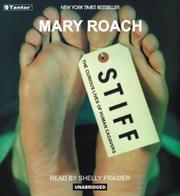
Her first book and still the best entry point: what happens to donated human cadavers, from anatomy labs to crash tests to composting research. It sets the template for everything after it, and it earns its jokes by taking the dead seriously.
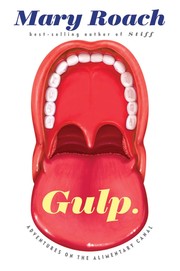
A tour of the alimentary canal from mouth to exit. Read it second because it is the purest distillation of the formula, and because it proves the Stiff trick was not a fluke.
The Flagship Curious-Science Books
BeginnerWatch her apply the same method to three fields with very different institutional cultures — spaceflight, sex research, and the military — and see how much of each book is really about the awkwardness of studying humans.
▸ Study plan for this stage
Pace: 3–4 weeks for roughly 940 pages across Packing for Mars, Bonk and Grunt. About a book a week at 45 pages a day. Read them in that order: Packing for Mars is the most reported, Bonk the most personally exposed, Grunt the most restrained.
- Packing for Mars reframes spaceflight as a hygiene, food and psychology problem, which is exactly the part space journalism omits
- Bonk is a history of sex research as much as a book about sex — the recurring theme is how hard institutions have made it to study something universal
- Roach makes herself a subject in Bonk (she and her husband participate in an imaging study), which is the furthest she takes the participant-narrator move
- Grunt is about military science that keeps soldiers alive — heat, noise, diarrhoea, sharks, sleep — rather than weapons, and the choice of what to leave out is the argument
- Institutional culture is the hidden comparison across the three: NASA's obsessive documentation, sex research's defensiveness, the military's practicality
- Her sourcing habit is consistent — the archival oddity plus the living researcher who will answer a blunt question on the record
- Grunt shows the method maturing: fewer jokes per page, more weight given to consequences, because the subjects can die at work
- What does Packing for Mars claim is the actual limiting factor on long-duration spaceflight, and how convincing is the case?
- Why does Bonk spend so much of its length on the history of researchers rather than on findings?
- Roach participates in an experiment in Bonk. Does that strengthen the reporting or make the reader the audience for a stunt?
- Grunt deliberately avoids weapons. What does that omission let her say about war that a weapons book could not?
- Rank the three by how much of the book is about the science versus about the institution studying it.
- List every bodily-function problem Packing for Mars raises that you had never considered. It is the fastest way to see what her subject selection is actually for.
- In Bonk, note each instance of a study being blocked, defunded or hidden. The pattern is the book's real thesis.
- Read the Grunt chapter on sleep deprivation alongside any Packing for Mars chapter on confinement — the same human limits, two institutions, two tones.
- Write the one-sentence pitch Roach must have made to each set of gatekeepers to get access. Doing this reveals how much of her craft is negotiation.
Next up: Having seen the method work where institutions cooperate, the next stage takes on the two books where the evidence itself refuses to cooperate.
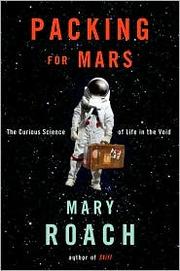
The unglamorous logistics of putting a body in orbit: motion sickness, hygiene, food, and what NASA actually tests. The most reported of her books and the one that changes how you watch space coverage.
The history and present of sex research, including a memorable chapter in which she and her husband become subjects. Read it after Packing for Mars because by then you know she goes further than the assignment requires.

Military science that is not about weapons — heat, noise, diarrhoea, sleep, uniforms. The book where the comedy sits closest to real harm, which is why it belongs after you have calibrated her tone.
The Deeper Cuts
IntermediateSee what happens when Roach takes on subjects where the science is contested or the animals do not cooperate, and where her scepticism does more work than her curiosity.
▸ Study plan for this stage
Pace: 2 weeks for Spook (320 pages) and Fuzz (336). Slightly slower going than the flagships — Spook because the historical material is thinner on payoff, Fuzz because the field reporting ranges across several continents. 35–40 pages a day is realistic.
- Spook applies scientific method to claims about the afterlife, and the interest is entirely in the failures — what a hundred years of experiments could not establish
- Roach's scepticism in Spook is genuinely open rather than performative: she names what would have convinced her and reports that it did not happen
- Weighing the soul, reincarnation case files, ectoplasm and EVP are treated as episodes in the history of measurement, not as beliefs to mock
- Fuzz is about human–wildlife conflict and the law: what happens when a bear, a gull, a leopard or a tree breaks rules written for people
- Fuzz is the most policy-driven of her books — the punchline is usually a bureaucratic decision, not a laboratory result
- Both books show the method under strain: where the science is weak or the animals will not behave, her judgement does more work than her curiosity
- The ethical thread in Fuzz — culling, relocation, deterrence — gets more space than the comedy, which is the clearest sign of how her writing changed after Grunt
- In Spook, what standard of evidence does Roach set for herself at the start, and does she hold to it?
- Which Spook chapter comes closest to a genuine finding, and why is that still not enough?
- What does Fuzz argue is really being managed when a government manages a dangerous animal?
- Compare the tone of Fuzz to Stiff. What has changed in eighteen years, and what has not?
- Do these two books belong on the same shelf as the flagships, or are they minor? Defend the answer with a specific chapter.
- For each Spook chapter, write the claim, the test and the result in three lines. The book becomes much clearer as a structured argument.
- In Fuzz, identify the chapter where you disagree with the policy she reports. Articulating why is the point of the book.
- Pick the single funniest passage in Fuzz and the single grimmest, then look at how few pages apart they usually are.
- Compare a Spook chapter to a Bonk chapter on the same problem: how to study something people will not fund or discuss honestly.
Next up: That covers the seven full-length books; the last stage is for completists and for anyone curious where the voice came from before the science.
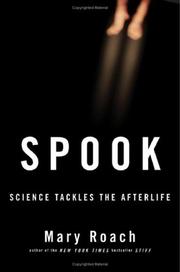
Her attempt to take experiments on the afterlife seriously, from soul-weighing to reincarnation research. The most sceptical of her books and the least likely to be your favourite, which is exactly why it goes here rather than first.

Animals that break human laws — bears, elephants, gulls, trees — and the people whose job is to negotiate. Her most policy-minded book, and a good late read because it shows her method stretching beyond the human body.
The Completist Tail
IntermediateFill in the non-flagship Roach for readers who want everything, and understand where the voice came from before the books.
▸ Study plan for this stage
Pace: A weekend. My Planet is a collection of short humour columns, read three or four at a time. It is not a science book and should not be judged as one.
- My Planet collects Roach's magazine columns on domestic life — marriage, clutter, aging, the small absurdities of a household
- The voice is fully formed here without the reporting attached, which is the useful thing to notice: the comedy was never dependent on the laboratory
- The pieces are short and closed, so they show her joke construction in miniature — setup, specific detail, deflating clause
- Read as an appendix, not an entry point: someone who starts here will get an entirely wrong impression of the work
- It also marks the boundary of the shelf — Roach's output is small and deliberate, and there is no hidden major book waiting
- Which parts of the Roach voice survive with no research behind them, and which turn out to have depended on it?
- What does the column form allow that a book chapter does not, and what does it lose?
- Having read all of it, what makes a subject a Roach subject? Test the definition against a subject she has never taken.
- If you were handing one book to a specific friend, which one and why — and what does that choice say about who each book is for?
- Write your own one-paragraph pitch for a Mary Roach book on a subject she has not covered, including the two researchers you would need access to.
- Reread the opening page of Stiff after finishing everything else. The method is entirely present in it.
- Rank all eight books by how well the humour has aged, and identify what dates fastest.
Next up: This is the end of the path; from here the natural next step is another reporter who works a single subject to exhaustion, such as Oliver Sacks or Patrick Radden Keefe.
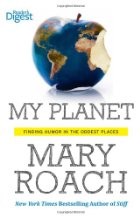
A collection of her Reader's Digest columns on domestic absurdity. Slighter than the science books and worth reading last, but it shows the comic voice fully formed before she ever set foot in a cadaver lab.
Discussion
Keep reading
Paths that share books, cover the same subject, or open a related topic.