Oliver Sacks Reading Order: Where to Start
Oliver Sacks wrote neurology as biography: a lesion is never just a lesion, it is a person rebuilding a life around it. The books do not form a series, so the useful order runs from the famous case collections, through the single-subject investigations, out to the places and edges he was drawn to, and finally to the memoirs, which explain where the whole project came from. Read this way, the late autobiography lands as a reveal rather than an appendix.
Start Here: The Case Histories
BeginnerLearn to read a Sacks case study — the deficit, the compensation, and the argument that the person is not reducible to the diagnosis.
▸ Study plan for this stage
Pace: 2–3 weeks. The Man Who Mistook His Wife for a Hat is 308 pages of short case studies and An Anthropologist on Mars is 351 pages of seven long ones. Read one case per sitting rather than in bulk; they blur badly if you chain four together. Roughly 25–30 pages a day.
- A Sacks case history has a consistent shape: the deficit, the compensation the person builds around it, and the argument that the compensation is a life rather than a symptom
- The Man Who Mistook His Wife for a Hat is organised as losses, excesses, transports and the world of the simple — a taxonomy worth noticing, because it is a claim about what neurology should study
- An Anthropologist on Mars gives seven people a full essay each, which lets him follow consequences over years instead of presenting a vignette
- Sacks writes in the Romantic clinical tradition of Luria — the whole person, narratively — explicitly against a neurology that reports test scores
- The recurring claim is that the brain reorganises around damage, and that identity is what the reorganisation produces
- The ethical question is present from the first book and never fully settled: these are real patients, described by their doctor, for a general readership, and several could not meaningfully consent
- Sacks addressed that discomfort himself in later writing and in his prefaces, acknowledging the risk of turning patients into curiosities — read the case histories with that objection live rather than parked
- What does Sacks's case-history form let him show that a clinical paper cannot, and what does it let him avoid demonstrating?
- Take one case from each book. What does the patient want, and does the essay tell you or does Sacks tell you?
- How does the taxonomy in The Man Who Mistook His Wife for a Hat shape what counts as interesting? What kind of patient is missing?
- An Anthropologist on Mars follows people over years. Which cases change most under that longer lens?
- Where does admiration for a patient's adaptation shade into treating disability as a source of wonder for the reader?
- Summarise three cases as a neurologist would — deficit, localisation, prognosis — then compare each to Sacks's version. The gap is the entire argument of his career.
- Mark every point where Sacks records that a patient contradicted him or refused his framing. Those moments are rarer than they should be and they are where the writing is most honest.
- Read Temple Grandin's own account of herself alongside the title essay of An Anthropologist on Mars. It is the one case where the subject went on to speak at length for herself.
- Write down your own position on whether these books should have been written. Return to it after the final stage.
Next up: Having seen the portrait gallery, the next stage watches Sacks hold a single condition in view for a whole book, where he has to argue rather than accumulate.
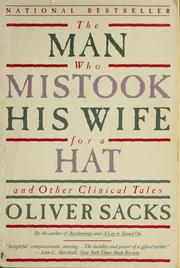
The book that made him famous, and still the right door: twenty-four short cases of visual agnosia, amnesia, Tourette's and savant ability. Short chapters mean you can find his wavelength in an evening.
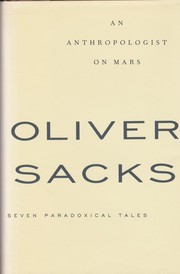
Seven longer cases, including the surgeon with Tourette's and Temple Grandin. Read it second: the same method with room to breathe, and the first sign that he is as interested in adaptation as in loss.
The Single-Subject Books
BeginnerFollow one condition all the way down, and see Sacks build a full-length argument rather than a portrait gallery.
▸ Study plan for this stage
Pace: 4 weeks for Awakenings (409 pages), Musicophilia (425) and Hallucinations (352). Awakenings is the hardest of the three and worth slowing to 20 pages a day; the other two are episodic and go faster. Awakenings' footnotes and appendices are substantial — decide early whether you are reading them, and
- Awakenings documents post-encephalitic patients given L-DOPA in 1969, their brief return, and the deterioration that followed — it is a book about a failure as much as a discovery
- Its structure is unusual: twenty patient histories, then long theoretical sections, then footnotes that argue with the main text; the argument is distributed across all three layers
- Musicophilia treats music as a neurological probe — amusia, musical hallucination, Williams syndrome, the preservation of song in amnesia — evidence that music is not a single faculty
- Hallucinations argues that hallucinating is common, mostly benign, and heavily stigmatised, which is a public-health claim wrapped in case material
- In Hallucinations Sacks reports his own drug experiences and migraine auras, using himself as a case, which changes the authority of the book
- Single-subject books force him to generalise, and this is where his weakness as a theorist relative to his strength as an observer is most visible
- Awakenings raises the sharpest version of the ethics problem: these patients were institutionalised for decades and are described in extraordinary intimacy
- What does Awakenings conclude about L-DOPA, and how does Sacks handle having been the enthusiastic prescriber?
- Which layer of Awakenings — histories, theory or footnotes — carries the actual argument, and would the book survive losing one?
- In Musicophilia, what does the range of musical disorders tell you about how music is processed?
- What is Hallucinations arguing for practically, and who is the intended audience for that argument?
- Does Sacks reporting his own hallucinations make Hallucinations more trustworthy or less?
- Build a table of the Awakenings patients: pre-treatment state, response, outcome. The pattern the prose keeps softening becomes plain.
- For Musicophilia, list which musical abilities survive which kinds of damage. It is effectively a map of music in the brain.
- Identify a hallucination type in Hallucinations that you or someone you know has experienced. The book's stigma argument depends on that recognition.
- Compare a single case that appears in more than one book and note what changes in the retelling.
Next up: The next stage takes Sacks out of the clinic entirely, to a deaf community, a Pacific island and his own failing sight, where he is an outsider rather than a physician.

His account of the post-encephalitic patients revived by L-DOPA in 1969 and what happened next. The foundational book of his career, placed here rather than first because it is denser and more clinical than the case collections.
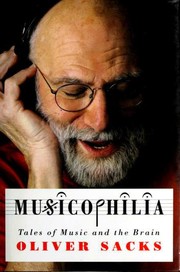
Music and the brain, from musical hallucination to the way rhythm can move a Parkinsonian body that will not otherwise move. The most immediately useful of his books, and the one non-neurologists quote most.
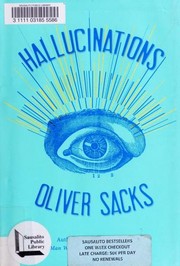
A survey of seeing and hearing what is not there, including his own drug experiments. Read it after Musicophilia because the two together dismantle the idea that perception is a passive recording.
The Edges
IntermediateSee Sacks outside the clinic — inside a deaf culture, on an island, and inside his own failing sight — where the writing turns anthropological and personal at once.
▸ Study plan for this stage
Pace: 3 weeks for Seeing Voices (189 pages), The Island of the Colorblind (320) and The Mind's Eye (278). Seeing Voices is short but dense and heavily footnoted; the island book is a travel narrative and reads quickly. About 30 pages a day.
- Seeing Voices argues that sign languages are full natural languages and that deafness is a linguistic and cultural situation before it is a medical one
- It is the book where Sacks is least the expert — he is learning from Deaf people and reports the Gallaudet protest as a political event, not a case
- The Island of the Colorblind pairs two island populations, one with hereditary achromatopsia and one with a neurodegenerative disease, and reads congenital difference as a form of community rather than deficit
- That book is also a botany book — his cycad obsession is genuine and takes up real space; readers expecting neurology throughout are often thrown
- The Mind's Eye returns to vision and includes his own account of losing sight in one eye to ocular melanoma, written contemporaneously
- Turning the method on himself is the pivot of the whole shelf: the observer becomes the patient, and the ethical asymmetry of the earlier books becomes visible from the other side
- Across these three, the argument shifts from 'the person is more than the deficit' to 'the deficit may not be a deficit at all', which is a genuinely different claim
- What changes when Sacks writes about a community rather than an individual? Does his method survive the shift?
- How does Seeing Voices handle the disagreement between Deaf culture and medical intervention, and does it take a side?
- In The Island of the Colorblind, what is the cycad material doing in the book? Is it a digression or the argument?
- How does The Mind's Eye read differently once you know he is describing his own eye?
- Does writing about himself resolve the consent problem in the earlier books, or merely complicate it?
- Learn the fingerspelling alphabet while reading Seeing Voices. His argument about language becoming visual is hard to grasp abstractly.
- In the island book, list what each community has organised around its condition — schooling, work, social roles. The point is the accommodation, not the pathology.
- Read Sacks's own vision journals in The Mind's Eye next to any patient account from the first stage and compare the level of detail he permits himself.
- Write one paragraph on how you would have wanted to be described if you had been one of his patients.
Next up: With the work behind you, the memoirs land as explanations rather than biography — the boy, the motorcyclist and the dying man each account for a book you have already read.
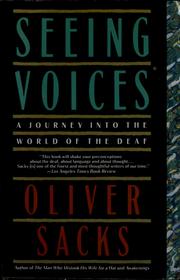
Deafness as a language and a culture rather than a deficit, culminating in the Gallaudet protests. The book where his politics are most visible, and it changes how you read every earlier case.

Pacific islands with hereditary achromatopsia and a mysterious neurodegenerative disease, plus a long digression on cycads. Sacks as travelling naturalist; read after Seeing Voices, which established the community-level lens.

Cases of lost vision, reading and face recognition, braided with his own ocular tumour. The hinge book: the clinician becomes a patient, which is the transition into the memoirs.
The Life Behind the Work
IntermediateRead the autobiographies last, so that the chemistry-obsessed boy, the motorcycling weightlifter and the dying man all land as explanations of books you have already read.
▸ Study plan for this stage
Pace: 3 weeks. Uncle Tungsten is 352 pages, On the Move 416, and Gratitude is 55 pages of four essays that can be read in one sitting — but read Gratitude alone, on its own day. Keep the order: childhood, then life, then the ending.
- Uncle Tungsten is a chemistry memoir of a wartime London childhood, and it explains where the taxonomic, collecting, wonder-driven habit of mind came from
- It also contains the wartime boarding-school material and the account of his brother Michael's schizophrenia, which is the private origin of a career spent among people whose minds had changed
- On the Move is the late, frank autobiography — motorcycles, weightlifting, amphetamines, his long silence about being gay, and the writing life
- On the Move is where he reflects most directly on the ethics and cost of writing about patients, and on how his books were received by the clinical profession
- Gratitude is four short essays written after his terminal diagnosis, published posthumously; it is not a summing-up of the science but of a life
- Read in this order, the memoirs work as commentary: the collector explains Musicophilia, the outsider explains Seeing Voices, the patient explains The Mind's Eye
- The shelf is finite and this is the end of it — Sacks published steadily for forty years and the memoirs deliberately close the account
- What in Uncle Tungsten prefigures the neurologist? Name three specific childhood habits.
- How does On the Move change your reading of the earliest case histories?
- What does Sacks say, in his own words, about the fairness of writing about his patients — and is it adequate?
- Gratitude is very short. What does it choose to include, and what does the choice say about the criteria he ends up applying to a life?
- Having read everything, is the Sacks project medicine, literature or advocacy? Defend it with one book.
- Match each memoir episode to the later book it explains, and write the pairing out. Half the shelf will re-order in your head.
- Return to the position you wrote in stage one about whether the case histories should have been written. Revise it now, with reasons.
- Read Gratitude aloud. It was written for the ear and for a newspaper page, and it is the one Sacks text that changes under a spoken reading.
- Choose the single book you would keep if you could keep one, and write two sentences on why it survives the rest.
Next up: This closes the path; readers who want the same patient, humane attention applied outside medicine should look next at Peter Hessler or Mary Roach.

A wartime London childhood told through chemistry — metals, light, the periodic table. The origin of his particular way of loving a subject, and a delight even if you never read another word of neurology.

The full memoir: California, motorcycles, amphetamines, the writing life, and the relationships he kept private for decades. Best read once the books it describes are familiar.
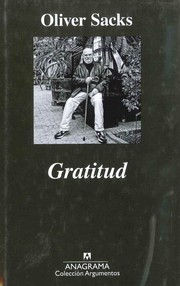
Four short essays written after his terminal diagnosis. Fewer than fifty pages and the only possible last stop; it reads as the closing paragraph of everything above.
Discussion
Keep reading
Paths that share books, cover the same subject, or open a related topic.