Best Books on Behavioral Genetics and the Nature-Nurture Debate
This is a subject where the evidence is narrower than the argument, and the argument is unusually bad-tempered because it touches education, parenting and inequality. The path is built as a debate rather than a syllabus: you read the framing books first, then the specific claim that made the field notorious, then what twin studies actually measured, then the two strongest opposed readings of the same data, and finally the critics who think the whole programme is misconceived. The one concept to keep hold of throughout is heritability, which is a population statistic about variance in one environment and is routinely reported as though it were a statement about an individual. Almost every dispute in this literature turns on that confusion.
The Frame
BeginnerRetire the idea that nature and nurture are opposing quantities, and understand why the 'blank slate' position was influential enough to need refuting.
▸ Study plan for this stage
Pace: 3 weeks. The Blank Slate is around 500 pages of argument and takes two; Ridley's Nature Via Nurture is about 300 and takes one. Read them in that order and against each other. Pinker's book is a polemic with a named target — it argues that a denial of innate human nature was the default position in
- The three doctrines Pinker sets out to refute: the blank slate, the noble savage, and the ghost in the machine — and the fact that he treats them as a linked package
- Why 'nature versus nurture' is a badly formed question: both authors argue the two are not competing quantities that sum to one
- Ridley's central mechanism — genes as switches that are turned on and off by experience, so that a gene can be the instrument of an environmental effect
- Heritability as a population statistic about variation, not a statement about how much of an individual trait is genetic
- The moral non-sequitur both books attack: that a finding about causes implies a policy, or that an innate difference justifies a hierarchy
- Why this argument became politically charged, and Pinker's account of the specific episodes (Wilson, Jensen, Herrnstein) that made it so
- What exactly is the blank slate position Pinker attacks, and which twentieth-century figures does he name as holding it?
- How does Ridley's account of gene expression dissolve the dichotomy rather than settle it in favour of one side?
- Why is heritability not the same as 'how genetic' a trait is in a given person?
- Pinker argues the blank slate was adopted partly for moral reasons. What were they, in his telling?
- Where do Pinker and Ridley actually differ, given that both reject the dichotomy?
- Write out Pinker's three doctrines and, for each, find the passage where he names a specific author or school as holding it — then check one of those attributions against the original source; this is the standard objection to the book and you should form your own view of it
- Take Ridley's chapter on a single gene and diagram the causal loop he describes, with arrows in both directions between genotype and environment; keep the diagram, you will reuse it in stage four
- Find the sentences in each book where the author states what does not follow politically from their scientific claim, and copy both out verbatim — most of the public argument about this subject is conducted by ignoring exactly those sentences
- Summarise the disagreement in one paragraph without using the words nature or nurture; if you cannot, you have not yet got past the framing
Next up: With the framing retired, the next stage takes up the single empirical claim that made this argument bitter: that parents matter far less than everyone assumes.
The polemic that put this argument in front of a general readership: an attack on the assumption that human minds arrive without structure, and on the moral panic that greeted anyone who said otherwise. Start here because it maps the political stakes before any data arrives, and read it knowing it is an advocate's brief.

The corrective to reading Pinker as a hereditarian: Ridley's case is that genes are mechanisms for responding to experience, so the dichotomy dissolves. Published in the United States as The Agile Gene, which is a separate record in our catalogue — it is the same book, so buy one.
The Claim That Started the Fight
IntermediateFollow the argument that shared family environment explains almost none of the variation between siblings, and be able to state both what the finding shows and what it does not.
▸ Study plan for this stage
Pace: 3-4 weeks. The Nurture Assumption runs to roughly 450 pages including extensive notes and takes two weeks; No Two Alike is comparably long and denser. Harris is an advocate for a specific and contested position, not a neutral surveyor of the field, and she says so; read her as counsel making a case.
- The behavioural-genetic decomposition Harris builds on: variance partitioned into additive genetic, shared environment, and non-shared environment
- Her core claim — that estimates of the shared-environment component in adult personality are consistently near zero, so parenting style leaves little measurable trace
- Group socialisation theory: the argument that children are socialised by peer groups rather than by parents
- The distinction Harris insists on between how parents affect a child's happiness and relationship with them, and whether parents affect adult personality outcomes
- The 'nurture assumption' itself as a cultural belief with a history, which Harris traces through twentieth-century childrearing advice
- In No Two Alike, her three-system model (relationships, socialisation, status) as an attempt to explain why identical twins raised in the same home still differ
- The standard objections to her case: restricted range of family environments in the samples studied, measurement error in personality inventories, and the reliance on self-report
- What is the shared-environment component, and what does Harris claim the twin and adoption data show about its size for adult personality?
- What does group socialisation theory predict that a parenting-effects theory does not?
- Which effects does Harris explicitly concede parents do have, and how does she keep those separate from her main claim?
- In No Two Alike, what problem is she trying to solve that The Nurture Assumption left open, and what is her answer?
- What is the strongest objection to her use of the shared-environment estimate, and how does she answer it?
- Reconstruct Harris's central argument as a numbered chain of premises and mark which links are empirical claims and which are inferences — the disputes in the literature are almost all about the inferences
- Take one study Harris cites in her endnotes, find the original paper, and check whether her characterisation of its effect size matches the paper's own abstract
- Write the paragraph a critic would write against her, then find where in No Two Alike she anticipates it; keep both, because stage five returns to this move
- List three parenting decisions that Harris's argument implies are unimportant and three she would say still matter, and be able to say why the line falls where it does
- Compare her three-system model in No Two Alike with the single mechanism of The Nurture Assumption, and state in one sentence what she conceded between the two books
Next up: Harris's argument rests entirely on the twin and adoption designs, so the next stage examines how those studies were actually built and what they assume.

The book that made the field impossible to ignore: an independent scholar arguing from adoption and twin data that parenting style has almost no measurable effect on how children turn out, and that peer groups do the socialising. Read it before the hereditarian books — most of them are answering it.
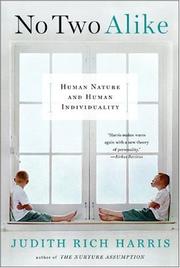
Her follow-up, and the more interesting book: having removed shared environment as an explanation, she has to account for why identical twins raised together still differ, and this is her attempt. Read it second because it assumes the earlier argument is settled.
What the Twin Studies Actually Did
IntermediateUnderstand the design of classical twin and adoption studies, what the equal-environments assumption is, and where the Minnesota reared-apart data came from.
▸ Study plan for this stage
Pace: 4 weeks. Segal's Entwined Lives is a long survey (roughly 400 pages) and takes two weeks; Wright's Born That Way is a journalistic narrative of about 340 pages and reads much faster; Spector's Identically Different is around 350 and also reads quickly. Segal is a twin researcher and a participant in
- The classical twin design: comparing monozygotic and dizygotic concordance to estimate genetic and environmental components
- The equal-environments assumption, which is the design's load-bearing premise and its most attacked one
- Adoption designs and reared-apart designs as attempts to break the correlation between genes and rearing environment
- The Minnesota Study of Twins Reared Apart: how twins were recruited, how much contact many had had before testing, and what that does to the estimates
- Why anecdotal similarities between reared-apart twins are weak evidence, and the base-rate reasoning that shows why
- Discordant monozygotic pairs as an evidentiary tool: Spector uses them to argue for epigenetic and environmental effects, since genetically identical people who differ cannot be differing genetically
- Assortative mating, gene-environment correlation, and non-additive genetic variance as the standard complications to a naive reading of the estimates
- State the equal-environments assumption precisely, and give the two strongest arguments that have been made against it
- How were the Minnesota reared-apart twins recruited, and why does the recruitment method matter for the results?
- Why does a striking coincidence between two reared-apart twins carry so little evidential weight?
- What does Spector claim discordant identical twins show, and what would a researcher who disagreed with him say those cases show instead?
- What is gene-environment correlation, and how does it inflate an estimate that is reported as heritability?
- Using the correlations Segal reports for a single trait, work Falconer's estimate by hand — twice the difference between the monozygotic and dizygotic correlations — and then write down every assumption you had to accept to get that number
- Take three of the anecdotal twin coincidences in Wright's book and estimate, roughly, how many pairs you would need to test before one such coincidence occurred by chance
- For one trait Spector discusses, list the discordant pairs he uses and note what non-genetic explanation he offers in each case; then note which of those explanations is measured and which is inferred
- Draw the design of a reared-apart study as a diagram showing what is and is not held constant, and mark on it the exact place the equal-environments assumption enters
- Compare Segal's and Wright's accounts of the same Minnesota findings and list where the researcher and the journalist emphasise different things
Next up: Now that you can judge the designs, the next stage sets the two strongest interpretations of the modern evidence directly against each other.
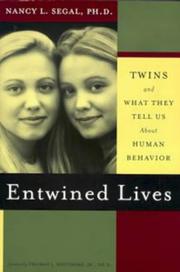
A twin researcher's account of what the studies are and what they found, written for a general reader and unusually careful about method. Read it before any interpretive book so you can judge the interpretations.
A journalist's narrative of the Minnesota Study of Twins Reared Apart — the striking anecdotes, and equally the reasons the striking anecdotes are weak evidence. Useful as a case study in how this research reaches the public.

By the head of the UK twin registry, and the book that turns the twin design against a simple genetic reading: he uses discordant identical twins to argue for epigenetic and environmental effects. Read it directly after Segal as the other conclusion drawn from the same instrument.
The Two Strongest Readings
IntermediateRead the hereditarian and egalitarian interpretations of the modern genomic evidence back to back, and locate the exact point at which they disagree.
▸ Study plan for this stage
Pace: 4 weeks. Plomin's Blueprint is short (around 250 pages) and can be read in a week; Stuart Ritchie's Intelligence is a 160-page primer and takes an evening or two; Harden's The Genetic Lottery is around 300 pages and is the one to read slowly. Read Blueprint and The Genetic Lottery back to back, idea
- Genome-wide association studies and polygenic scores: how a score is constructed, and the variance it currently predicts for behavioural traits
- Plomin's three laws — that all traits show substantial heritability, that shared environment matters less than genes, and that a substantial portion of variance is unexplained by either
- Plomin's further claim that polygenic scores make prediction possible at the level of the individual rather than the population
- What an intelligence test measures, the g factor, and the reason both authors conduct much of their argument in these terms
- Portability: the finding that polygenic scores derived in one ancestry group predict poorly in another, and why this constrains what the scores can be used for
- Harden's position that Plomin's evidence is largely correct and supports egalitarian redistribution, because genetic endowment is unchosen and therefore an arbitrary basis for reward
- The precise point of disagreement: not the size of the heritability estimates, but what a society owes to people who drew badly
- How is a polygenic score built from a genome-wide association study, and what proportion of variance in educational attainment do current scores predict?
- State Plomin's laws in his own terms, and identify which one Harden also asserts and which one she qualifies
- What is the portability problem, and what does it imply about using polygenic scores across populations?
- What does Harden mean by calling genetic endowment a lottery, and what political conclusion does she draw from that?
- Where, exactly, do Plomin and Harden agree about the evidence, and where do they diverge?
- Why do both authors spend so much of their argument on intelligence testing specifically?
- Build a two-column table of claims — evidence in one column, policy inference in the other — filled from Blueprint and The Genetic Lottery, and mark every row where the two books put the same item in the evidence column but different items in the inference column
- Find the passage in Blueprint where Plomin describes what a polygenic score can tell an individual parent, and the passage in The Genetic Lottery where Harden addresses the same use case; write out both and note what each declines to say
- Use Ritchie's Intelligence to write a one-paragraph definition of g, then check both Plomin's and Harden's usage against it and record any drift
- Take one of Harden's policy proposals and ask what evidence would have to change for her to abandon it; do the same for one of Plomin's predictive claims — this identifies whether each position is empirically defeasible
- Write the single sentence that both authors would sign, and the single sentence that separates them
Next up: Both readings assume that partitioning variance into genetic and environmental shares is a coherent thing to do, which is exactly what the final stage denies.

The strongest statement of the hereditarian position by the field's most prominent researcher: DNA as the major systematic force shaping psychological differences, with polygenic scores as the new instrument. The clearest version of the claim you need to be able to evaluate.

A very short primer on what intelligence testing measures, which sits between Plomin and Harden because most of their disagreement is conducted in terms of it. Our catalogue shows the short title; the book is published as Intelligence: All That Matters.

The most important book on this path: Harden accepts essentially all of Plomin's evidence and draws the opposite political conclusion — that genetic luck is arbitrary and therefore an argument for redistribution, not against it. Read it immediately after Blueprint.
The Case Against the Whole Programme
IntermediateTake seriously the argument that heritability estimates are the wrong tool, and be able to say why this criticism has persisted for forty years without being resolved.
▸ Study plan for this stage
Pace: 4-5 weeks. Not in Our Genes runs to around 300 pages and is written in a combative register aimed at 1980s sociobiology, so some of its targets are dated even where the methodological objection is not; The Mismeasure of Man is roughly 400 pages including its historical case studies; Biology as Ideol
- Lewontin's central objection: that heritability partitions variance within a specific population in a specific range of environments and licenses no inference about what a changed environment would produce
- The norm of reaction — a genotype's outcome across the range of environments — and why a single heritability figure discards it
- The claim that organism and environment are mutually constructed, so that treating them as separable causes is a category error rather than an approximation
- Biological determinism as a social argument, and the reason Lewontin, Rose and Kamin treat scientific and political claims in the same book
- Gould's historical case: that measurement in the study of human difference has repeatedly been shaped by the expectations of the measurer, demonstrated through craniometry and the early intelligence tests
- Reification — treating a statistical construct such as g as a thing in the world — which is Gould's specific objection to factor analysis
- Why this criticism has persisted for four decades: it is a claim about what the statistic can mean, not a claim that the numbers were computed wrongly
- State Lewontin's objection in one sentence, and explain why it is not answered by making the heritability estimate more precise
- What is a norm of reaction, and what does Lewontin's seed-and-soil illustration show that a heritability figure does not?
- What is reification in Gould's sense, and what is his specific charge against factor analysis?
- Which parts of Not in Our Genes are objections to method and which are objections to political use — and does the book keep them apart?
- Given Lewontin's argument, what could a behavioural geneticist still legitimately claim from a twin study?
- How would Plomin and Harden each answer the norm-of-reaction objection?
- Take Lewontin's two-plot seed illustration from Biology as Ideology and reproduce it as a diagram, then apply it to one specific finding from Blueprint in stage four — write out what Plomin's claim becomes once the norm of reaction is restored
- Return to the Falconer calculation you did in stage three and write down, in Lewontin's terms, exactly what population and what range of environments that number is about
- Read Gould's chapter on the army intelligence tests, then read the corresponding account in Harden or Ritchie, and list what each includes that the other omits
- Locate the passage where Not in Our Genes moves from a methodological claim to a political one and mark it; whatever your view of the politics, being able to see the seam is the skill this stage teaches
- Write a one-page statement of the strongest version of each of the three positions you have now read — Plomin's, Harden's and Lewontin's — in which each is stated as its author would state it, with no adjudication
Next up: This closes the path: you have the hereditarian case, the egalitarian reading of the same evidence, and the argument that the evidence is the wrong kind for either conclusion, and you can now state all three without caricature.
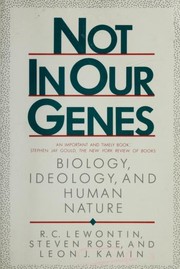
The classic critique, from a geneticist, of biological determinism in psychology and psychiatry — and specifically of the inference from heritability to inevitability. Polemical and dated in its targets, but the technical objection at its core has never been answered.

The history of how intelligence measurement went wrong, and the reason many readers distrust this entire literature. Gould's own handling of the Morton skull data has since been contested, which you should know while reading; the wider argument about reification survives it.
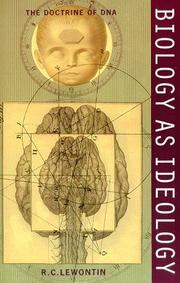
Short lectures that state Lewontin's methodological objection more cleanly than the longer book — that organisms and environments are mutually constructed, so partitioning their contributions is a category error. The right last book: it sends you back to reread the first stage.
Discussion
Keep reading
Paths that share books, cover the same subject, or open a related topic.